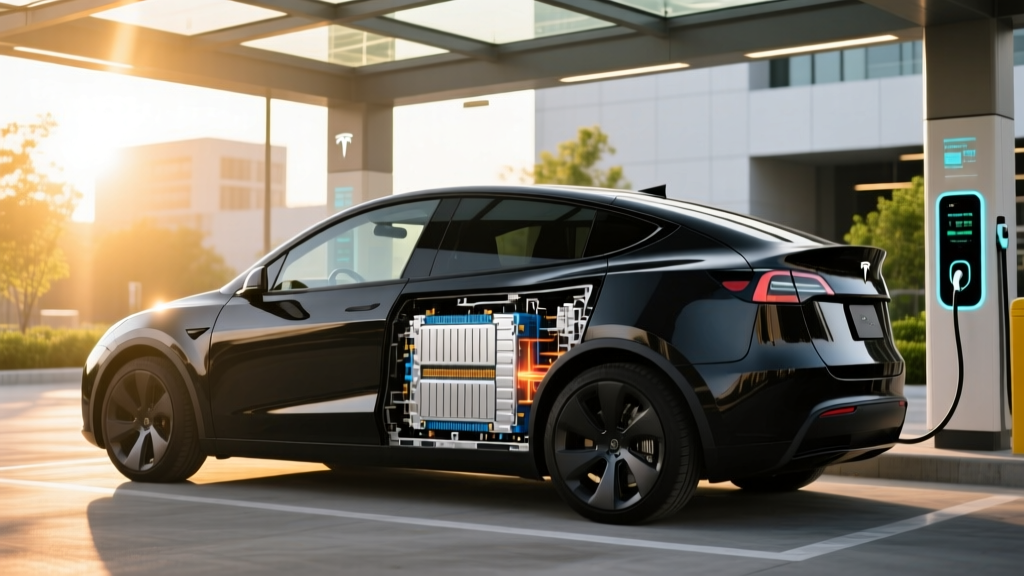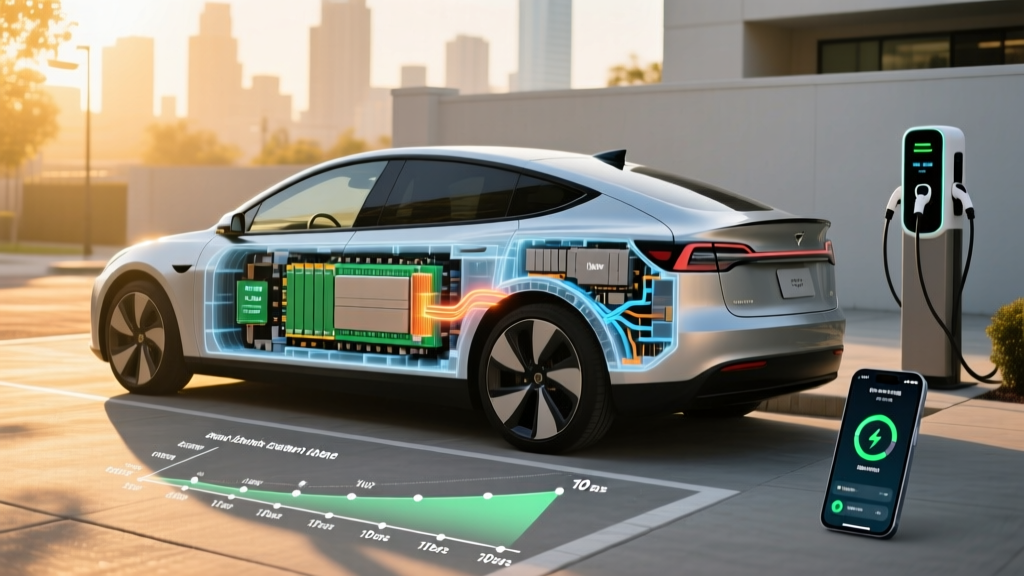
The heart of every modern EV is its high-voltage traction battery — a multi-thousand-pound pack of lithium ion cells that stores the energy propelling you down the road. But not all electric car lithium ion batteries are created equal. The chemistry inside those cells determines your range, how fast you can charge, how the pack handles a Minnesota winter, and how much capacity remains after 150,000 miles. If you're shopping for an EV in 2026 or trying to maximize the life of the one you own, understanding battery chemistry, degradation patterns, and warranty coverage is the single highest-leverage knowledge you can acquire.
This guide breaks down the two dominant lithium ion chemistries in today's EV market — NMC (nickel manganese cobalt) and LFP (lithium iron phosphate) — with hard data on degradation, real-world replacement costs, warranty structures, and the daily habits that extend or erode your pack's lifespan.
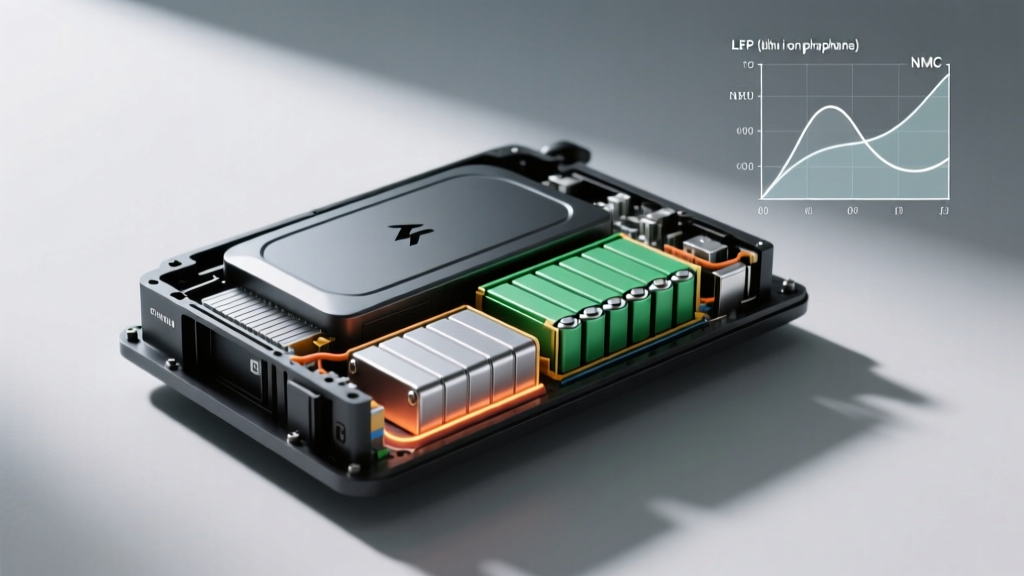
LFP vs NMC: The Two Chemistries Powering Today's EVs
Every electric car lithium ion battery uses lithium ions shuttling between a cathode and an anode. The cathode material is what defines the chemistry — and the trade-offs. In the U.S. market, two chemistries dominate:
- NMC (Nickel Manganese Cobalt) and its close cousin NCA (Nickel Cobalt Aluminum) — used in most long-range EVs including the Tesla Model 3 Long Range, Hyundai Ioniq 5, Ford Mustang Mach-E Extended Range, and Chevrolet Equinox EV.
- LFP (Lithium Iron Phosphate) — used in the Tesla Model 3 RWD, Model Y RWD, Ford Mustang Mach-E Select (standard range), and an expanding roster of affordable trims from BYD, Rivian, and others.
| Attribute | LFP (LiFePO₄) | NMC / NCA |
|---|---|---|
| Energy Density (cell-level) | ~160–180 Wh/kg | ~220–260 Wh/kg |
| Typical EV Range | 240–272 mi EPA (standard-range trims) | 270–360+ mi EPA (long-range trims) |
| Cycle Life | 3,000–5,000+ cycles to 80% SoH | 1,000–2,000 cycles to 80% SoH |
| Cold-Weather Performance | Greater range loss below 32°F; slower DC charging without preconditioning | Better low-temp conductivity; preconditioning still recommended |
| Cost per kWh (pack-level) | ~$80–$100 | ~$110–$140 |
| Recommended Charge Ceiling (daily) | 100% SoC — charge to full regularly | 80% SoC — avoid prolonged 100% |
| Cobalt Content | None (cobalt-free) | Contains cobalt (sourcing varies) |
| Thermal Stability | Higher — less prone to thermal runaway | Good, but requires more active thermal management |
| SoC Estimation Accuracy | Flat voltage curve makes % estimation harder; needs periodic 100% calibration | More linear voltage curve; easier SoC estimation |
Which Is Better — LFP or NMC?
There's no universal winner. The right chemistry depends on your driving profile:
Choose LFP if: You prioritize longevity and lower cost, can charge at home daily (to 100%), don't need 320+ miles of EPA range, and live in a moderate climate. LFP's cycle life advantage means your pack will likely outlast the rest of the car. Tesla recommends charging LFP packs to 100% at least weekly to keep the battery management system (BMS) calibrated.
Choose NMC if: You need maximum range per charge (road trips, long commutes), frequently drive in cold climates where NMC's low-temperature performance is stronger, or want access to the fastest DC charging speeds (many NMC packs support 250–350 kW peak rates). The trade-off is a shorter cycle life and a recommendation to keep daily charges at 80%.
How Long Do Electric Car Lithium Ion Batteries Last?
The short answer: almost certainly longer than you think. Real-world fleet data from Tesla, Geotab, and independent researchers consistently shows that modern EV batteries lose capacity gradually — not catastrophically — and most retain well above 80% of original capacity after 150,000 miles.
Typical Degradation Curve (Real-World Fleet Data)
| Mileage | NMC Avg. Retention | LFP Avg. Retention | Source Context |
|---|---|---|---|
| 25,000 mi | ~96–97% | ~97–98% | Early settling period (most loss occurs here) |
| 50,000 mi | ~93–95% | ~95–97% | Linear degradation phase begins |
| 100,000 mi | ~89–92% | ~92–95% | Geotab fleet study, Tesla fleet data |
| 150,000 mi | ~85–90% | ~90–94% | Warranty threshold period |
| 200,000 mi | ~80–87% | ~87–92% | LFP advantage widens with mileage |
Source references: Geotab EV Battery Degradation Study, Tesla Impact Report fleet data. Individual results vary based on climate, charging habits, and thermal management.
The critical insight is that degradation is non-linear. Most packs lose 2–5% capacity in the first year (the "early settling" phase), then degrade at a slow, roughly linear rate of 0.5–1.5% per year for the next decade. Catastrophic, sudden failure of the entire pack is extremely rare in modern EVs with active liquid thermal management.
What does 85% retention mean in practice? A Tesla Model Y Long Range with a 330-mile EPA range would still show roughly 280 miles at 85% — still a very usable daily driver after 150,000 miles.
What Does the Battery Warranty Actually Cover?
Federal law mandates that EV battery warranties last a minimum of 8 years or 100,000 miles (whichever comes first). In California and states that follow CARB (California Air Resources Board) emissions standards, the requirement extends to 10 years or 150,000 miles. Most automakers meet or exceed these minimums.
| Manufacturer | Warranty Period | Capacity Threshold | Notes |
|---|---|---|---|
| Tesla (Model 3/Y NMC Long Range) | 8 yr / 120,000 mi | 70% retention | Whichever comes first |
| Tesla (Model 3/Y LFP RWD) | 8 yr / 100,000 mi | 70% retention | Lower mileage cap vs Long Range |
| Hyundai / Kia (Ioniq 5, EV6, EV9) | 10 yr / 100,000 mi | 70% retention | Industry-leading duration |
| Ford (Mach-E, F-150 Lightning) | 8 yr / 100,000 mi | 70% retention | Covers battery and hybrid/electric components |
| General Motors (Equinox EV, Blazer EV, Silverado EV) | 8 yr / 100,000 mi | 60% retention (some trims 70%) | Verify trim-specific terms at purchase |
| Rivian (R1T, R1S) | 8 yr / 175,000 mi | 70% retention | Highest mileage threshold in market |
| BMW (i4, iX, i7) | 8 yr / 100,000 mi | 70% retention | Includes BMW's Battery Health monitoring |
What triggers a warranty claim? If your battery's usable capacity drops below the stated threshold (typically 70% of original) within the warranty period, the manufacturer must repair or replace the pack at no cost. In practice, most warranty replacements involve swapping out individual modules rather than the entire pack — a less invasive procedure than many owners assume.
What's NOT covered: Damage from accidents, flooding, unauthorized modifications, or using the vehicle as a stationary power source beyond manufacturer-approved V2H/V2L functions. Normal capacity loss above the threshold (e.g., dropping from 100% to 75% over 8 years) is considered expected wear, not a defect.
EV Battery Replacement Cost: What Owners Actually Pay
This is the question that generates the most anxiety — and the most misinformation. Let's anchor the discussion in data: the vast majority of EV owners will never need a full battery replacement. Most EVs are sold, traded, or scrapped before the pack degrades to unusable levels. But if you plan to keep your EV for 15+ years, or buy used with high mileage, here's what the numbers look like.
| Vehicle | Battery Size | Chemistry | Estimated Pack Cost | Labor + Install | Total Range |
|---|---|---|---|---|---|
| Tesla Model 3 RWD | ~60 kWh | LFP | $6,000–$8,000 | $1,500–$2,500 | $7,500–$10,500 |
| Tesla Model Y Long Range | ~75 kWh | NMC | $9,000–$12,000 | $1,500–$2,500 | $10,500–$14,500 |
| Hyundai Ioniq 5 | 77.4 kWh | NMC | $10,000–$14,000 | $2,000–$3,000 | $12,000–$17,000 |
| Ford Mustang Mach-E Ext. Range | 91 kWh | NMC | $12,000–$16,000 | $2,000–$3,500 | $14,000–$19,500 |
| Ford F-150 Lightning Ext. Range | 131 kWh | NMC | $18,000–$25,000 | $3,000–$4,500 | $21,000–$29,500 |
| Chevrolet Silverado EV | ~200 kWh | NMC (Ultium) | $25,000–$35,000 | $3,500–$5,000 | $28,500–$40,000 |
Key context: Battery pack prices have fallen from over $1,000/kWh in 2010 to roughly $100–$130/kWh at the pack level in 2026, per BloombergNEF data. This trend continues, meaning a replacement in 2035 will likely cost significantly less than today's estimates. Additionally, module-level repairs (replacing a few degraded modules rather than the entire pack) can cost $2,000–$5,000 and resolve many capacity-loss issues.
When is replacement typically needed? In practice, full replacements are most often triggered by physical damage (collision, ground-strike, flooding) or rare manufacturing defects — not gradual degradation. A pack that degrades to 70% capacity after 200,000 miles is still functional; it just offers reduced range.
Five Factors That Accelerate (or Preserve) Battery Life
Your daily habits have a measurable impact on how quickly your electric car lithium ion battery loses capacity. Research from the National Renewable Energy Laboratory (NREL) and fleet telematics data identify these primary factors:
🔋 Battery Care Best Practices
- Avoid sustained 100% or 0% SoC (NMC packs): Lithium ion cells experience the most stress at the extremes of their charge range. For NMC, set your daily charge limit to 80% and only charge to 100% when you need the full range for a trip. LFP packs are the exception — charge to 100% regularly as Tesla recommends.
- Minimize DC fast charging when possible: Occasional DC fast charging (50–350 kW) is fine, but daily use accelerates degradation due to high C-rates and heat generation. A study in the journal Joule found that packs charged primarily via Level 2 (7–11 kW) retained 2–3% more capacity over 100,000 miles than those primarily DC fast-charged. Use Level 2 home charging as your daily routine.
- Precondition before fast charging: Cold batteries charge slowly and experience more stress. Use your EV's preconditioning feature (available on Tesla, Hyundai/Kia, Ford, GM, BMW, and most modern EVs) to warm the pack before arriving at a DC fast charger. This optimizes the charge curve and reduces lithium plating risk.
- Park in shade or a garage in extreme heat: Sustained high temperatures (above 95°F) accelerate electrolyte decomposition. Active thermal management systems mitigate this while driving, but a parked EV in direct Arizona sun can see pack temperatures climb significantly. A garage or shaded spot reduces passive heat soak.
- Don't store at 100% SoC for extended periods: If you're leaving your EV unused for a week or more (vacation, travel), set the charge limit to 50–60% for NMC packs. LFP packs tolerate higher storage SoC better but 50–80% is still ideal for multi-week storage.
The Fast-Charging Reality Check
DC fast charging isn't inherently "bad" for your battery — modern BMS systems actively manage temperature and current to protect cells. But physics is physics: pushing 250 kW into a 75 kWh pack means a 3.3C charge rate, generating significant heat. The degradation difference between exclusive Level 2 and exclusive DC fast charging is roughly 2–5% additional capacity loss over 100,000 miles. That's meaningful but not catastrophic. If your lifestyle requires frequent road-trip fast charging, the convenience trade-off is reasonable — just don't fast-charge daily when a Level 2 home charger is available.
How to Check Your Battery's State of Health (SoH)
State of Health (SoH) is the percentage of your battery's original usable capacity that remains available. A new EV has 100% SoH; a pack that originally held 75 kWh but now holds 67.5 kWh sits at 90% SoH.
Here's how to monitor it on today's EVs:
- In-vehicle displays: Tesla shows battery health information through the service menu (accessible in recent software updates). Hyundai/Kia's infotainment includes an EV battery status screen showing SoH percentage. BMW's iDrive includes a Battery Health indicator. Ford's SYNC system provides battery health data in the EV settings menu.
- OBD-II diagnostic apps: Third-party tools like Scan My Tesla, Leaf Spy (for Nissan Leaf), and general OBD-II readers with EV-capable software can pull detailed BMS data including SoH, cell voltage variance, and pack temperature. These require a compatible Bluetooth OBD-II dongle (~$30–$60).
- Dealer diagnostics: Any authorized service center can run a full battery health report. Request this during routine service or pre-purchase inspections on used EVs. Ask for the printout showing measured kWh capacity vs. original rated capacity.
- Charging-data analysis: Apps like TeslaFi, Stats (for Tesla), and Recurrent track your charging sessions over time and estimate SoH trends based on energy added during full charges. This is less precise than BMS data but useful for spotting trends.
For used-EV buyers: Always request a battery health report before purchase. A 3-year-old Model 3 Long Range showing 94% SoH is normal and healthy; one showing 82% SoH may indicate heavy fast-charging use or a defective module worth investigating before closing the deal.
What's Next: Solid-State, Silicon Anodes, and Beyond
Next-generation battery technologies are in active development, but it's important to separate lab announcements from production reality:
- Solid-state batteries (replacing the liquid electrolyte with a solid material) promise higher energy density (~350–500 Wh/kg at cell level), faster charging, and improved safety. Toyota has announced solid-state battery production for select models beginning in 2027–2028, though initial volumes will be limited. Samsung SDI and QuantumScape are targeting similar timelines. Expect solid-state EVs to be premium-priced and low-volume through at least 2030.
- Silicon-dominant anodes replace graphite with silicon to boost energy density by 20–40%. Companies like Sila Nanotechnologies and Group14 are supplying silicon anode materials to automakers now, with Mercedes-Benz's next-generation EQ models expected to incorporate the technology. This is an incremental improvement compatible with existing manufacturing — expect it in mainstream EVs by 2027–2028.
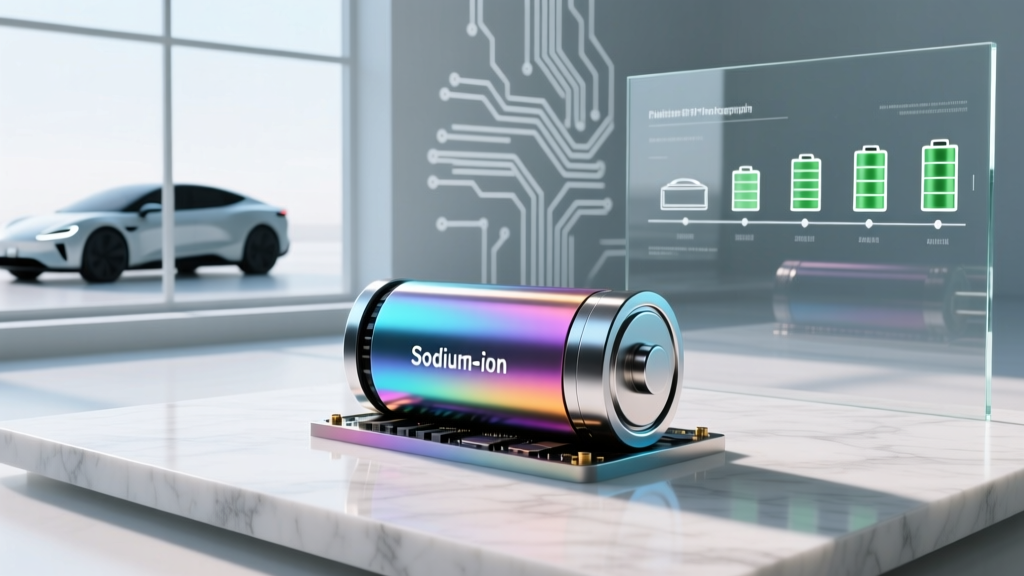
- Sodium-ion batteries use abundant sodium instead of lithium, dramatically reducing cost. CATL has begun production for Chinese-market EVs, but energy density (~120–150 Wh/kg) currently limits use to city cars and energy storage. U.S. availability is not expected before 2028 at the earliest.
Bottom line: Today's NMC and LFP lithium ion packs are mature, well-understood technologies with proven longevity. If you need an EV now, there is no compelling reason to wait for solid-state. The electric car lithium ion battery in a 2026 model year EV will, with reasonable care, outlast the vehicle's body, suspension, and interior.
Frequently Asked Questions
How long do EV batteries last in years and miles?
Most modern EV batteries with liquid thermal management retain 80–90% of original capacity after 150,000 miles or 10–12 years. Fleet data from Geotab shows average annual degradation of roughly 1.8% across all EV models, meaning a 10-year-old pack should still hold about 82% of its original capacity. LFP packs typically outperform this average.
How much does it cost to replace an EV battery?
Out-of-warranty full pack replacement ranges from roughly $7,500 for a Tesla Model 3 RWD (LFP, ~60 kWh) to $30,000+ for a large-pack vehicle like the Chevrolet Silverado EV (~200 kWh). However, most EVs never need a full replacement — module-level repairs cost $2,000–$5,000, and most packs outlast the vehicle. Battery prices continue to decline at roughly 5–8% annually.
What does the EV battery warranty cover?
Federal law requires a minimum 8-year/100,000-mile warranty (10-year/150,000-mile in CARB states). The warranty guarantees that the battery will retain a minimum percentage of original capacity — typically 70% — during the coverage period. If it falls below that threshold, the manufacturer repairs or replaces the pack. Physical damage, unauthorized modifications, and misuse are excluded.
Should I charge my EV to 100% every day?
It depends on the chemistry. For LFP packs (Tesla Model 3/Y RWD, some Ford and BYD models): yes, charge to 100% regularly — Tesla recommends at least weekly. LFP's flat voltage curve requires full charges for accurate SoC calibration. For NMC packs (most long-range EVs): no, set the daily limit to 80% and only charge to 100% when you need the full range. Sustained 100% SoC stresses NMC cells.
Does fast charging damage my EV battery?
DC fast charging generates more heat and stress than Level 2 charging, contributing to slightly faster degradation — approximately 2–5% additional capacity loss over 100,000 miles if used exclusively. However, modern battery management systems actively limit charge rates when the pack is too cold or too warm, providing substantial protection. Occasional fast charging on road trips is not a concern; daily fast charging when Level 2 is available is suboptimal but not catastrophic.
How do I check my EV battery health before buying used?
Request a battery health report from the seller or dealer showing the measured SoH percentage and remaining kWh capacity. Third-party OBD-II tools like Scan My Tesla or Leaf Spy can read BMS data directly. Services like Recurrent also provide battery health scoring. Look for SoH above 90% on vehicles under 50,000 miles and above 85% on vehicles under 100,000 miles.
Is the 12V battery the same as the EV traction battery?
No. The 12V auxiliary battery (often a small lithium ion or lead-acid unit) powers the vehicle's electronics, lights, infotainment, and door locks — just like in a gas car. It's separate from the high-voltage traction battery (60–200 kWh) that propels the vehicle. The 12V battery may need replacement every 3–5 years and costs $150–$400; it is not covered under the EV battery warranty and is unrelated to your EV's range or driving performance.
Battery specifications, pricing, and warranty terms reflect 2026 model year data. Always verify current terms with the manufacturer. For federal EV tax credit eligibility under IRS §30D, consult IRS.gov or a tax professional, as income limits, MSRP caps, and battery sourcing requirements apply.