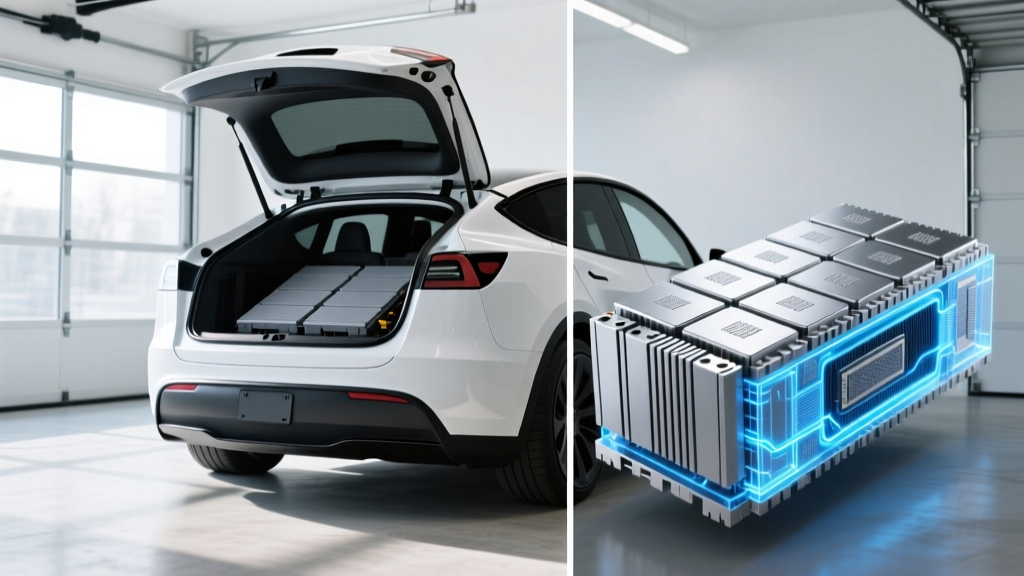
If you've searched "what type of battery is in a Tesla" expecting a single answer, the reality is more nuanced. As of the 2026 model year, Tesla uses two distinct lithium-ion chemistries across its lineup: lithium iron phosphate (LFP) in Standard Range (now often branded "Rear-Wheel Drive") models, and nickel-based chemistries (NMC/NCA) in Long Range and Performance variants. The chemistry sitting under your floorboards directly affects your daily charging habits, cold-weather range, long-term degradation trajectory, and even how you should set your charge limit.
This guide breaks down exactly which Tesla models get which battery, what the real-world trade-offs mean for ownership, and how to keep whichever pack you have healthy well past the warranty period.
Tesla's Two Battery Chemistries: LFP vs NMC/NCA
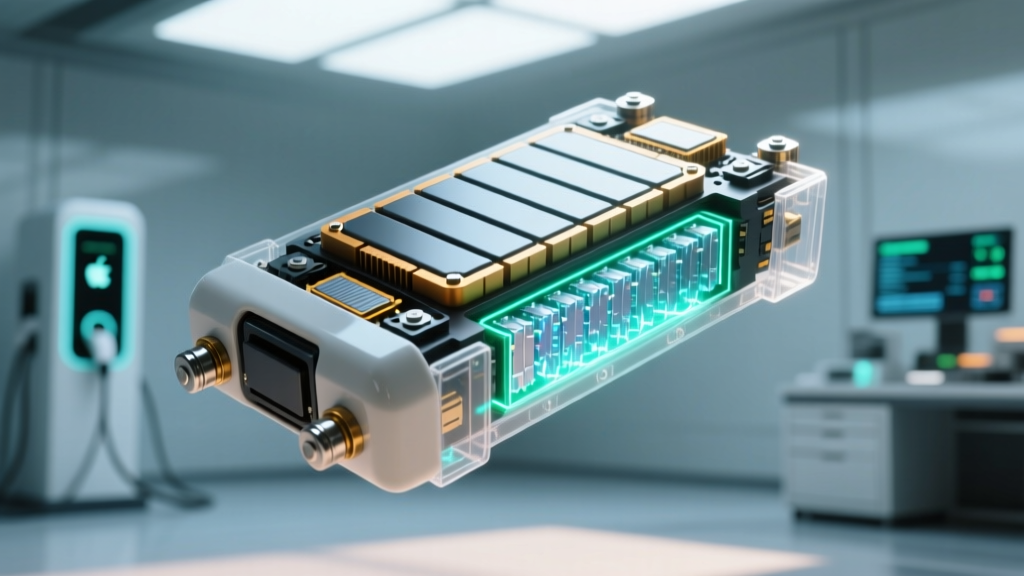
Tesla sources cells from multiple suppliers — primarily CATL (LFP prismatic cells) and Panasonic (NCA/NMC cylindrical cells, including the 4680 format). The chemistry determines the pack's fundamental characteristics.
LFP (Lithium Iron Phosphate) cells use iron and phosphate in the cathode. They contain no nickel or cobalt, making them cheaper to produce and less exposed to supply-chain volatility. Tesla uses CATL-supplied LFP packs in the Model 3 Rear-Wheel Drive and Model Y Rear-Wheel Drive.
NMC (Nickel Manganese Cobalt) and NCA (Nickel Cobalt Aluminum) cells use nickel-rich cathodes for higher energy density. Panasonic's 2170 and 4680 cylindrical cells power the Long Range and Performance trims of the Model 3, Model Y, Model S, and Model X.
| Attribute | LFP (CATL Prismatic) | NMC/NCA (Panasonic Cylindrical) |
|---|---|---|
| Models (2026) | Model 3 RWD, Model Y RWD | Model 3/Y LR & Perf, Model S, Model X |
| Energy Density | Lower (~160 Wh/kg cell-level) | Higher (~250-270 Wh/kg cell-level) |
| Typical Usable Pack Size | ~57-60 kWh (Model 3), ~60 kWh (Model Y) | ~75-82 kWh (Model 3/Y LR), ~100 kWh (Model S/X) |
| EPA Range (example) | Model 3 RWD: 272 mi | Model 3 LR: 363 mi |
| Cycle Life | 3,000-5,000+ cycles | 1,000-2,000 cycles |
| Cold-Weather Performance | More range loss in freezing temps (~30-40%) | Better cold performance (~20-30% loss) |
| Recommended Charge Limit | 100% daily is fine (Tesla recommends weekly 100%) | 80% daily; 100% only for trips |
| Cost to Produce | Lower (no nickel/cobalt) | Higher (nickel/cobalt exposure) |
| Thermal Stability | Excellent — higher thermal runaway threshold | Good — requires active thermal management |
The key ownership difference: LFP owners should charge to 100% regularly (Tesla's in-car recommendation is at least once per week), because LFP cells have a very flat voltage curve that makes state-of-charge estimation difficult without periodic full charges. NMC/NCA owners should set daily limits to 80% to minimize calendar degradation, charging to 100% only when departing on a road trip.
How Long Do Tesla Batteries Actually Last?
Tesla's 2025 Impact Report (published data through end of 2024) states that Model 3 and Model Y battery packs retain approximately 85% of original capacity after 200,000 miles. That translates to roughly 15% degradation over the average vehicle's usable life — far less than the catastrophic failure many prospective buyers fear.
Real-world data from fleet operators and owner surveys generally corroborates this:
- Year 1-2 (0-30,000 mi): Expect 2-5% initial degradation as cells stabilize. This is normal and steepest early on.
- Year 3-5 (30,000-75,000 mi): Degradation slows to roughly 1-2% per year.
- Year 6-10 (75,000-150,000+ mi): Gradual linear decline; most packs remain above 80% capacity at 150,000 miles.
LFP packs tend to show slower capacity fade over time due to their superior cycle life, but they start with less total range. An NMC pack may lose capacity slightly faster but provides a larger initial buffer. In practice, both chemistries are engineered to outlast the vehicle's economic life for most owners.
Tesla Battery Warranty: What's Actually Covered
Tesla's battery and drive unit warranty is one of the more straightforward in the industry. Coverage varies by model and trim:
| Model / Trim | Warranty Period | Mileage Limit | Minimum Capacity Retention |
|---|---|---|---|
| Model 3 RWD (LFP) | 8 years | 100,000 miles | 70% |
| Model 3 LR / Perf (NMC/NCA) | 8 years | 120,000 miles | 70% |
| Model Y RWD (LFP) | 8 years | 100,000 miles | 70% |
| Model Y LR / Perf (NMC/NCA) | 8 years | 120,000 miles | 70% |
| Model S / Model X | 8 years | 150,000 miles | 70% |
The 70% threshold means Tesla will repair or replace the battery if it degrades below 70% of original usable capacity within the warranty window. In practice, very few packs fall below this threshold under normal use. The warranty covers defects and abnormal degradation but does not cover damage from accidents, flooding, or unauthorized modifications.
For context, the U.S. Department of Energy notes that most modern EV batteries are designed to last the life of the vehicle, and federal regulations require minimum 8-year/100,000-mile battery warranties on all EVs sold in the U.S.
EV Battery Replacement Cost: What Tesla Owners Pay
Out-of-warranty battery replacement is the number-one fear among prospective EV buyers. Here's what the actual numbers look like for Tesla in 2026:
| Model | Battery Size (Usable) | Estimated Replacement Cost (Parts + Labor) |
|---|---|---|
| Model 3 RWD (LFP) | ~57-60 kWh | $12,000 – $16,000 |
| Model 3 Long Range | ~75-82 kWh | $14,000 – $20,000 |
| Model Y RWD (LFP) | ~60 kWh | $13,000 – $17,000 |
| Model Y Long Range | ~75-82 kWh | $15,000 – $22,000 |
| Model S / Model X | ~100 kWh | $20,000 – $28,000 |
These figures come from owner-reported service invoices and third-party repair data. Costs have declined roughly 30-40% since 2020 as cell prices have fallen and Tesla's remanufactured pack supply has grown.
When is replacement actually needed? Extremely rarely within the first 10-12 years. The vast majority of Tesla batteries will retain 75-85% capacity at 200,000 miles. A full pack replacement is typically only necessary if the battery suffers physical damage, a manufacturing defect that manifests late, or if the owner drives 250,000+ miles and wants to restore original range. For most owners who sell or trade in at 100,000-150,000 miles, battery replacement is a non-issue.
Factors That Affect Tesla Battery Longevity
Degradation is not just a function of time and mileage — how you use the battery matters significantly.
Daily Habits That Preserve Battery Health
- Set the right charge limit: NMC/NCA owners — 80% daily, 100% for trips only. LFP owners — charge to 100% at least weekly for cell balancing.
- Avoid sitting at extreme SoC: Don't leave an NMC pack at 100% for days. If you charge to full, drive soon after.
- Minimize DC fast charging when possible: Supercharging is convenient for road trips, but daily use accelerates degradation slightly. Home Level 2 (7-11 kW) is gentler on cells.
- Use scheduled departure / preconditioning: Warming the battery before driving in cold weather reduces stress and improves regen effectiveness.
- Avoid deep discharges: Try not to regularly drop below 10% SoC. The small buffer below 0% displayed protects the cells, but repeated deep cycling adds wear.
Temperature is a major variable. Lithium-ion cells degrade faster when exposed to sustained high temperatures (above 95°F / 35°C ambient, especially when combined with high SoC). Tesla's liquid thermal management system actively cools the pack, but parking in shade or a garage during summer heat helps. In freezing weather, range drops 20-40% depending on chemistry and driving conditions — this is temporary energy loss, not permanent degradation.
Fast-charging frequency deserves nuance. Studies from NREL and real-world fleet data show that exclusive DC fast charging can add roughly 2-4% additional degradation over 100,000 miles compared to primarily Level 2 charging. This is measurable but not catastrophic. Tesla's battery management system throttles charge speed when cells are too hot or too cold, which provides inherent protection.
How to Check Your Tesla's Battery Health (State of Health)
Tesla does not display a simple "battery health percentage" on the main touchscreen the way some competitors do. However, owners have several ways to assess State of Health (SoH):
- Range comparison method: Charge to 100% and note the displayed range. Compare it to the original EPA-rated range for your model. A Model 3 LR that originally displayed 363 miles at 100% but now shows 320 miles has roughly 88% SoH. Note that displayed range is affected by driving style and temperature — use this as a trend indicator, not a precise measurement.
- Service Mode (DIY): Some Tesla owners access Service Mode (hold the model name on the About screen for ~3 seconds, enter "service" as the access code) to view more detailed battery data, including nominal full-pack energy. This gives a more accurate SoH reading than the range estimate.
- Third-party apps: Tools like Tessie, Stats (iOS), and TeslaFi log charge sessions and can calculate SoH over time by comparing energy added during charges to the pack's known capacity.
- Tesla Service Center: You can request a battery health report during a service visit. Tesla technicians can pull detailed cell-level data including individual module voltage variance.
For most owners, the range comparison method checked quarterly is sufficient. If you notice a sudden drop in displayed range at 100% (more than a few miles over a short period), schedule a service appointment — this could indicate a module imbalance that Tesla can often address under warranty.
What's Next: Solid-State and Silicon-Anode Batteries
The battery industry is actively developing next-generation chemistries, but it's important to separate laboratory milestones from production reality.
Solid-state batteries replace the liquid electrolyte with a solid material, promising higher energy density, faster charging, and improved safety. Companies like Toyota, QuantumScape, and Samsung SDI have demonstrated prototype cells, but mass production at automotive scale remains challenging. Realistic industry timelines place limited solid-state production in select vehicles around 2028-2030, with broad availability not expected until the early 2030s. Tesla has not announced a solid-state roadmap.
Silicon-anode batteries add silicon to the graphite anode to increase energy storage capacity. Sila Nanotechnologies and Group14 are supplying early silicon-anode materials to automakers, with Mercedes-Benz's G-Class EV among the first to incorporate the technology. Tesla's 4680 cells already use a modest silicon content in the anode. Expect incremental silicon-anode improvements through the late 2020s rather than a sudden breakthrough.
For buyers deciding today: current lithium-ion technology — both LFP and NMC/NCA — is mature, well-understood, and proven to deliver 200,000+ miles of service. Waiting for solid-state is not a practical purchase strategy for anyone who needs a vehicle in the next 3-5 years.
Frequently Asked Questions
Does my Tesla use an LFP or NMC battery?
If you have a 2023-2026 Model 3 or Model Y in the base Rear-Wheel Drive configuration, you almost certainly have an LFP battery from CATL. Long Range, Performance, Model S, and Model X variants use NMC or NCA chemistry from Panasonic. You can confirm by checking your charge settings — if Tesla recommends charging to 100% regularly, you have LFP.
Is it bad to Supercharge my Tesla every day?
It's not catastrophic, but it does add measurable wear. Fleet data suggests exclusive DC fast charging contributes an additional 2-4% degradation over 100,000 miles compared to primarily Level 2 home charging. If you have reliable home Level 2 access, use Supercharging for road trips and occasional top-ups rather than as your daily routine.
Will my Tesla battery need replacing before 200,000 miles?
Statistically, very unlikely. Tesla's own fleet data shows average retention of ~85% at 200,000 miles. Most packs will provide 15-20 years of usable service before capacity drops to a level where replacement becomes worthwhile. Outright battery failure (not gradual degradation) is rare and typically covered under the 8-year warranty.
How does cold weather affect my Tesla's battery?
In freezing temperatures (below 32°F / 0°C), expect 20-40% temporary range reduction depending on chemistry, driving speed, and cabin heating use. LFP packs tend to lose slightly more range in extreme cold than NMC/NCA. This is not permanent damage — range returns as temperatures warm. Using Tesla's preconditioning feature before driving recovers significant range by warming the battery.
LFP vs NMC — which Tesla battery is better?
Neither is universally better; they serve different priorities. LFP is the right choice if you want lower cost, longer cycle life, the ability to charge to 100% daily without worry, and you don't need maximum range. NMC/NCA is better if you need the longest possible EPA range (300+ miles), better cold-weather performance, and you're comfortable managing an 80% daily charge limit. For most daily commuters who charge at home, LFP is arguably the more practical chemistry.
Does the federal tax credit apply to Tesla vehicles with LFP batteries?
Eligibility for the §30D federal EV tax credit (up to $7,500) depends on MSRP caps, buyer income limits, and battery component/critical mineral sourcing requirements — not solely on chemistry. LFP batteries from CATL use Chinese-sourced materials, which has affected credit eligibility for certain model years. Check the latest qualifying vehicle list on IRS.gov before purchasing, as sourcing rules continue to evolve. Consult a tax professional for your specific situation.