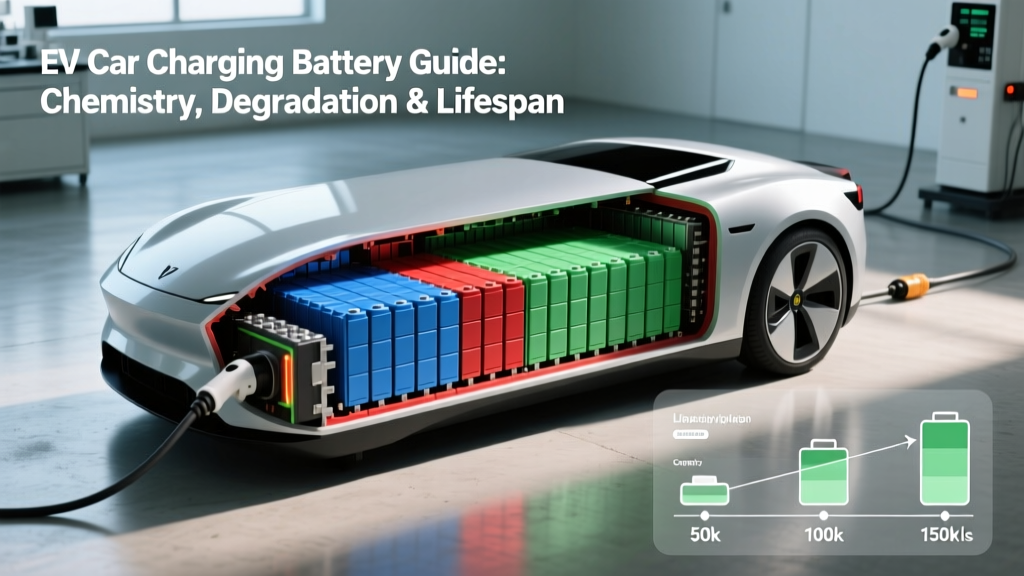
If you've been researching Tesla ownership, you've likely encountered a confusing array of battery acronyms: LFP, NMC, NCA, 4680 cells, structural packs. Unlike most automakers that stick with a single chemistry across their lineup, Tesla sources and manufactures multiple battery types depending on the model, trim, and build location. Understanding what batteries Tesla uses isn't just an academic exercise — it directly affects your vehicle's range, charging behavior, long-term degradation, and even how you should charge it day to day.
This guide breaks down every battery chemistry Tesla currently deploys, how each degrades over time, what the warranty actually covers, and what replacement costs look like if you ever need one. We'll also cover how to monitor your battery's State of Health (SoH) and what emerging technologies like solid-state cells might mean for the future.
Tesla's Current Battery Chemistries: LFP, NMC, and NCA Explained
Tesla uses three primary cathode chemistries across its 2025–2026 vehicle lineup, plus two distinct cell form factors. The chemistry inside your battery pack determines energy density, cycle life, thermal behavior, and cost — and it varies by model and trim level.
LFP (Lithium Iron Phosphate) — The Standard Range Workhorse
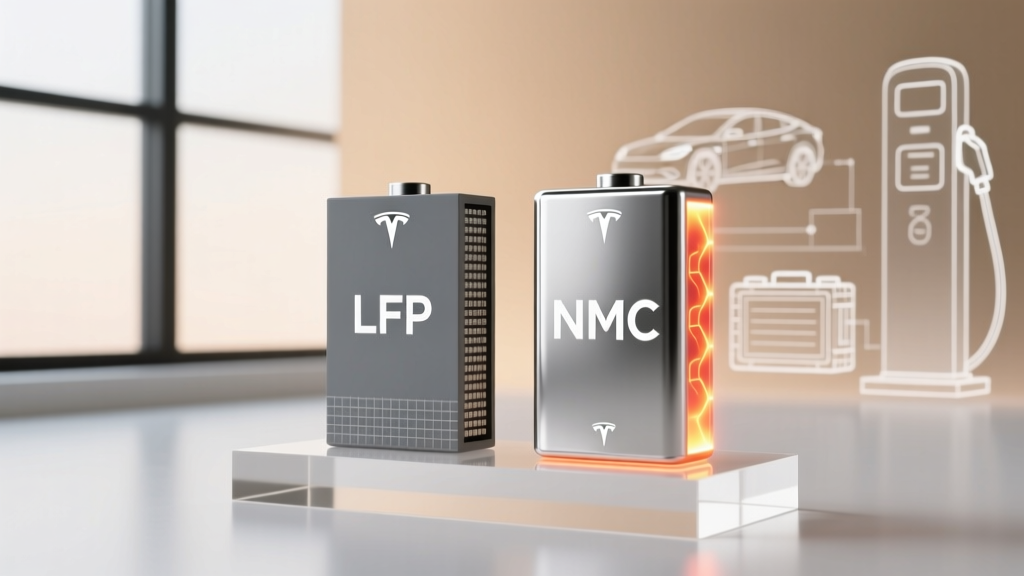
LFP cells, supplied primarily by CATL, power most Model 3 Rear-Wheel Drive and Model Y Rear-Wheel Drive vehicles built for the North American and European markets. LFP chemistry uses iron and phosphate in the cathode rather than nickel and cobalt, making it cheaper to produce and free of conflict minerals. The trade-off is lower energy density — meaning a heavier pack for the same kWh — and reduced performance in extreme cold.
One major advantage of LFP: Tesla recommends charging these packs to 100% regularly, unlike NMC/NCA packs. This is because LFP chemistry has a very flat voltage curve, making it difficult for the Battery Management System (BMS) to estimate State of Charge (SoC) accurately unless it periodically reaches full charge. If you own an LFP Tesla, setting your daily charge limit to 100% is not just acceptable — it's recommended.
NMC (Nickel Manganese Cobalt) — Long Range and Performance Models
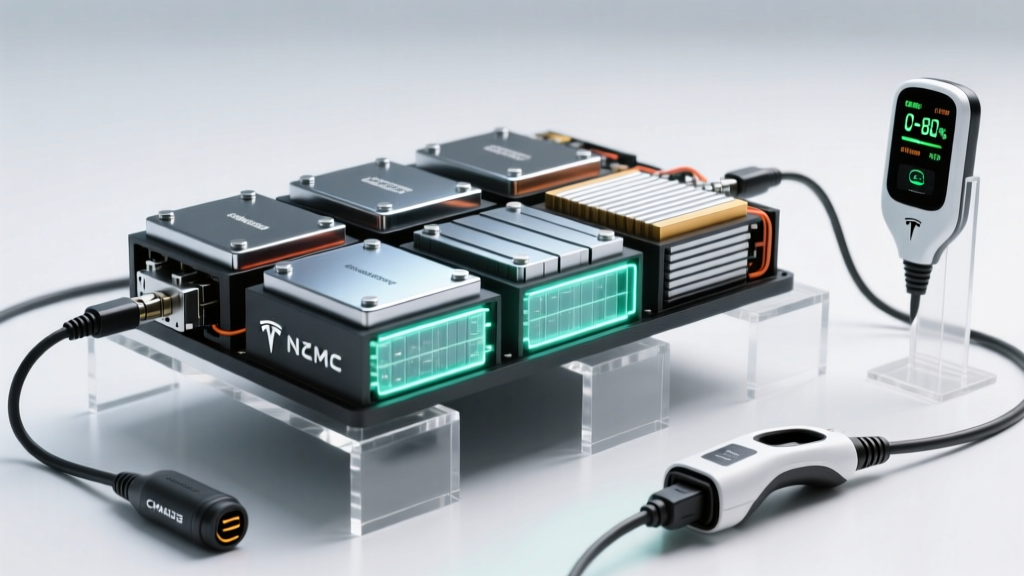
NMC cells, primarily supplied by LG Energy Solution and Panasonic, are used in Model 3 Long Range, Model Y Long Range, and Model Y Performance variants. NMC offers higher energy density than LFP, which translates to more range in a lighter pack. For the 2025–2026 model years, these packs typically use an NMC 811 or similar high-nickel formulation (8 parts nickel, 1 part manganese, 1 part cobalt) to maximize energy density.
The trade-off: NMC packs are more sensitive to sustained high SoC. Tesla recommends a daily charge limit of 80% for NMC vehicles, reserving 100% charges for road trips. Consistently charging to 100% accelerates calendar degradation in nickel-rich chemistries.
NCA (Nickel Cobalt Aluminum) — Legacy and 4680 Cells
NCA chemistry, produced by Panasonic, has been Tesla's longest-running battery partnership, dating back to the original Roadster and Model S. Today, NCA cells are found in the Model S, Model X, and in Tesla's in-house 4680 cells used in certain Cybertruck configurations and some Austin-built Model Y vehicles.
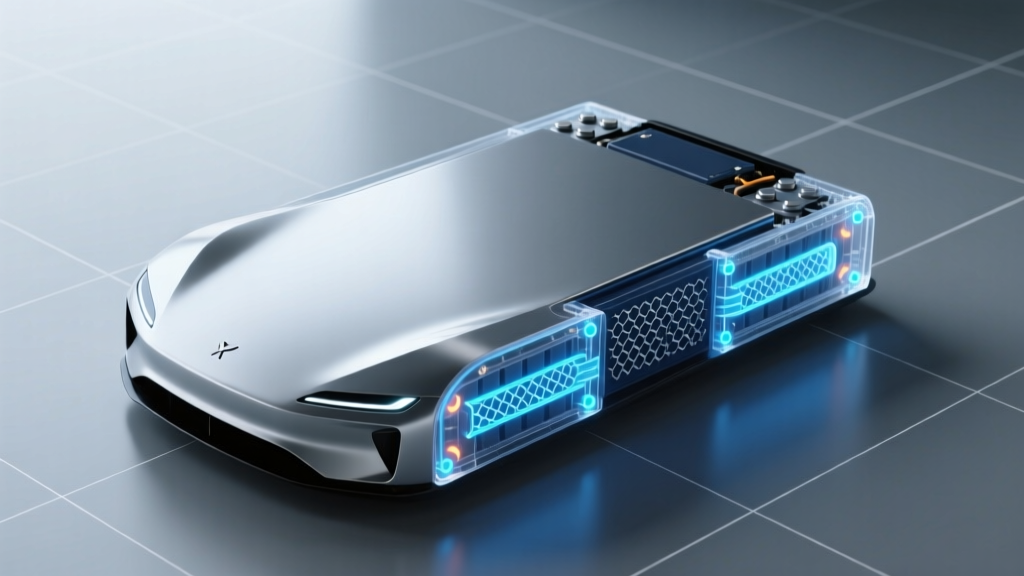
The 4680 cell (46mm diameter, 80mm height) is Tesla's proprietary large-format cylindrical cell featuring a tabless electrode design that reduces internal resistance, improving thermal management and enabling faster charging. These cells also serve a structural role — the battery pack is bonded to the vehicle chassis, reducing overall vehicle weight but making out-of-warranty replacement more complex.
| Attribute | LFP (CATL) | NMC (LG / Panasonic) | NCA / 4680 (Panasonic / Tesla) |
|---|---|---|---|
| Models using | Model 3 RWD, Model Y RWD | Model 3 LR, Model Y LR, Model Y Perf | Model S, Model X, Cybertruck, some Model Y (Austin) |
| Typical pack size | ~57–60 kWh usable | ~75–82 kWh usable | ~95–123 kWh usable |
| Energy density | Lower (~160 Wh/kg cell-level) | Higher (~250–270 Wh/kg) | Highest (~260–300 Wh/kg) |
| Cycle life | Excellent (3,000+ cycles to 80% SoH) | Good (1,000–2,000 cycles to 80% SoH) | Good (1,000–1,500 cycles to 80% SoH) |
| Cold-weather performance | Reduced (greater range loss below 32°F) | Better (heat pump mitigates loss) | Better (thermal mgmt + heat pump) |
| Recommended daily charge | 100% | 80% | 80% |
| Cost per kWh (est.) | Lowest | Mid-range | Mid-to-high |
| Cobalt content | None | Low (NMC 811) | Low (NCA) |
How Long Do Tesla Batteries Last? Real-World Degradation Data
Battery degradation is the gradual, irreversible loss of usable capacity over time. It's measured as a percentage of original capacity — a pack at 90% State of Health (SoH) has lost 10% of its original kWh capacity.
Tesla's degradation profile follows a well-documented curve: a steeper drop in the first 1–2 years (roughly 2–5%), followed by a long, slow linear decline. Based on aggregated fleet data from sources like TeslaFi community datasets and Tesla's own 2024 Impact Report, here's what typical degradation looks like:
| Mileage | Average Capacity Retained (SoH) | Notes |
|---|---|---|
| 0–25,000 mi | 95–98% | Initial calibration drop; steepest early loss |
| 50,000 mi | 92–96% | Curve flattens significantly |
| 100,000 mi | 88–94% | Most packs well above warranty threshold |
| 150,000 mi | 85–92% | Variance increases based on charging habits |
| 200,000 mi | 80–90% | Upper range typically LFP packs |
Key insight: Tesla's own Impact Report claims that Model 3/Y battery packs retain approximately 85% of original capacity after 200,000 miles. In practice, fleet data shows wide variance — from as low as 78% to as high as 94% at 200k miles — driven largely by charging habits, climate, and whether the pack is LFP or NMC/NCA.
LFP packs consistently show lower degradation rates due to their inherently stable chemistry. An LFP Model 3 charged to 100% daily may degrade less over 100,000 miles than an NMC Model 3 charged to 90% daily, all else being equal.
What Does Tesla's Battery Warranty Actually Cover?
Tesla provides a separate battery and drive unit warranty that extends beyond the basic vehicle limited warranty. The warranty guarantees that the battery will retain a minimum percentage of its original capacity — if it falls below that threshold within the warranty period, Tesla will replace or refurbish the pack at no cost.
| Model | Warranty Period | Mileage Limit | Minimum Capacity Retention |
|---|---|---|---|
| Model 3 RWD (LFP) | 8 years | 100,000 miles | 70% |
| Model 3 Long Range / Performance | 8 years | 120,000 miles | 70% |
| Model Y (all trims) | 8 years | 120,000 miles | 70% |
| Model S / Model X | 8 years | 150,000 miles | 70% |
| Cybertruck | 8 years | 150,000 miles | 70% |
What's covered: Battery capacity falling below 70% of original, manufacturing defects, and drive unit failures. What's not covered: Damage from accidents, flooding, fire, unauthorized modifications, or using the vehicle as a stationary power source (unless equipped with Powerwall integration). The warranty also does not cover gradual range loss from normal degradation if the pack remains above the 70% threshold.
Worth noting: Tesla's warranty terms are competitive but not class-leading. Hyundai and Kia offer 10-year/100,000-mile battery warranties on vehicles like the Ioniq 5 and EV6, also at a 70% retention threshold. Always check Tesla's official warranty page for the most current terms, as they can change by model year.
How Much Does a Tesla Battery Replacement Cost?
Out-of-warranty battery replacement is the scenario most prospective EV buyers fear — but it's also one of the least likely events in EV ownership. The vast majority of Tesla battery packs outlast the vehicle itself. That said, if a pack does fail outside the warranty window (due to physical damage, extreme abuse, or simply reaching end-of-life after 15+ years), here's what you're looking at:
| Model | Battery Size | Estimated Pack Cost | Labor & Calibration | Total Estimate |
|---|---|---|---|---|
| Model 3 RWD (LFP) | ~57–60 kWh | $8,000–$11,000 | $2,000–$3,500 | $10,000–$14,500 |
| Model 3/Y Long Range | ~75–82 kWh | $12,000–$16,000 | $2,500–$4,000 | $14,500–$20,000 |
| Model S / Model X | ~95–100 kWh | $15,000–$22,000 | $3,000–$5,000 | $18,000–$27,000 |
| Cybertruck (4680 structural) | ~123 kWh | $18,000–$25,000 | $5,000–$8,000 | $23,000–$33,000 |
Context matters: These are worst-case, full-pack-replacement figures. In practice, Tesla often performs module-level repairs on older packs, replacing individual modules rather than the entire battery — reducing costs to $3,000–$7,000 in many cases. Additionally, Tesla's refurbishment program means a replacement pack may be a remanufactured unit with guaranteed capacity, not a brand-new pack.
The Cybertruck's structural 4680 pack is the most expensive to replace because the cells are bonded into the vehicle's frame. Removal requires specialized equipment and significant labor. This is a trade-off of the structural battery design: lower manufacturing cost and vehicle weight, but higher repair complexity.
Factors That Accelerate (or Preserve) Battery Life
Not all miles are created equal when it comes to battery wear. The following factors have the most significant impact on long-term State of Health:
State of Charge Habits
For NMC and NCA packs, consistently storing the battery at 100% SoC accelerates calendar degradation — the chemical breakdown that occurs even when the car is parked. The ideal storage SoC for nickel-based chemistries is between 40–60%. For daily driving, 80% is the recommended ceiling. LFP packs are the exception: their chemistry is far more tolerant of high SoC, which is why Tesla recommends 100% daily charges.
DC Fast Charging Frequency
Occasional Supercharging does not meaningfully harm your battery. Tesla's BMS actively manages cell temperature during fast charging to mitigate stress. However, exclusive reliance on DC fast charging (250 kW Superchargers or third-party stations) — especially in hot climates — does correlate with slightly higher degradation rates over 100,000+ miles. Fleet data suggests vehicles that charge primarily on Level 2 (home charging at 7–11.5 kW) retain 2–4% more capacity at 100,000 miles compared to vehicles that fast-charge daily.
Extreme Temperatures
Heat is the primary enemy of lithium-ion batteries. Sustained exposure to ambient temperatures above 95°F (35°C), particularly at high SoC, accelerates degradation. Tesla's active thermal management system (liquid cooling/heating) mitigates this significantly, but it can't eliminate the effect entirely. Cold temperatures below 20°F (-7°C) don't cause permanent damage, but they temporarily reduce available capacity and slow charging speeds — the battery must be preconditioned (warmed) before fast charging to avoid lithium plating on the anode.
Battery Care Best Practices by Chemistry
- LFP owners: Charge to 100% at least once per week. Regular 100% charging is recommended for BMS calibration. Avoid letting SoC drop below 10% for extended periods.
- NMC/NCA owners: Set daily charge limit to 80%. Reserve 100% charges for road trips, and avoid leaving the car at 100% for more than a few hours. If storing the vehicle for 2+ weeks, set SoC to ~50%.
- All owners: Use scheduled charging to finish charging right before departure (reduces time spent at high SoC). Precondition the battery before Supercharging in cold weather. Avoid repeated deep discharges below 10% SoC.
- Hot-climate owners: Park in shade or a garage when possible. Avoid charging to 100% and then leaving the car in direct sun for hours.
How to Check Your Tesla's Battery Health (SoH)
Tesla does not display a simple "battery health percentage" in the vehicle's UI the way a smartphone does. Instead, owners must infer SoH through a few methods:
Method 1: Range at Full Charge
The simplest approach: charge your vehicle to 100% (or calculate from a known SoC) and note the displayed rated range. Compare this to the EPA-rated range when new. For example, if your 2023 Model 3 Long Range originally displayed 333 miles at 100% and now displays 305 miles at 100%, your estimated SoH is approximately 305/333 = 91.6%.
Caveat: Displayed range fluctuates based on recent driving efficiency, temperature, and BMS calibration. This method gives a rough estimate, not a precise measurement. LFP owners should perform this check after a full 100% charge to ensure BMS accuracy.
Method 2: Third-Party Apps (TeslaFi, Tessie, Stats)
Apps like TeslaFi and Tessie log detailed battery data over time via Tesla's API, including estimated degradation curves, energy consumed per charge session, and projected SoH. These tools aggregate data across thousands of vehicles and can benchmark your pack against similar model-year vehicles. A subscription typically costs $5–$8/month.
Method 3: Service Center Diagnostic
If you suspect abnormal degradation (e.g., a sudden drop in range, or a pack approaching the 70% warranty threshold), a Tesla Service Center can run a full battery diagnostic that reads individual module voltages, internal resistance, and precise capacity. This is the most accurate method and is free if performed under a warranty claim.
Emerging Battery Tech: What's Next After LFP and NMC?
Tesla is actively developing and sourcing next-generation battery technologies. Here's what's on the horizon — and realistic timelines based on current industry data:
Improved 4680 Cells (Dry Electrode Process)
Tesla's Austin gigafactory continues to ramp 4680 cell production with a dry electrode coating process that eliminates the need for toxic solvents, reducing manufacturing cost and energy consumption. As of early 2026, these cells are in production for Cybertruck and select Model Y vehicles. Yield and energy density continue to improve with each production iteration, but they are not yet deployed across the full lineup.
Silicon-Anode Cells
Replacing graphite anodes with silicon can theoretically increase energy density by 20–40%. Tesla has been researching silicon-anode technology, and suppliers like Sila Nanotechnologies are scaling production. However, silicon anodes suffer from volume expansion during charge cycles, which limits cycle life. Realistic timeline: Limited commercial deployment in premium vehicles by 2028–2030, with mass-market adoption likely post-2030.
Solid-State Batteries
Solid-state cells replace the liquid electrolyte with a solid material, offering higher energy density, faster charging, and improved safety (no flammable electrolyte). Companies like Toyota, QuantumScape, and Samsung SDI are advancing prototypes. Tesla has not announced a solid-state timeline. Realistic timeline: Low-volume production in luxury vehicles by 2028–2030; cost-competitive mass production is unlikely before 2032–2035. Solid-state should be viewed as a future technology, not a reason to delay a current EV purchase.
For a deeper look at battery chemistry fundamentals and degradation science, the U.S. Department of Energy's EV battery overview provides authoritative technical context.
Frequently Asked Questions
Does Tesla use CATL batteries?
Yes. Tesla sources LFP (lithium iron phosphate) prismatic cells from CATL for most Model 3 Rear-Wheel Drive and Model Y Rear-Wheel Drive vehicles sold in North America, Europe, and Asia. CATL is the world's largest battery manufacturer and a key Tesla supply partner.
Is LFP better than NMC for daily driving?
For most daily drivers, LFP offers practical advantages: longer cycle life, tolerance for 100% daily charging, lower cost, and no cobalt. The trade-offs are lower energy density (slightly less range for a given pack weight) and greater range loss in extreme cold. If you need maximum range or live in a very cold climate, NMC may be the better fit. For a commuter who charges at home nightly, LFP is arguably the superior choice.
Will my Tesla battery need to be replaced?
Statistically, it's unlikely during typical ownership. Tesla's fleet data shows the majority of packs retain above 80% capacity at 200,000 miles. Most vehicles are retired or sold before the battery reaches end-of-life. Out-of-warranty full replacements are rare — and when they do occur, module-level repairs are often possible at a fraction of the full-pack cost.
Does frequent Supercharging damage the battery?
Not significantly, provided the BMS is functioning normally and the battery is preconditioned. Tesla's thermal management system actively cools the pack during Supercharging to limit stress. Fleet data shows a modest 2–4% difference in capacity retention at 100,000 miles between vehicles that primarily Supercharge versus those that primarily use Level 2 home charging. For road trips, Supercharge without worry. For daily charging, Level 2 at home remains the gentler option.
How do I know if my Tesla qualifies for a battery warranty claim?
If your vehicle is within the 8-year warranty period and the battery has degraded below 70% of its original capacity (as confirmed by Tesla's diagnostic tools), you qualify for a warranty replacement or refurbishment. You can initiate a claim through the Tesla app by scheduling a Service Center visit. Tesla will run a full diagnostic before approving any warranty work.
Does the federal EV tax credit depend on battery chemistry?
Indirectly, yes. Under the current IRS §30D clean vehicle credit rules, eligibility depends on battery component manufacturing location and critical mineral sourcing — not chemistry directly. However, LFP packs from CATL (manufactured in China) have faced sourcing challenges under the current rules, affecting credit eligibility for some Tesla trims. Always verify current-year eligibility on the IRS website or consult a tax professional before purchasing, as rules change frequently and have income caps, MSRP caps, and sourcing requirements.