Why the Stark Varg Battery Matters to EV Shoppers
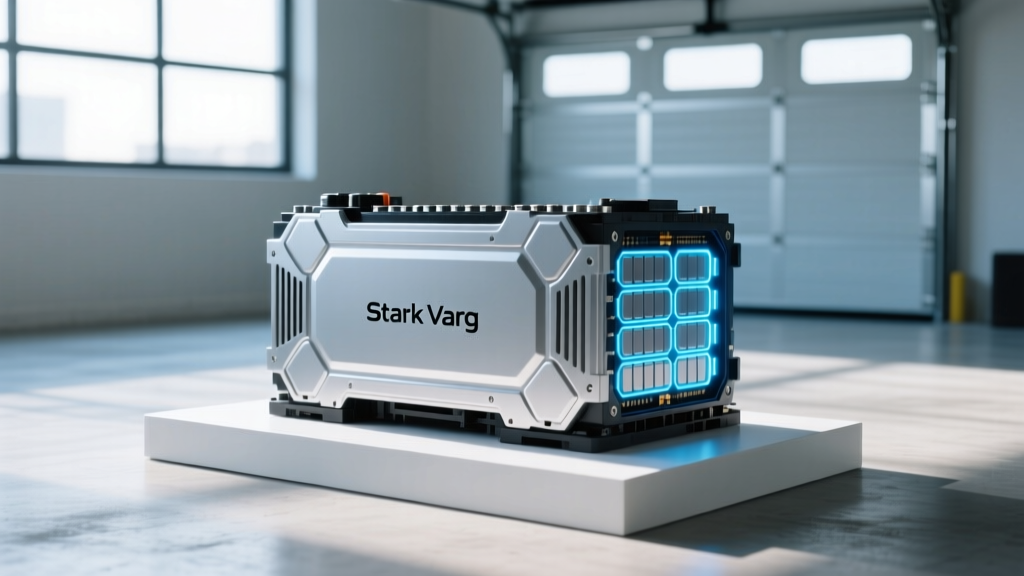
When the Stark Varg EX launched as a high-performance electric motocross and enduro machine, the headline number was its power output — but for real buyers, the Stark Varg battery range and long-term durability matter far more than peak horsepower. The Varg uses a purpose-built lithium-ion pack that sits at the extreme end of EV battery engineering: optimized for burst power delivery, lightweight packaging, and off-road abuse rather than the daily-commute efficiency priorities of a Tesla Model Y or Hyundai Ioniq 5.
Understanding what's inside the Varg's battery — and how it compares to the NMC and LFP chemistries dominating mainstream EVs — gives any electric-vehicle shopper a sharper lens on what battery specs actually mean for range, longevity, and ownership cost.
- Battery capacity: 6.0 kWh usable (motocross/enduro off-road use)
- Chemistry: NMC (Nickel Manganese Cobalt) lithium-ion
- Claimed ride time: Up to ~6 hours (enduro, conservative riding) / ~30-45 min (full motocross race pace)
- Charge time: ~1-2 hours (220V), longer on standard 110V
- Voltage: ~400V nominal architecture
- Base MSRP: ~$13,890 (Varg MX) / ~$14,890 (Varg EX enduro)
Note: The Stark Varg is an off-road competition motorcycle, not a street-legal commuter. Its "range" is measured in ride time and moto sessions rather than highway miles. For street-legal EV battery comparisons, we'll benchmark its chemistry against mainstream automotive packs throughout this guide.
NMC vs. LFP: The Battery Chemistry Showdown
The Stark Varg uses NMC (Nickel Manganese Cobalt) cells — the same chemistry family found in most long-range EVs from Tesla (Model S/X and older Model 3/Y Long Range), Ford (Mustang Mach-E Extended Range), and Hyundai (Ioniq 5/6). But mainstream buyers now also encounter LFP (Lithium Iron Phosphate) in vehicles like the Tesla Model 3 RWD, standard-range BYD models, and the Ford F-150 Lightning standard-range pack.
Here's how the two chemistries stack up across the metrics that matter:
| Factor | NMC / NCA | LFP (LiFePO4) |
|---|---|---|
| Energy density | Higher (~250-300 Wh/kg cell-level) — more range per pound | Lower (~160-200 Wh/kg) — heavier pack for same kWh |
| Cycle life | ~1,000-2,000 full cycles to 80% SoH | ~3,000-5,000+ full cycles to 80% SoH |
| Cold-weather performance | Better low-temp discharge; less range loss below freezing | More cold-weather range loss; slower cold charging without preconditioning |
| Thermal stability / safety | Good with active thermal management; higher runaway risk if damaged | Excellent intrinsic stability; very low thermal runaway risk |
| Cost per kWh | Higher — cobalt and nickel are expensive, supply-constrained | Lower — iron and phosphate are abundant, cheaper to source |
| Max SoC charging | Best kept to 80-90% daily; 100% only for trips | Can and should be charged to 100% regularly for cell balancing |
| Typical use case | Long-range, performance, cold-climate vehicles | Standard-range, daily commuter, budget-friendly EVs |
Why Stark chose NMC for the Varg: In a competition motorcycle, weight is everything. NMC's higher energy density lets the Varg pack 6.0 kWh into a ~30 kg battery module — something that would require ~40+ kg with LFP cells. For off-road performance, that weight savings translates directly to handling and suspension response.
For mainstream EV buyers: If you drive in cold climates or need 300+ miles of EPA range, NMC remains the better choice. If your commute is under 40 miles round-trip and you want maximum battery longevity with lower upfront cost, LFP is increasingly compelling — and it's why Tesla shifted Model 3 RWD to LFP globally.
How Long Do EV Batteries Actually Last?
The single most persistent myth in EV ownership is that batteries "need replacing every few years like a phone." The data tells a very different story.
- Tesla Model 3/Y (NMC, 2018-2023): Average ~5-7% capacity loss at 100,000 miles per Tesla's 2023 Impact Report fleet data.
- Chevrolet Bolt EV (NMC, 2017-2022): Many owners report ~8-12% loss at 80,000-100,000 miles; some early packs were recalled for fire risk and replaced under warranty.
- Nissan Leaf (LMO/NMC, passively cooled): Higher degradation — ~15-25% loss at 80,000-100,000 miles in hot climates, largely due to lack of active liquid cooling.
- Tesla Model 3 RWD (LFP, 2021+): Early data suggests <5% loss at 60,000+ miles, consistent with LFP's superior cycle life.
- Stark Varg (NMC, off-road): No long-term fleet data yet (launched 2023); expected cycle life of ~1,000-1,500 full charge cycles before 80% SoH — roughly 5-8 seasons of regular motocross use.
What this means in practice: A modern, liquid-cooled NMC battery in a mainstream EV (Tesla, Hyundai, Ford, BMW) should retain 85-90% of original capacity at 150,000 miles and 10 years of typical use. Most EV batteries will outlast the vehicle's body, suspension, and interior. Complete battery failure before 200,000 miles is statistically rare in liquid-cooled packs.
The Stark Varg's pack faces a different stress profile: high-discharge motocross sessions (pulling 80+ hp bursts) generate significant heat, and off-road vibration/shock loads are far beyond automotive norms. Stark engineers for this with robust cell-level fusing and a rigid carbon-fiber battery enclosure, but competition use will accelerate degradation compared to gentle commuter driving.
What the Battery Warranty Covers (and What It Doesn't)
Federal law in the US mandates that EV batteries carry a minimum warranty of 8 years / 100,000 miles (in California Air Resources Board states, it's 10 years / 150,000 miles). But the details matter enormously.
| Manufacturer | Warranty Period | Capacity Threshold | Notes |
|---|---|---|---|
| Tesla (Model 3/Y Long Range, NMC) | 8 yr / 120,000 mi | 70% retention | Covers defects + capacity below threshold |
| Tesla (Model 3 RWD, LFP) | 8 yr / 100,000 mi | 70% retention | Same threshold, fewer miles |
| Hyundai (Ioniq 5/6) | 10 yr / 100,000 mi | 70% retention | Industry-leading duration |
| Ford (Mach-E, F-150 Lightning) | 8 yr / 100,000 mi | 70% retention | Covers battery + electric drivetrain components |
| GM (Ultium-based: Equinox EV, Blazer EV, Silverado EV) | 8 yr / 100,000 mi | 60-70% retention (varies by model) | Some models offer 70%; check specific warranty booklet |
| Stark Varg (off-road motorcycle) | 2 yr limited (battery) | Not publicly specified | Competition use may void; check dealer terms |
Key caveat: Battery warranties cover defects and capacity loss below the stated threshold. They do not cover damage from accidents, flooding, improper charging equipment, or (in many cases) competition/racing use. If your 5-year-old EV battery sits at 78% capacity, the warranty won't trigger — the battery is functioning within spec.
For the IRS §30D federal tax credit, battery sourcing and critical-mineral requirements also affect whether a new EV qualifies — a separate consideration from warranty coverage, but one that influences total purchase cost.
EV Battery Replacement Cost: The Real Numbers
This is where fear-mongering runs rampant. Let's anchor the conversation in actual data.
| Vehicle / Pack Size | Battery kWh | Estimated Replacement Cost (2025-2026) | Typical Need Timeline |
|---|---|---|---|
| Tesla Model 3 RWD (LFP) | ~57.5 kWh | $8,000 - $12,000 | Rarely needed; 200,000+ mi expected life |
| Tesla Model Y Long Range (NMC) | ~75 kWh | $12,000 - $16,000 | Rarely needed; 200,000+ mi expected life |
| Hyundai Ioniq 5 (NMC) | 77.4 kWh | $14,000 - $18,000 | Rarely needed under warranty period |
| Ford F-150 Lightning Ext. Range | 131 kWh | $22,000 - $30,000 | Larger pack = higher cost; still rare |
| Chevrolet Bolt EV (NMC) | 65 kWh | $9,000 - $14,000 | Many replaced under 2021-2022 recall at no cost |
| Stark Varg (NMC, off-road) | 6.0 kWh | $3,500 - $5,500 (est.) | Competition use may require sooner; 5-8 seasons typical |
Context that matters: Battery pack prices have fallen from ~$1,100/kWh in 2010 to roughly $120-140/kWh at the cell level in 2025, per BloombergNEF tracking. Full pack replacement costs include labor, BMS (battery management system) recalibration, and dealer markup — but the trajectory is downward. By the time most 2025-2026 EVs actually need a pack replacement (2040s), costs will likely be substantially lower.
Also worth noting: many "battery replacements" are actually module-level repairs. Most EV packs contain 10-20+ individual modules. If one module degrades or fails, a qualified EV technician can replace just that module for $1,500-$4,000 rather than swapping the entire pack.
What Kills an EV Battery (and How to Maximize Its Life)
Batteries degrade from two mechanisms: calendar aging (chemical changes over time, regardless of use) and cycle aging (wear from charge/discharge cycles). You can't stop calendar aging, but you can dramatically slow cycle aging.
- Avoid daily 100% charges (NMC/NCA): Set your charge limit to 80-90% for daily driving. Charge to 100% only when you need the full range for a trip. LFP packs are the exception — charge to 100% at least weekly for cell balancing.
- Minimize DC fast charging when possible: Frequent 150+ kW DC sessions generate sustained heat. Use Level 2 home charging as your primary method; save DCFC for road trips. Data from fueleconomy.gov and fleet studies show that vehicles primarily using Level 2 degrade 1-3% less over 100,000 miles than those relying heavily on DCFC.
- Don't let it sit at 0% or 100% for days: Extreme states of charge accelerate calendar aging. If storing the vehicle for weeks, target 50-60% SoC.
- Precondition before fast charging: Most modern EVs (Tesla, Hyundai, Ford, BMW) automatically precondition the battery when you navigate to a DC fast charger. This warms the cells to ~30-35°C for optimal charge acceptance and reduces lithium plating risk. If your EV has a manual precondition option, use it in cold weather.
- Park in shade or a garage in extreme heat: Sustained battery temperatures above 40°C (104°F) accelerate degradation. Active thermal management mitigates this, but it still helps.
- Don't baby it too much: Occasional 100% charges and fast-charging sessions won't destroy your battery. The goal is habitual care, not obsessive avoidance.
For Stark Varg owners specifically: Competition motocross use means high C-rate discharge (pulling maximum current from a small pack). After intense motos, allow the battery to cool before recharging. Store the Varg at ~50-60% SoC between race weekends, and avoid leaving it fully charged in a hot garage or truck bed.
How to Check Your Battery's State of Health (SoH)
State of Health (SoH) is the percentage of your battery's original capacity that remains usable. A new EV battery is at 100% SoH; at 70-80% SoH, you'll notice meaningful range reduction, though the vehicle remains fully drivable.
How to check SoH by brand:
- Tesla: The mobile app and in-car service menu show estimated range at 100% — compare this to the original EPA figure. Third-party tools like TeslaFi or Scan My Tesla (via OBD-II) provide more precise SoH percentages.
- Hyundai/Kia: The dealer diagnostic tool reads exact SoH. Some owners access this via the E-GMP platform's hidden service menus or third-party OBD apps like Car Scanner.
- Ford: The FordPass app shows estimated range; dealer service can pull SoH data via the Ford Diagnostic and Repair System (FDRS).
- Universal method: An OBD-II Bluetooth dongle (~$30-50) paired with apps like Car Scanner ELM OBD2 or ABRP (A Better Route Planner) can read battery SoH on most EVs.
- Stark Varg: The Stark app provides charge status and estimated ride time, but detailed SoH metrics are limited. Dealers can run diagnostics during annual service.
When to be concerned: If your SoH drops below 80% within the warranty period, contact the manufacturer. Most warranties trigger at 70%, but accelerated degradation (e.g., 15% loss in 2 years) may indicate a defective module or BMS issue worth a warranty claim.
Emerging Battery Tech: Solid-State, Silicon Anode, and What's Real
The EV battery landscape is evolving fast, but separating marketing timelines from engineering reality is critical.
Solid-state batteries replace the liquid electrolyte with a solid material (ceramic, sulfide, or polymer), promising higher energy density (~400-500 Wh/kg cell-level), faster charging, and improved safety. Current status (2026): Toyota has announced limited solid-state production for 2027-2028 vehicles, and QuantumScape is shipping prototype cells to automotive partners. However, mass production at automotive scale with competitive pricing remains 3-5+ years away for mainstream vehicles. No current production EV uses a solid-state pack.
Silicon anode technology replaces graphite anodes with silicon, which can store roughly 10x more lithium ions per gram. Companies like Sila Nanotechnologies and Group14 are already shipping silicon-dominant anode materials for consumer electronics, with automotive applications in pilot. Expect initial EV adoption in performance trims by 2027-2028, with broader rollout by 2030. This technology could meaningfully improve the Stark Varg battery range and energy density in future model years.
Sodium-ion batteries use abundant sodium instead of lithium, offering lower cost and excellent cold-weather performance at the trade-off of lower energy density. CATL has begun producing sodium-ion cells for Chinese-market EVs (e.g., Chery, JAC). US-market adoption is likely 2028+ for budget/standard-range models.
Frequently Asked Questions
How long do EV batteries last in years and miles?
Modern liquid-cooled EV batteries (NMC or LFP) typically last 15-20 years and 200,000+ miles before dropping below 70-80% capacity. Data from Tesla's fleet shows average NMC packs retaining ~90% capacity at 100,000 miles. LFP packs are projected to last even longer based on their 3,000-5,000 cycle life. The battery will usually outlast the rest of the vehicle.
How much does it cost to replace an EV battery?
Full pack replacement costs range from ~$8,000 for a smaller LFP pack (Tesla Model 3 RWD, ~57.5 kWh) to $22,000-$30,000 for a large pack (F-150 Lightning Extended Range, 131 kWh). However, most EVs never need a full replacement — module-level repairs cost $1,500-$4,000, and warranty coverage (8 years / 100,000 miles minimum) protects against early failure. The Stark Varg's 6.0 kWh pack is estimated at $3,500-$5,500 for replacement, though competition use may affect warranty coverage.
What does the EV battery warranty actually cover?
Federal minimum is 8 years / 100,000 miles (10/150,000 in CARB states). Warranties cover manufacturing defects and capacity loss below a stated threshold — typically 70% of original capacity. They do not cover accident damage, improper charging, unauthorized modifications, or (usually) competition use. Check your specific warranty booklet for exact terms.
How do I check and maximize my EV battery health?
Check SoH via your vehicle's app, dealer diagnostics, or an OBD-II dongle with apps like Car Scanner or TeslaFi. To maximize life: charge NMC to 80-90% daily (LFP to 100%), minimize frequent DC fast charging, avoid prolonged storage at 0% or 100%, precondition before fast charging in cold weather, and park in shade during extreme heat.
Is LFP or NMC better for my EV?
It depends on your use case. NMC offers higher energy density (more range per pound), better cold-weather performance, and is standard in long-range and performance EVs. LFP offers longer cycle life (3,000-5,000 cycles vs. 1,000-2,000), lower cost, superior thermal safety, and can be charged to 100% daily — making it ideal for standard-range commuters. The Stark Varg uses NMC because weight is critical in a competition motorcycle; most daily-driver EVs can benefit from either chemistry depending on range needs.
Will solid-state batteries make current EVs obsolete?
Not in the near term. Solid-state technology is still in limited pilot production as of 2026, with mass-market availability likely 2029-2031+. Current NMC and LFP batteries are mature, reliable, and cost-effective. Buying an EV now doesn't mean you'll be "stuck" with outdated tech — today's batteries are engineered to last 15-20 years, and replacement packs will only get cheaper as the technology advances.