What Is an SSD Battery — and Is It Ready for Your Next EV?
Search for "ssd battery" and you will find a tangle of marketing hype, forum speculation, and genuine engineering breakthroughs colliding in real time. In the EV world, the term generally refers to a solid-state battery — a cell that replaces the liquid or gel electrolyte inside a conventional lithium-ion battery with a solid material (ceramic, sulfide glass, or polymer). The promise is enormous: higher energy density, faster charging, reduced fire risk, and longer cycle life. The reality, as of 2026, is more measured.
Solid-state cells are in limited production for a handful of vehicles in Asia (notably Toyota's bZ-series prototypes and Nissan's pilot line), but no mass-market EV sold in the United States today uses a true solid-state traction battery. What you can buy are vehicles with increasingly refined lithium-ion chemistries — primarily NMC (nickel-manganese-cobalt), NCA (nickel-cobalt-aluminum), and LFP (lithium iron phosphate) — each with well-documented trade-offs that matter far more to a 2026 buyer than a technology still years from mainstream scale.
This guide gives you the data you need to make a real purchase decision today, while honestly mapping where solid-state and silicon-anode tech is actually headed.
Chemistry Face-Off: LFP vs. NMC vs. NCA (and Where Solid-State Fits)
Before comparing to an "ssd battery" concept, ground yourself in the chemistries you can actually buy. Nearly every EV on the US market uses one of three lithium-ion variants, and the choice shapes range, cost, longevity, and cold-weather behavior.
| Attribute | LFP (LiFePO₄) | NMC (Ni-Mn-Co) | NCA (Ni-Co-Al) | Solid-State (Projected) |
|---|---|---|---|---|
| Energy Density (Wh/kg, cell-level) | 160–180 | 220–260 | 240–270 | 300–400 (target) |
| Typical Cycle Life (full cycles to 80% SoH) | 2,500–4,000+ | 1,000–2,000 | 800–1,500 | 2,000+ (lab) |
| Cold-Weather Range Retention (-7°C / 20°F) | ~55–65% | ~65–75% | ~65–75% | Unknown at scale |
| Thermal Runaway Risk | Very low | Moderate | Moderate-High | Very low (projected) |
| Cost per kWh (pack-level, 2026) | ~$100–$115 | ~$125–$145 | ~$130–$150 | >$200 (pilot) |
| Fast-Charging Tolerance | Excellent (accepts high C-rate at low SoC) | Good with active thermal mgmt | Good with active thermal mgmt | Excellent (lab) |
| US Vehicles Using (2026) | Tesla Model 3/Y RWD, Ford Mustang Mach-E Select, Rivian Standard | Hyundai Ioniq 5/6, Kia EV6/EV9, VW ID.4, BMW iX | Tesla Model S/X, Lucid Air | None (US consumer market) |
Which is better, LFP or NMC? It depends on your driving profile. LFP wins on cycle life, safety, and cost — ideal for daily commuters who charge at home and don't need maximum range. NMC wins on energy density — ideal for road-trippers and buyers in cold climates who need every EPA mile. For most 2026 buyers, LFP in a Standard Range model and NMC in a Long Range model is the rational split.
How Long Do EV Batteries Last? Real Degradation Data
The single most common question I field is "will my battery die at 100,000 miles?" The data says almost certainly not. Modern thermal management and chemistry have pushed degradation curves far flatter than early-2010s predictions.
Typical degradation for a liquid-electrolyte lithium-ion pack in a 2026-era EV:
- Year 1 / 15,000 miles: 2–5% capacity loss (initial SEI layer formation — steepest part of the curve)
- Years 2–5 / 75,000 miles: ~1% per year additional loss, roughly linear
- Year 8 / 120,000 miles: ~88–92% State of Health (SoH) retained for most NMC packs; 93–96% for LFP
- Year 12 / 180,000 miles: ~80–87% SoH retained — the point where many packs approach the warranty threshold
Recurrent's fleet data across ~15,000 vehicles shows median range retention at 100,000 miles of approximately 90–94% for liquid-cooled packs (Tesla, Hyundai/Kia, BMW). Older passive-cooled packs (early Nissan Leaf) degraded far faster, sometimes reaching 70% SoH by 80,000 miles — a cautionary tale about thermal management mattering more than chemistry alone.
For context, a 2026 Hyundai Ioniq 5 Long Range with an EPA 305-mile rating and an 84 kWh usable NMC pack would typically retain roughly 275–285 miles of real-world range at 100,000 miles. That is a noticeable but livable reduction — not a "dead battery" scenario.
What Does the Battery Warranty Actually Cover?
Federal regulation mandates a minimum 8-year / 100,000-mile battery warranty on EVs sold in the US; California Air Resources Board (CARB) states extend that to 10 years / 150,000 miles for PZEV/TZEV classifications, which most major OEMs honor nationwide for simplicity.
| Manufacturer | Term | Mileage | Capacity Retention Threshold | Notes |
|---|---|---|---|---|
| Tesla (Model 3/Y LFP) | 8 years | 120,000 | 70% | Higher mileage threshold for LFP trims |
| Tesla (Model S/X) | 8 years | 150,000 | 70% | NCA pack |
| Hyundai / Kia (E-GMP) | 10 years | 100,000 | 70% | Among the longest terms |
| Ford (Mach-E, F-150 Lightning) | 8 years | 100,000 | 70% | Both LFP and NMC trims covered |
| GM (Ultium-based) | 8 years | 100,000 | 70% (60% Bolt EUV legacy) | Varies by platform generation |
| Rivian | 8 years | 120,000 (Standard) / 150,000 (Max) | 70% | Pack-size dependent |
| BMW (iX, i4, i7) | 8 years | 100,000 | 70% | Includes thermal management components |
The critical detail most buyers miss: the warranty triggers only when capacity drops below the stated threshold (usually 70%). A pack at 75% SoH at 95,000 miles is functioning "within spec," even if range feels noticeably reduced. This is why monitoring SoH yourself matters.
How Much Does an EV Battery Replacement Cost?
Out-of-warranty traction battery replacement is the nightmare scenario owners fear — but it is rarer than internet lore suggests. Most packs outlive the vehicle's economic life. When replacement is needed (typically after 150,000–200,000+ miles, or after physical/thermal damage), costs in 2026 look like this:
| Vehicle Class / Example | Pack Size (kWh usable) | Replacement Cost (parts + labor) | Typical Trigger |
|---|---|---|---|
| Compact (Chevy Bolt EV/EUV legacy) | 60–65 | $8,000–$11,000 | Rare; most under warranty |
| Midsize crossover (Tesla Model 3, Ioniq 5) | 72–84 | $11,000–$16,000 | Post-200k mi or collision |
| Large SUV / truck (F-150 Lightning, Rivian R1S) | 100–135 | $16,000–$24,000 | Very rare; modular repair often possible |
| Luxury sedan (Lucid Air, Model S) | 100–118 | $18,000–$28,000 | Out-of-warranty, high-mileage |
Two important nuances. First, module-level repair is increasingly common: a single degraded or failed module (out of 4–12 in a pack) can often be replaced for $2,000–$5,000 without swapping the whole pack. Second, pack prices continue to decline — BloombergNEF's 2025 survey placed average pack pricing at ~$125/kWh, down from $200+/kWh in 2020, and that trend continues into 2026.
Bottom line: fear of a $25,000 surprise bill in year six is not supported by data. Most 2026 EVs will never need a pack replacement during first ownership.
Factors That Actually Kill an EV Battery — and How to Maximize Life
Not all miles age a battery equally. The five biggest accelerants of degradation, in rough order of impact:
- Repeated 100% SoC + high-temperature storage. Sitting at full charge in a hot garage (90°F+) for days is worse for NMC/NCA than a year of normal driving. LFP is more tolerant — Tesla and Ford explicitly recommend periodic 100% charges for LFP to support BMS cell-balancing.
- Exclusive DC fast-charging without preconditioning. A 2026 study from Idaho National Laboratory showed packs that DC fast-charged 100% of the time (vs. Level 2 primarily) lost roughly 5–8% more capacity over 100,000 miles. Preconditioning the pack before charging (a feature in Tesla, Hyundai E-GMP, and most modern EVs) significantly reduces this penalty.
- Frequent deep discharges to 0%. The bottom buffer protects against true 0% cell voltage, but regularly driving the pack to turtle mode stresses chemistry.
- Cold-weather DC fast-charging without preconditioning. Lithium plating can occur when charging a cold pack at high C-rate — a permanent degradation mechanism. This is why preconditioning is non-negotiable in sub-freezing weather.
- Track use / sustained high-discharge loads. Occasional hard launches are fine; sustained high-C-rate discharge (track days, heavy towing up grades in heat) accelerates wear.
- ✓ Daily charging target: 80% for NMC/NCA, 100% OK for LFP (check your owner's manual)
- ✓ Use Level 2 home charging as your primary method; DC fast-charge for road trips
- ✓ Always precondition before DC fast-charging, especially below 40°F
- ✓ Avoid storing the car above 90% SoC for more than 24 hours in hot weather
- ✓ If leaving the car unused for 2+ weeks, set SoC to ~50% and plug in to maintain
- ✓ Keep cabin/battery thermal management active (don't disable "keep battery warm" features in winter)
- ✓ Update BMS software when OEM releases it — meaningful degradation-curve improvements ship OTA
How to Check Your EV's Battery State of Health (SoH)
State of Health (SoH) is the percentage of original capacity the pack currently holds. A new pack is 100% SoH; a pack at 85% SoH holds 85% of its original kWh. Monitoring SoH is essential for three reasons: catching anomalous degradation early (potential warranty claim), understanding real-world range expectations, and documenting condition for resale.
Ways to check SoH in 2026:
- In-vehicle displays. Tesla, Hyundai/Kia, BMW, and Mercedes now expose SoH or "battery health" metrics directly in the infotainment system or mobile app. The figure may be labeled "Battery Health," "Maximum Capacity," or "State of Health."
- OBD-II diagnostic apps. Tools like Scan My Tesla, Carista, LeafSpy (Nissan), or ABRP-linked OBD dongles read BMS-reported SoH, cell voltage variance, and pack impedance — more granular than the in-car display.
- Dealer service department. A pre-purchase inspection (PPI) or routine service visit can pull a full battery health report, including per-module voltage spread — a key indicator of imbalance.
- Third-party certification. Services like Recurrent and Kelley Blue Book now incorporate battery health into used-EV valuations; some dealerships display a SoH score on the window sticker.
A healthy pack typically shows cell-to-cell voltage variance under 20–30 mV at rest. Variance exceeding 50–80 mV signals imbalance that may warrant module-level service before the whole pack degrades disproportionately.
Solid-State, Silicon-Anode, and What's Actually Coming (2026–2032)
The "ssd battery" query often lands here because buyers want to know: should I wait? Honest answer: for most people, no — but the roadmap is real.
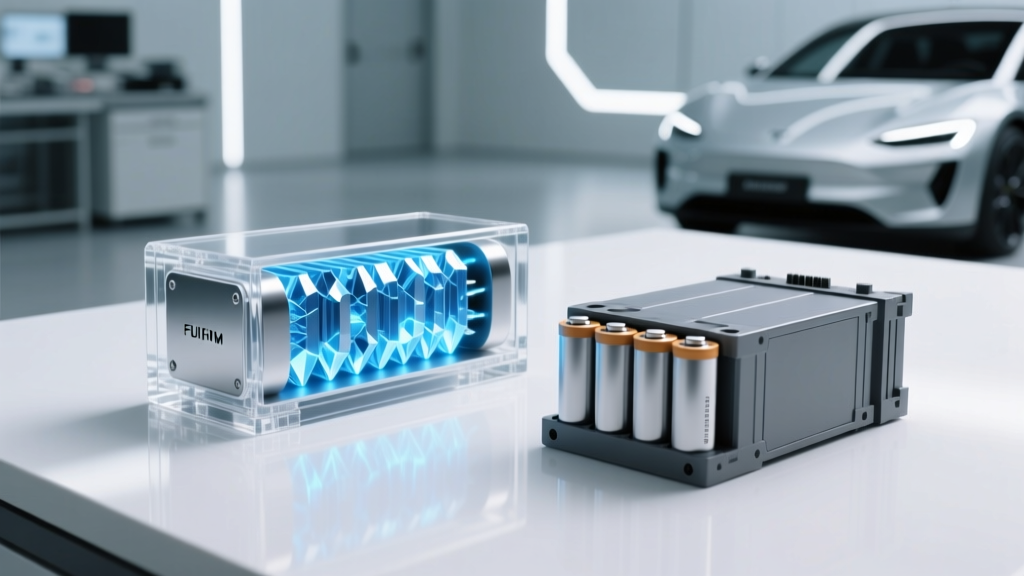
Solid-state batteries (SSB) replace the flammable liquid electrolyte with a solid ceramic, sulfide, or polymer. Benefits in lab settings include 30–50% higher energy density (enabling 400+ mile packs at current weight), 10-minute fast-charging capability, and dramatically reduced fire risk. Toyota has announced limited 2027–2028 production in Japan, with US availability unlikely before 2029–2030 and mainstream scale (multiple OEMs, multiple models, sub-$150/kWh) projected for 2031–2033.
Challenges still being solved at production scale: interfacial resistance between solid electrolyte and electrodes, mechanical cracking during charge/discharge cycles, and manufacturing yield. Pilot-line costs remain well above $200/kWh — not competitive with today's $100–$145/kWh lithium-ion packs.
Silicon-anode batteries are the nearer-term upgrade. Companies like Sila Nanotechnologies, Group14, and Enovix are shipping silicon-dominant or silicon-carbon composite anodes that boost energy density 15–25% without the manufacturing disruption of full solid-state. Expect silicon-anode packs in premium 2027–2028 models (Mercedes G-Class EV has already announced Sila cells), with broader rollout through 2030.
Sodium-ion batteries are emerging as a low-cost alternative for entry-level and commercial vehicles, with CATL shipping packs in China. US availability for passenger EVs is uncertain but plausible by 2028–2029 in budget segments.
Bottom line: if you need an EV in the next 1–3 years, buy today's chemistry. If you can wait until 2030+, solid-state and silicon-anode will likely deliver meaningful range and charging improvements — but today's packs are already good enough for 200,000+ miles of service.
EV Battery FAQ: Straight Answers to the Top Questions
How long do EV batteries last in years and miles?
Most 2026-era liquid-cooled lithium-ion packs (NMC, NCA, LFP) retain 80–90% of original capacity at 150,000 miles and 10–12 years. Many packs reach 200,000+ miles before approaching the 70% SoH warranty threshold. LFP chemistries typically outlast NMC/NCA on pure cycle count, though real-world difference is smaller than lab figures suggest.
How much does an EV battery cost to replace?
Full pack replacement ranges from ~$8,000 for a compact EV (60 kWh) to $24,000+ for a large truck or luxury sedan (130+ kWh). Module-level repair — replacing only the degraded segment — often costs $2,000–$5,000. Most owners never face this expense; the pack typically outlasts the vehicle's economic life.
What does the EV battery warranty actually cover?
Federal minimum is 8 years / 100,000 miles; many OEMs offer 10 years / 100,000 miles. Coverage triggers when pack capacity falls below a stated threshold (usually 70% of original). The warranty covers defects and abnormal degradation, not physical damage from collisions or flooding (those are handled by insurance). See fueleconomy.gov for current federal EV requirements.
How do I check and maximize my EV battery health?
Check SoH via the in-car display, OBD-II diagnostic app, or dealer service report. Maximize life by charging to 80% daily (100% OK for LFP), using Level 2 as your primary charge method, preconditioning before DC fast-charging, avoiding hot storage at high SoC, and keeping thermal management active in extreme weather.
LFP vs NMC — which is better for me?
Choose LFP if you charge at home daily, want maximum cycle life, prioritize lower cost, and don't need the longest possible single-charge range. Choose NMC if you take frequent road trips, live in a cold climate (better winter range retention), or need maximum range from a given pack weight. Both chemistries are mature, warrantied, and reliable in 2026 vehicles.
Is a solid-state ("ssd") battery EV worth waiting for?
Not for most 2026 buyers. Solid-state EVs are not yet available in the US consumer market; realistic mainstream availability is 2030–2033. Today's NMC and LFP packs already deliver 250–350 miles of real-world range, 18–25 minute 10–80% DC fast-charging, and 200,000+ mile service life. Waiting 4–7 years for solid-state means forgoing years of EV ownership savings.
Does fast-charging damage my EV battery?
Occasional DC fast-charging (road trips, a few times per month) has minimal impact. Exclusively DC fast-charging without preconditioning can accelerate degradation by 5–8% over 100,000 miles versus primarily Level 2 charging. Modern battery management systems actively limit charge rate when cells are cold or near full SoC to protect longevity — the EPA's EV myths page addresses this concern directly.
The Bottom Line for 2026 EV Buyers
The "ssd battery" hype cycle is real engineering, just not real availability. Today's EVs use mature lithium-ion chemistries — LFP for durability and value, NMC/NCA for range and performance — that reliably deliver 200,000+ miles of service with proper care. Replacement costs, while meaningful, are declining and rarely encountered by first owners. Warranty coverage is robust, and SoH monitoring tools are better than ever.
Buy the chemistry that fits your driving profile today. Take care of the pack with the checklist above. And when solid-state finally arrives at scale, you will have already banked years of fuel and maintenance savings that no future tech can retroactively deliver.