If you've been following EV news, you've likely seen the acronym SSB battery — shorthand for solid-state battery — touted as the next revolution in electric-vehicle energy storage. But what does solid-state technology actually promise, how does it compare to the lithium-ion cells powering today's EVs, and when can you realistically expect it in a driveway near you?
This guide breaks down everything EV buyers and owners need to know: from the LFP and NMC chemistries dominating 2026 model-year vehicles, to real-world degradation data, warranty coverage, replacement costs, and a clear-eyed look at where solid-state batteries actually stand. No hype, no fear-mongering — just the numbers and the engineering.
Today's EV Battery Chemistries: LFP vs NMC/NCA
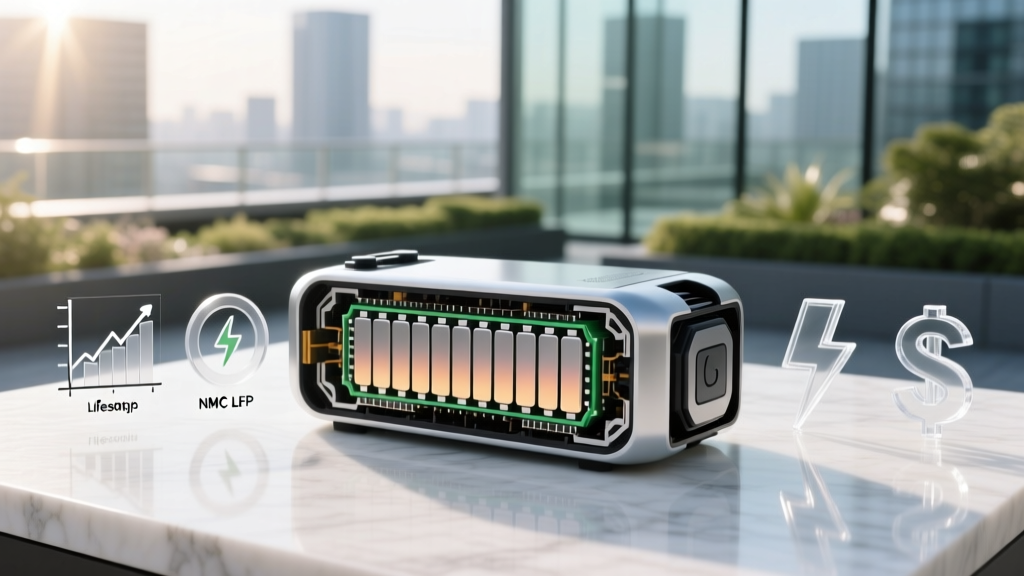
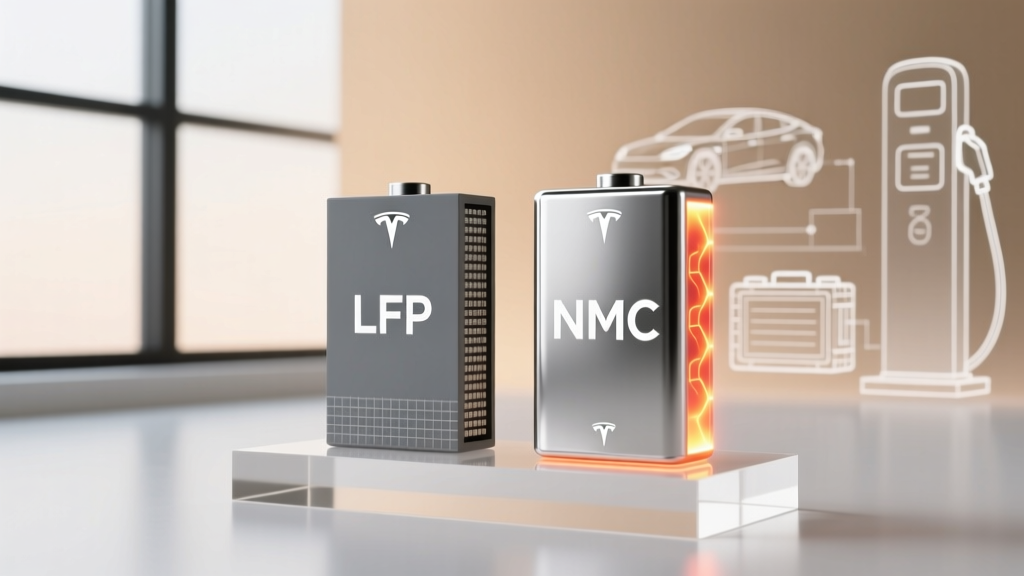
Every battery electric vehicle (BEV) sold in the U.S. in 2026 uses one of two dominant cathode chemistries in its high-voltage traction battery: Lithium Iron Phosphate (LFP) or Nickel Manganese Cobalt / Nickel Cobalt Aluminum (NMC/NCA). Understanding the trade-offs is critical before you buy.
| Attribute | LFP (LiFePO₄) | NMC / NCA |
|---|---|---|
| Energy Density | ~160–180 Wh/kg (cell-level) | ~230–300 Wh/kg (cell-level) |
| Cycle Life | 3,000–5,000+ full cycles | 1,000–2,000 full cycles |
| Cold-Weather Performance | Moderate — greater range loss below 32°F | Better — retains more capacity in freezing temps |
| Cost (per kWh) | ~$80–$100 (2026 cell pricing) | ~$110–$140 (2026 cell pricing) |
| Thermal Stability | Excellent — less prone to thermal runaway | Good — requires more robust thermal management |
| Typical Use Cases | Standard-range models, fleet vehicles, daily commuters | Long-range / performance models, cold-climate buyers |
| Notable 2026 Examples | Tesla Model 3 RWD, Ford Mustang Mach-E SR, BYD models | Hyundai Ioniq 5 LR, Rivian R1T, Chevrolet Silverado EV |
The practical takeaway: LFP is the cost-and-longevity champion. If you charge at home, drive under 200 miles daily, and want a battery that will likely outlast the car, LFP is ideal. NMC/NCA is the range-and-performance pick — better energy density means more miles in the same pack weight, and it handles DC fast charging in cold weather more gracefully.
How Long Do EV Batteries Actually Last?
This is the number-one question from prospective EV buyers, and the answer is more reassuring than the internet rumor mill suggests. Modern EV traction batteries are engineered for longevity far exceeding typical vehicle lifespans.
According to data aggregated from fleet studies and owner reports, here's what typical degradation looks like for liquid-lithium-ion packs in 2026-era EVs:
| Time / Mileage | Average Capacity Retained (NMC) | Average Capacity Retained (LFP) |
|---|---|---|
| Year 1 / ~15,000 mi | ~96–98% | ~97–99% |
| Year 3 / ~45,000 mi | ~91–94% | ~94–97% |
| Year 5 / ~75,000 mi | ~86–90% | ~91–95% |
| Year 8 / ~120,000 mi | ~80–86% | ~87–93% |
| Year 10 / ~150,000 mi | ~75–82% | ~84–90% |
Key context: The steepest degradation occurs in the first 12–18 months (typically 2–4%), after which the curve flattens significantly. This is normal lithium-ion behavior — the solid-electrolyte interphase (SEI) layer stabilizes. Data from Geotab's fleet study of 6,300+ EVs shows an average annual degradation rate of roughly 1.8% for modern packs — meaning the average EV retains about 82% capacity after a decade.
At 80% State of Health (SoH), a vehicle originally rated for 300 miles of EPA range would still deliver roughly 240 miles — still very usable for most drivers. Most EV batteries will never need replacement during typical first- or second-owner lifespans.
What the Battery Warranty Actually Covers
Federal law mandates that EV battery warranties cover a minimum of 8 years / 100,000 miles (in California Air Resources Board states, it's 10 years / 150,000 miles). But the details matter enormously.
| Manufacturer | Warranty Period | Capacity Threshold | Notes |
|---|---|---|---|
| Tesla (Model 3/Y LFP) | 8 yr / 100,000 mi | 70% retention | LFP packs historically exceed threshold easily |
| Tesla (Model 3/Y LR NMC) | 8 yr / 120,000 mi | 70% retention | Longer mileage on LR/AWD trims |
| Hyundai / Kia | 10 yr / 100,000 mi | 70% retention | Among the longest coverage periods |
| GM (Ultium platform) | 8 yr / 100,000 mi | 70% retention | Covers battery and powertrain components |
| Ford | 8 yr / 100,000 mi | 70% retention | Applies to Mach-E, F-150 Lightning |
| Rivian | 8 yr / 175,000 mi | 70% retention | Highest mileage cap among major OEMs |
Critical fine print: Warranties cover defects and excessive degradation below the stated threshold — they do not cover damage from accidents, flooding, or improper modifications. If your pack drops to 69% capacity at year 7 and 90,000 miles, the manufacturer is obligated to repair or replace it. In practice, warranty claims for degradation are rare; most packs remain well above the 70% floor.
EV Battery Replacement Costs: The Real Numbers
When replacement is needed — typically due to physical damage, manufacturing defect, or extreme high-mileage use beyond the warranty period — costs are substantial but declining.
| Vehicle / Pack Size | Battery Capacity | Estimated Replacement Cost | When Typically Needed |
|---|---|---|---|
| Tesla Model 3 RWD (LFP) | ~60 kWh | $10,000–$13,000 | Rarely — 200,000+ mi or damage |
| Tesla Model Y LR (NMC) | ~75 kWh | $13,000–$16,000 | Rarely — 200,000+ mi or damage |
| Hyundai Ioniq 5 | ~77.4 kWh | $14,000–$18,000 | Rarely — 200,000+ mi or damage |
| Ford F-150 Lightning Ext. | ~131 kWh | $22,000–$30,000 | Rarely — 200,000+ mi or damage |
| Chevrolet Bolt EV (older gen) | ~65 kWh | $9,000–$14,000 | Some early recalls; otherwise rare |
Perspective matters here. A $15,000 battery replacement sounds alarming until you compare it to a gas-engine rebuild or transmission replacement on a 200,000-mile ICE vehicle, which can easily hit $5,000–$8,000 — and that's for a component that will wear out again. EV motors have far fewer moving parts, and most owners will sell or trade the vehicle long before a pack swap is necessary. Battery cell pricing has fallen roughly 80% since 2013 according to BloombergNEF, and that trend continues to push replacement costs downward.
Factors That Accelerate (or Protect) Battery Health
Not all miles are created equal when it comes to battery wear. Here are the factors that most significantly impact long-term State of Health:
What Hurts Your Battery
- Frequent DC fast charging above 150 kW — sustained high-C-rate charging generates heat, accelerating SEI layer growth and lithium plating. Occasional road-trip fast charging is fine; daily 350 kW sessions are not.
- Regularly charging to 100% SoC and sitting — for NMC packs, prolonged storage at full charge stresses the cathode. LFP tolerates 100% better and manufacturers often recommend periodic full charges for BMS calibration.
- Deep discharges to 0% — letting the pack sit at very low SoC can cause copper dissolution in the anode current collector.
- Extreme heat exposure — prolonged parking in 110°F+ ambient temps without thermal management active accelerates degradation.
- Aggressive driving in cold weather — drawing high current from a cold pack (below ~40°F) without preconditioning risks lithium plating on the anode.
What Protects Your Battery
- Daily charging to 80% (NMC) or 100% (LFP) — follow your manufacturer's specific recommendation.
- Home Level 2 charging as your primary method — slower charging (~7–11 kW) generates far less heat than DC fast charging.
- Preconditioning before DC fast charging — most 2026 EVs do this automatically when you navigate to a charger; it warms the pack to the optimal ~95°F for rapid ion transfer.
- Moderate SoC for long-term storage — if leaving the car for weeks, set charge limit to ~50%.
- Garage parking in extreme climates — even an unheated garage buffers the pack from the worst ambient extremes.
How to Check and Monitor Your Battery's State of Health
State of Health (SoH) is expressed as a percentage — 100% being a brand-new pack, with degradation reducing that figure over time. Here's how 2026 EV owners can monitor it:
In-vehicle displays: Many modern EVs now include battery health readouts. Tesla added a Battery Health percentage in the service menu (Software 2024.38+). Hyundai/Kia's infotainment system shows SoH under the EV diagnostics tab. GM's Ultium-platform vehicles display battery health in the myChevrolet/myCadillac app.
OBD-II diagnostic tools: Devices like the OBDLink SX paired with apps such as EV Notify or LeafSpy (for Nissan Leaf) can read the battery management system's (BMS) internal SoH estimate. This is the most reliable owner-accessible method for vehicles without a built-in health display.
Dealer/service center checks: Any authorized service center can pull a detailed battery health report, including individual cell-group voltage deltas, which reveal if one module is degrading faster than the rest — a potential warranty claim trigger.
Third-party services: Companies like Recurrent Auto offer free battery health reports based on telematics data, providing fleet-benchmarking so you can see how your pack compares to thousands of identical vehicles. Their published data confirms that most EV batteries are outlasting their vehicles.
The SSB Battery Promise: Solid-State Reality Check
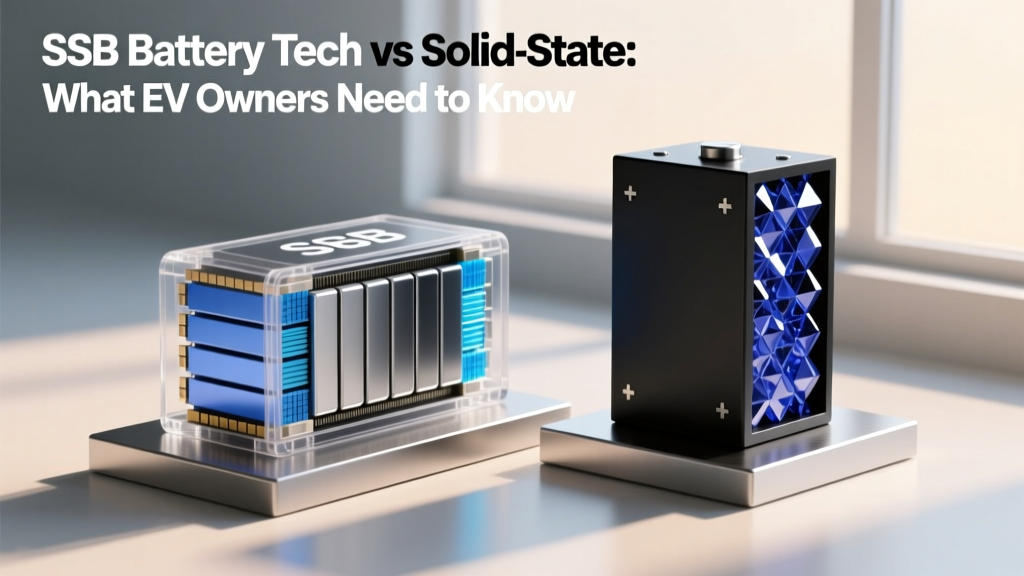
Now to the technology behind the "SSB battery" search buzz: solid-state batteries. Unlike today's lithium-ion cells, which use a liquid electrolyte to shuttle ions between cathode and anode, solid-state batteries replace that liquid with a solid material — typically a ceramic, sulfide glass, or polymer.
What Solid-State Batteries Promise (on Paper)
- Energy density: 400–500+ Wh/kg (cell-level) vs. ~250–300 Wh/kg for current NMC — potentially doubling range or halving pack weight
- Charge speed: 10–80% in under 10 minutes, enabled by higher C-rates without lithium plating risk
- Safety: No flammable liquid electrolyte — dramatically reduced thermal runaway risk
- Longevity: Projected 5,000–10,000+ cycle life due to reduced dendrite formation
- Cold performance: Solid electrolytes may maintain ionic conductivity at lower temperatures
Where things actually stand in 2026:
Toyota has announced a solid-state battery pilot in a limited-production vehicle, targeting 2027–2028 with a claimed 750 km (~466 miles) of range and 10-minute fast charging. Samsung SDI is producing solid-state prototype cells for testing with automotive partners. QuantumScape has delivered prototype cells to Volkswagen's PowerCo division for validation, but mass production remains unconfirmed beyond 2028.
Nissan, BMW, and Stellantis have all announced solid-state pilot programs, but none have committed to volume production before 2029–2030. The core challenges remain manufacturing scalability (solid electrolyte layers must be deposited at micron precision over millions of cells), cost (currently 3–5× the price of liquid lithium-ion per kWh), and long-term cycle validation.
⚠️ Reality Check: SSB Battery Availability
As of 2026, no mass-produced consumer EV uses a solid-state battery. Any vehicle you can buy today uses liquid-electrolyte lithium-ion cells (LFP or NMC/NCA). Solid-state technology is real and progressing, but commercial availability in mainstream, affordably priced EVs is realistically a 2029–2032 timeline. Be wary of marketing claims suggesting otherwise.
Silicon Anode and Other Near-Term Battery Advances
While solid-state gets the headlines, incremental advances are already improving the batteries in 2026 EVs:
Silicon-dominant anodes: Companies like Sila Nanotechnologies and Group14 are supplying silicon-composite anode materials that increase energy density by 20–40% over traditional graphite anodes. Mercedes-Benz's upcoming G-Class EV is slated to use silicon anode cells from Sila, targeting significantly higher energy density. These are shipping in limited applications now and will scale through 2027–2028.
Sodium-ion batteries: CATL has begun shipping sodium-ion cells for entry-level EVs in China. While energy density is lower (~120–150 Wh/kg), sodium is abundant and cheap, making these ideal for urban commuter vehicles. Don't expect these in U.S. long-range models, but they may appear in budget segments.
LMFP (Lithium Manganese Iron Phosphate): A hybrid chemistry blending LFP's safety and cost with higher voltage (and thus higher energy density) from manganese. Tesla and Ford are reportedly evaluating LMFP cells for next-generation standard-range vehicles.
SSB Battery FAQ: Quick Answers for EV Buyers
How long do EV batteries last in years and miles?
Most modern EV batteries (2023–2026 production) are designed to retain 70–85% of original capacity after 10 years or 150,000–200,000 miles. Fleet data shows average annual degradation of ~1.8%. LFP chemistries typically outperform NMC in cycle life. The vast majority of EV batteries will outlast the vehicle they're installed in.
How much does it cost to replace an EV battery?
Out-of-warranty replacement costs range from roughly $9,000 for a ~60 kWh pack (e.g., Tesla Model 3 RWD) to $22,000–$30,000 for large packs like the F-150 Lightning's 131 kWh unit. However, most batteries never need replacement — they remain functional well beyond 200,000 miles. Federal warranty mandates cover at least 8 years / 100,000 miles at 70% capacity retention.
What does the EV battery warranty cover?
Battery warranties cover manufacturing defects and excessive capacity loss below a stated threshold (typically 70% SoH) within the warranty period (usually 8 yr / 100,000 mi, or 10 yr / 150,000 mi in CARB states). They do not cover accident damage, flooding, unauthorized modifications, or normal wear above the threshold. Check your specific manufacturer's terms.
How do I check my EV battery's State of Health?
Many 2026 EVs display SoH in the vehicle's infotainment or service menu. You can also use OBD-II diagnostic tools with EV-specific apps, visit a dealer for a detailed cell-level report, or use free telematics services like Recurrent Auto. Monitoring SoH annually helps you spot abnormal degradation early.
LFP vs NMC — which battery chemistry is better for me?
Choose LFP if you want maximum longevity, lower cost, and primarily charge at home for daily commuting under 200 miles. Choose NMC/NCA if you need maximum range per charge, regularly drive in freezing temperatures, or frequently road-trip and need faster DC charging in cold weather. Neither is universally "better" — it depends on your use case.
When will solid-state (SSB) batteries be available in consumer EVs?
No mass-market EV with a solid-state battery is available for purchase in 2026. Toyota, Samsung SDI, QuantumScape, and others are advancing prototypes, but realistic volume production for mainstream vehicles is projected for 2029–2032. Near-term improvements (silicon anodes, LMFP) are already improving today's lithium-ion packs.
The bottom line for 2026 EV buyers: today's lithium-ion batteries — whether LFP or NMC — are proven, durable, well-warrantied, and declining in cost. The SSB battery revolution is genuinely promising, but it remains a near-future technology. Buy based on what's real and validated today, and maintain your pack properly. The data overwhelmingly shows that battery replacement anxiety is vastly overstated relative to the engineering reality.