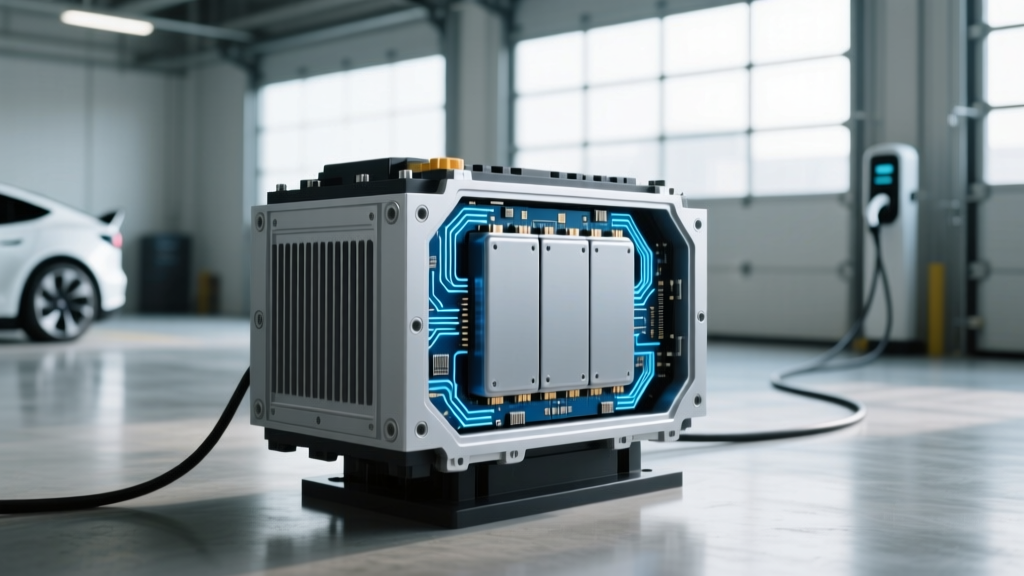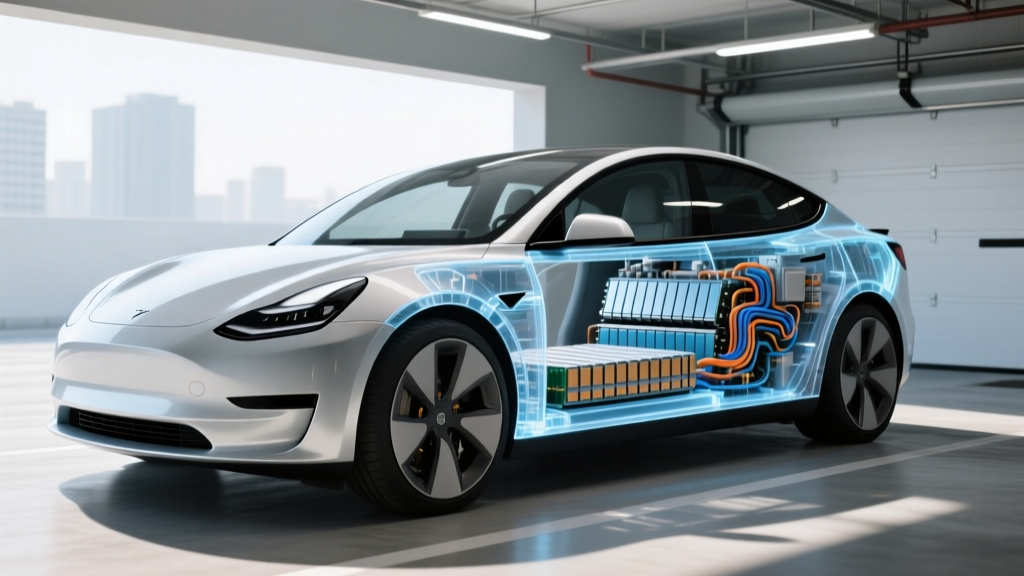
The promise of solid-state batteries — more range, faster charging, improved safety — has hovered over the EV market for years. But if you're shopping for an electric vehicle today, the chemistry under your feet is still liquid-electrolyte lithium-ion, split mainly between two camps: NMC/NCA (nickel manganese cobalt / nickel cobalt aluminum) and LFP (lithium iron phosphate). Both are mature, well-warrantied, and capable of outlasting the vehicles they power.
This guide covers what's actually on sale now, what the data says about longevity and replacement costs, and when solid-state vehicles might realistically reach US showrooms.
Current EV Battery Chemistry: LFP vs NMC/NCA Explained
Every EV sold in the US today uses a lithium-ion traction battery (not to be confused with the 12V auxiliary battery that runs lights and infotainment). The two dominant chemistries make different trade-offs:
| Attribute | LFP (Lithium Iron Phosphate) | NMC/NCA (Nickel-Based) |
|---|---|---|
| Energy Density | Lower (~160–180 Wh/kg cell-level) | Higher (~220–300 Wh/kg cell-level) |
| Typical Range Application | Standard-range / urban models | Long-range / performance models |
| Cycle Life | 3,000–5,000+ cycles to 80% SoH | 1,500–2,500 cycles to 80% SoH |
| Cold-Weather Performance | Greater range loss below 32°F; slower charging in cold | Better cold-weather energy delivery; preconditioning still recommended |
| Cost per kWh | Lower — no cobalt or nickel | Higher — commodity-priced metals |
| Thermal Stability / Safety | Excellent — higher thermal runaway threshold | Good — requires more active thermal management |
| State of Charge (SoC) Habit | Can be charged to 100% daily without significant degradation | Best kept at 80% daily; 100% for trips only |
| Notable US Vehicles (2026) | Tesla Model 3/Y RWD, base Ford Mustang Mach-E, Rivian Standard pack | Hyundai Ioniq 5/6 Long Range, Chevy Equinox EV, BMW i4, Lucid Air |
Which is better? It depends on your driving pattern. If you commute 30–50 miles daily, charge at home, and want a battery that will barely degrade over a decade, LFP is the pragmatic pick — lower cost, longer cycle life, and the convenience of 100% daily charging. If you need 300+ miles of EPA range, tow, drive in cold climates regularly, or want maximum performance, NMC/NCA delivers the energy density to make that possible in a practical vehicle weight.
How Long Do EV Batteries Actually Last?
"Battery replacement anxiety" remains one of the top objections to EV ownership, but real-world degradation data tells a reassuring story. Modern thermal management systems (liquid cooling and heating) have dramatically slowed capacity loss compared to early EVs like the 2011 Nissan Leaf.
Degradation Data Points from Real-World Fleets
Based on aggregated fleet data from sources including Recurrent Auto and manufacturer-reported warranty claims:
- Average degradation at 5 years / 75,000 miles: ~8–12% capacity loss (88–92% State of Health retained)
- Average degradation at 8 years / 120,000 miles: ~12–18% capacity loss (82–88% SoH retained)
- Projected degradation at 15 years / 200,000 miles: ~20–25% capacity loss for NMC; ~15–20% for LFP (extrapolated from cycle-life curves)
These numbers mean a 300-mile EPA-rated EV with NMC chemistry would realistically deliver roughly 250–270 miles of range at year 8 — still eminently usable for the vast majority of drivers. LFP packs in vehicles like the Tesla Model 3 RWD are showing even slower degradation curves, with some high-mileage examples retaining over 92% SoH past 100,000 miles.
Key insight: Degradation is not linear. Most packs lose 3–5% in the first year (an initial "formation" loss), then the curve flattens significantly. You won't see a steady 2% drop every year — the battery plateaus.
What Does the Battery Warranty Cover?
Federal law mandates that EV batteries carry a minimum warranty of 8 years / 100,000 miles (10 years / 150,000 miles in California Air Resources Board states). Most manufacturers exceed this floor.
| Manufacturer | Warranty Period | Capacity Retention Threshold |
|---|---|---|
| Tesla (Model 3/Y LFP) | 8 yr / 100,000 mi | 70% of original capacity |
| Tesla (Model 3/Y Long Range NMC) | 8 yr / 120,000 mi | 70% of original capacity |
| Hyundai / Kia (Ioniq 5, EV6, EV9) | 10 yr / 100,000 mi | 70% of original capacity |
| General Motors (Ultium-based: Equinox EV, Blazer EV, Silverado EV) | 8 yr / 100,000 mi | 70% of original capacity (some trims 60% on commercial) |
| Ford (Mustang Mach-E, F-150 Lightning) | 8 yr / 100,000 mi | 70% of original capacity |
| Rivian (R1T, R1S) | 8 yr / 175,000 mi (Max pack) | 70% of original capacity |
| BMW (i4, iX) | 8 yr / 100,000 mi | 70% of original capacity |
What triggers a warranty claim? If your battery's State of Health drops below the stated threshold (typically 70%) within the warranty period, the manufacturer must repair or replace it at no cost. In practice, very few packs fall below 70% within 8 years — warranty claim rates are well under 1% across major OEMs according to industry reports.
Note: The warranty covers the high-voltage traction battery, not the 12V auxiliary battery (which follows a standard 3-year/36,000-mile bumper-to-bumper term and costs $200–$400 to replace).
EV Battery Replacement Costs: When and How Much
Most EV batteries will never need replacement during typical ownership. But if you're buying a used EV out of warranty or planning to keep a vehicle past 200,000 miles, here's what the market looks like in 2026:
| Vehicle | Battery Size (kWh usable) | Chemistry | Replacement Cost Range (parts + labor) |
|---|---|---|---|
| Tesla Model 3 RWD | ~57 kWh | LFP | $10,000 – $14,000 |
| Tesla Model Y Long Range | ~75 kWh | NMC | $14,000 – $18,000 |
| Hyundai Ioniq 5 Long Range | ~77 kWh | NMC | $13,000 – $17,000 |
| Ford F-150 Lightning Extended Range | ~131 kWh | NMC | $22,000 – $30,000 |
| Chevy Equinox EV | ~85 kWh | NMC (Ultium) | $14,000 – $19,000 |
| BMW i4 eDrive40 | ~81 kWh | NMC | $16,000 – $22,000 |
When is replacement typically needed? For the vast majority of owners, never within the vehicle's useful life. Replacement becomes a consideration mainly for:
- High-mileage fleet vehicles (200,000+ miles)
- Packs that suffered physical damage (collision, flooding)
- Rare manufacturing defects outside the warranty window
Costs are trending downward. Cell-level pricing for NMC has fallen below $100/kWh at scale, and LFP cells trade around $60–75/kWh. The labor-intensive pack removal and reinstallation still adds significantly to the total bill, but remanufactured and refurbished packs are increasingly available from third-party shops, bringing costs down 20–30% versus OEM-new.
Factors That Accelerate (or Preserve) Battery Health
Not all miles age a battery equally. Here's what the electrochemistry actually cares about:
Battery Care Checklist — Maximize Your Pack's Lifespan
- Avoid sustained 100% SoC (NMC/NCA): Store and commute at 80% or below. Charge to 100% only when departing on a road trip. LFP owners can charge to 100% daily — the chemistry tolerates it well, and Tesla recommends periodic 100% charges for LFP calibration.
- Minimize DC fast-charging frequency: Occasional road-trip fast charging is fine, but daily use of 150+ kW DC chargers accelerates degradation by ~1–3% over 5 years compared to Level 2 home charging. The heat and high C-rate stress the anode.
- Precondition before fast charging: Most modern EVs do this automatically when you navigate to a charger. A cold battery (below 50°F) charged at high power suffers lithium plating — permanent capacity loss. Preconditioning warms the pack to the optimal 77–95°F window.
- Avoid prolonged storage at extreme SoC: If leaving the car for weeks, store at ~50% SoC. Don't leave it at 100% in a hot garage or at 5% in freezing temperatures.
- Use scheduled charging: Set your car to finish charging right before you leave. This minimizes time spent at high SoC, especially important for NMC.
- Park in shade/garage when possible: Sustained ambient heat (above 95°F for weeks) accelerates calendar degradation even when the car isn't driven.
What About Fast Charging?
The data on DC fast charging (DCFC) impact has become clearer. Studies from Idaho National Laboratory found that exclusive DCFC use (versus Level 2) resulted in roughly 5–8% additional capacity loss over 50,000 miles — meaningful but not catastrophic. For most owners who mix home Level 2 charging with occasional road-trip DCFC, the effect is negligible within the warranty period.
How to Check Your EV's Battery Health (State of Health)
State of Health (SoH) is the percentage of original capacity your battery can still hold. A new battery is 100% SoH; one that holds 77 kWh of its original 84 kWh is at ~91.7% SoH.
Methods to Check SoH
- In-car display (limited): Some vehicles (Tesla via the service menu, Hyundai/Kia via the infotainment diagnostics page) show an approximate SoH percentage. Accuracy varies — treat it as a trend indicator, not a lab measurement.
- OBD-II diagnostic tools: Devices like the OBDLink SX paired with apps such as LeafSpy (Nissan), Scan My Tesla, or Carista can pull the battery management system's (BMS) reported SoH and individual cell voltage deltas.
- Dealer diagnostic report: Any authorized service center can run a full battery health report, often free during routine service. This is the most reliable method and is what warranty claims are based on.
- Third-party services: Companies like Recurrent offer battery health reports based on telematics data, useful when evaluating a used EV purchase.
What to look for in a used EV: Request a SoH reading before purchase. Anything above 88% at 60,000–80,000 miles is normal and healthy. Below 80% with under 100,000 miles may signal an impending warranty claim — which could be a good thing (free replacement) or a headache (dispute with the manufacturer).
When Will Solid-State Vehicles Be Sold in the US?
Solid-state batteries replace the liquid electrolyte in current lithium-ion cells with a solid material (ceramic, sulfide, or polymer). The theoretical advantages are significant:
- Higher energy density (potentially 400+ Wh/kg at the cell level, versus ~260–300 Wh/kg for current NMC)
- Faster charging without lithium plating risk (the solid electrolyte resists dendrite formation)
- Improved safety (no flammable liquid electrolyte)
- Wider operating temperature range
But the engineering challenges — manufacturing yield, interfacial resistance between solid layers, cost scaling — have pushed timelines repeatedly. Here's the realistic outlook as of 2026:
Solid-State Timeline: Manufacturer Commitments
- Toyota: Has announced a solid-state battery targeting 2027–2028 production, initially in limited-run vehicles sold in Japan. US availability is not confirmed before 2029–2030, and initial volumes will be very low (likely a premium Lexus model). Toyota holds the most solid-state patents globally but has a history of delaying timelines.
- Samsung SDI: Targeting 2027 mass production of all-solid-state cells, with Hyundai Motor Group as a likely early customer. US-market vehicles with Samsung SDI solid-state cells are realistically 2029+ models.
- Nissan: Announced a pilot production line for solid-state batteries in 2025, with a production vehicle targeted for fiscal year 2028 (ending March 2029). US availability would follow, likely 2030+.
- QuantumScape: The US-based startup (backed by Volkswagen) continues to ship prototype cells to OEM partners. VW's PowerCo division is evaluating them, but no production vehicle with QuantumScape cells is confirmed for US sale before 2029 at the earliest.
- Solid Power: Partnered with BMW and Ford for prototype testing. BMW has indicated a solid-state demonstrator vehicle by 2025–2026, but production-scale US vehicles are 2030+.
The honest answer: If you're asking when solid-state vehicles will be sold in the US in meaningful volumes (multiple models, available at dealerships, not limited-edition flagships), the answer is 2030–2032 at the earliest. Early adopters may see limited-run models from Toyota or Hyundai in the 2028–2029 window, but at premium pricing and restricted availability.
Bridge Technologies Arriving Sooner
Before full solid-state arrives, expect incremental improvements already in production or near-production:
- Silicon-dominant anodes: Companies like Sila Nanotechnologies and Group14 are supplying silicon-carbon anode materials that boost energy density 15–20% within existing liquid-electrolyte cells. These are appearing in 2025–2026 model-year vehicles (Mercedes-Benz G 580 EQ uses a Sila anode).
- Semi-solid-state cells: A hybrid approach using a small amount of liquid electrolyte with solid separators. NIO in China is deploying 150 kWh semi-solid packs; US availability depends on whether Chinese suppliers export the technology.
- LFP improvements: CATL's second-generation LFP cells and LMFP (lithium manganese iron phosphate) variants are closing the energy-density gap with NMC at lower cost, likely appearing in US-market standard-range models by 2027.
Frequently Asked Questions
How long do EV batteries last in years and miles?
Based on current fleet data, most EV batteries retain 80–88% of original capacity at 8 years / 100,000–120,000 miles. Many will outlast 15 years and 200,000 miles before dropping below the 70% threshold that typically defines end-of-automotive-life. The vehicle's body, suspension, or electronics are more likely to fail first.
How much does an EV battery cost to replace in 2026?
Replacement costs range from approximately $10,000 for a smaller LFP pack (Tesla Model 3 RWD, ~57 kWh) to $30,000 for a large NMC pack (F-150 Lightning Extended Range, ~131 kWh), including parts and labor. Most owners will never face this expense — the battery is covered under warranty for 8–10 years, and degradation data shows most packs don't need replacement within a typical ownership cycle.
What does the federal EV battery warranty require?
US federal law mandates a minimum of 8 years / 100,000 miles of battery coverage (10 years / 150,000 miles in CARB states). Manufacturers warrant that the battery will retain at least 70% of its original capacity during this period. If it drops below that threshold, the manufacturer repairs or replaces it at no cost to the owner.
LFP vs NMC — which battery chemistry should I choose?
Choose LFP if you want maximum cycle life, lower cost, the convenience of daily 100% charging, and you don't need 300+ miles of range. Choose NMC/NCA if you need long range, better cold-weather performance, faster DC charging in cold conditions, or maximum power output. Neither is "better" universally — they serve different use cases.
Will solid-state batteries make current EVs obsolete?
Not immediately. Even when solid-state reaches production scale (likely 2030+), it will debut in premium vehicles at high prices. Current LFP and NMC batteries will remain cost-competitive for mainstream vehicles for years afterward, much as lithium-ion coexisted with lead-acid for decades. If a current-generation EV meets your needs, waiting for solid-state means a minimum 4–6 year delay with no guarantee of affordable pricing at launch.
How do I check my EV battery's State of Health?
Use your vehicle's built-in diagnostics menu (availability varies by brand), an OBD-II scanner with EV-compatible software (Scan My Tesla, LeafSpy, Carista), or request a battery health report from your dealer. For used-EV purchases, a dealer diagnostic report or a third-party service like Recurrent provides the most reliable SoH reading.