Why Everyone Is Talking About Solid-State Batteries
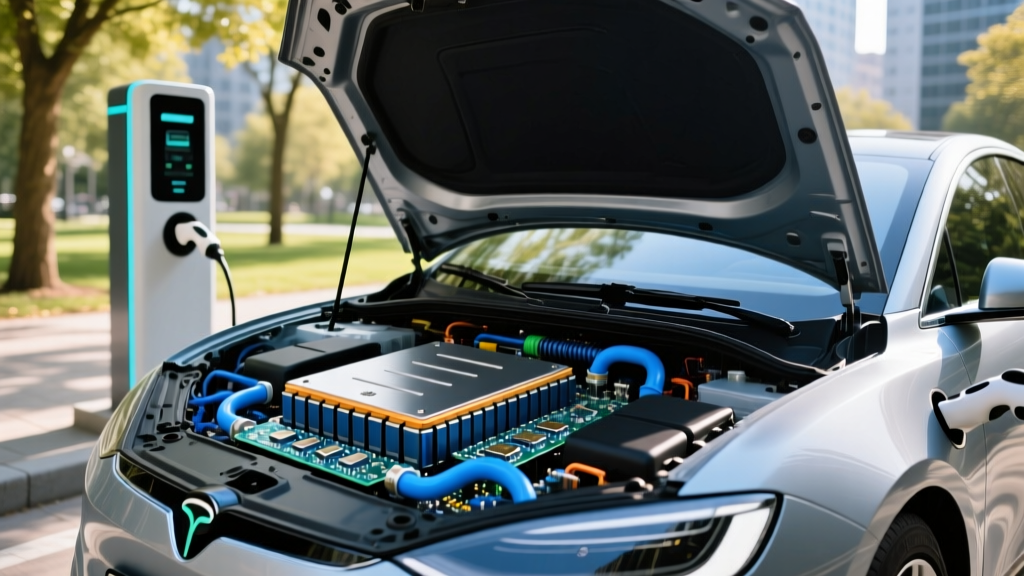
If you've been researching your next EV purchase, you've probably encountered the phrase battery solid state in headlines promising a revolution in range and charging speed. Toyota, Nissan, Samsung SDI, and several well-funded startups have all announced solid-state battery programs targeting the late 2020s. The technology genuinely represents a step-change in energy storage — but as of 2026, no mass-production vehicle on sale in the United States uses a solid-state traction battery.
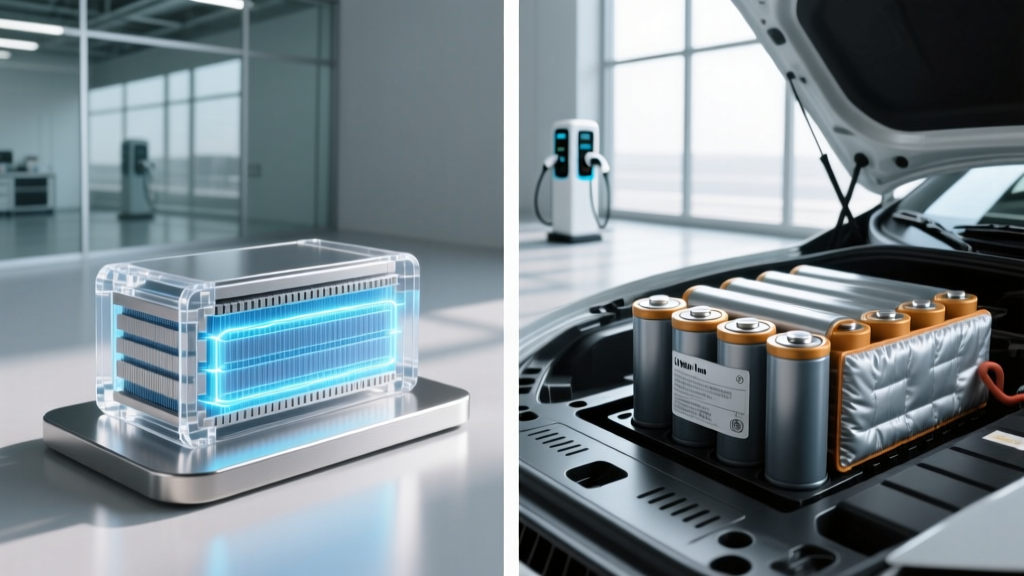
What you can buy right now are vehicles with highly refined lithium-ion batteries in two dominant chemistries: NMC (nickel manganese cobalt) and LFP (lithium iron phosphate). Both have proven track records spanning hundreds of thousands of real-world miles. Understanding what's available today — and what solid-state might deliver tomorrow — is essential before you sign a purchase agreement or delay a buy waiting for a technology that may be years from your driveway.
Today's Battery Chemistries: LFP vs NMC/NCA Explained
The high-voltage traction battery in every mainstream 2026 EV uses one of two lithium-ion cathode chemistries. The 12V auxiliary battery that powers lights and infotainment is a separate, conventional unit — this guide covers only the main propulsion battery measured in tens of kWh.
| Attribute | LFP (Lithium Iron Phosphate) | NMC / NCA (Nickel-based) |
|---|---|---|
| Energy Density | ~160–180 Wh/kg (lower) | ~230–280 Wh/kg (higher) |
| Typical Cycle Life | 3,000–5,000+ cycles to 80% SoH | 1,500–2,500 cycles to 80% SoH |
| Cold-Weather Performance | Moderate; loses more range below 32°F | Better low-temp conductivity |
| Thermal Stability | Excellent; less prone to thermal runaway | Good but requires more active cooling |
| Cost per kWh | ~$80–$100 (lower) | ~$110–$140 (higher) |
| Recommended Charge Habit | Can charge to 100% daily | Best kept 20–80% for daily use |
| Example 2026 Vehicles | Tesla Model 3 RWD, Model Y RWD, Ford Mustang Mach-E Select (LFP option) | Hyundai Ioniq 5, Kia EV6, Chevy Equinox EV, BMW i4, Tesla Long Range/Performance trims |
Which Chemistry Is Better for You?
Choose LFP if: You want maximum cycle life, plan to keep the vehicle 10+ years, charge at home nightly to 100%, and don't need the absolute longest single-charge range. LFP's lower energy density means a slightly heavier or physically larger pack for the same kWh, but Tesla's structural battery pack engineering has largely offset this in the Model 3 and Model Y RWD trims.
Choose NMC/NCA if: You prioritize maximum range per charge, frequently drive in cold climates, need faster DC fast-charging peak rates, or want a lighter vehicle. NMC packs deliver more energy in a smaller, lighter package — critical for larger SUVs and trucks like the Rivian R1S or Ford F-150 Lightning Extended Range.
How Long Do EV Batteries Actually Last?
Based on fleet data aggregated by Geotab's analysis of over 10,000 EVs, the average modern lithium-ion traction battery loses approximately 1.8% to 2.3% of its original capacity per year under typical mixed-use conditions. That translates to roughly 85–90% State of Health (SoH) after eight years for most NMC packs, and 90–95% for LFP packs driven similarly.
Typical Degradation Curve by Milestone
| Time / Mileage | Avg. SoH (NMC) | Avg. SoH (LFP) | Notes |
|---|---|---|---|
| Year 1 / ~12,000 mi | ~97–98% | ~98–99% | Initial calibration drop |
| Year 3 / ~36,000 mi | ~93–95% | ~95–97% | Linear degradation phase |
| Year 5 / ~60,000 mi | ~90–92% | ~93–95% | Most owners report minimal perceived change |
| Year 8 / ~100,000 mi | ~85–88% | ~90–93% | Warranty threshold period |
| Year 12 / ~150,000 mi | ~80–85% | ~87–91% | Battery still functional; range reduced |
Sources: Geotab fleet data, Recurrent Auto battery reports, manufacturer warranty disclosures. Individual results vary based on climate, charging habits, and thermal management system quality.
The critical insight: most EV batteries outlast the vehicles they're installed in. The average age of a scrapped passenger vehicle in the U.S. is roughly 12 years. A well-maintained EV battery at year 12 with 80–85% SoH still provides usable daily range — a 300-mile EPA-rated vehicle would retain approximately 240–255 miles of range, which covers the vast majority of daily driving needs.
What the Battery Warranty Actually Covers
Federal law mandates a minimum battery warranty of 8 years / 100,000 miles for all EVs sold in the United States (10 years / 150,000 miles in California and states adopting CARB standards). But the details matter enormously.
| Manufacturer | Warranty Period | Capacity Threshold | What Triggers a Claim |
|---|---|---|---|
| Tesla (Model 3/Y RWD — LFP) | 8 yr / 100,000 mi | 70% retention | SoH drops below 70% as measured by Tesla diagnostics |
| Tesla (Long Range/Performance) | 8 yr / 120,000 mi | 70% retention | Same threshold; higher mileage coverage |
| Hyundai / Kia (E-GMP platform) | 10 yr / 100,000 mi | 70% retention | Measured via dealer diagnostic scan |
| General Motors (Ultium platform) | 8 yr / 100,000 mi | 70% retention | Diagnostic-verified capacity loss |
| Ford (Mach-E, F-150 Lightning) | 8 yr / 100,000 mi | 70% retention | Dealer-measured SoH below threshold |
| BMW (i4, iX, i7) | 8 yr / 100,000 mi | 70% retention | BMW diagnostic assessment required |
Key warranty nuances buyers miss:
- The 70% threshold is a floor, not a target. A battery at 71% SoH is considered "within spec" even though you've lost nearly a third of your original range. In practice, very few batteries hit this threshold within the warranty period based on current degradation data.
- Warranty covers defects and abnormal degradation, not normal wear. If your battery degrades from 100% to 75% over 8 years of normal use, that's considered expected wear. A claim is only valid if SoH drops below the stated threshold.
- Replacement may use a refurbished pack. Most manufacturers reserve the right to replace a warrantied battery with a remanufactured unit of equivalent capacity and function — not necessarily a brand-new pack.
- Warranty is tied to the vehicle, not the owner. It transfers to subsequent owners, which supports resale value.
EV Battery Replacement Cost: What to Budget For
Out-of-warranty battery replacement is the single biggest fear among prospective EV buyers. Here's what the numbers actually look like in 2026, based on manufacturer service bulletins and independent shop data.
| Vehicle | Battery Size (kWh) | Chemistry | Estimated Replacement Cost |
|---|---|---|---|
| Tesla Model 3 RWD | ~60 kWh | LFP | $12,000–$16,000 |
| Tesla Model Y Long Range | ~82 kWh | NMC | $16,000–$22,000 |
| Hyundai Ioniq 5 | 77.4 kWh | NMC | $15,000–$20,000 |
| Chevy Equinox EV | ~85 kWh | NMC (Ultium) | $14,000–$19,000 |
| Ford F-150 Lightning Ext. Range | ~131 kWh | NMC | $22,000–$30,000 |
| Rivian R1S (Max Pack) | ~149 kWh | NMC | $25,000–$32,000 |
Costs include battery pack and labor. Prices vary by region, dealer vs. independent shop, and parts availability. Module-level repair (replacing individual failed modules rather than the entire pack) can reduce costs by 40–60% on platforms that support it, such as GM's Ultium architecture.
When is replacement typically needed? In most cases, it isn't — at least not during the vehicle's practical lifespan. Based on current data, a full battery replacement due to degradation alone (not accident damage or manufacturing defect) is statistically rare before 200,000+ miles. The vehicles most likely to need one are high-mileage fleet vehicles, rideshare cars accumulating 50,000+ miles annually, or early-generation EVs (pre-2018) with less sophisticated thermal management.
Factors That Accelerate (or Preserve) Battery Life
Not all miles are equal when it comes to battery wear. Research from the National Renewable Energy Laboratory (NREL) and real-world fleet data from Recurrent Auto identify several high-impact factors:
What Accelerates Degradation
- Frequent DC fast charging above 150 kW: Occasional road-trip fast charging has minimal impact, but daily reliance on 250–350 kW DC chargers generates sustained high temperatures that stress cell chemistry. Vehicles that DC fast-charge more than 3 times per week show approximately 0.5–1.0% additional annual degradation versus those charging primarily on Level 2.
- Regularly charging NMC to 100% and holding it there: NMC cells experience the most stress at the top and bottom of their charge range. Leaving an NMC vehicle plugged in at 100% for days (such as before a trip) accelerates calendar aging.
- Extreme heat exposure without preconditioning: Ambient temperatures above 95°F combined with aggressive driving and fast charging create compounding thermal stress. Vehicles with active liquid cooling (Tesla, Hyundai E-GMP, GM Ultium) handle this far better than passively cooled packs.
- Deep discharges below 10%: Regularly running the battery to near-zero stresses the anode. Most BMS systems maintain a hidden bottom buffer, but repeatedly hitting the dashboard's "0%" warning still adds wear.
What Preserves Battery Health
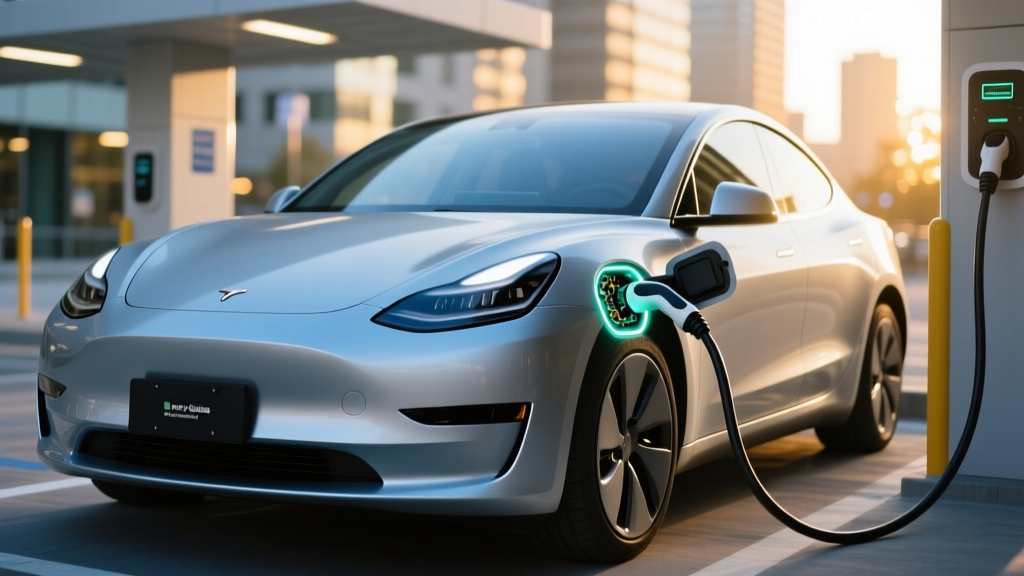
- Level 2 home charging as your primary routine — 7–11 kW charging generates minimal heat compared to 150+ kW DC
- Set NMC charge limit to 80% for daily use — use the vehicle's built-in charge-limit setting (100% only for road trips)
- LFP owners: charge to 100% at least once per week — this allows the BMS to recalibrate cell balancing; LFP chemistry tolerates full charge without accelerated wear
- Use preconditioning before DC fast charging — navigate to a charger using the vehicle's built-in routing (Tesla, Hyundai, GM) to trigger battery thermal preconditioning automatically
- Park in shade or a garage during summer — reducing soak temperature by even 10°F meaningfully slows calendar degradation
- Avoid storing the vehicle at 100% or 0% SoC for extended periods — if leaving for a vacation, set the charge limit to 50–60%
How to Check and Monitor Your Battery's State of Health
State of Health (SoH) is expressed as a percentage of the battery's original usable capacity. A new battery starts at 100% SoH; at 70% SoH, it holds 70% of its original kWh. Here's how to track it:
Built-In Vehicle Tools
- Tesla: The Service menu (accessible via the app or in-car) displays estimated range at 100% charge, which you can compare to the original EPA figure. Tesla's internal BMS logs detailed SoH data accessible during service visits.
- Hyundai/Kia (E-GMP): The EV-specific menu in the infotainment system shows a battery health indicator. Dealers can pull a detailed SoH report via the KDS diagnostic tool.
- GM (Ultium): The myChevrolet/myCadillac app displays estimated range; OnStar diagnostics can provide a battery health summary on request.
- Ford: The FordPass app provides battery health status, and dealers can run a full SoH diagnostic.
Third-Party and OBD-II Tools
For more granular data, devices like the OBDLink SX or Car Scanner ELM OBD2 app can read the battery management system's reported SoH value on many vehicles. Some EV-specific platforms, such as ABRP (A Better Route Planner), integrate SoH estimation based on your actual charging data. The most accurate measurement remains a dealer-level diagnostic that performs a controlled discharge test — consider requesting one during routine service visits, especially as you approach the warranty's mileage threshold.
Solid-State Batteries: What's Realistic and When
Solid-state batteries replace the liquid electrolyte in today's lithium-ion cells with a solid material — typically a ceramic, sulfide glass, or polymer. This change promises several advantages:
- Higher energy density: Potential for 350–500 Wh/kg at the cell level (vs. ~230–280 for today's NMC), enabling 500+ mile ranges in compact packages
- Faster charging: Solid electrolytes may tolerate charge rates of 4C–6C without lithium plating, theoretically enabling 10–80% charges in under 10 minutes
- Improved safety: No flammable liquid electrolyte reduces thermal runaway risk
- Wider operating temperature range: Better cold-weather performance is expected
The Reality Check: 2026 Status
As of early 2026, solid-state batteries remain in pilot production and limited pre-commercial testing. Here's where major programs stand:
- Toyota: Has announced plans for a solid-state-equipped vehicle in limited production by 2027–2028, initially in Japan. U.S. availability is unconfirmed and likely not before 2029 at the earliest.
- Samsung SDI: Operating a pilot line targeting 2027 production start; automotive customers not publicly confirmed for U.S. models.
- QuantumScape: Continuing to ship prototype cells to automotive partners (Volkswagen group among them) for validation. Commercial-scale manufacturing remains in development.
- Nissan: Has announced a solid-state pilot plant, targeting a production vehicle around 2028–2029.
Bottom line for buyers: Solid-state battery technology is real and progressing, but it will not be available in a vehicle you can purchase at a U.S. dealership before 2028–2029 at the earliest — and likely only in limited, premium-priced models initially. If you need an EV in 2026, today's LFP and NMC batteries are mature, well-warrantied, and demonstrably long-lasting. Waiting for solid-state means waiting at minimum 3–4 years for initial limited availability, with affordable mainstream adoption likely in the 2030–2032 timeframe.
Other Emerging Battery Tech to Watch
Silicon-dominant anodes (from companies like Sila Nanotechnologies and Group14) are closer to market — expected in select 2027–2028 models — and offer a 20–40% energy density improvement by replacing graphite anodes with silicon composites. This is an incremental but meaningful upgrade to existing lithium-ion architecture, not a full platform change like solid-state. Sodium-ion batteries from CATL are entering low-cost, short-range vehicle segments in China but are not expected in U.S.-market vehicles in the near term due to their lower energy density.
Frequently Asked Questions
How long do EV batteries last in years and miles?
Based on fleet data from Geotab and Recurrent Auto, modern EV batteries (2020 and newer) retain approximately 85–93% of their original capacity after 8 years / 100,000 miles, depending on chemistry and usage patterns. LFP batteries tend to degrade more slowly than NMC. Most batteries remain functional well beyond 200,000 miles with 75–85% SoH — still providing adequate daily range for most drivers.
How much does an EV battery cost to replace?
Full pack replacement costs range from approximately $12,000 for a Tesla Model 3 RWD (LFP, ~60 kWh) to $30,000+ for a Ford F-150 Lightning Extended Range (~131 kWh NMC). Module-level repairs on platforms like GM's Ultium can cost significantly less. In practice, battery replacement due to degradation is rare during the vehicle's first 10–12 years. Most replacements occur due to collision damage, which is covered by insurance.
What does the EV battery warranty actually cover?
Federal law requires a minimum 8-year / 100,000-mile battery warranty (10/150,000 in CARB states). The warranty covers capacity loss below a stated threshold — typically 70% of original capacity. If your battery's SoH drops below 70% within the warranty period, the manufacturer will repair or replace it (potentially with a refurbished pack). Normal gradual degradation above the threshold is not covered.
How do I check my EV's battery health?
Most EVs provide a battery health indicator in the infotainment system or companion app. For a precise SoH reading, request a dealer diagnostic scan during routine service. Third-party OBD-II readers can also pull BMS-reported SoH data on many models. Compare your vehicle's current estimated full-charge range to its original EPA rating as a quick sanity check — a 310-mile EPA vehicle showing 280 miles at 100% has roughly 90% SoH (accounting for normal variation).
LFP vs NMC — which battery chemistry is better?
Neither is universally better; they serve different priorities. LFP offers longer cycle life (3,000–5,000+ cycles), lower cost, better thermal safety, and the convenience of daily 100% charging — ideal for commuters and long-term owners. NMC offers higher energy density (longer range in a lighter, smaller pack), better cold-weather performance, and faster peak DC charging rates — ideal for road-trippers, cold-climate drivers, and larger vehicles. Check the specific trim you're buying; many manufacturers offer both chemistries across their lineup.
Should I wait for solid-state batteries before buying an EV?
For most buyers, no. Solid-state batteries are not expected in U.S.-market vehicles before 2028–2029 at the earliest, and initial availability will be limited and premium-priced. Today's LFP and NMC batteries offer proven longevity (85–93% SoH at 8 years), strong warranties, and declining costs. If you need a vehicle now, the technology is mature enough to buy with confidence. If your current vehicle serves you well and you can wait 4+ years, solid-state may offer meaningful range and charging improvements — but mainstream affordability will take longer.