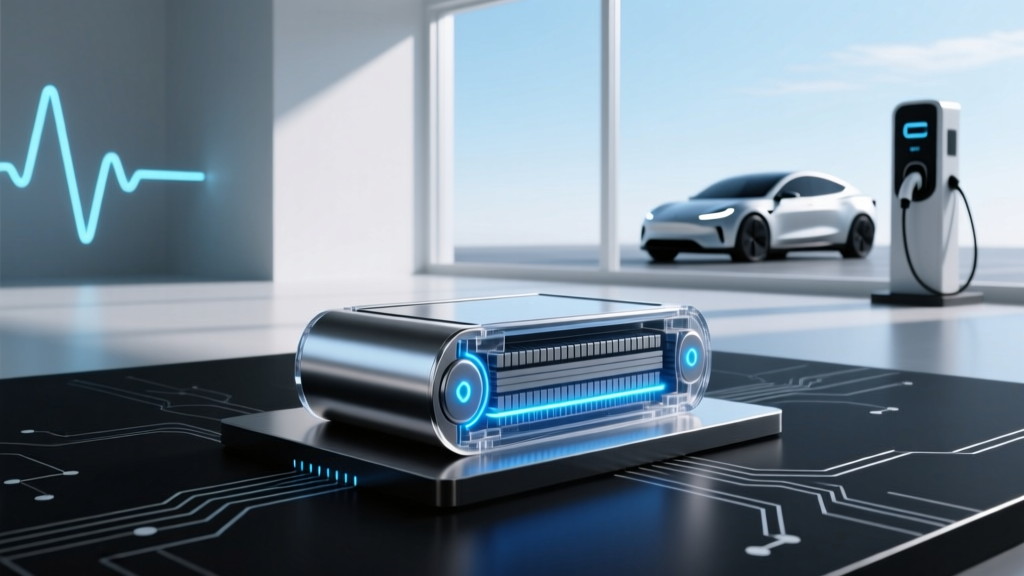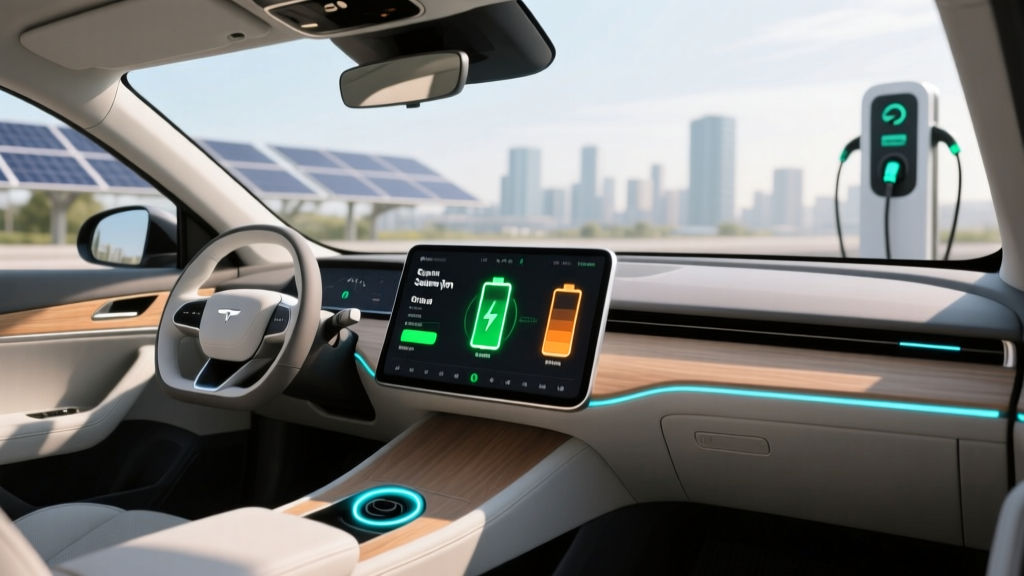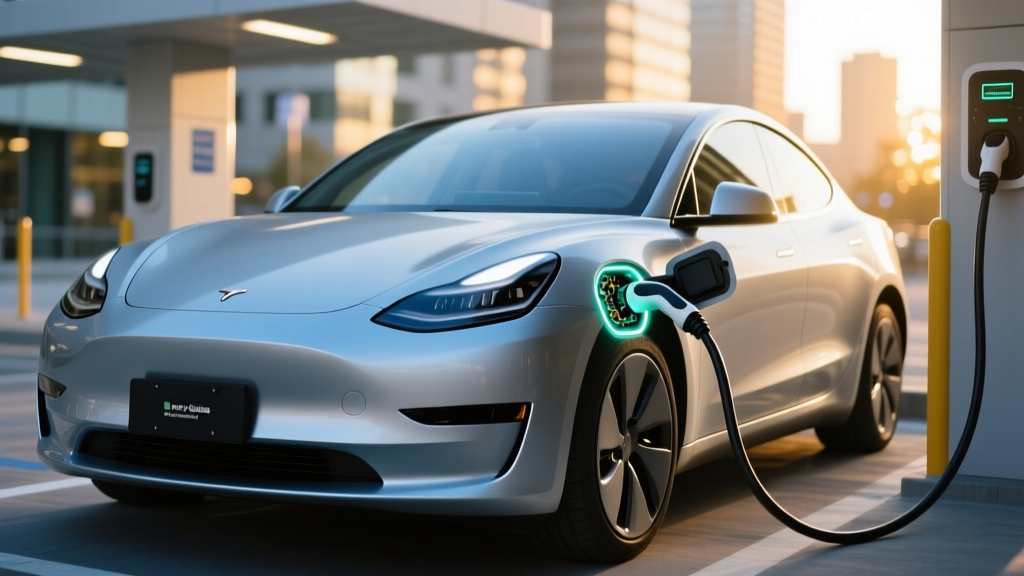
Electric vehicle batteries are engineered to last well beyond 150,000 miles with proper care, but how you charge and maintain them significantly impacts long-term performance. This guide covers the battery charging how to practices that preserve capacity, explains chemistry trade-offs, and provides real degradation data to set realistic expectations.
Battery Chemistry: LFP vs NMC/NCA Trade-offs
The two dominant lithium-ion chemistries in 2026 EVs—lithium iron phosphate (LFP) and nickel manganese cobalt (NMC) or nickel cobalt aluminum (NCA)—offer distinct advantages depending on your priorities.
| Characteristic | LFP (Lithium Iron Phosphate) | NMC/NCA (Nickel-based) |
|---|---|---|
| Energy Density | Lower (~160-180 Wh/kg) | Higher (~220-260 Wh/kg) |
| Cycle Life | 3,000-5,000+ cycles to 80% capacity | 1,500-2,500 cycles to 80% capacity |
| Cold Performance | Reduced range in freezing temps (15-25% loss) | Better cold-weather efficiency (10-20% loss) |
| Cost | Lower ($100-120/kWh in 2026) | Higher ($130-160/kWh in 2026) |
| Thermal Stability | Excellent (less prone to thermal runaway) | Good (requires robust BMS) |
| Charging to 100% | Safe for daily use | Best kept at 80-90% daily |
| Typical Applications | Tesla Model 3/Y RWD, standard-range EVs | Long-range, performance models |
Which is better? LFP excels for daily commuting with superior cycle life and lower cost, making it ideal for drivers who charge at home and prioritize longevity. NMC/NCA delivers more range per kilogram, better cold-weather performance, and faster charging—better for road trips and northern climates. Neither chemistry is universally superior; the choice depends on your driving patterns and climate.
How Long Do EV Batteries Last?
Modern EV batteries typically last 15-20 years or 150,000-200,000 miles before degrading to 70-80% of original capacity. This doesn't mean the battery fails—it simply holds less energy, reducing range proportionally.
Real-World Degradation Data:
- Year 1-2: 2-5% capacity loss (initial formation period)
- Year 3-5: 1-2% annual loss (steady-state degradation)
- Year 6-10: 0.5-1.5% annual loss
- 100,000 miles: Typical 8-12% total degradation
- 150,000 miles: Typical 12-18% total degradation
According to Recurrent Auto's 2025 battery study analyzing over 15,000 EVs, most modern batteries retain 90-95% capacity after 50,000 miles and 85-90% after 100,000 miles. Tesla's 2025 Impact Report shows Model 3/Y batteries retain approximately 88% capacity at 150,000 miles.
Factors accelerating degradation include frequent DC fast charging (especially above 150 kW), sustained high state of charge (90-100%), extreme heat exposure, and aggressive acceleration patterns. Batteries in hot climates like Arizona or Texas may degrade 2-4% faster over 10 years compared to temperate regions.
Battery Warranty Coverage Explained
Federal law mandates minimum 8-year/100,000-mile battery warranties for EVs, but manufacturers often exceed these requirements. Warranties cover defects and excessive capacity loss, typically defined as falling below 70% of original capacity.
| Manufacturer | Warranty Period | Capacity Threshold | Notes |
|---|---|---|---|
| Tesla (Model 3/Y) | 8 years / 120,000 miles (RWD) 8 years / 120,000 miles (AWD/LR) |
70% retention | LFP batteries in RWD models |
| Hyundai/Kia | 10 years / 100,000 miles | 70% retention | Industry-leading coverage |
| Ford (Mach-E, F-150 Lightning) | 8 years / 100,000 miles | 70% retention | Covers battery components |
| GM (Ultium platform) | 8 years / 100,000 miles | 70% retention | Modular design allows partial replacement |
| Volkswagen ID.4 | 8 years / 100,000 miles | 70% retention | Includes thermal management system |
Warranty claims require diagnostic verification by authorized service centers. Most manufacturers use onboard battery management system (BMS) data to assess state of health (SoH). If your battery falls below the threshold within the warranty period, the manufacturer will repair or replace it at no cost.
Battery Replacement Costs and When Needed
Most EV batteries outlive the vehicle itself, but replacements become necessary in rare cases of manufacturing defects, accident damage, or extreme degradation beyond warranty coverage.
| Battery Size | Typical Models | Replacement Cost Range | Labor (Additional) |
|---|---|---|---|
| 50-60 kWh | Chevy Bolt, Nissan Leaf, base Model 3 RWD | $8,000 - $12,000 | $1,500 - $2,500 |
| 75-85 kWh | Model 3/Y Long Range, Mustang Mach-E, ID.4 | $12,000 - $18,000 | $1,500 - $2,500 |
| 90-100 kWh | Model S/X, F-150 Lightning Extended, Rivian R1T | $18,000 - $25,000 | $2,000 - $3,500 |
| 100+ kWh | Hummer EV, Cybertruck, Lucid Air | $25,000 - $35,000 | $2,500 - $4,000 |
These costs have declined approximately 40% since 2020 due to manufacturing scale and improved cell design. Some manufacturers like GM and Ford use modular battery packs allowing individual module replacement for $2,000-$5,000 instead of full pack replacement.
When is replacement typically needed? Very rarely before 150,000 miles. Most replacements occur due to collision damage, manufacturing defects (covered under warranty), or in vehicles exceeding 200,000 miles with 20-30% degradation making range impractical for the owner's needs.
Battery Charging How To: Best Practices for Longevity
Daily Charging Habits:
- NMC/NCA batteries: Set charge limit to 80-90% for daily use; reserve 100% for road trips
- LFP batteries: Safe to charge to 100% regularly; Tesla recommends 100% at least weekly for calibration
- Avoid sustained low SoC: Don't leave battery below 20% for extended periods (weeks)
- Precondition when possible: Use scheduled departure to warm battery before driving in cold weather
DC Fast Charging:
- Limit frequent use of 150+ kW chargers; use for road trips, not daily charging
- Charging from 10-80% is faster than 80-100% due to charge curve taper
- Precondition battery before fast charging (most EVs do this automatically when navigating to charger)
- Occasional fast charging (1-2 times per week) shows minimal impact on degradation
Temperature Management:
- Park in shade or garage during extreme heat (above 95°F)
- Use battery preconditioning in cold weather (below 32°F)
- Avoid fast charging when battery is extremely hot or cold without preconditioning
- Active thermal management systems (liquid cooling/heating) significantly reduce temperature-related degradation
Monitoring Battery Health (State of Health)
State of Health (SoH) represents your battery's current maximum capacity compared to its original capacity when new. Most EVs provide SoH data through the vehicle's infotainment system or mobile app.
How to check SoH:
- Tesla: Service menu > Battery Health (requires service mode access) or third-party apps like TeslaFi
- Hyundai/Kia: EV settings menu displays battery health percentage
- Ford: FordPass app shows estimated range and battery condition
- General Motors: myChevrolet/myCadillac apps provide battery health metrics
- OBD-II tools: Devices like OBDeleven or manufacturer-specific scanners can read BMS data
Track your SoH every 6-12 months or every 10,000 miles. Normal degradation appears as gradual decline (1-2% annually after year 2). Sudden drops or inconsistent readings warrant service center diagnosis. Some third-party services like Recurrent offer battery health reports by analyzing your charging data.
Emerging Battery Technologies (Forward-Looking)
While current lithium-ion batteries serve most drivers well for 15+ years, next-generation technologies promise further improvements:
Solid-State Batteries: Toyota, Nissan, and Samsung SDI have announced solid-state battery production for 2027-2028 model years. These promise 50-70% more energy density, 10-minute fast charging, and enhanced safety. However, initial availability will be limited to premium models with costs above $200/kWh.
Silicon Anode Batteries: Already in limited production (2026 Porsche Taycan, some Mercedes models), silicon anodes increase energy density by 20-40% compared to graphite anodes. Expect broader adoption by 2027-2028 as manufacturing scales.
Sodium-Ion Batteries: CATL and BYD are producing sodium-ion batteries for budget EVs in China, with potential US market entry by 2027-2028. Lower cost ($60-80/kWh) but 30-40% lower energy density than lithium-ion—suitable for city cars and fleet vehicles.
These technologies remain in limited production or pilot phases. For 2026 buyers, current LFP and NMC chemistries offer proven reliability, comprehensive warranties, and sufficient longevity for most ownership scenarios.
Frequently Asked Questions
How long do EV batteries last in years and miles?
Modern EV batteries typically last 15-20 years or 150,000-200,000 miles before degrading to 70-80% capacity. This doesn't mean failure—just reduced range. Most batteries outlive the vehicle's useful life or are replaced due to accident damage rather than degradation.
How much does an EV battery cost to replace?
Replacement costs range from $8,000-$12,000 for 50-60 kWh batteries (Chevy Bolt, base Model 3) to $25,000-$35,000 for 100+ kWh packs (Hummer EV, Lucid Air). Labor adds $1,500-$4,000. Most replacements occur due to collision damage or manufacturing defects covered under warranty, not degradation.
What does the battery warranty cover?
Federal law requires minimum 8-year/100,000-mile coverage. Warranties cover defects and excessive degradation—typically defined as falling below 70% of original capacity. Hyundai/Kia offers 10-year/100,000-mile coverage. Claims require authorized service center diagnosis using BMS data.
How do I check and maximize battery health?
Check SoH through your vehicle's app or service menu every 6-12 months. Maximize longevity by limiting daily charge to 80-90% (NMC) or charging to 100% regularly (LFP), minimizing frequent 150+ kW fast charging, avoiding extreme heat exposure, and using battery preconditioning in cold weather.
LFP vs NMC—which is better and why?
LFP offers superior cycle life (3,000-5,000 cycles), lower cost, better thermal stability, and safe daily 100% charging—ideal for daily commuters with home charging. NMC provides higher energy density (more range), better cold-weather performance, and faster charging—better for road trips and northern climates. Neither is universally superior; choose based on your driving patterns.
Does fast charging damage EV batteries?
Occasional fast charging (1-2 times weekly) shows minimal degradation impact. Frequent daily use of 150+ kW chargers can accelerate degradation by 2-4% over 100,000 miles compared to Level 2 charging. Modern BMS and thermal management systems mitigate most damage, but Level 2 home charging remains optimal for daily use.
Should I charge my EV to 100% every night?
For NMC/NCA batteries, no—limit daily charging to 80-90% and reserve 100% for road trips. For LFP batteries, yes—Tesla recommends regular 100% charging for battery calibration. Check your owner's manual for chemistry-specific guidance.
Proper battery care extends beyond charging habits—maintaining tire pressure, avoiding aggressive acceleration, and using regenerative braking reduce overall battery stress. With current technology and reasonable care, your EV battery should provide reliable service for the vehicle's entire lifespan.