The 2026 EV Battery Landscape: What's Real and What's Coming
If you've been following EV news, you've seen the headlines: solid-state batteries promise 600-mile ranges, 10-minute charging, and decades of cycle life. But as of 2026, every EV you can actually buy still uses a liquid-electrolyte lithium-ion battery — either NMC (nickel manganese cobalt), NCA (nickel cobalt aluminum), or LFP (lithium iron phosphate). The solid-state battery EV commercialization timeline remains longer than most marketing suggests, and understanding today's battery reality is far more important for your purchase decision.
This guide covers the chemistry you can buy right now, real degradation data from vehicles on the road, what warranties actually protect, how much a replacement costs if you ever need one, and where emerging technologies like solid-state and silicon-anode cells realistically fit into the timeline.
LFP vs NMC vs NCA: The Chemistry You Can Actually Buy in 2026
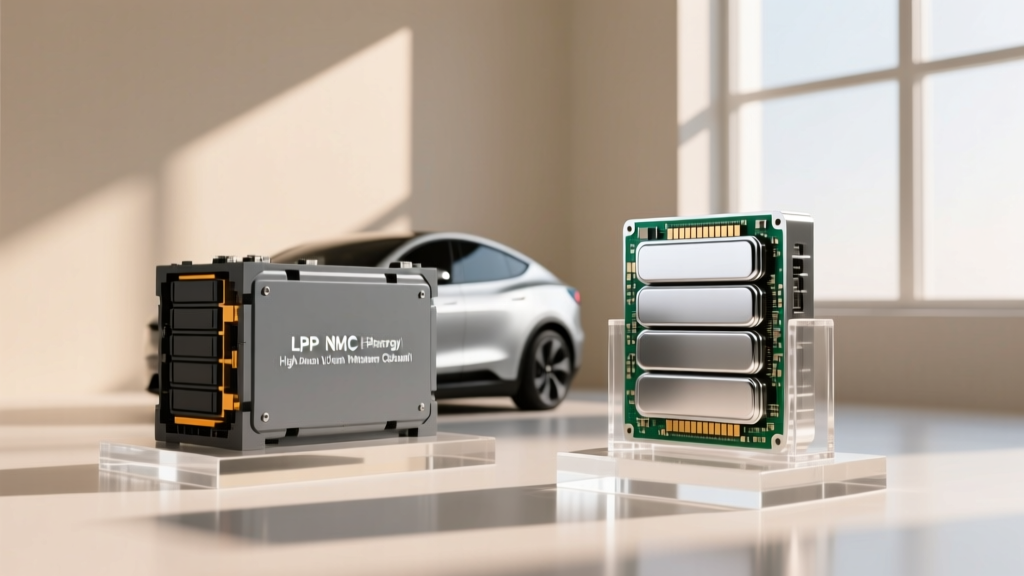
The two dominant chemistries in the 2026 EV market are LFP and NMC/NCA. Both are mature, mass-produced, and backed by years of real-world data. Here's how they compare across the metrics that matter for ownership:
| Attribute | LFP (Lithium Iron Phosphate) | NMC / NCA (Nickel-based) |
|---|---|---|
| Energy Density (cell-level) | ~160–180 Wh/kg | ~220–300 Wh/kg |
| Typical Cycle Life | 3,000–5,000+ full cycles | 1,000–2,000 full cycles |
| Cold-Weather Performance | Moderate — greater range loss below 32°F | Better low-temp discharge, less range penalty |
| Fast-Charging Tolerance | Excellent — handles frequent DCFC well | Good, but repeated high-rate charging accelerates degradation |
| Recommended Daily SoC | 100% is fine (no calendar stress) | 80% daily, 100% for trips only |
| Cost (per kWh, pack-level) | ~$95–$110 | ~$120–$145 |
| Cobalt / Nickel Content | None | Significant — supply chain and ethical concerns |
| Common 2026 Applications | Tesla Model 3/Y RWD, Ford Mustang Mach-E Select, BYD models | Tesla Long Range, Hyundai Ioniq 5/6, Rivian, GM Ultium vehicles |
Which is better? It depends on your use case. If you commute daily, charge at home, and want a battery that you can leave at 100% without worry, LFP is the pragmatic choice — it's cheaper, lasts longer in cycle count, and simplifies ownership habits. If you need maximum range in a single charge, drive in very cold climates regularly, or want the lightest possible pack for a large vehicle, NMC/NCA still holds the energy-density advantage.
Neither chemistry is fragile. Both are engineered to outlast the vehicle's useful economic life under normal use. The fear that EV batteries "need replacing every few years" is not supported by fleet data.
How Long Do EV Batteries Actually Last? Real Degradation Data
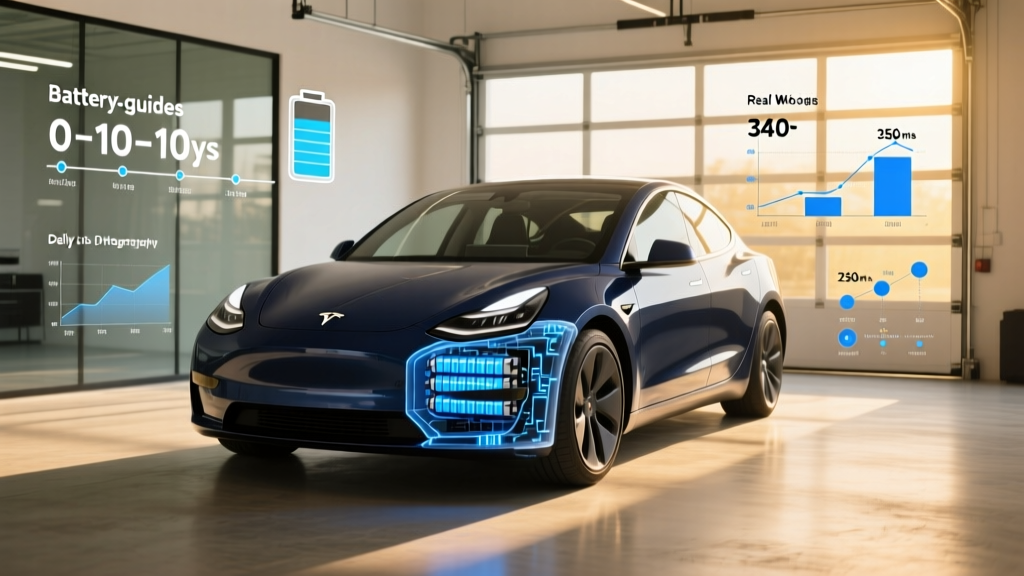
Battery degradation is measured as a percentage of original capacity lost over time and mileage. Most EV batteries degrade in two phases: a steeper initial drop in the first year or two (typically 2–5%), followed by a long, slow linear decline.
Typical Degradation Curves (Based on Fleet & Owner Data):
- Year 1 / 15,000 miles: 2–5% capacity loss (formation period)
- Year 3 / 45,000 miles: 5–8% total loss
- Year 5 / 75,000 miles: 7–12% total loss
- Year 8 / 120,000 miles: 10–15% total loss (NMC); 5–10% (LFP)
- Year 10 / 150,000 miles: 12–20% total loss (NMC); 8–12% (LFP)
Sources: Geotab fleet battery health study, Recurrent Auto battery data reports, owner-reported data on TeslaFi and ABetterRoutePlanner.
These figures assume mixed use — some Level 2 home charging, occasional DC fast charging, and moderate climates. Vehicles frequently DC fast-charged in extreme heat (Arizona, Texas summers) or consistently charged to 100% with NMC chemistry show degradation on the higher end of these ranges.
Real-world example: A 2020 Tesla Model 3 Long Range (75 kWh usable, NMC) with 80,000 miles and primarily home Level 2 charging typically shows 88–92% State of Health (SoH) in 2026 — meaning roughly 66–69 kWh usable. That's still enough for ~260 miles of real-world range from an original EPA sticker of 322 miles. The car remains highly functional.
What Does the Battery Warranty Actually Cover?
Federal law mandates a minimum 8-year / 100,000-mile warranty on EV battery packs for emissions-related compliance, and most manufacturers meet or exceed this baseline. The critical detail is the capacity retention threshold — the point at which the manufacturer considers the battery "failed" and will repair or replace it.
| Manufacturer (2026 Models) | Warranty Period | Mileage Cap | Capacity Retention Threshold |
|---|---|---|---|
| Tesla (Model 3/Y LFP) | 8 years | 100,000 mi | 70% |
| Tesla (Model 3/Y LR, Model S/X) | 8 years | 120,000 mi | 70% |
| Hyundai / Kia (E-GMP) | 10 years | 100,000 mi | 70% |
| GM (Ultium-based) | 8 years | 100,000 mi | 70% |
| Ford (Mach-E, F-150 Lightning) | 8 years | 100,000 mi | 70% |
| Rivian (R1T / R1S) | 8 years | 120,000 mi | 70% |
| Volkswagen (MEB platform) | 8 years | 100,000 mi | 70% |
The 70% threshold is standard across the industry. This means if your 82 kWh pack drops below ~57.4 kWh of usable capacity within the warranty period, the manufacturer will replace or repair modules to bring it above that line. In practice, very few batteries hit this threshold within the warranty window — fleet data from Recurrent Auto shows that the vast majority of EVs retain well above 80% capacity at the 8-year mark.
What's NOT covered: Cosmetic degradation that doesn't cross the 70% line, damage from accidents or flooding, modifications to the battery management system, and in some cases, degradation from consistent use outside manufacturer guidelines (e.g., leaving an NMC vehicle at 100% SoC for extended periods). Read your specific warranty booklet.
EV Battery Replacement Cost: What You'd Pay If It Ever Comes to That
Most EV batteries will never need a full replacement during the vehicle's life. But if you're buying used, planning to keep a vehicle for 15+ years, or driving high-mileage commercially, it's worth understanding the cost landscape.
| Vehicle (Example) | Battery Size (Usable) | Full Pack Replacement Cost (2026) | Module-Level Repair |
|---|---|---|---|
| Tesla Model 3 (LFP) | ~57 kWh | $10,000–$13,000 | $2,500–$4,500 |
| Tesla Model Y LR (NMC) | ~75 kWh | $13,000–$17,000 | $3,000–$5,500 |
| Hyundai Ioniq 5 (NMC) | ~77.4 kWh | $14,000–$18,000 | $3,500–$6,000 |
| Ford F-150 Lightning Ext. Range | ~131 kWh | $22,000–$30,000 | $5,000–$9,000 |
| Chevrolet Silverado EV | ~200 kWh | $30,000–$40,000 | $6,000–$12,000 |
Two important trends are working in owners' favor. First, pack-level prices continue to decline — down from $20,000+ for a Model S pack in 2018 to the figures above. Second, module-level repair is increasingly viable. Most modern packs are composed of individual modules; if one or two degrade disproportionately, a qualified shop can replace just those modules for a fraction of a full-pack swap.
The vehicles most likely to need a battery replacement are high-mileage fleet vehicles (taxis, rideshare, delivery vans) that accumulate 200,000+ miles in a few years with heavy DC fast-charging use. For a typical owner driving 12,000–15,000 miles per year with home charging, the battery will almost certainly outlast the car's body, suspension, and interior.
Factors That Affect Battery Life — and How to Maximize It
Battery degradation isn't random. It's driven by specific, controllable factors. Here's what the electrochemistry actually responds to:
Battery Care Best Practices (2026 Owner's Checklist):
- Charge to 80% daily (NMC/NCA): High state of charge stresses nickel-based cathodes. Set your charge limit to 80% for daily use and only charge to 100% when you need full range for a trip. LFP owners can charge to 100% regularly without concern.
- Minimize DC fast charging when possible: High-current charging generates heat and accelerates electrolyte decomposition. DCFC is fine for road trips, but daily Level 2 home charging (7–11 kW) is gentler on the pack.
- Precondition before fast charging: Most 2026 EVs automatically precondition the battery when you navigate to a charger. This warms the cells to optimal temperature (~77–95°F internal), reducing lithium plating risk and improving charge speed. Always use the car's navigation to route to a charger — don't just drive there cold.
- Avoid prolonged storage at extreme SoC: Don't leave an NMC vehicle sitting at 100% for weeks. If storing for a vacation, set SoC to ~50%. LFP is more tolerant of storage at higher SoC.
- Extreme heat is worse than extreme cold: Cold reduces range temporarily (the energy is still there, but electrochemistry slows). Heat, however, causes permanent degradation. If you live in a hot climate, park in shade or a garage when possible, and use scheduled charging to avoid charging during peak afternoon heat.
- Use regenerative braking moderately: High regen settings push current back into the battery at high rates, especially when the pack is near full. Most manufacturers recommend "low" regen when the battery is above 90% SoC.
How to Check Your Battery's State of Health (SoH)
State of Health is the percentage of original capacity your battery can still hold. A new EV has 100% SoH; a battery at 85% SoH holds 85% of its original kWh. Here's how to check it on popular 2026 platforms:
- Tesla: No native SoH display in the app, but third-party tools like TeslaFi, Tessie, or the car's hidden "Energy" screen (via Service Mode) can estimate SoH from charge logs. A full 100%→0%→100% calibration cycle gives the most accurate reading.
- Hyundai / Kia: The infotainment system's EV diagnostics menu shows battery health percentage. The dealer can also pull a detailed BMS (Battery Management System) report.
- GM (Ultium): The myChevrolet / myCadillac app includes a battery health indicator. OnStar diagnostics can provide a detailed report.
- Ford: FordPass shows estimated battery health. A dealer scan tool provides cell-level voltage variance data.
- OBD-II scanners: Devices like the OBDLink SX combined with apps such as EVNotify or Car Scanner can read BMS data from most EVs, including individual cell voltages, pack temperature, and SoH estimates.
When buying a used EV, always request a battery health report. If the seller can't provide one, factor the cost of a dealer diagnostic (~$100–$200) into your inspection budget. A car with 90%+ SoH at 50,000 miles is in excellent shape; below 80% at any mileage warrants investigation into charging habits and warranty coverage.
Solid-State Batteries and the 2026 Commercialization Timeline
Solid-state batteries replace the liquid electrolyte in conventional lithium-ion cells with a solid material (ceramic, sulfide, or polymer). The theoretical advantages are significant:
- Higher energy density: 400–500 Wh/kg at the cell level (vs. ~250–300 for today's best NMC)
- Faster charging: Potential for 10–80% in under 10 minutes without degradation
- Improved safety: No flammable liquid electrolyte — dramatically reduced thermal runaway risk
- Longer cycle life: 10,000+ cycles in lab conditions
Where things stand in 2026:
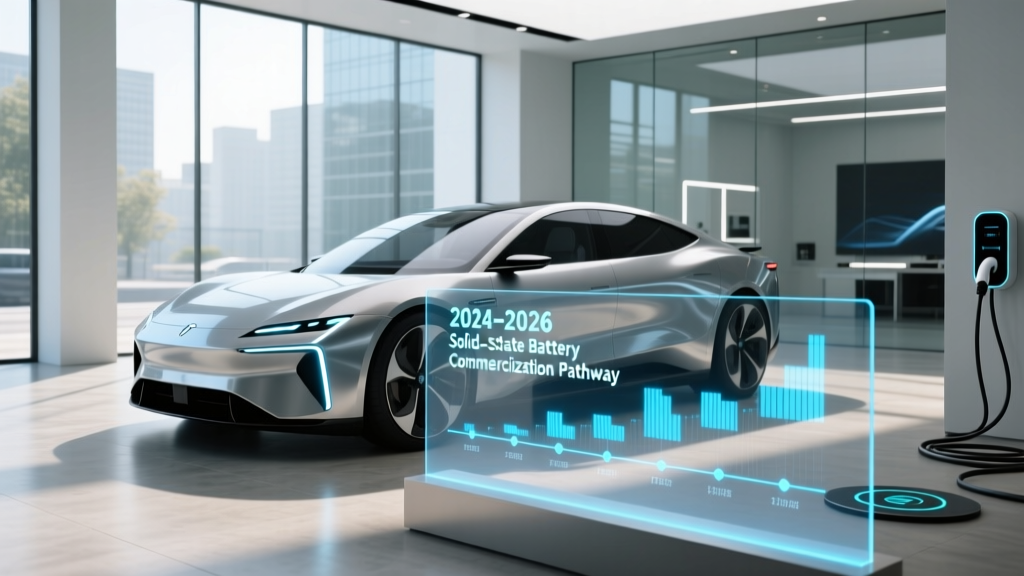
Toyota has announced limited production of solid-state-equipped vehicles for 2027–2028, initially in small numbers for the Japanese market. Samsung SDI is targeting 2027 for mass production. QuantumScape has delivered prototype cells to automotive partners but has not announced a production vehicle. Nissan and Honda have pilot lines running but project commercial-scale production no earlier than 2028–2030.
The honest assessment: no solid-state EV is available for purchase in 2026, and the first vehicles to use the technology will likely be limited-production, premium-priced models sold in specific markets. Mass-market solid-state EVs at price parity with today's lithium-ion vehicles remain a 2030+ proposition. The manufacturing challenges — yield rates, dry-room requirements, electrode interface stability — are production-engineering problems, not science problems, but they are not trivial.
Silicon-anode batteries are a nearer-term incremental improvement. Companies like Sila Nanotechnologies and Group14 are supplying silicon-dominant anode materials that boost energy density by 10–20% within existing lithium-ion manufacturing. These are beginning to appear in 2026 model-year vehicles as incremental range improvements rather than as a separate product category.
Frequently Asked Questions
How long do EV batteries last in years and miles?
Based on fleet data, most EV batteries retain 80–90% of their original capacity at 8 years / 100,000 miles, and 75–85% at 12 years / 150,000 miles. LFP batteries generally outlast NMC in cycle count. The vehicle's body, suspension, and electronics are more likely to reach end-of-life before the battery becomes unusable.
How much does an EV battery cost to replace in 2026?
Full pack replacement ranges from ~$10,000 for a smaller LFP pack (Tesla Model 3 RWD) to $30,000+ for a large pack (F-150 Lightning Extended Range, Chevrolet Silverado EV). Module-level repairs, which address localized degradation, cost $2,500–$12,000 depending on the vehicle. Pack prices continue to decline year over year.
What does the EV battery warranty cover?
Federal law requires a minimum 8-year / 100,000-mile warranty. Most manufacturers guarantee 70% capacity retention — meaning if your battery drops below 70% of its original kWh within the warranty period, the manufacturer will repair or replace it. Hyundai and Kia offer 10-year coverage. Warranties do not cover accident damage, flooding, or aftermarket modifications.
How do I check my EV battery's health?
Most 2026 EVs provide a battery health indicator through the infotainment system or companion app. Third-party OBD-II tools and apps like TeslaFi, Car Scanner, or EVNotify can pull detailed BMS data including SoH percentage and individual cell voltages. For a used EV purchase, a dealer diagnostic report is the gold standard.
LFP vs NMC — which battery chemistry is better for me?
Choose LFP if you want lower cost, longer cycle life, and the convenience of charging to 100% daily without degradation concerns — ideal for commuters and daily drivers. Choose NMC/NCA if you need maximum range per charge, better cold-weather performance, or are buying a larger vehicle where energy density matters for weight and packaging. Both chemistries are proven and will outlast the vehicle under normal use.
Should I wait for solid-state batteries before buying an EV?
No. Solid-state batteries are not available in any production EV as of 2026. The earliest limited-production vehicles are expected in 2027–2028, likely at premium prices and in restricted markets. Mass-market availability at competitive pricing is a 2030+ timeline. Today's lithium-ion batteries (both LFP and NMC) are mature, well-warrantied, and supported by real-world data showing they last the life of the vehicle. Waiting for solid-state means waiting at minimum 4–5 years with no guarantee of price or availability.
For official EPA range and efficiency data on specific models, consult fueleconomy.gov. For current federal EV tax credit rules under IRS §30D, including battery sourcing and income requirements, see IRS.gov clean vehicle credits.