Why LFP Cell Energy Density (Wh/kg) Matters for Your Next EV
If you've shopped for an EV in the last two years, you've likely encountered the letters "LFP" in a spec sheet. Lithium Iron Phosphate (LFP) chemistry has moved from a niche choice to a mainstream battery option used by Tesla, Ford, Hyundai, and others. The trade-off at the center of this shift is energy density — measured in watt-hours per kilogram (Wh/kg) — and it directly shapes the range, weight, cost, and longevity of the EV you buy.
As of 2026, typical LFP cell energy density sits between 160 and 180 Wh/kg at the cell level, while Nickel Manganese Cobalt (NMC) and Nickel Cobalt Aluminum (NCA) cells achieve 250 to 300 Wh/kg. That gap sounds massive, but pack-level engineering, thermal management, and structural integration narrow it considerably in real vehicles. Understanding what those numbers mean — and what you sacrifice or gain on either side — is the single most important factor in choosing an EV battery that fits your ownership timeline.
This guide breaks down the chemistry, the real-world degradation data, warranty protections, replacement economics, and the care habits that determine whether your battery outlasts the car around it.
LFP vs NMC/NCA: Chemistry, Trade-Offs, and Real-World Impact
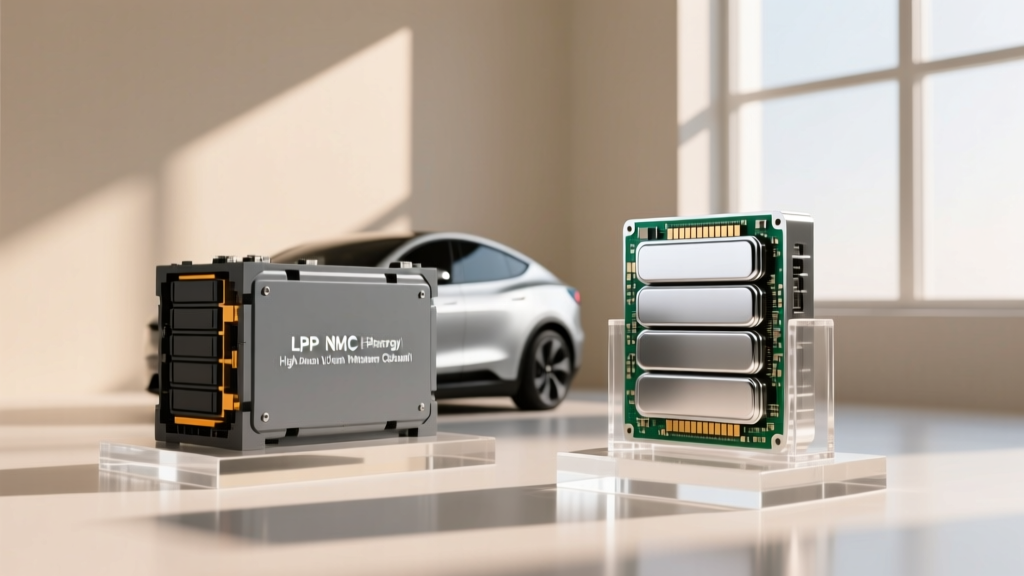
EV batteries aren't one-size-fits-all. The cathode chemistry determines energy storage capacity per unit of weight, cycle durability, thermal stability, raw-material cost, and cold-weather behavior. Here's how the two dominant chemistries compare in current production cells:
| Attribute | LFP (LiFePO₄) | NMC / NCA |
|---|---|---|
| Cell Energy Density | 160–180 Wh/kg | 250–300 Wh/kg |
| Pack-Level Energy Density | ~130–150 Wh/kg | ~170–210 Wh/kg |
| Typical Cycle Life (to 80% SoH) | 3,000–5,000+ cycles | 1,000–2,000 cycles |
| Calendar Life Expectancy | 15–20+ years | 10–15 years |
| Cold Performance (below 32°F) | Moderate loss; slower charge acceptance | Better low-temp conductivity |
| Thermal Runaway Risk | Very low (stable olivine structure) | Higher (requires robust BMS) |
| Raw Material Cost | Lower (no cobalt, no nickel) | Higher (cobalt/nickel price exposure) |
| State of Charge (SoC) Tolerance | Can charge to 100% daily | Best kept 20–80% for longevity |
| Common 2026 Applications | Tesla Model 3 RWD, Ford Mustang Mach-E Select (LFP trims), BYD, standard-range models | Long-range and performance trims, Hyundai Ioniq 5/6, Rivian, BMW iX |
What the Energy Density Gap Means in Practice
The LFP cell energy density of 160–180 Wh/kg means a 60 kWh LFP pack weighs roughly 400–460 kg at the cell level, while a comparable NMC pack at 270 Wh/kg weighs around 220–260 kg. At the pack level — accounting for cooling plates, structural housing, wiring, and the Battery Management System (BMS) — the weight difference compresses but doesn't disappear. Automakers compensate by using Cell-to-Pack (CTP) and Cell-to-Chassis (CTC) architectures that eliminate module-level hardware, boosting LFP pack-level density toward 150 Wh/kg.
The practical result: LFP vehicles tend to appear in standard-range trims where absolute maximum range isn't the priority. A Tesla Model 3 RWD with a ~60 kWh LFP pack delivers an EPA-estimated 272 miles of range, while the Long Range AWD variant with an NMC/NCA ~82 kWh pack achieves 341 miles (per fueleconomy.gov). The LFP car is slightly heavier per kWh but costs thousands less and offers dramatically longer cycle life.
Cold-Weather Reality
LFP cells have higher internal resistance at low temperatures, which means reduced charge acceptance and somewhat greater range loss below freezing. In real-world cold testing (20–30°F ambient), LFP-equipped vehicles typically see 20–30% range reduction, while NMC vehicles lose roughly 15–25%. Preconditioning the battery — warming it via the vehicle's thermal management system before driving or charging — narrows this gap substantially. If you live in a cold climate and frequently drive in sub-freezing conditions, NMC retains a measurable edge in winter efficiency.
How Long Do EV Batteries Actually Last?
The short answer: almost certainly longer than you'll own the car. The longer answer requires separating cycle life (charge-discharge events) from calendar aging (chemical degradation over time regardless of use).
Degradation Data: What the Numbers Show
Typical EV Battery Degradation Curve (NMC and LFP, aggregated fleet data):
- Year 1 / 15,000 miles: 2–4% capacity loss (initial formation settling)
- Year 3 / 45,000 miles: 5–8% total loss (NMC); 3–5% total loss (LFP)
- Year 5 / 75,000 miles: 8–12% total loss (NMC); 4–7% total loss (LFP)
- Year 8 / 120,000 miles: 10–17% total loss (NMC); 6–10% total loss (LFP)
- Year 10+ / 150,000+ miles: 15–22% (NMC); 8–14% (LFP)
These figures are drawn from aggregated fleet telemetry data published by sources including Geotab's EV battery health study and manufacturer-reported warranty claim rates. The critical insight: degradation is non-linear. Most capacity loss occurs in the first 12–24 months, after which the curve flattens significantly. An NMC battery that has lost 10% by year five will likely sit at 14–17% by year ten — not the linear extrapolation to 20% that anxious owners sometimes fear.
LFP's superior cycle life (3,000–5,000+ cycles to 80% State of Health) means that even with daily charging to 100%, an LFP pack can endure the equivalent of 500,000+ miles of driving before reaching the 80% capacity threshold. Calendar aging — not cycle wear — is what ultimately limits LFP batteries in typical ownership scenarios.
When Is Replacement Typically Needed?
For the vast majority of owners, it isn't. Based on current degradation trajectories, an EV battery will retain 75–85% of its original capacity at 150,000 miles and 10 years of age. That translates to an EPA-rated 300-mile vehicle still delivering 225–255 miles of range — well within usable daily service. Replacement is typically driven by:
- Catastrophic failure (manufacturing defect, physical damage, coolant intrusion) — rare, usually covered under warranty
- Extreme degradation (below 60–65% capacity) — almost exclusively in high-mileage fleet or rideshare vehicles at 200,000+ miles
- Second-life repurposing — the battery is removed for stationary storage use, not because it's "dead"
What Does the EV Battery Warranty Actually Cover?
Federal law mandates a minimum battery warranty of 8 years / 100,000 miles for EVs sold in the United States (10 years / 150,000 miles in California Air Resources Board states). Most manufacturers meet or exceed this baseline. Here's what the major warranties look like for 2026 model-year vehicles:
| Manufacturer | Warranty Term | Capacity Retention Threshold | Chemistry |
|---|---|---|---|
| Tesla (Model 3/Y RWD) | 8 yr / 100,000 mi | 70% minimum | LFP |
| Tesla (Model 3/Y LR/Perf) | 8 yr / 120,000 mi | 70% minimum | NMC/NCA |
| Hyundai / Kia | 10 yr / 100,000 mi | 70% minimum | NMC |
| Ford (Mach-E, F-150 Lightning) | 8 yr / 100,000 mi | 70% minimum | NMC / LFP (by trim) |
| GM (Ultium-based) | 8 yr / 100,000 mi | 70% minimum (60% for Bolt EUV fleet) | NMC |
| Rivian | 8 yr / 175,000 mi | 70% minimum | NMC |
| BMW | 8 yr / 100,000 mi | 70% minimum | NMC |
What's covered: Capacity loss below the stated threshold, manufacturing defects, and cell/module failures. The warranty guarantees the battery will retain at least the stated percentage of its original usable capacity (typically 70%) for the duration of the term.
What's NOT covered: Gradual degradation above the threshold (e.g., losing 15% over 8 years is "normal" if the threshold is 70%), damage from accidents, flooding, improper modifications, or use of non-approved charging equipment. Some warranties also exclude capacity loss from consistently charging to 100% on NMC batteries if the owner manual specifies an 80% daily limit.
How Much Does an EV Battery Cost to Replace?
This is the question that generates the most anxiety — and the most misinformation. Let's ground it in actual 2026 replacement pricing.
| Vehicle / Battery Size | Chemistry | Battery Cost (Parts) | Labor | Total Estimate |
|---|---|---|---|---|
| Tesla Model 3 RWD (~60 kWh) | LFP | $7,000–$9,500 | $1,500–$2,500 | $8,500–$12,000 |
| Tesla Model Y LR (~82 kWh) | NMC/NCA | $10,000–$14,000 | $1,500–$2,500 | $11,500–$16,500 |
| Hyundai Ioniq 5 (~77.4 kWh) | NMC | $11,000–$15,000 | $2,000–$3,000 | $13,000–$18,000 |
| Ford F-150 Lightning Ext. (~131 kWh) | NMC | $18,000–$25,000 | $2,500–$4,000 | $20,500–$29,000 |
| Chevrolet Equinox EV (~85 kWh) | NMC | $10,000–$14,000 | $2,000–$3,000 | $12,000–$17,000 |
Context that matters: Battery pack prices have fallen roughly 8–12% annually over the past five years, driven by manufacturing scale and LFP adoption. A replacement that costs $15,000 today may cost $9,000–$11,000 by the time you'd realistically need one in 2034–2036. Additionally, module-level repairs are increasingly available — replacing a single degraded module rather than the entire pack — at costs of $2,000–$5,000.
The probability of needing a full out-of-warranty replacement remains low. According to warranty claim data, fewer than 1–2% of EV batteries require replacement due to defects, and the vast majority of those occur within the warranty period. The combination of declining replacement costs, module-level repair options, and the sheer longevity of modern packs makes catastrophic battery cost the least likely financial risk of EV ownership.
Factors That Accelerate (or Preserve) Battery Life
Battery longevity isn't purely a function of time and miles. How you charge, where you park, and what temperatures you expose the pack to all influence the degradation curve. Here's a practical care framework:
EV Battery Care Checklist
- Limit DC fast charging frequency. Occasional road-trip fast charging is fine. Daily reliance on 150+ kW DCFC accelerates degradation by an estimated 1–3% over the battery's life due to sustained high cell temperatures and lithium plating risk at high C-rates.
- Manage State of Charge (SoC) habits. For NMC batteries, set your daily charge limit to 80% and reserve 100% for trips. LFP batteries tolerate (and benefit from) regular 100% charges — Tesla and Ford recommend charging LFP to 100% at least weekly for accurate BMS calibration.
- Avoid prolonged storage at extreme SoC. Don't leave an NMC vehicle sitting at 100% or below 10% for weeks. If storing for extended periods, target 50% SoC.
- Use preconditioning. Activate battery preconditioning before DC fast charging (most EVs do this automatically when you navigate to a charger). In cold weather, precondition before driving to reduce energy draw from a cold pack.
- Park in shade or a garage when possible. Sustained high ambient temperatures (above 95°F) accelerate calendar aging. A garage or shaded spot meaningfully reduces thermal stress over years of ownership.
- Don't obsess over regen braking settings. Aggressive regen does not harm the battery. The BMS manages charge acceptance rates regardless of regen intensity.
- Keep coolant systems maintained. EV battery thermal management relies on coolant loops. Follow manufacturer service intervals for coolant checks and replacements (typically every 4–5 years).
The Fast-Charging Question, Quantified
Research from the Idaho National Laboratory and real-world fleet data suggest that exclusive DC fast charging (versus Level 2 home charging) adds approximately 0.5–1.5% additional capacity loss over 100,000 miles. That's measurable but not catastrophic — the difference between 88% and 86.5% retained capacity at the 100,000-mile mark. For most owners who mix home Level 2 charging with occasional fast charging, the impact is negligible.
How to Check and Monitor Your Battery's State of Health (SoH)
State of Health (SoH) is the percentage of your battery's original usable capacity that remains available. A new battery starts at 100% SoH; a battery at 85% SoH that originally held 75 kWh now holds approximately 63.75 kWh of usable energy.
Built-In Vehicle Tools
Most 2026 EVs provide SoH estimates through the infotainment system or companion app:
- Tesla: Navigate to Service → Battery Health in the vehicle menu, or check the Tesla app. Tesla provides a percentage-based SoH reading.
- Hyundai/Kia: The EV menu in the infotainment system displays battery condition as a percentage.
- Ford: The FordPass app and in-vehicle settings show estimated battery health.
- GM (Ultium): Battery health is accessible through the Energy app on the infotainment screen.
Third-Party and OBD-II Diagnostics
For a more granular reading, OBD-II diagnostic tools paired with apps like Scan My Tesla, LeafSpy (Nissan), or Car Scanner ELM OBD2 can read individual cell voltages, pack voltage, and BMS-reported SoH. Independent EV service centers can also perform capacity tests by fully charging and discharging the pack under controlled conditions — the gold standard for SoH measurement, though time-intensive.
A practical self-test: charge your vehicle to 100% (or your normal limit) and note the displayed range estimate. Compare this to the EPA-rated range when new, adjusted for your typical driving conditions. If your fully charged range has dropped more than 15–20% from new, it's worth scheduling a dealer diagnostic to check for cell imbalance or BMS calibration issues.
Emerging Battery Technologies: What's Next and When
Several next-generation battery technologies are in various stages of development. Here's a realistic timeline assessment — none of these are currently available in production vehicles sold in the U.S. as of 2026:
Silicon Anode Cells
Replacing graphite anodes with silicon-dominant anodes can boost cell energy density by 20–40%, potentially pushing NMC-type cells above 350 Wh/kg. Companies like Sila Nanotechnologies and Group14 are supplying early production volumes, with vehicles from Mercedes-Benz (G-Class EV variants) expected to feature silicon anode cells by 2027–2028. The challenge is silicon's volume expansion during charging (~300%), which requires novel binder and structural solutions to maintain cycle life.
Solid-State Batteries
Solid-state cells replace the liquid electrolyte with a solid ceramic, polymer, or sulfide conductor, promising energy densities of 350–500 Wh/kg at the cell level, faster charging, and near-zero thermal runaway risk. Toyota, Samsung SDI, and QuantumScape have announced pilot production timelines targeting 2027–2029 for limited vehicle integration. However, manufacturing cost, yield rates, and interface stability between the solid electrolyte and electrodes remain unsolved challenges at scale. Realistic mass-market availability: 2030–2033.
Sodium-Ion Batteries
Sodium-ion cells offer lower energy density (~120–150 Wh/kg) but dramatically lower raw material costs and excellent cold-weather performance. BYD and CATL have begun production in China for low-cost city EVs. U.S. market availability is not expected before 2028–2029, likely in budget-oriented models or as a range-extender supplement in dual-chemistry packs.
LFP Energy Density Improvements
Current LFP cell development is pushing toward 190–200 Wh/kg through improved cathode compaction, thinner separators, and LMFP (lithium manganese iron phosphate) variants that add manganese to raise cell voltage from 3.2V to ~4.1V. LMFP cells from CATL and Gotion are entering production in 2026–2027 and could close the energy density gap with lower-end NMC to within 20%, making LFP viable for long-range trims for the first time.
LFP vs NMC: Which Battery Should You Choose?
The Decision Framework
Choose LFP if:
- You plan to own the vehicle for 8+ years and want maximum cycle life
- You primarily charge at home and want the simplicity of daily 100% charging
- You're buying a standard-range trim and don't need 300+ miles of EPA range
- Lower purchase price matters more than maximum range per charge
- You value cobalt-free battery sourcing for supply-chain and ethical reasons
Choose NMC/NCA if:
- You need maximum range (300–400+ miles EPA) for frequent long-distance driving
- You live in a cold climate where NMC's better low-temperature performance matters
- You're buying a performance or AWD trim that requires the energy density advantage
- You're comfortable managing 20–80% daily SoC limits for longevity
- Towing or heavy payload demands require the lightest possible battery pack
For most daily-commute and suburban owners who charge at home, LFP is the more durable, lower-stress choice. The lower LFP cell energy density (160–180 Wh/kg vs NMC's 250–300 Wh/kg) translates to a modest range penalty that rarely matters when you wake up to a full charge every morning. For road-trip-heavy drivers, cold-climate owners, and those who need every available mile of range, NMC's energy density advantage remains meaningful.
Frequently Asked Questions
How long do EV batteries last in years and miles?
Based on current fleet data, modern EV batteries retain 75–85% of original capacity at 10 years and 150,000 miles. LFP batteries typically outperform NMC in longevity, retaining 85–92% at the same interval. Most EV batteries will outlast the vehicle's useful economic life without requiring replacement.
How much does an EV battery cost to replace?
Full pack replacement costs range from approximately $8,500 for a 60 kWh LFP pack (Tesla Model 3 RWD) to $29,000 for a 131 kWh NMC pack (Ford F-150 Lightning Extended Range), including labor. However, fewer than 2% of EV batteries require replacement, and costs are declining 8–12% annually. Module-level repairs for isolated cell failures cost $2,000–$5,000.
What does the EV battery warranty cover?
Federal law requires a minimum 8-year/100,000-mile battery warranty (10 years/150,000 miles in CARB states). The warranty guarantees the battery will retain at least 70% of its original capacity for the warranty term. It covers manufacturing defects, cell failures, and capacity loss below the threshold. It does not cover normal gradual degradation above the threshold or damage from accidents or misuse.
How do I check my EV battery health?
Most EVs display a State of Health (SoH) percentage in the infotainment system or companion app. For more detailed readings, OBD-II diagnostic tools and apps like Scan My Tesla or LeafSpy can read individual cell data. You can also compare your fully charged range estimate to the original EPA rating — a drop of more than 15–20% warrants a dealer diagnostic check.
Is LFP better than NMC for daily driving?
For daily driving with home charging, LFP offers meaningful advantages: longer cycle life (3,000–5,000+ cycles vs 1,000–2,000), the ability to charge to 100% daily without degradation concerns, lower cost, and superior thermal safety. The trade-off is lower energy density (160–180 Wh/kg vs 250–300 Wh/kg), which limits maximum range and slightly increases vehicle weight. If you don't need 300+ miles of range, LFP is the more practical long-term choice.
Does frequent fast charging damage my EV battery?
Exclusive reliance on DC fast charging adds an estimated 0.5–1.5% additional capacity loss over 100,000 miles compared to Level 2 charging. Occasional fast charging during road trips has negligible impact. The battery's BMS actively manages charge rates and temperatures during fast charging to minimize stress. Mixing home Level 2 charging with periodic DCFC is the recommended approach.
What is LMFP and how does it differ from LFP?
LMFP (Lithium Manganese Iron Phosphate) adds manganese to the LFP cathode, raising the cell voltage from approximately 3.2V to 4.1V and boosting energy density to an estimated 200–220 Wh/kg — closing much of the gap with NMC. LMFP cells are entering production in 2026–2027 from CATL and Gotion, with U.S. vehicle integration expected by 2028. LMFP retains LFP's safety and cycle-life advantages while offering meaningfully more range per kilogram.
Understanding battery chemistry isn't academic — it's the single largest determinant of your EV's range trajectory, charging habits, and long-term ownership cost over a decade. Whether you choose LFP's durability and simplicity or NMC's range and cold-weather edge, the data is clear: modern EV batteries are engineered to outlast the cars they power.