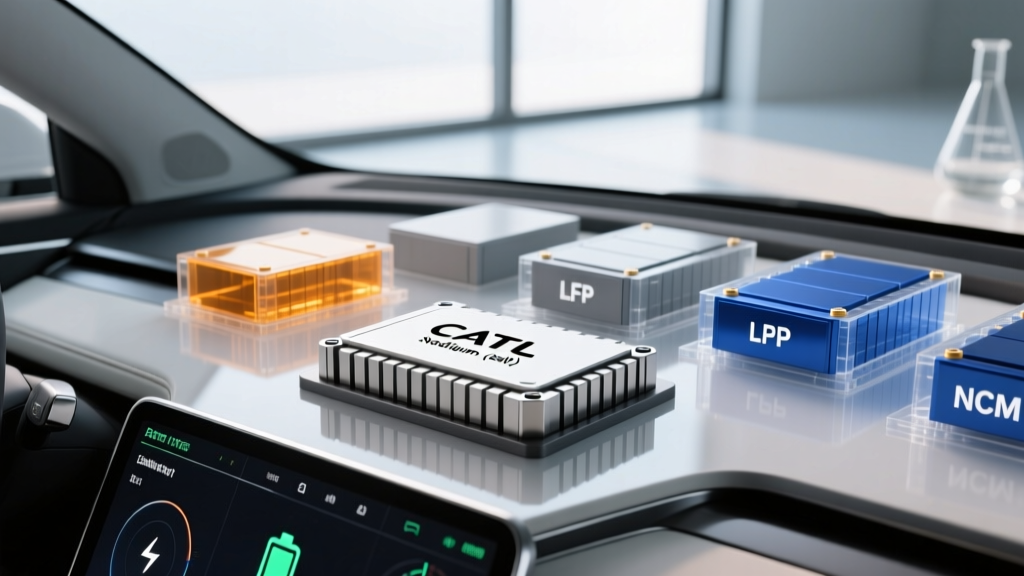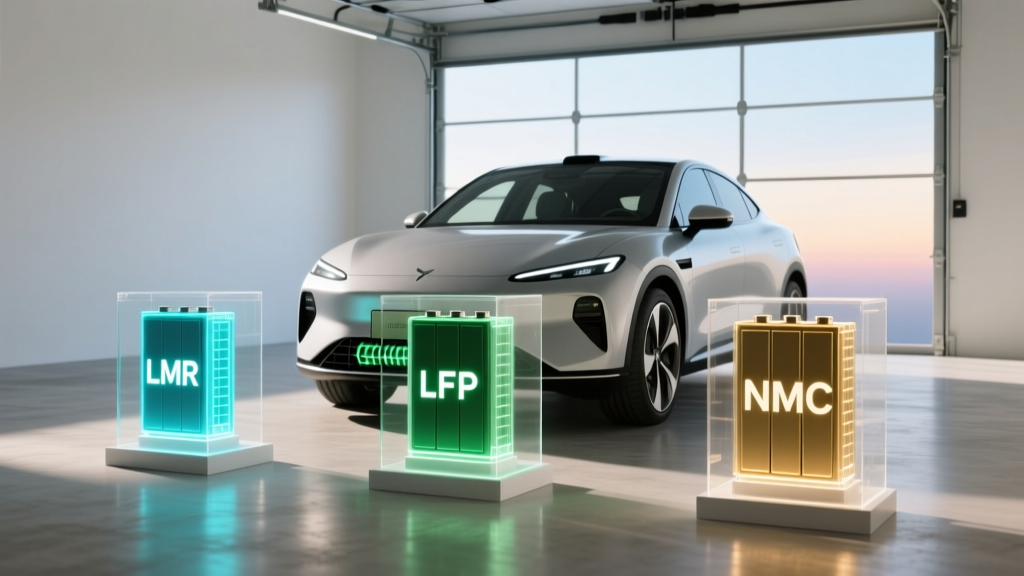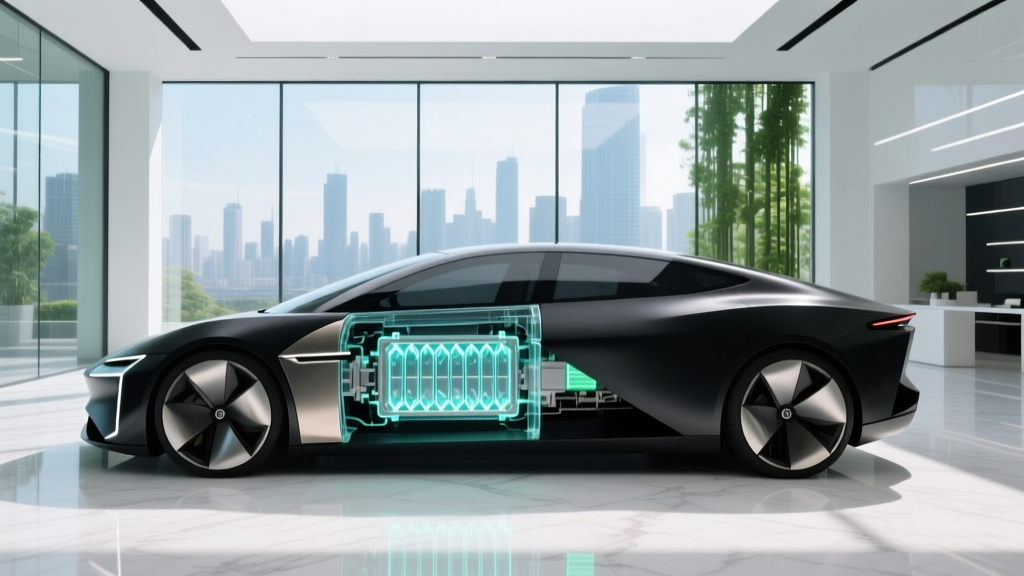
If you have been following EV news, you have likely seen headlines promising that cars with solid state batteries will revolutionize range, charging speed, and safety. Toyota, Samsung SDI, QuantumScape, and Solid Power have all demonstrated promising prototypes. But as of 2026, no mass-market vehicle sold in the United States uses a solid-state traction battery. What you can buy today are increasingly refined lithium-ion batteries in two dominant chemistries — NMC (nickel manganese cobalt) and LFP (lithium iron phosphate) — that are lasting longer, degrading slower, and costing less than early-generation packs.
This guide separates what is real from what is still in the lab. We will cover the chemistry you can buy today, realistic solid-state timelines, degradation data, warranty protection, replacement costs, and how to monitor and maximize your battery's health over a decade or more of ownership.
Solid-State Batteries: What They Are and When They Will Actually Arrive
A solid-state battery replaces the liquid electrolyte in a conventional lithium-ion cell with a solid material — typically a ceramic, sulfide-based glass, or polymer. The theoretical advantages are significant:
- Higher energy density: Solid electrolytes can enable lithium-metal anodes, potentially pushing cell-level energy density from today's ~250–300 Wh/kg to 400–500 Wh/kg.
- Faster charging: Some prototypes demonstrate 10–80% charges in under 10 minutes, because solid electrolytes resist dendrite formation at high charge rates.
- Improved safety: No flammable liquid electrolyte means dramatically reduced thermal runaway risk.
- Longer cycle life: Early data suggests 1,000+ cycles with minimal degradation, though long-term data is still limited.
The engineering challenges remain substantial: manufacturing yield at scale, interfacial resistance between solid layers, pressure requirements within the cell, and cost reduction from current estimates of $300–500/kWh down to the $100/kWh threshold needed for mainstream pricing. These are solvable problems — but they are not solved yet.
Today's Chemistry Battle: LFP vs NMC vs NCA
While solid-state technology matures, the current EV market runs on two proven lithium-ion chemistries. Understanding the trade-offs is essential for any buyer in 2026.
| Attribute | LFP (Lithium Iron Phosphate) | NMC/NCA (Nickel-based) |
|---|---|---|
| Energy Density | ~160–180 Wh/kg (cell level) | ~230–300 Wh/kg (cell level) |
| Cycle Life | 3,000–5,000+ cycles to 80% SoH | 1,500–2,500 cycles to 80% SoH |
| Cold-Weather Performance | More range loss below freezing (~30–40%) | Moderate range loss (~20–30%) |
| Charging to 100% | Recommended regularly for calibration | Best kept at 80% daily; 100% for trips only |
| Cost per kWh | ~$90–110/kWh (pack level, 2026) | ~$120–150/kWh (pack level, 2026) |
| Thermal Stability | Excellent — higher thermal runaway threshold | Good — requires active thermal management |
| Common 2026 Applications | Tesla Model 3 RWD, Model Y RWD, Ford Mustang Mach-E Select (base), BYD models | Hyundai Ioniq 5, Kia EV6, Tesla Long Range/Performance, BMW iX, Rivian |
The bottom line: LFP wins on longevity, cost, and safety — ideal for daily commuting, fleet use, and buyers who plan to keep their EV for 10+ years. NMC/NCA wins on energy density and cold-weather range — better for long-range trims, cold-climate buyers, and those who need maximum miles per charge. Neither is universally "better"; the right choice depends on your driving pattern and climate.
How Long Do EV Batteries Actually Last?
The short answer: almost certainly longer than you will keep the car. Real-world fleet data from Tesla, Geotab, and Recurrent Auto consistently shows modern EV batteries retaining 85–93% of original capacity after 100,000 miles, with degradation curves flattening significantly after the initial 20,000–30,000 mile break-in period.
- Tesla Model 3/Y (NMC, 2021–2024): ~5% loss at 50,000 mi; ~8–10% loss at 100,000 mi; ~12–15% loss at 200,000 mi
- Tesla Model 3 RWD (LFP, 2022–2025): ~3% loss at 50,000 mi; ~5–7% loss at 100,000 mi (projected based on cycle life)
- Chevrolet Bolt EV/EUV (NMC, 2017–2023): ~7–9% loss at 80,000 mi; some early 2017 models showed higher degradation tied to thermal management limitations
- Hyundai Ioniq 5 (NMC, 2022–2025): ~4–6% loss at 50,000 mi based on early fleet data
- Nissan Leaf (passive air cooling, 2011–2017): 15–25% loss at 80,000 mi — a cautionary example of why active thermal management matters
The key insight is that degradation is non-linear. Most batteries lose 3–5% in the first year or 20,000 miles, then settle into a slow, gradual decline of roughly 1–2% per year or 10,000–15,000 miles. A well-maintained battery in a liquid-cooled pack should realistically deliver 200,000+ miles before dropping below 70% State of Health (SoH) — the threshold at which most warranties trigger replacement.
What the Battery Warranty Actually Covers
Federal law mandates a minimum 8-year/100,000-mile warranty on EV traction batteries for emissions-related compliance, and most manufacturers match or exceed this. The critical detail is the capacity retention threshold — the SoH percentage below which the manufacturer must repair or replace the pack.
| Manufacturer | Duration | Mileage | SoH Threshold |
|---|---|---|---|
| Tesla (all models) | 8 years | 100,000–120,000 mi (varies by trim) | 70% |
| Hyundai / Kia | 10 years | 100,000 mi | 70% |
| Ford (Mustang Mach-E, F-150 Lightning) | 8 years | 100,000 mi | 70% |
| General Motors (Ultium platform) | 8 years | 100,000 mi | 70% (some models 60%) |
| Rivian | 8 years | 175,000 mi (R1T/R1S) | 70% |
| BMW | 8 years | 100,000 mi | 70% |
What is covered: Defects in materials or workmanship, and capacity loss below the stated threshold under normal use. What is typically excluded: Damage from accidents, flooding, improper modifications, or use outside manufacturer guidelines (e.g., persistent exposure to extreme temperatures without preconditioning). Always read the specific warranty booklet for your model — the 70% threshold is standard, but a few manufacturers set it at 65% or 60% for certain trims.
EV Battery Replacement Cost: What It Actually Takes to Swap a Pack
Battery replacement is the single biggest fear for prospective EV buyers. The numbers sound alarming — until you add context. The vast majority of EV batteries never need replacement during typical ownership. When they do, it is usually covered under warranty, and out-of-warranty costs have been declining steadily.
| Vehicle / Pack Size | Battery (kWh) | Chemistry | Est. Replacement Cost |
|---|---|---|---|
| Tesla Model 3 RWD | ~60 kWh | LFP | $8,000–$12,000 |
| Tesla Model Y Long Range | ~75 kWh | NMC | $12,000–$16,000 |
| Hyundai Ioniq 5 (Long Range) | 77.4 kWh | NMC | $13,000–$18,000 |
| Ford F-150 Lightning (Extended Range) | ~131 kWh | NMC | $20,000–$30,000 |
| Chevrolet Bolt EV | 65 kWh | NMC | $10,000–$14,000 |
| Rivian R1T (Large Pack) | ~135 kWh | NMC | $22,000–$30,000 |
These figures include the battery pack and labor but can vary by region, dealer, and whether a refurbished or new pack is used. Costs have dropped roughly 15–20% since 2022 as pack-level pricing falls and more third-party repair shops gain EV certification. For context, a conventional vehicle's transmission or engine replacement can run $4,000–$8,000 — and those components fail far more frequently than EV batteries.
When is replacement typically needed? In practice, almost never during the first 150,000–200,000 miles on a modern liquid-cooled pack. The rare out-of-warranty replacements we see are usually on early-generation vehicles (2011–2016 Nissan Leaf, early Tesla Model S with 85 kWh packs) that lacked sophisticated thermal management.
Factors That Accelerate Battery Degradation
Not all miles are equal when it comes to battery wear. Based on fleet data and manufacturer guidance, these are the factors that measurably accelerate capacity loss:
- Minimize DC fast charging frequency: Occasional road-trip fast charging is fine, but daily use of 150+ kW chargers accelerates degradation by ~1–2% per year vs. Level 2 charging. Aim for 80%+ of charging on Level 2 (home/work).
- Avoid extreme State of Charge: For NMC/NCA, keep daily SoC between 20–80%. For LFP, charging to 100% weekly is recommended for BMS calibration — LFP tolerates full charge better.
- Precondition before fast charging: Use your car's navigation to route to a DC fast charger — this triggers battery preconditioning, warming the pack to optimal temperature (~35–40°C) and reducing charge time and stress.
- Park in shade or a garage when possible: Sustained high battery temperatures (above 45°C / 113°F) accelerate calendar aging. This matters most in Arizona, Texas, and Southern California summers.
- Don't let the car sit at 100% or below 10% for extended periods: If storing for more than a week, aim for ~50% SoC. Most EVs have a "storage mode" or departure timer that helps.
- Use regenerative braking wisely: In cold weather, allow the battery to warm up before relying on heavy regen — most EVs automatically limit regen when the pack is cold, protecting the cells.
How to Check and Monitor Your Battery's State of Health
State of Health (SoH) is the percentage of your battery's original usable capacity that remains. A new pack is at 100% SoH; at 70% SoH, your EPA range is effectively reduced by 30%. Here is how to track it:
Built-In Vehicle Displays
Some manufacturers provide a battery health indicator in the infotainment system or mobile app. Tesla shows battery health as a percentage in the service menu (accessible via the software screen). Hyundai/Kia provides a battery health readout in the EV-specific settings on newer models. BMW offers SoH data through the iDrive system on iX and i4 models.
OBD-II Diagnostic Tools
For more precise readings, an OBD-II dongle paired with apps like ABRP (A Better Routeplanner), Leaf Spy (Nissan Leaf), or Scan My Tesla can read cell-level voltage, pack temperature, and SoH directly from the BMS (Battery Management System). Expect to spend $30–80 on a compatible Bluetooth OBD-II adapter.
Third-Party Battery Health Reports
Services like Recurrent Auto offer free battery health reports that compare your pack's degradation to a fleet of identical vehicles. You connect your EV's telematics data, and they provide a SoH estimate, range projection, and peer comparison. This is particularly useful when buying a used EV — request a battery health report before purchase.
Manual Calculation
Track your real-world range over a full charge cycle (100% to ~10%) under consistent conditions (similar temperature, speed, and terrain). Compare the measured miles to the original EPA rating. If your Model 3 Long Range (EPA 341 mi new) consistently delivers only 270 mi in equivalent conditions, your SoH is roughly 79%. This method is imprecise but requires no tools.
Silicon Anode and Other Near-Term Battery Innovations
While solid-state batteries dominate headlines, a more immediate improvement is already reaching production: silicon-dominant anodes. Companies like Sila Nanotechnologies and Group14 Technologies are supplying silicon-carbon composite anode materials that replace the graphite anode in conventional lithium-ion cells.
The benefit is a 20–40% increase in energy density without the manufacturing challenges of solid-state technology. The Mercedes-Benz G-Class electric (announced for 2025–2026) was among the first vehicles to incorporate silicon-anode cells from Sila. Porsche has also signaled adoption for next-generation Taycan variants.
Other near-term advances include:
- Sodium-ion batteries: CATL has begun production of sodium-ion cells for lower-cost, shorter-range EVs. Energy density is ~30% lower than LFP, but raw material costs are dramatically lower. Best suited for city cars and fleet vehicles.
- LMFP (lithium manganese iron phosphate): An evolution of LFP that adds manganese for ~15–20% higher energy density while retaining LFP's cycle life and safety advantages. Expected in Tesla and BYD models by 2027.
- Dry electrode manufacturing: Tesla's dry-coating process eliminates solvent use in electrode production, reducing factory footprint and energy consumption by ~30%. Scaling this process has been slow but is gradually reaching production lines.
Frequently Asked Questions
Will cars with solid state batteries be available in the US by 2027?
Unlikely in meaningful volume. Toyota's first solid-state EV is targeting 2027–2028 production, but initial availability will be limited to Japan and possibly select markets. Samsung SDI and QuantumScape are still in prototype and pilot phases. For US buyers, expect 2029–2031 for the first solid-state EVs at any scale, with mainstream affordability arriving closer to 2032–2035.
Is LFP really better than NMC for daily driving?
For most daily commuters, yes. LFP offers 3,000–5,000 cycle life (vs. 1,500–2,500 for NMC), better thermal stability, and lower cost. The trade-off is lower energy density (shorter range for the same pack weight) and worse cold-weather performance. If you drive under 200 miles per day and live in a moderate climate, LFP is the more durable, economical choice. If you need 300+ miles of range or regularly drive in sub-freezing temperatures, NMC is still preferable.
Does fast charging really damage the battery?
Occasional DC fast charging does not cause meaningful harm to modern liquid-cooled packs. However, exclusive reliance on fast charging — say, daily 150+ kW sessions — has been shown in Geotab fleet data to add ~1–2% additional annual degradation compared to primarily Level 2 charging. The battery management system limits charge rate when cells are too hot or too cold, which provides built-in protection. The practical advice: fast charge on road trips, Level 2 charge at home for daily use.
What happens when my EV battery drops below 70% SoH?
If it happens within the warranty period (typically 8 years/100,000 miles), the manufacturer must repair or replace the battery at no cost to you. Outside of warranty, you have options: a full new pack replacement ($8,000–$30,000 depending on the vehicle), a refurbished pack from a third-party supplier (typically 30–50% less), or individual module replacement if only a subset of modules has degraded unevenly. Some companies now offer battery refurbishment services that replace only the weakest modules for $2,000–$5,000.
Can I upgrade my EV's battery to a larger or newer chemistry later?
In most cases, no. Battery packs are deeply integrated with the vehicle's BMS, thermal management, structural architecture, and software. Unlike swapping a laptop battery, an EV pack is a structural and electrical component specific to the model and model year. Some exceptions exist — Nio in China offers battery swap stations with upgrade options — but this is not available in the US market. Plan to buy the battery size and chemistry you need at purchase.
How does cold weather affect battery health long-term?
Cold weather reduces range temporarily (20–40% loss below freezing depending on chemistry and whether the vehicle has a heat pump), but it does not cause permanent damage as long as you follow basic practices: precondition the battery before driving and charging, avoid heavy regenerative braking on a cold pack, and do not fast-charge a frozen battery (most BMS systems prevent this automatically). Batteries actually degrade slower in cold climates than in hot ones — heat is the primary enemy of lithium-ion longevity.
The Practical Takeaway for 2026 Buyers
Cars with solid state batteries represent a genuine technological advance — but one that is still 3–5 years away from US showrooms in any volume. The batteries you can buy today are remarkably durable: LFP packs that will outlast 300,000 miles, NMC packs that hold 85%+ capacity at 100,000 miles, backed by 8–10 year warranties with 70% SoH guarantees.
If you are shopping for an EV now, do not wait for solid-state. Instead, choose the right chemistry for your driving pattern, follow basic battery care practices, and use the warranty as your safety net. By the time your current EV needs replacing, solid-state may be ready — but today's lithium-ion technology is already good enough to deliver a decade or more of reliable, low-cost electric driving.
Sources: fueleconomy.gov for EPA range and efficiency data; Recurrent Auto for fleet degradation studies; manufacturer warranty documentation for Tesla, Hyundai, Ford, GM, Rivian, and BMW (2026 model year).