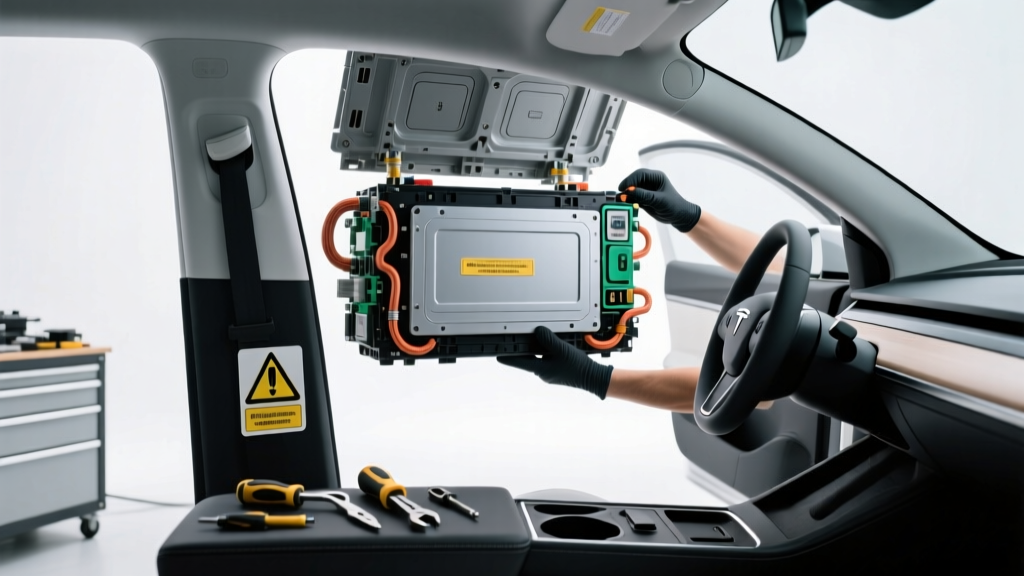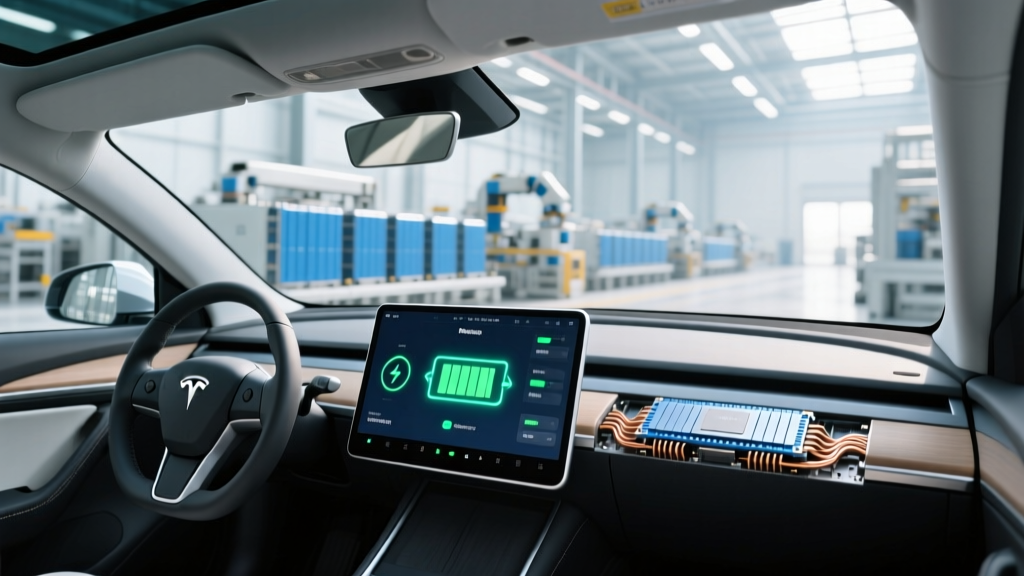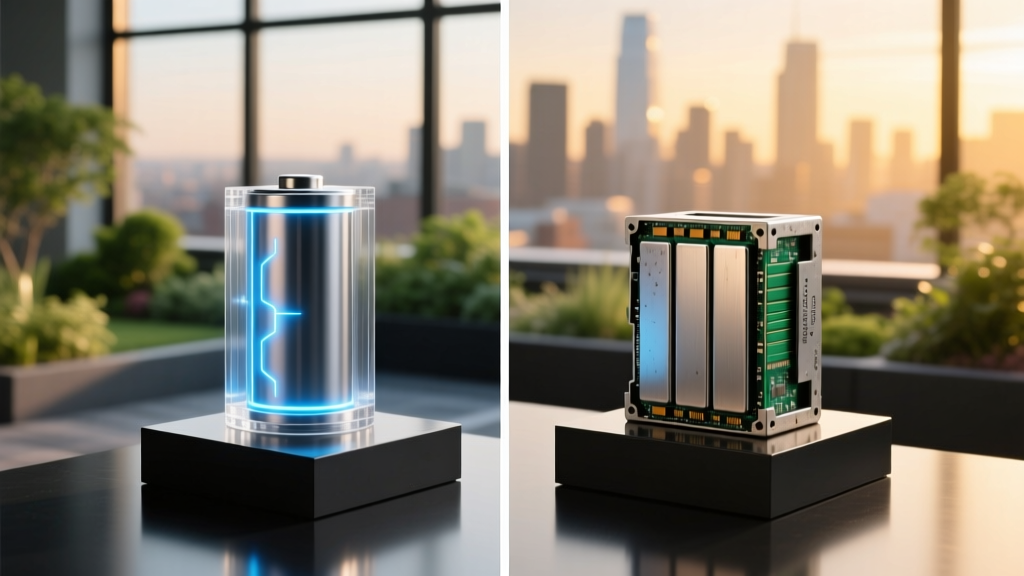
The Promise of the Solid Battery — and Where EV Batteries Stand Today
If you have browsed EV headlines in the past year, you have likely encountered the term solid battery — shorthand for solid-state battery technology that replaces the liquid electrolyte in conventional lithium-ion cells with a solid conductor. Toyota, Nissan, Samsung SDI, and QuantumScape have all published timelines suggesting commercial solid-state packs could arrive in production vehicles between 2027 and 2030. The promises are compelling: higher energy density, faster charging, improved safety, and longer cycle life.
But for anyone shopping for an EV in 2026, the battery in your vehicle will almost certainly use one of two proven lithium-ion chemistries: NMC/NCA (nickel manganese cobalt / nickel cobalt aluminum) or LFP (lithium iron phosphate). Understanding how these chemistries behave, how they degrade, what warranties cover, and what the solid battery future actually looks like is the single most important piece of EV ownership literacy you can develop.
This guide breaks down every dimension of EV battery technology with the exact numbers you need — no hype, no fear, just data.
LFP vs NMC/NCA: The Chemistry Decision That Shapes Your EV
Every EV sold in the US in 2026 uses a lithium-ion traction battery built on one of two dominant cathode chemistries. The choice between them affects range, charging behavior, longevity, cold-weather performance, and price.
| Attribute | LFP (Lithium Iron Phosphate) | NMC/NCA (Nickel-Based) |
|---|---|---|
| Energy Density (cell-level) | ~160–180 Wh/kg | ~220–300 Wh/kg |
| Typical Cycle Life | 3,000–5,000+ cycles | 1,000–2,000 cycles |
| Cold-Weather Performance | Moderate; range loss ~20–30% below freezing | Better; range loss ~15–25% below freezing |
| Thermal Stability / Safety | Excellent — very resistant to thermal runaway | Good — requires more active thermal management |
| Cost per kWh (pack-level, 2026) | ~$80–$100 | ~$110–$140 |
| Recommended Charging Habit | Can charge to 100% daily; periodic 100% calibration recommended | Daily charge to 80%; 100% only for trips |
| Notable 2026 Vehicles Using | Tesla Model 3/Y RWD, Ford Mustang Mach-E Select (base), Rivian Standard | Hyundai Ioniq 5, Kia EV6, BMW iX, Lucid Air, Tesla Long Range/Performance |
Which Chemistry Is Better — and Why?
Neither is universally superior. NMC/NCA wins on energy density, which translates to longer range in a given pack size — critical for larger vehicles and long-range trims. If you regularly drive 300+ mile highway trips in cold climates, an NMC pack's better cold-weather retention and higher energy density give it an edge.
LFP wins on cycle life and cost. A Tesla Model 3 RWD with an LFP pack rated at 3,000+ cycles could theoretically endure over 800,000 miles of full charge-discharge cycles before reaching end-of-life capacity. LFP also tolerates 100% state-of-charge storage far better, simplifying daily use for owners with home charging. The trade-off is lower energy density (heavier packs for the same range) and slightly worse cold-weather efficiency.
For most daily commuters covering under 100 miles, LFP offers the best long-term value and lowest maintenance anxiety. For road-trippers and cold-climate drivers, NMC's density and cold performance justify the higher cost and more careful charging habits.
How Long Do EV Batteries Actually Last?
The fear of a dead battery is the number-one barrier to EV adoption — and it is the most overstated. Modern EV traction batteries are engineered to outlast the vehicle itself in most cases.
Real-World Degradation Data Points
Based on aggregated fleet data and owner-reported measurements (sources including fueleconomy.gov and manufacturer disclosures):
- Year 1 / 15,000 mi: ~1–3% capacity loss (initial formation settling)
- Year 3 / 45,000 mi: ~4–7% total loss (degradation curve flattens)
- Year 5 / 75,000 mi: ~6–10% total loss
- Year 8 / 120,000 mi: ~8–14% total loss (still within warranty threshold for most manufacturers)
- Year 10 / 150,000 mi: ~10–18% total loss (varies significantly by chemistry and usage)
LFP packs consistently show lower degradation rates than NMC at equivalent mileage, largely due to their superior cycle life and tolerance for high state-of-charge storage.
A concrete example: a 2022 Tesla Model 3 Long Range (82 kWh NMC pack, EPA 358 mi) driven 15,000 miles/year with typical Level 2 home charging and occasional DC fast charging might show ~90% State of Health (SoH) at 100,000 miles — still delivering roughly 322 miles of EPA-equivalent range. That is more range than most gas cars get on a tank, five years in.
What the Battery Warranty Actually Covers
Federal regulations mandate that EV batteries sold in the US carry a minimum warranty of 8 years / 100,000 miles. California Air Resources Board (CARB) states require 10 years / 150,000 miles. Most manufacturers exceed the minimum.
| Manufacturer | Warranty Period | Capacity Retention Threshold | Notes |
|---|---|---|---|
| Tesla (Model 3/Y) | 8 yr / 120,000 mi (LR/AWD); 8 yr / 100,000 mi (RWD) | 70% | Covers defects and capacity below threshold |
| Hyundai / Kia | 10 yr / 100,000 mi | 70% | Among the longest coverage in the industry |
| Ford (Mach-E, F-150 Lightning) | 8 yr / 100,000 mi | 70% | Transferable to second owner |
| BMW | 8 yr / 100,000 mi | 70% | Includes high-voltage system components |
| Rivian | 8 yr / 175,000 mi | 70% | Highest mileage threshold in the market |
| GM (Ultium platform) | 8 yr / 100,000 mi | 70% | Ultium packs designed for modular cell replacement |
The critical detail: warranty coverage triggers when your battery's usable capacity drops below 70% of its original rated capacity within the stated period. If your 82 kWh pack can only hold 56 kWh (68% SoH) at year 7 and 95,000 miles, the manufacturer must repair or replace it at no cost. In practice, very few batteries degrade this quickly under normal use.
Warranties typically exclude damage from collisions, flooding, improper modifications, or use of non-approved charging equipment. They also generally do not cover gradual range reduction from normal aging above the 70% threshold.
EV Battery Replacement Cost: What You Would Actually Pay
Out-of-warranty battery replacement is the scenario that generates the most anxiety. Here are the actual numbers as of 2026:
| Vehicle | Battery Size | Chemistry | Estimated Replacement Cost |
|---|---|---|---|
| Tesla Model 3 RWD | 60 kWh | LFP | $8,000–$12,000 |
| Tesla Model Y Long Range | 82 kWh | NMC | $12,000–$16,000 |
| Hyundai Ioniq 5 | 77.4 kWh | NMC | $11,000–$15,000 |
| Ford F-150 Lightning Extended | 131 kWh | NMC | $18,000–$28,000 |
| Chevrolet Equinox EV | 85 kWh | NMC (Ultium) | $12,000–$16,000 |
| BMW iX xDrive50 | 111.5 kWh | NMC | $18,000–$25,000 |
Context that matters: the average age of a scrapped vehicle in the US is over 15 years, and the vast majority of EV batteries are projected to retain 80%+ capacity at 200,000 miles based on current degradation curves. Battery pack prices have fallen from over $1,000/kWh in 2010 to approximately $100–$140/kWh at the pack level in 2026, according to BloombergNEF tracking. If you do eventually need a replacement in 15 years, the cost will likely be substantially lower than today's figures.
Additionally, some manufacturers (notably GM with its Ultium platform) design packs for modular repair — replacing individual modules rather than the entire pack, reducing costs to $2,000–$5,000 per module.
Factors That Accelerate Battery Degradation
Not all miles are equal when it comes to battery wear. The following factors have the most significant measurable impact on long-term State of Health:
Battery Care Essentials — Maximize Your Pack's Life
- Limit DC fast charging frequency: Occasional road-trip fast charging is fine. Daily reliance on 150+ kW DC fast charging accelerates degradation by an estimated 1–3% over the pack's lifetime compared to Level 2-only charging. The high C-rates generate heat that stresses cell chemistry.
- Avoid sustained extreme SoC: For NMC packs, daily charging to 80% and avoiding letting the pack sit at 0% or 100% for extended periods reduces calendar aging. LFP packs tolerate 100% better — charge to 100% at least weekly for accurate BMS calibration.
- Manage extreme temperatures: Battery thermal management systems handle most scenarios, but parking in shade during extreme heat (100°F+) and plugging in during extreme cold (below 10°F) so the pack can precondition from grid power rather than battery energy reduces stress.
- Use preconditioning before fast charging: Most modern EVs (Tesla, Hyundai/Kia, BMW, Ford) automatically precondition the battery when you navigate to a DC fast charger. This warms the cells to optimal temperature (typically 30–40°C), enabling faster charging with less degradation. Always navigate through the car's system rather than just driving to a charger.
- Don't obsess over perfection: The difference between "perfect" battery care and "normal" use is typically 2–5% SoH over 10 years. Drive the car. The engineering margins are substantial.
How to Check Your Battery's State of Health
State of Health (SoH) is expressed as a percentage of the battery's current maximum capacity relative to its original rated capacity. A new pack is 100% SoH; a pack that can hold only 74 kWh of its original 82 kWh is at ~90% SoH.
Methods to Check SoH
1. In-vehicle battery health display: Some manufacturers (BMW, Mercedes, Hyundai) provide a SoH percentage or health indicator directly in the vehicle's settings menu. Tesla does not show a direct SoH percentage but displays estimated range at full charge, which you can compare to the original EPA figure.
2. OBD-II diagnostic tools: Third-party apps like OBDeleven, Leaf Spy (Nissan Leaf), or manufacturer-specific diagnostic readers can pull SoH data from the Battery Management System (BMS). These typically cost $30–$100 for the adapter plus a free or low-cost app.
3. Dealer diagnostic report: Requesting a battery health report during service visits provides an official SoH reading. Many dealers provide this free, especially during warranty-period inspections.
4. Manual calculation: Charge to 100%, note the displayed range, and compare to the original EPA sticker. If your 2023 Ioniq 5 originally showed 303 miles at 100% and now shows 278 miles, you are at approximately 92% SoH — recognizing that displayed range is also affected by driving style, temperature, and tire condition.
The Solid Battery Future: Realistic Timelines and What It Means
Solid-state batteries replace the flammable liquid electrolyte in conventional lithium-ion cells with a solid material — typically a ceramic, glass, or polymer conductor. The theoretical advantages are substantial:
- Energy density: 400–500 Wh/kg at the cell level (vs. ~260–300 for current NMC), potentially enabling 500+ mile ranges in mid-size vehicles
- Charging speed: Solid electrolytes can tolerate higher C-rates without dendrite formation, potentially enabling 10–80% charges in under 10 minutes
- Safety: No flammable liquid electrolyte eliminates the primary thermal runaway risk
- Longevity: Projected cycle life of 5,000–10,000+ cycles
Where Solid Battery Technology Actually Stands
As of early 2026, no mass-production vehicle on sale in the US uses a solid-state battery pack. Here is the announced timeline from major players:
- Toyota: Announced solid-state battery production for 2027–2028, initially in limited-run vehicles. Mass production targeted for 2030+. Toyota has stated these will debut in premium models first.
- Samsung SDI: Targeting 2027 for initial solid-state cell production, with automotive applications expected 2028–2029.
- QuantumScape: Has delivered prototype cells to automotive partners (including Volkswagen/PowerCo). Production timeline remains 2027–2028 for initial commercial deployment.
- Nissan: Announced a solid-state pilot plant operational in 2025, with production vehicles targeted for fiscal year 2028.
The realistic takeaway: solid-state batteries will begin appearing in limited, likely premium-priced vehicles around 2028–2030, with meaningful market penetration not expected until the early 2030s. If you are buying an EV in 2026, you are buying proven lithium-ion technology — and that technology is mature, reliable, and well-warrantied.
Another near-term advancement to watch is the silicon-dominant anode, which companies like Sila Nanotechnologies and Group14 are scaling. Silicon anodes can increase energy density by 20–40% over conventional graphite anodes and are expected in production vehicles as early as 2026–2027. This is a more incremental but more imminent improvement than full solid-state cells.
Frequently Asked Questions
How long do EV batteries last in years and miles?
Based on current degradation data, most EV batteries retain 80–90% of original capacity at 150,000 miles (roughly 10 years of average driving). LFP chemistry packs often exceed this. The battery will typically outlast other major vehicle components. The federal warranty minimum is 8 years / 100,000 miles, with many manufacturers offering 10 years.
How much does it cost to replace an EV battery?
Out-of-warranty replacement costs range from approximately $8,000 for a smaller LFP pack (e.g., Tesla Model 3 RWD, 60 kWh) to $25,000+ for large NMC packs (e.g., F-150 Lightning Extended Range, 131 kWh). However, full replacements are rare — most degradation stays within warranty thresholds, and modular repair options are expanding. Pack-level prices continue to decline year over year.
What does the EV battery warranty cover?
Manufacturer warranties cover defects in materials and workmanship, plus capacity loss below a specified threshold (typically 70% of original capacity) within the warranty period (typically 8 years / 100,000 miles minimum). They do not cover damage from accidents, flooding, unauthorized modifications, or normal gradual range reduction above the threshold. Check your specific manufacturer's warranty terms at irs.gov for tax credit implications of battery replacements.
How do I maximize my EV battery's health?
For NMC packs: charge to 80% daily, use 100% only for trips, avoid frequent DC fast charging, and precondition before fast charging. For LFP packs: charge to 100% at least weekly for BMS calibration, and follow the same fast-charging moderation. For both: park in shade during extreme heat, plug in during extreme cold, and don't let the pack sit at very low SoC for extended periods. The single highest-impact habit is relying on Level 2 home charging rather than daily DC fast charging.
LFP vs NMC — which battery chemistry should I choose?
Choose LFP if you prioritize longevity, lower cost, simpler charging habits (100% daily is fine), and mostly drive in moderate climates with daily commutes under 150 miles. Choose NMC/NCA if you need maximum range per charge, frequently drive in cold weather, take regular road trips requiring fast charging, or want the lightest possible pack for performance handling. Both chemistries are proven and well-warrantied in 2026.
Should I wait for solid-state batteries before buying an EV?
For most buyers, no. Solid-state batteries are not expected in mass-market US vehicles until 2029–2030 at the earliest, and initial pricing will likely be premium-segment. Current lithium-ion technology (both LFP and NMC) offers 250–400 miles of real-world range, 10–80% fast charging in 18–30 minutes, and proven longevity backed by 8–10 year warranties. Waiting 3–5+ years for solid-state means delaying the fuel savings, lower maintenance costs, and tax credit benefits available today under current IRS §30D rules.
Does fast charging damage my EV battery?
Occasional DC fast charging (1–2 times per week or on road trips) has a negligible impact on long-term health — perhaps 1–2% additional degradation over the pack's lifetime vs. Level 2-only charging. Daily DC fast charging at 150+ kW, however, does measurably accelerate wear due to sustained high cell temperatures and high C-rate stress. If you have access to Level 2 home charging (7–11.5 kW), use it as your primary method and reserve DC fast charging for trips.