Search forums and EV comment sections long enough, and you'll encounter the term "salty battery" — a colloquial nod to sodium-ion (Na-ion) battery chemistry that's been generating serious buzz in the EV world. With lithium supply chains under pressure and buyers demanding lower-cost electric vehicles, sodium-ion technology has emerged as a credible contender for next-generation energy storage. But how does it stack up against the lithium-ion chemistries powering today's EVs — specifically NMC (nickel manganese cobalt) and LFP (lithium iron phosphate)?
This guide cuts through the hype. We'll cover the chemistry trade-offs that matter, real degradation data from vehicles on the road today, warranty structures, replacement costs, and where sodium-ion realistically fits into the 2026 EV landscape.
LFP vs NMC vs Sodium-Ion: The Chemistry Breakdown
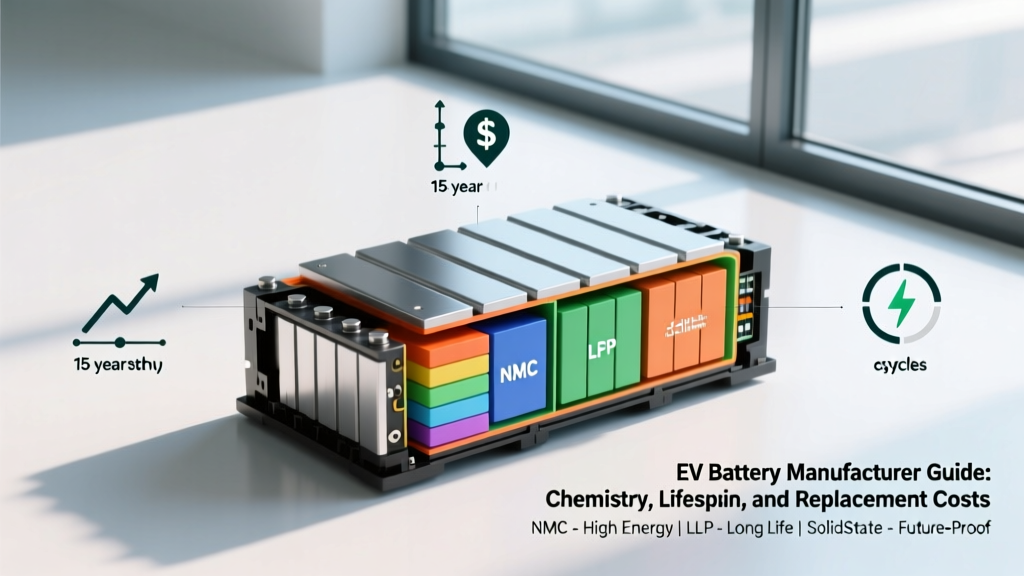
Before evaluating any "salty battery" promise, you need to understand the chemistries dominating today's market. Most modern EVs use one of two lithium-ion variants, each with distinct engineering trade-offs:
| Attribute | NMC / NCA (Lithium) | LFP (Lithium Iron Phosphate) | Sodium-Ion ("Salty Battery") |
|---|---|---|---|
| Energy Density (Wh/kg, cell-level) | 220–300 | 140–180 | 120–160 |
| Typical Cycle Life | 1,000–2,000 cycles | 3,000–6,000+ cycles | 2,000–4,000 cycles (est.) |
| Cold-Weather Performance | Moderate loss (~20-30% at 20°F) | Higher loss (~30-40% at 20°F) | Better low-temp retention (~15-20% loss at 20°F) |
| Cost ($/kWh, pack-level, 2026) | $110–$140 | $80–$100 | $50–$75 (projected, limited production) |
| Critical Mineral Dependence | High (cobalt, nickel, lithium) | Moderate (lithium, iron) | Low (sodium, iron, manganese) |
| Thermal Stability / Safety | Good, but prone to thermal runaway if damaged | Excellent — highly stable | Excellent — inherently stable chemistry |
| Current EV Availability (US, 2026) | Widely available (Tesla, Hyundai, BMW, Ford, etc.) | Widely available (Tesla Model 3 RWD, Ford Mustang Mach-E Select, Rivian Standard) | Not available in US-market EVs; limited Chinese-market vehicles |
The takeaway: NMC delivers the highest energy density — essential for long-range vehicles where battery weight matters. LFP trades range for longevity, safety, and lower cost. Sodium-ion promises even lower cost and better cold-weather behavior, but at a significant energy-density penalty that means heavier, bulkier packs for the same range.
How Long Do EV Batteries Actually Last?
The single most common question from prospective EV buyers: how long until I need a new battery? The data from hundreds of thousands of vehicles on the road provides a reassuring answer.
Real-World Degradation Data
Battery degradation is not linear. Most packs lose capacity quickly in the first 1–2 years (typically 2–5%), then the curve flattens significantly. Here's what fleet and owner data shows:
Typical Capacity Retention Over Time (based on aggregated fleet data from sources including Geotab's longitudinal study of 6,300+ EVs):
- Year 1: ~97–98% capacity retained (initial formation loss)
- Year 3: ~93–96% retained
- Year 5: ~89–94% retained
- Year 8: ~83–90% retained
- Year 10: ~78–87% retained (varies significantly by chemistry and usage)
LFP packs consistently outperform NMC in long-term cycle life. Tesla's 2025 Impact Report noted that Model 3/Y vehicles with LFP packs retained approximately 92% capacity at 100,000 miles. NMC packs in similar vehicles averaged approximately 88% at the same mileage.
What this means practically: At 15 years and 150,000 miles, a well-maintained EV battery will likely still hold 75–85% of its original capacity. You won't be stranded — you'll just have proportionally less range. A vehicle that started with 310 miles EPA might deliver 240–260 miles at that point.
EV Battery Warranty: What's Actually Covered?
Federal law mandates that EV battery warranties cover a minimum of 8 years / 100,000 miles (10 years / 150,000 miles in CARB states like California). But the details matter — specifically, the capacity retention threshold.
| Manufacturer | Warranty Period | Capacity Threshold | Chemistry (Primary) |
|---|---|---|---|
| Tesla (Model 3/Y RWD) | 8 yr / 100,000 mi | 70% retention | LFP |
| Tesla (Model 3/Y Long Range) | 8 yr / 120,000 mi | 70% retention | NMC |
| Hyundai / Kia | 10 yr / 100,000 mi | 70% retention | NMC |
| Ford (Mach-E, F-150 Lightning) | 8 yr / 100,000 mi | 70% retention | NMC / LFP (varies by trim) |
| Rivian | 8 yr / 120,000 mi | 70% retention | NMC / LFP (varies) |
| GM (Ultium platform) | 8 yr / 100,000 mi | 70% retention | NMC |
| BMW | 8 yr / 100,000 mi | 70% retention | NMC |
Critical nuance: The 70% threshold means the manufacturer only replaces or repairs the battery if it degrades below 70% of original capacity within the warranty window. Given the degradation data above, very few batteries actually breach this threshold under normal use. According to data compiled by Recurrent Auto, fewer than 1.5% of EVs in their study cohort required warranty battery replacements.
How Much Does an EV Battery Replacement Cost?
This is the fear that keeps potential EV buyers up at night. Let's address it with real numbers — and critical context.
| Vehicle / Pack Size | Battery Capacity (kWh) | Replacement Cost (Parts + Labor) | Typical Replacement Timeline |
|---|---|---|---|
| Tesla Model 3 RWD (LFP) | ~60 kWh | $12,000–$16,000 | Rarely needed before 200,000+ mi |
| Tesla Model Y Long Range | ~75 kWh | $14,000–$18,000 | Rarely needed before 200,000+ mi |
| Hyundai Ioniq 5 | 77.4 kWh | $15,000–$20,000 | Rarely needed before 200,000+ mi |
| Ford F-150 Lightning (Extended) | ~131 kWh | $22,000–$32,000 | Rarely needed before 150,000+ mi |
| Chevrolet Bolt EV/EUV | 65 kWh | $14,000–$16,000 | Rarely needed before 200,000+ mi |
The context that matters: Most EV batteries will outlast the vehicle's useful economic life. The average age of a scrapped passenger vehicle in the US is approximately 15–17 years. Given that modern EV batteries are projected to retain 75–85% capacity at that age, a full replacement is statistically unlikely for the majority of original owners. When replacements are needed, they're often due to manufacturing defects (covered under warranty) or physical damage (covered by insurance), not end-of-life degradation.
Additionally, module-level repairs are increasingly common — rather than replacing the entire pack, technicians can swap individual degraded modules for $2,000–$5,000 depending on the vehicle.
Factors That Accelerate (or Slow) Battery Degradation
Not all miles are created equal. Battery longevity depends heavily on how you charge, drive, and store your EV.
Battery Care Best Practices
- Avoid sustained 100% State of Charge (SoC): For NMC batteries, daily charging to 80% significantly extends cycle life. LFP batteries tolerate 100% SoC better and manufacturers like Tesla recommend periodic full charges for LFP to maintain cell-balancing accuracy.
- Minimize DC fast charging when possible: Occasional fast charging is fine, but daily reliance on 150+ kW DC charging accelerates degradation. Research from the Idaho National Laboratory showed that vehicles charged exclusively via DC fast charging lost approximately 5–8% more capacity over 50,000 miles compared to Level 2 charging.
- Precondition before fast charging: Most modern EVs precondition the battery when you navigate to a charger. This brings the pack to optimal temperature (roughly 85–95°F), reducing lithium plating risk and improving charge speed.
- Avoid extreme SoC in extreme temperatures: Don't leave your EV sitting at 100% SoC in summer heat or below 10% SoC in sub-freezing cold for extended periods. If storing, aim for 50–60% SoC.
- Use scheduled charging: Set your EV to finish charging just before you leave rather than sitting at high SoC for hours overnight.
- Drive it regularly: Batteries prefer regular, moderate use over long idle periods.
How to Check and Monitor Battery Health (SoH)
State of Health (SoH) is the metric that tells you how much capacity your battery retains compared to when it was new. Here's how to monitor it:
Built-In Vehicle Tools
- Tesla: The mobile app and in-car service menu display battery health percentage. Third-party tools like TeslaFi and Stats provide detailed SoH tracking over time.
- Hyundai/Kia: The EV-specific menu in the infotainment system shows battery condition. The Carista OBD-II adapter can pull detailed SoH data.
- GM (Ultium): The myChevrolet/myCadillac app includes a battery health indicator.
- Ford: The FordPass app provides battery state-of-health data for Mach-E and F-150 Lightning owners.
Third-Party and OBD-II Diagnostics
For deeper analysis, tools like the OBDLink MX+ paired with apps such as LeafSpy (Nissan Leaf), ABRP (A Better Route Planner) OBD integration, or manufacturer-specific diagnostic software can pull granular cell-level voltage data, internal resistance readings, and precise SoH percentages. Services like Recurrent offer free battery health reports that benchmark your pack against a fleet of identical vehicles.
Where the 'Salty Battery' Actually Stands in 2026
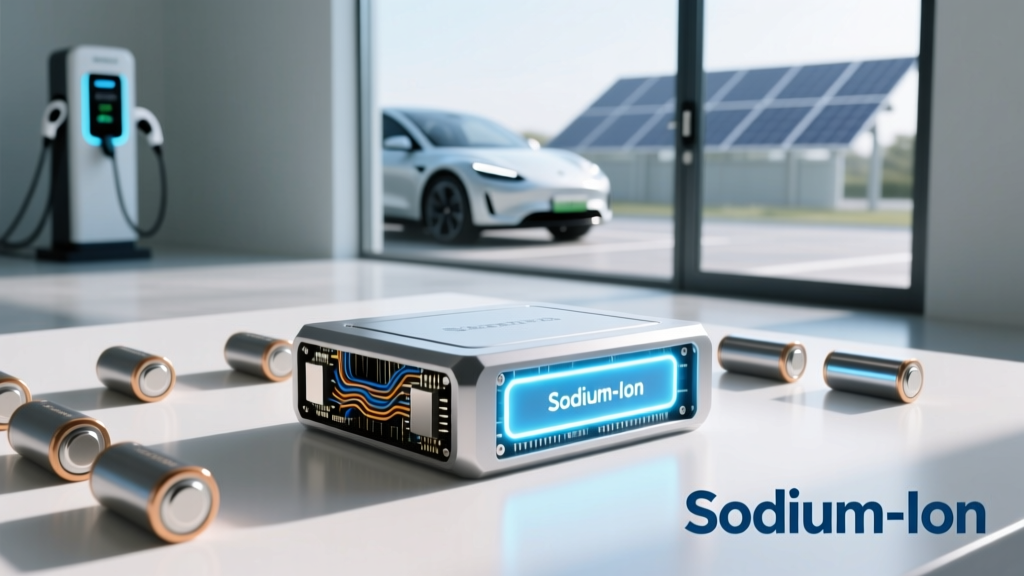
Sodium-ion batteries are not science fiction — they're in limited production today. But their current deployment tells you everything about where they fit in the EV ecosystem.
Current Sodium-Ion Status
As of early 2026, sodium-ion battery packs are being produced primarily by Chinese manufacturers CATL and HiNa Battery. The BYD Seagull (sold in China, not the US) and certain Chery models offer sodium-ion variants with ranges of approximately 155–200 miles on relatively small packs (~30–40 kWh). CATL's first-generation sodium-ion cells deliver approximately 160 Wh/kg at the cell level — roughly comparable to early LFP cells from a decade ago.
Where sodium-ion excels:
- Cost: Sodium is abundant and cheap. Pack-level costs are projected at $50–$75/kWh vs. $80–$100 for LFP, making sub-$20,000 EVs economically viable.
- Cold performance: Na-ion cells retain approximately 90%+ capacity at -4°F (-20°C), significantly outperforming both LFP and NMC.
- Supply chain independence: No lithium, cobalt, or nickel required — a major geopolitical and sourcing advantage, particularly relevant to §30D tax credit critical-mineral requirements under current IRS rules.
- Fast-charge capability: CATL's cells reportedly support 10–80% charging in approximately 15 minutes due to favorable ion-transport properties.
Where sodium-ion falls short:
- Energy density: At 120–160 Wh/kg, a 300-mile EV would require a pack weighing roughly 30–40% more than an equivalent NMC pack. This limits Na-ion to compact, urban-focused vehicles.
- US availability: No sodium-ion EVs are sold in the US market as of 2026. Import tariffs, supply chain localization requirements, and the infancy of Na-ion manufacturing mean US availability is realistically 3–5 years away at minimum.
- Long-term cycle data: Unlike LFP and NMC with millions of real-world vehicle miles, Na-ion degradation data at scale remains limited.
Forward-Looking: Solid-State and Silicon-Anode Batteries
Beyond sodium-ion, two other technologies are in active development:
- Solid-state batteries: Toyota, Samsung SDI, and QuantumScape are targeting 2027–2029 production timelines for solid-state cells promising 350–500 Wh/kg and 10-minute fast charging. These remain announced/preliminary — no mass-market vehicle currently uses solid-state packs. Expect initial deployment in premium vehicles with pricing above $70,000.
- Silicon-anode batteries: Companies like Sila Nanotechnologies and Group14 are replacing graphite anodes with silicon to boost energy density by 20–40%. Mercedes-Benz and GM have announced partnerships, with limited production expected in 2027–2028 model-year vehicles. Again, these are preliminary and not currently available.
LFP vs NMC: Which Should You Choose?
Setting aside the future promise of salty batteries and solid-state tech, today's buyers face a concrete choice between LFP and NMC. Here's a practical decision framework:
Choose LFP if:
- You plan to keep the vehicle 8+ years and want maximum cycle life
- You primarily commute and can charge at home (daily range needs under 250 miles)
- You want the lowest purchase price (LFP trims are typically $3,000–$6,000 cheaper)
- You value thermal safety and can tolerate slightly reduced cold-weather range
- You prefer charging to 100% without worrying about degradation
Choose NMC if:
- You need maximum range (300+ miles EPA) for frequent road trips
- You regularly drive in cold climates and need better winter range retention than LFP provides
- You want the lightest possible vehicle for handling and efficiency
- You tow or carry heavy loads where energy density matters
- You charge to 80% daily and can follow SoC best practices
Frequently Asked Questions
How long do EV batteries last in years and miles?
Based on fleet data, modern EV batteries retain 75–85% of original capacity at 15 years / 150,000 miles. LFP chemistries tend toward the higher end of that range. Most batteries will outlast the vehicle's useful economic life without requiring replacement.
How much does an EV battery cost to replace?
Full pack replacement ranges from approximately $12,000 for a 60 kWh LFP pack (Tesla Model 3 RWD) to $32,000 for a 131 kWh NMC pack (F-150 Lightning Extended Range), including labor. However, full replacements due to degradation alone are extremely rare — most are covered by warranty or insurance. Module-level repairs cost $2,000–$5,000.
What does the EV battery warranty actually cover?
All major manufacturers warrant the high-voltage traction battery for 8 years / 100,000 miles (10 years / 150,000 miles in CARB states) against capacity loss below 70% of original. This covers degradation, cell failures, and manufacturing defects. It does not cover physical damage from accidents (that's your insurance) or the 12V auxiliary battery.
How do I check my EV's battery State of Health?
Most manufacturers provide SoH data through their mobile app or in-car menus. For more granular data, OBD-II adapters like the OBDLink MX+ paired with apps like TeslaFi, LeafSpy, or Carista can pull cell-level voltage and precise SoH percentages. Services like Recurrent offer free fleet-benchmarked battery reports.
Is a sodium-ion ("salty") battery better than lithium-ion?
It depends on the application. Sodium-ion is cheaper, performs better in extreme cold, and avoids critical-mineral supply chain issues. But it's significantly heavier and less energy-dense, limiting it to shorter-range, urban vehicles. For US buyers in 2026, sodium-ion EVs are not yet available. LFP remains the best choice for cost-conscious buyers wanting longevity, while NMC serves those needing maximum range.
Does frequent DC fast charging damage my battery?
Occasional DC fast charging is fine and expected. However, daily reliance on 150+ kW DC charging has been shown to accelerate degradation by approximately 5–8% over 50,000 miles compared to Level 2 home charging. For daily use, a Level 2 home charger (7–11 kW) is ideal. Use DC fast charging for road trips, not as your primary charging method.
Whether you're evaluating today's LFP and NMC options or watching the sodium-ion horizon, the data is clear: modern EV batteries are remarkably durable, well-warranted, and unlikely to become the financial liability many fear. The right chemistry depends on your driving patterns, climate, and ownership timeline — not on marketing hype.