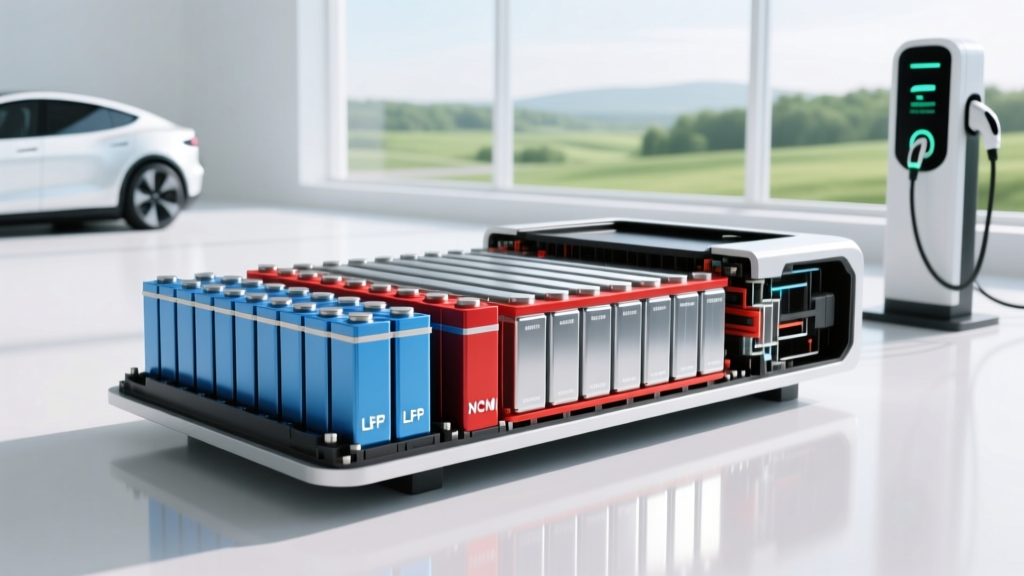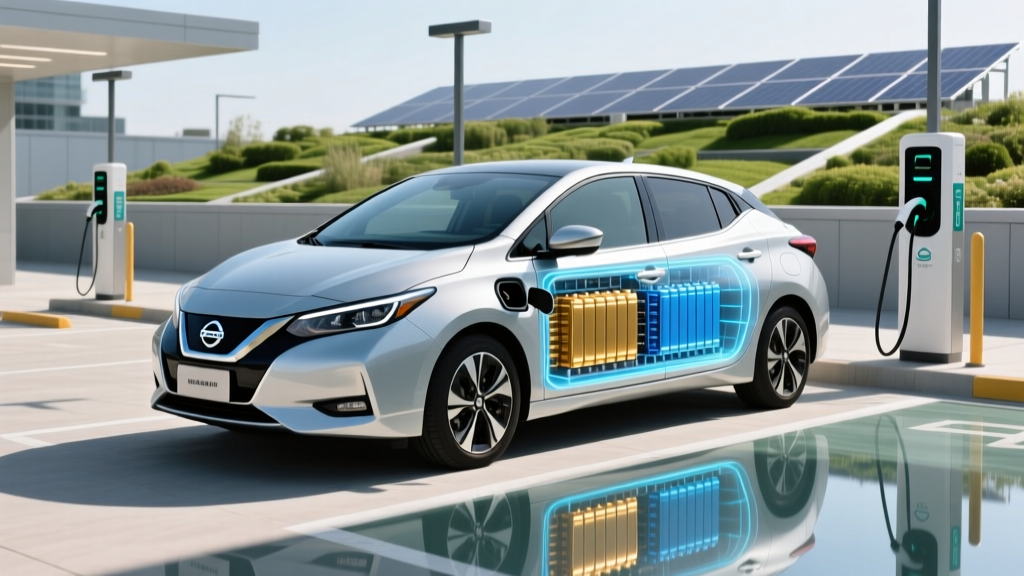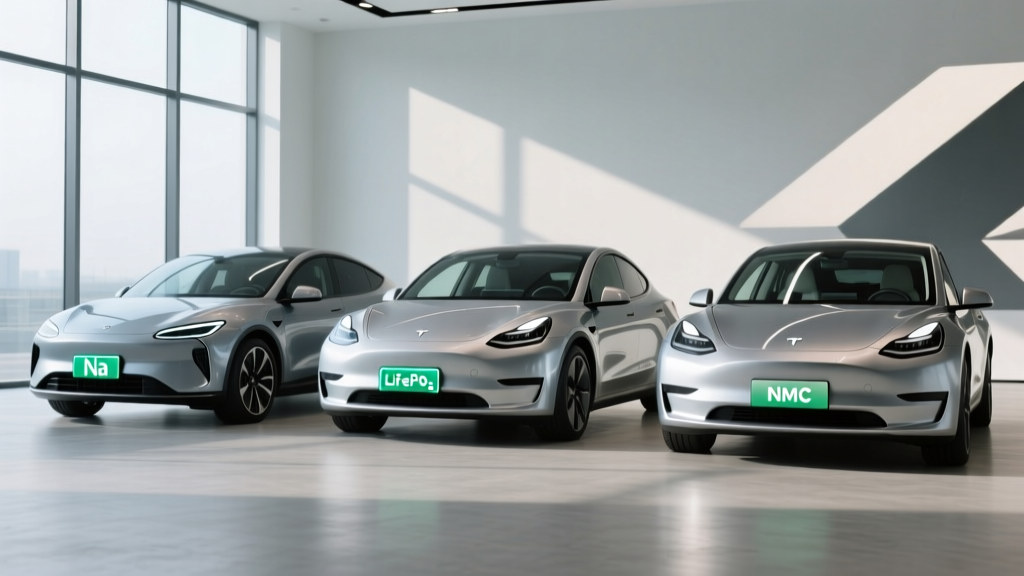
Sodium-ion batteries — often abbreviated as NA batteries — have moved from laboratory curiosity to production reality. CATL began shipping its first-generation sodium-ion packs in Chinese-market EVs in 2024, and by early 2026 several automakers have announced or launched models using the chemistry globally. For US-based EV shoppers, the question is no longer if sodium-ion will arrive, but when it will show up in vehicles sold stateside and whether it deserves a spot on your shortlist.
This guide breaks down how NA battery technology compares to the two chemistries you already know — lithium iron phosphate (LFP) and nickel-manganese-cobalt/aluminum (NMC/NCA) — across energy density, cost, degradation, cold-weather behavior, and lifespan. We'll also cover what the shift means for battery replacement costs, warranty coverage, and how to monitor and maximize the health of whichever pack you drive.
What Is a Sodium-Ion (NA) Battery?
A sodium-ion battery replaces lithium in the cathode and electrolyte with sodium, an element that is roughly 1,000 times more abundant in the Earth's crust. The electrochemistry is similar: ions shuttle between anode and cathode during charge and discharge. The key difference is the raw material. Sodium carbonate costs a fraction of lithium carbonate — often under $300 per metric ton compared to lithium's volatile $10,000–$50,000+ range over the past few years.
Current-generation NA cells from CATL deliver an energy density around 160 Wh/kg at the cell level. That trails LFP (~170–185 Wh/kg) and falls well short of high-nickel NMC/NCA (~250–300 Wh/kg). CATL's second-generation cells, announced for 2026–2027 production, target 200 Wh/kg, which would put them on par with today's mid-range LFP.
Where NA batteries shine is cold performance and fast-charge tolerance. CATL reports that its first-gen sodium-ion cells retain over 90% of capacity at −20°C (−4°F), a figure that LFP cells typically can't match without aggressive thermal preconditioning. NA cells also accept a 15-minute charge from 10–80% at room temperature and tolerate repeated DC fast charging with less structural stress than NMC.
| Attribute | NMC/NCA | LFP | NA (Sodium-Ion) |
|---|---|---|---|
| Cell energy density | 250–300 Wh/kg | 170–185 Wh/kg | 160 Wh/kg (gen 1); ~200 Wh/kg (gen 2 target) |
| Typical pack-level density | 180–210 Wh/kg | 130–155 Wh/kg | ~120–140 Wh/kg (estimated) |
| Cycle life (to 80% SoH) | 1,000–2,000 | 3,000–5,000+ | 3,000–4,000 (reported) |
| Cold retention at −20°C | ~75–80% | ~65–75% | >90% |
| Raw-material cost index | Highest (Ni, Co, Li) | Moderate (Li, Fe, P) | Lowest (Na, Fe, Mn) |
| Peak DC fast-charge rate | Up to 350 kW | Up to 250 kW | ~200 kW (gen 1) |
| 10–80% charge time | ~15–22 min | ~20–30 min | ~15 min (reported, gen 1) |
| US-market availability (2026) | Widespread | Widespread (Tesla, Ford, Rivian) | Announced/preliminary; not yet in US-market EVs |
LFP vs NMC vs NA: Which Chemistry Fits Your Driving?
Choosing a battery chemistry is a trade-off, not a hierarchy. Here's how each stacks up for common buyer profiles:
NMC/NCA remains the pick for maximum range in a given pack volume. If you need 350+ EPA miles in a midsize SUV, high-nickel NMC is still the only chemistry that delivers it without excessive weight. The trade-off is higher material cost, faster degradation under repeated fast charging, and greater sensitivity to high state-of-charge storage. Vehicles using NMC include the Hyundai Ioniq 5 (84 kWh usable, EPA 303 mi Long Range AWD), BMW iX, and most long-range trims from legacy automakers.
LFP dominates the value segment. Tesla's Model 3 Rear-Wheel Drive uses a ~60 kWh LFP pack (EPA 272 mi, $38,990 base MSRP before incentives). LFP tolerates daily 100% charging — Tesla actually recommends it — and offers 3,000–5,000+ cycle life. The penalty is lower energy density (more weight for the same range) and steeper capacity loss in sub-freezing temperatures unless the pack is preconditioned.
NA (sodium-ion) targets the budget-compact and cold-climate segments. With gen-1 density around 160 Wh/kg, expect NA packs in the 40–55 kWh range yielding roughly 150–200 EPA miles — ideal for city commuters and second vehicles. The cost advantage could push entry-level EV pricing below $25,000 MSRP, a threshold LFP has approached but not consistently crossed. If you live in Minnesota or Maine, NA's cold-weather retention is a genuine daily-life advantage, not a spec-sheet curiosity.
How Long Do EV Batteries Last?
The short answer: longer than most buyers expect, and usually longer than the rest of the car.
Real-world degradation data collected by Recurrent, a battery-health analytics firm tracking over 15,000 EVs, shows that the median Tesla Model 3 (NMC, 2018–2022) loses approximately 5–8% of original range by 100,000 miles. The Nissan Leaf (passive-cooled NMC, 2013–2017) was a notable outlier, with some packs losing 15–25% over the same mileage due to thermal stress.
For LFP packs, data is more limited but promising. Tesla's 2024 Impact Report stated that Model 3 RWD (LFP) vehicles showed an average of ~8% degradation at 200,000 miles. Given that the average American drives ~13,500 miles per year (FHWA data), that translates to roughly 15 years of service before hitting the 80% state-of-health (SoH) threshold that most warranties use.
Sodium-ion cycle-life data from production vehicles is still thin. CATL's published lab results claim 3,000–4,000 cycles to 80% SoH, which at 200 Wh/kg gen-2 density and an average of 3 miles per kWh would mean 180,000–240,000 miles before significant degradation. Real-world fleet data will take 3–5 more years to mature.
- Year 1 / 0–15k mi: 1–3% loss (initial formation settling)
- Years 2–4 / 15k–60k mi: Gradual linear loss, ~0.5–1% per year
- Years 5–8 / 60k–120k mi: Continued slow decline; total ~8–12% loss for liquid-cooled packs
- Years 9–15 / 120k–200k mi: Tapering curve; most packs remain above 80% SoH with proper care
Sources: Recurrent fleet data, Tesla Impact Report, owner-forum aggregated logs. Individual results vary with climate, charging habits, and thermal management.
What Does the Battery Warranty Cover?
Federal law mandates that EV battery warranties cover a minimum of 8 years / 100,000 miles. In California Air Resources Board (CARB) states — which include California, New York, Massachusetts, and over a dozen others — the requirement extends to 10 years / 150,000 miles for certain emissions-related components, though battery-specific extensions vary by automaker.
The industry-standard capacity-retention threshold is 70% of original capacity over the warranty period. If your pack falls below that, the manufacturer will repair or replace it. Some brands go further:
| Automaker | Warranty Period | Capacity Threshold | Chemistry |
|---|---|---|---|
| Tesla (Model 3/Y LFP) | 8 yr / 100,000 mi | 70% | LFP |
| Tesla (Model 3/Y LR NMC) | 8 yr / 120,000 mi | 70% | NMC |
| Hyundai / Kia | 10 yr / 100,000 mi | 70% | NMC / LFP |
| Ford (Mustang Mach-E) | 8 yr / 100,000 mi | 70% | NMC / LFP |
| Rivian | 8 yr / 175,000 mi | 70% | NMC (2170 cells) |
| GM (Ultium platform) | 8 yr / 100,000 mi | 70% | NMC |
Warranties cover defects and abnormal degradation. They do not cover damage from accidents, flooding, or unauthorized modifications. Read the fine print: some warranties prorate coverage after the initial years, though most major EV makers currently offer full replacement through the term.
How Much Does an EV Battery Cost to Replace?
Out-of-warranty battery replacement is the single biggest fear among prospective EV buyers — and the one most frequently overstated in mainstream coverage.
Current replacement costs for the high-voltage traction battery (not the 12V auxiliary battery, which is a separate, inexpensive component) vary enormously by pack size and chemistry:
| Vehicle / Pack Size | Chemistry | Estimated Pack Cost | Labor + Total |
|---|---|---|---|
| Tesla Model 3 RWD (~60 kWh) | LFP | $8,000–$11,000 | $10,000–$14,000 |
| Tesla Model Y LR (~82 kWh) | NMC | $12,000–$16,000 | $14,000–$19,000 |
| Hyundai Ioniq 5 (~84 kWh) | NMC | $13,000–$18,000 | $15,000–$21,000 |
| Ford F-150 Lightning Ext. (~131 kWh) | NMC | $20,000–$28,000 | $23,000–$32,000 |
| Nissan Leaf (40 kWh) | NMC | $6,500–$9,000 | $8,000–$11,000 |
| Chevrolet Bolt EV (~65 kWh) | NMC | $9,000–$13,000 | $11,000–$15,000 |
Context matters here. The vast majority of EV batteries never need full replacement under normal ownership. fueleconomy.gov data and fleet studies consistently show that liquid-cooled packs from 2018 onward retain 85–92% capacity at the 100,000-mile mark. The vehicles most likely to need out-of-warranty replacement are early-generation, passively cooled models (pre-2018 Nissan Leaf, early Fiat 500e) — not current-production EVs with active thermal management.
When sodium-ion packs reach US-market vehicles, their lower raw-material cost could bring replacement pricing down 20–30% compared to equivalent-capacity NMC packs. A 55 kWh NA pack might cost $5,000–$7,000 to replace, a figure that would meaningfully change the total-cost-of-ownership equation for budget EVs.
Factors That Affect Battery Lifespan
Battery degradation is not random. It's driven by a handful of well-understood stressors, and managing them can add years to your pack's useful life.
- Avoid sustained 100% SoC: For NMC/NCA, charge to 80% daily; save 100% for road trips. LFP and NA tolerate regular 100% charges better — follow your automaker's guidance.
- Minimize DC fast-charging frequency: Occasional fast charging is fine. Daily reliance on 150+ kW DC charging accelerates degradation, especially for NMC. One NREL study found that exclusive DC fast charging increased degradation by ~4–6% over 50,000 miles compared to Level 2 only.
- Precondition before fast charging: Most modern EVs do this automatically when you navigate to a charger. Preconditioning warms the pack to ~30–35°C, enabling faster charging and reducing lithium plating risk.
- Limit extreme-temperature storage: Don't leave your EV at 100% SoC in 100°F+ heat for days, or at very low SoC in sub-zero cold for extended periods. Park in shade or a garage when possible.
- Drive moderately in extreme cold: Cold batteries have higher internal resistance. Gentle acceleration in the first 10–15 minutes of a cold-soak drive reduces stress.
- Keep software updated: Automakers periodically refine battery management system (BMS) algorithms to improve longevity. Install OTA updates promptly.
How to Check and Monitor Battery Health (SoH)
State of Health (SoH) is the percentage of your battery's original usable capacity that remains. A brand-new pack is 100% SoH; a pack that has degraded to hold only 70 of its original 80 kWh is at 87.5% SoH.
Here's how to check it:
- In-car displays: Tesla shows battery health indirectly through the range estimate at 100% charge compared to the original EPA figure. Hyundai/Kia's infotainment includes an EV battery diagnostics screen on newer models.
- OBD-II readers and apps: Devices like the OBDLink CX paired with apps such as EV Health or Scan My Tesla can pull BMS-reported SoH data directly. This is the most accurate DIY method.
- Third-party services: Companies like Recurrent offer battery health reports that compare your pack's degradation to a fleet of identical vehicles. Some dealerships now provide SoH printouts during service visits.
- Manual tracking: Charge to 100% (for LFP/NA) or your normal daily limit (for NMC), note the displayed range, and compare it to the range when the car was new under similar temperature conditions. A 10% drop over 3–4 years is normal; 15%+ warrants a dealer visit.
Emerging Battery Tech: Solid-State, Silicon Anode, and Beyond
Sodium-ion isn't the only chemistry vying for next-generation status. Here's where other emerging technologies stand as of 2026:
Solid-state batteries replace the liquid electrolyte with a solid ceramic, polymer, or sulfide layer. The promise is dramatic: 400+ Wh/kg cell density, faster charging, and near-zero fire risk. Toyota has announced solid-state packs for limited 2027–2028 production vehicles, and QuantumScape continues to ship prototype cells to Volkswagen for testing. However, manufacturing yield, cost, and cycle-life challenges remain. Realistic mass-market availability is 2029–2032 at the earliest. No solid-state EV is currently available for purchase anywhere.
Silicon-anode batteries swap graphite for silicon at the anode, boosting energy density by 20–40%. Sila Nanotechnologies and Group14 Technologies are shipping silicon-dominant anode materials to battery cell makers, and Mercedes-Benz's next-generation EQ models are expected to use them. Expect first production vehicles in 2027–2028.
Sodium-ion + LFP hybrid packs are already in production in China. CATL's "AB battery" system integrates sodium-ion and LFP cells in a single pack, using the NA cells for cold-start performance and fast-charge acceptance and the LFP cells for bulk energy storage. This hybrid approach could reach global markets by 2027–2028.
None of these technologies invalidate current EV purchases. Today's LFP and NMC packs are mature, well-understood, and backed by 8–10 year warranties. The emerging tech will improve range and reduce cost incrementally, but the vehicles on sale now will remain practical and supportable for well over a decade.
Frequently Asked Questions
Are sodium-ion (NA) batteries safe?
Yes. Sodium-ion cells have demonstrated strong thermal stability in testing — comparable to or better than LFP, which is already considered the safest lithium chemistry. NA cells can be discharged to 0V for transport without damage, reducing shipping-fire risk. No safety incidents specific to sodium-ion EV packs have been reported as of early 2026.
Will a sodium-ion EV qualify for the federal §30D tax credit?
Eligibility depends on the vehicle's MSRP, your income, and the battery's critical-mineral and component sourcing — not the chemistry itself. Under current IRS §30D rules, the vehicle must have a battery capacity of at least 7 kWh, meet North American final assembly requirements, and satisfy critical-mineral and battery-component sourcing thresholds that tighten annually. A sodium-ion EV assembled in the US with qualifying sourcing could receive up to $7,500 (or be applied as a point-of-sale discount). Consult a tax professional for your specific situation.
Can I fast-charge an NA battery every day without damage?
Sodium-ion cells tolerate frequent DC fast charging better than NMC due to the larger ionic radius of sodium causing less structural stress on the anode. CATL's published data suggests minimal additional degradation from repeated fast charging. However, best practice for any chemistry is still to use Level 2 home charging for daily needs and reserve DC fast charging for road trips.
Which is better for cold climates — LFP or NA?
Sodium-ion has a clear cold-weather advantage. At −20°C (−4°F), gen-1 NA cells retain over 90% of room-temperature capacity, while LFP typically drops to 65–75% without preconditioning. If you regularly drive in sub-freezing conditions and don't have access to a heated garage, NA could meaningfully reduce winter range loss — once vehicles with the chemistry become available in your market.
When will sodium-ion EVs be available in the United States?
As of early 2026, no US-market EV uses a pure sodium-ion traction battery. Several Chinese-market models (BYD Seagull variants, Chery iCAR) already use NA packs, and CATL has signaled plans to supply global automakers. Realistic US availability is 2027–2028 for entry-level compact models, likely from brands already sourcing CATL cells. Announcements are preliminary and specs may change.
Should I wait for sodium-ion or buy an EV now?
If you need a vehicle today, current LFP and NMC options are mature, well-supported, and backed by long warranties. Waiting 2–3 years for NA might save $2,000–$5,000 on a budget compact and give you better cold-weather range, but it also means forgoing today's incentives, which may not be available in the same form later. For most buyers, the right move is to buy the best LFP or NMC vehicle that fits your budget now and let NA mature for your next purchase.