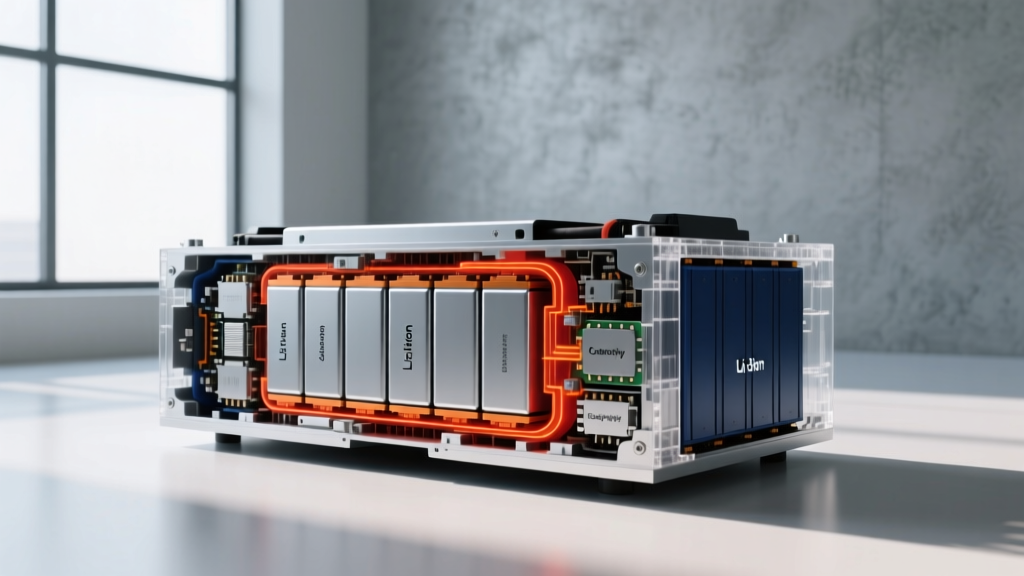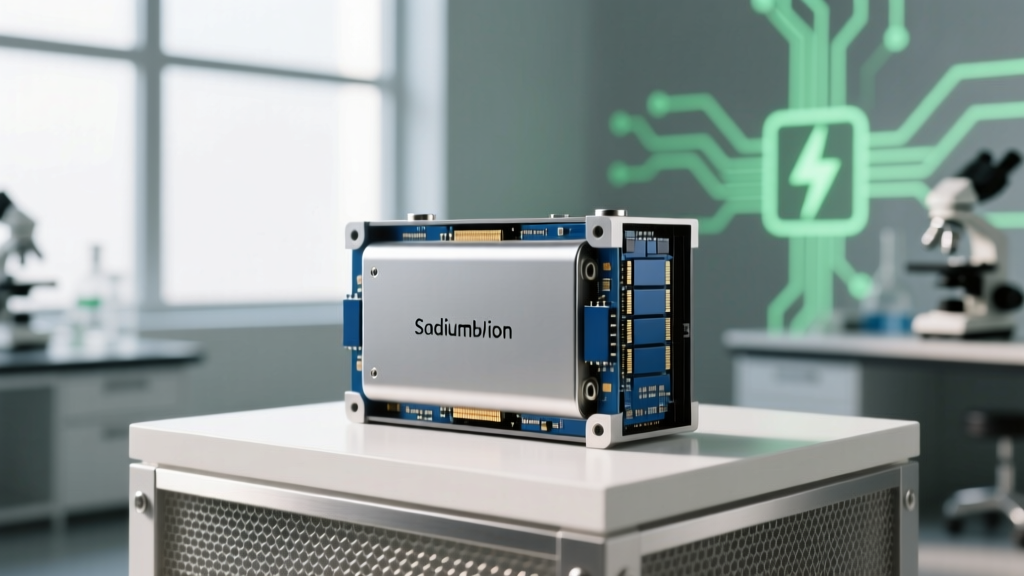
The lithium-ion battery has defined the electric vehicle era, but a quieter revolution is brewing in cell chemistry. Sodium-ion batteries — long confined to lab prototypes and grid-storage pilots — are now entering early commercial production, driven by a growing roster of sodium ion battery manufacturers aiming to cut costs, reduce reliance on critical minerals, and offer a viable alternative for entry-level EVs and energy storage.
But what does sodium-ion actually deliver compared to the LFP (lithium iron phosphate) and NMC/NCA (nickel manganese cobalt / nickel cobalt aluminum) cells that power today's EVs? And how does it stack up against the solid-state batteries that automakers keep promising? This guide breaks down every major EV battery chemistry on the market in 2026 — including where sodium-ion fits, what the data says about degradation and longevity, and what owners can do to maximize the pack they already have.
Today's EV Battery Chemistries: LFP vs NMC vs NCA
Before evaluating sodium-ion, it helps to understand the two dominant lithium-ion chemistries in current production EVs. Most modern EVs use either LFP or NMC/NCA cathode chemistry, each with distinct trade-offs in energy density, cycle life, cost, and thermal behavior.
LFP (Lithium Iron Phosphate): Used in the Tesla Model 3 Standard Range, base Model Y, Ford Mustang Mach-E Select (LFP option), and most BYD vehicles. LFP cells sacrifice some energy density for dramatically longer cycle life, superior thermal stability (much lower risk of thermal runaway), and lower raw-material cost. LFP packs tolerate regular charging to 100% SoC better than NMC, and Tesla explicitly recommends periodic full charges for LFP-equipped vehicles to keep the battery management system (BMS) calibrated.
NMC/NCA (Nickel-based): Found in long-range and performance variants — Tesla Model 3 Long Range, Hyundai Ioniq 5/6, Kia EV6/EV9, Rivian R1T/R1S, GM Ultium-based vehicles (Cadillac Lyriq, Chevrolet Equinox EV). These chemistries pack more energy per kilogram, enabling longer range in the same physical footprint. The trade-off: higher cost, greater sensitivity to sustained high SoC, and more complex thermal management requirements.
| Attribute | LFP | NMC / NCA | Sodium-Ion (Emerging) |
|---|---|---|---|
| Energy Density (Wh/kg, cell-level) | 160–200 | 230–300 | 120–160 |
| Typical Cycle Life | 3,000–6,000+ | 1,000–2,500 | 2,000–5,000 (est.) |
| Cold-Weather Performance | Moderate loss (~15-25% at -20°C) | Moderate loss (~15-20% at -20°C) | Potentially better low-temp; data limited |
| Thermal Stability | Excellent (high runaway threshold) | Good (requires active management) | Excellent (inherent stability) |
| Cost (per kWh, cell-level) | $70–$95 | $90–$130 | $45–$70 (projected at scale) |
| Critical Mineral Dependency | No cobalt/nickel; uses lithium, iron, phosphate | Requires nickel, cobalt, lithium | No lithium, cobalt, or nickel — sodium is abundant |
| Current EV Adoption (2026) | Widespread (Tesla, BYD, Ford) | Widespread (most OEMs, LR/performance trims) | Limited: BYD Seagull (China), select micro-EVs |
Which is better? There is no universal winner. LFP is the better choice for buyers prioritizing longevity, daily-driver duty cycles, and lower cost — especially if you can charge at home and don't need maximum range. NMC/NCA is the right pick when range is paramount (road trips, towing, cold climates where every mile counts). Sodium-ion, as we'll see, targets a different lane entirely.
Sodium Ion Battery Manufacturers: Who Is Building the Cells?
The sodium ion battery manufacturer landscape has expanded rapidly since 2023. Several companies have moved from R&D into pilot and early mass production, though most current deployment is in stationary energy storage and low-speed/micro electric vehicles rather than full-size, highway-capable EVs sold in the U.S. market.
CATL (Contemporary Amperex Technology Co., Limited): The world's largest battery cell maker announced its first-generation sodium-ion cell in 2021 (160 Wh/kg energy density) and began integrating sodium-ion cells into battery packs using its "AB battery" architecture — mixing sodium-ion and lithium-ion cells in a single pack to balance cost, cold performance, and energy density. By 2025–2026, CATL has expanded sodium-ion production, primarily supplying Chinese-market EVs and energy storage systems.
HiNa Battery Technology (中科海钠): A Chinese company spun out of the Chinese Academy of Sciences, HiNa is one of the earliest pure-play sodium ion battery manufacturers. They've demonstrated cells at ~145 Wh/kg and have supplied packs for low-speed EVs and grid storage projects in China.
BYD: While BYD's Blade Battery (LFP) remains its flagship EV chemistry, BYD has publicly disclosed sodium-ion R&D and began deploying sodium-ion packs in the BYD Seagull mini-EV for the Chinese market. The Seagull's low price point (~$10,000 USD equivalent in China) is partly enabled by sodium-ion's lower material cost.
Faradion (acquired by Reliance Industries): A UK-origin company now backed by India's Reliance, Faradion focuses on sodium-ion cells for energy storage and mobility applications in emerging markets. Their cells target ~160 Wh/kg with strong cycle-life claims.
Northvolt: The Swedish battery maker has explored sodium-ion chemistry for European energy storage, though its primary EV focus remains NMC and LFP for automotive customers.
U.S. market reality check: As of 2026, no mainstream EV sold in the United States uses a sodium-ion traction battery. The chemistry is real, the manufacturers are real, but deployment in U.S.-market vehicles remains at least 2–4 years away for anything beyond micro-mobility or stationary storage. If you're shopping for an EV today, your chemistry choice is LFP or NMC/NCA.
How Long Do EV Batteries Actually Last?
This is the single most important question for prospective EV buyers, and the data is reassuring: the vast majority of EV traction batteries outlast the useful life of the vehicle they're installed in. Catastrophic battery failure is rare; gradual capacity loss is the norm.
Here's what the real-world data shows:
Typical Degradation Curve (NMC and LFP packs, aggregated fleet data):
- Year 1: 2–4% capacity loss (initial "break-in" degradation)
- Years 2–5: ~1–2% per year additional loss
- Year 8 (typical warranty milestone): Most packs retain 85–92% of original capacity
- Year 10–12: Projected 75–85% retention for NMC; 80–90%+ for LFP
- 200,000-mile benchmark: Tesla fleet data (published in Impact Reports) shows average Model S/X packs retaining ~88% capacity at 200,000 miles; Model 3/Y with LFP shows similar or better retention
Sources: Tesla 2023 Impact Report, Recurrent Auto fleet degradation studies, GeoTab EV battery health data.
Key insight: LFP packs consistently show slower degradation than NMC in fleet data, largely because LFP tolerates higher average states of charge without accelerating wear. A 2024 Recurrent Auto analysis of over 15,000 EVs found that LFP-equipped vehicles showed median degradation of ~5% at 50,000 miles vs. ~7–8% for comparable NMC packs.
What Does the EV Battery Warranty Cover?
Federal law mandates a minimum 8-year/100,000-mile warranty on EV battery packs for emissions-related compliance, and most manufacturers match or exceed this. The warranty typically guarantees that the battery will retain a minimum percentage of its original capacity — most commonly 70% over 8 years or 100,000 miles, whichever comes first.
| Manufacturer | Warranty Term | Capacity Retention Threshold | Notes |
|---|---|---|---|
| Tesla (Model 3/Y RWD, LFP) | 8 yr / 100,000 mi | 70% | LFP packs; Tesla recommends periodic 100% charge |
| Tesla (Model 3/Y LR/Perf, NMC) | 8 yr / 120,000 mi | 70% | Longer mileage coverage on LR/Performance |
| Hyundai / Kia (Ioniq 5/6, EV6/EV9) | 10 yr / 100,000 mi | 70% | Among the longest time-based coverage |
| GM (Ultium: Lyriq, Equinox EV, Blazer EV) | 8 yr / 100,000 mi | 70% | Covers battery and electric propulsion components |
| Ford (Mustang Mach-E, F-150 Lightning) | 8 yr / 100,000 mi | 70% | LFP option on Mach-E Select |
| Rivian (R1T, R1S) | 8 yr / 120,000 mi | 70% | NMC packs; covers modules and management system |
| BMW (i4, iX, i7) | 8 yr / 100,000 mi | 70% | NMC chemistry |
What's covered: Capacity degradation below the threshold, manufacturing defects, cell/module failures, and BMS malfunctions. Most warranties cover the full pack replacement or module-level repair at no cost.
What's typically NOT covered: Cosmetic damage, damage from accidents or flooding, modifications to the battery system, or capacity loss from sustained misuse (though this is rarely enforced and difficult to prove). Normal gradual degradation above the 70% threshold is considered expected wear.
How Much Does It Cost to Replace an EV Battery?
Battery replacement is the specter that haunts EV skeptics, but context matters enormously. First, most EV batteries never need replacement — they degrade gradually and remain functional well beyond 200,000 miles. Second, replacement costs have dropped substantially as cell prices have fallen and module-level repair has become more common.
That said, if you do need an out-of-warranty replacement, here's what the market looks like in 2026:
| Vehicle | Battery Size (kWh) | Chemistry | Full Pack Replacement (Parts + Labor) | Typical Need Timeline |
|---|---|---|---|---|
| Tesla Model 3 RWD | ~57.5 usable | LFP | $10,000–$14,000 | Rarely needed before 250,000+ mi |
| Tesla Model Y Long Range | ~75 usable | NMC | $13,000–$17,000 | Rarely needed before 200,000+ mi |
| Hyundai Ioniq 5 | ~77.4 usable | NMC | $14,000–$18,000 | Rarely needed before 200,000+ mi |
| Chevrolet Equinox EV | ~85 usable | NMC (Ultium) | $15,000–$20,000 | Rarely needed before 200,000+ mi |
| Ford F-150 Lightning (Extended) | ~131 usable | NMC | $20,000–$28,000 | Rarely needed before 200,000+ mi |
| Rivian R1T (Max Pack) | ~149 usable | NMC | $22,000–$30,000 | Rarely needed before 200,000+ mi |
Important nuances:
- Module-level repair is increasingly common. Many shops and OEMs can replace individual failed modules rather than the entire pack, reducing cost to $2,000–$6,000 depending on the number of modules replaced.
- Remanufactured packs are becoming available from third-party suppliers at 30–50% below new OEM pricing.
- Costs continue declining. Cell-level pricing for NMC has fallen below $100/kWh in 2025–2026 (per BloombergNEF data), and LFP cells are approaching $60/kWh. Pack-level costs lag behind but follow the trend.
What Factors Affect EV Battery Life?
Not all miles are created equal when it comes to battery wear. Several factors accelerate or decelerate degradation, and understanding them helps owners maximize pack longevity.
Battery Care Best Practices
- Avoid sustained 100% SoC (NMC/NCA only): For nickel-based chemistries, daily charging to 80% significantly reduces stress. Set your charge limit to 80% for daily use and 100% only for road trips. LFP owners: follow your OEM's guidance — Tesla recommends periodic 100% charges for calibration.
- Minimize DC fast charging when possible: Occasional DCFC is fine, but daily fast charging at 150+ kW generates sustained heat that accelerates degradation. A 2024 Recurrent study found vehicles that fast-charged >90% of the time showed ~2–3% additional degradation at 75,000 miles vs. those primarily using Level 2.
- Precondition before fast charging: Most modern EVs automatically precondition the battery when you navigate to a DC fast charger. This brings the pack to optimal temperature (~25–35°C), improving charge speed and reducing thermal stress. Always use the vehicle's built-in navigation to route to chargers when possible.
- Avoid extreme SoC in extreme temperatures: Don't leave an NMC pack at 100% SoC in 100°F+ heat for days. Don't leave any pack at near-0% SoC in sub-freezing weather for extended periods. Aim for 40–60% SoC for long-term parking.
- Use Level 2 home charging as your primary method: A home Level 2 charger (7–11 kW) charges gently, generates minimal heat, and is the single best thing you can do for battery longevity.
Factors that accelerate degradation:
- Frequent DC fast charging (>3x/week consistently)
- Sustained high SoC (>90%) in hot climates (NMC/NCA)
- Regular deep discharge to near 0%
- Operating in extreme ambient temperatures without preconditioning
- High-performance driving generating sustained high-current discharge (track use, heavy towing in heat)
Factors that slow degradation:
- Primary Level 2 charging at moderate rates
- Maintaining 20–80% SoC for daily use (NMC/NCA)
- Garaging the vehicle (temperature moderation)
- Using the vehicle regularly — batteries prefer regular cycling over prolonged storage at any SoC
- LFP chemistry (inherently more tolerant of high-SoC and high-cycle use)
How to Monitor Your Battery's State of Health (SoH)
State of Health (SoH) is the metric that tells you what percentage of your battery's original capacity remains. Monitoring it helps you track degradation, plan for warranty claims if needed, and understand your vehicle's real-world range.
Methods for checking SoH:
1. In-vehicle displays: Many EVs show battery health or estimated range vs. original in the settings menu. Tesla's menu shows a "Battery Health" percentage under Service mode. Hyundai/Kia vehicles display estimated range at full charge, which you can compare to the original EPA figure.
2. OBD-II diagnostic tools: Devices like the OBDLink MX+ paired with apps such as EVNotify or Car Scanner can read the BMS-reported SoH directly. This is the most accurate owner-accessible method and works with most modern EVs.
3. Third-party services: Companies like Recurrent Auto offer battery health reports based on telematics data. Some dealerships can pull detailed BMS logs during service visits.
4. Manual calculation: Charge to 100% (on an LFP pack, or occasionally on NMC for testing), note the displayed range, and compare it to the EPA-rated range when new. A car originally rated at 310 miles EPA now showing 275 miles at 100% SoC has roughly ~89% SoH. (Note: displayed range is an estimate and can be affected by driving style, temperature, and BMS calibration.)
When to be concerned: If your SoH drops below 70% within the warranty period, contact your dealer for a warranty evaluation. Sudden drops in displayed range (e.g., losing 20+ miles of range in a single month) may indicate a failed module and warrant immediate service.
Emerging Battery Technologies: Solid-State, Silicon Anode, and Beyond
Sodium-ion isn't the only emerging chemistry attracting investment. Several next-generation technologies are in development, though realistic timelines for widespread EV adoption remain longer than headlines suggest.
Solid-state batteries: These replace the liquid electrolyte in lithium-ion cells with a solid material (ceramic, sulfide, or polymer), promising higher energy density (potentially 400–500 Wh/kg), faster charging, and improved safety. Toyota has announced solid-state EV prototypes targeting 2027–2028 production, with initial deployment likely in limited, high-end models. Samsung SDI, QuantumScape (backed by Volkswagen), and Solid Power (partnered with BMW and Ford) are also advancing solid-state cells. Realistic timeline for mainstream adoption: 2030+. Manufacturing yield, cost, and scale-up remain significant hurdles.
Silicon anode batteries: Replacing graphite anodes with silicon can boost energy density by 20–40%. Companies like Sila Nanotechnologies (partnered with Mercedes-Benz and Panasonic) and Group14 (partnered with Porsche and SK On) are bringing silicon-dominant anodes to market. The Mercedes G-Class electric SUV (2025–2026) uses Sila's silicon anode technology. Timeline: Limited production now, broader adoption 2027–2029.
Lithium-sulfur (Li-S): Offers theoretical energy density of 2,600 Wh/kg — far beyond lithium-ion — but suffers from rapid cycle-life degradation. Still primarily in research phase for automotive use. Timeline: 2032+ at the earliest for EVs.
What this means for buyers today: None of these technologies are available in mainstream EVs you can purchase in 2026. If you need an EV now, LFP and NMC are mature, proven, and backed by substantial warranty coverage. Waiting for solid-state is a valid strategy only if your purchase timeline extends to 2030 or beyond.
Frequently Asked Questions
How long do EV batteries last in years and miles?
Most modern EV batteries are designed to last 15–20 years or 200,000–300,000+ miles before degrading to 70–80% of original capacity. Fleet data from Tesla, Recurrent Auto, and GeoTab consistently shows median degradation of 8–12% over the first 100,000 miles for NMC packs, and 5–8% for LFP packs. Full replacement is rarely needed within a vehicle's typical ownership period.
How much does an EV battery cost to replace?
Out-of-warranty full pack replacement ranges from approximately $10,000 (smaller LFP packs like Tesla Model 3 RWD) to $28,000+ (large packs like the F-150 Lightning Extended Range or Rivian Max Pack). However, most replacements are covered under warranty (8 years/100,000 miles minimum), and module-level repairs can reduce out-of-pocket costs to $2,000–$6,000. Cell prices continue to decline, making future replacements cheaper.
What does the EV battery warranty cover?
Federal law requires a minimum 8-year/100,000-mile battery warranty. Most manufacturers guarantee that the battery will retain at least 70% of its original capacity over this period. Coverage includes cell/module failures, manufacturing defects, BMS malfunctions, and capacity loss below the threshold. Hyundai/Kia offers 10-year/100,000-mile coverage. Damage from accidents, flooding, or unauthorized modifications is typically excluded.
How do I check and maximize my EV battery health?
Check SoH via your vehicle's settings menu, an OBD-II scanner with an EV-compatible app (EVNotify, Car Scanner), or a dealer service visit. To maximize longevity: charge primarily on Level 2, limit NMC packs to 80% SoC for daily use, minimize frequent DC fast charging, precondition before fast charging, avoid prolonged storage at extreme SoC levels, and garage your vehicle when possible in extreme climates.
LFP vs NMC — which battery chemistry is better?
It depends on your priorities. Choose LFP if: you want maximum cycle life, lower cost, better thermal safety, and you primarily drive under 250 miles/day with home charging access. LFP tolerates 100% charging better and degrades more slowly. Choose NMC/NCA if: you need maximum range (300+ miles), frequently road-trip, tow heavy loads, or live in a cold climate where every mile of range matters. NMC offers higher energy density but requires more careful SoC management for longevity.
Will sodium-ion batteries be available in U.S. EVs?
Not in mainstream vehicles in 2026. Sodium ion battery manufacturers like CATL, HiNa, and BYD are producing cells primarily for the Chinese market, grid storage, and low-speed EVs. The lower energy density (~120–160 Wh/kg vs. 230–300 for NMC) makes sodium-ion best suited for affordable, shorter-range vehicles. Expect initial U.S. market sodium-ion EVs around 2028–2030, likely in entry-level segments or as part of hybrid battery packs (CATL's AB architecture mixing sodium-ion and lithium-ion cells).