Why Sodium-Ion Batteries Are Suddenly Everywhere in EV Headlines
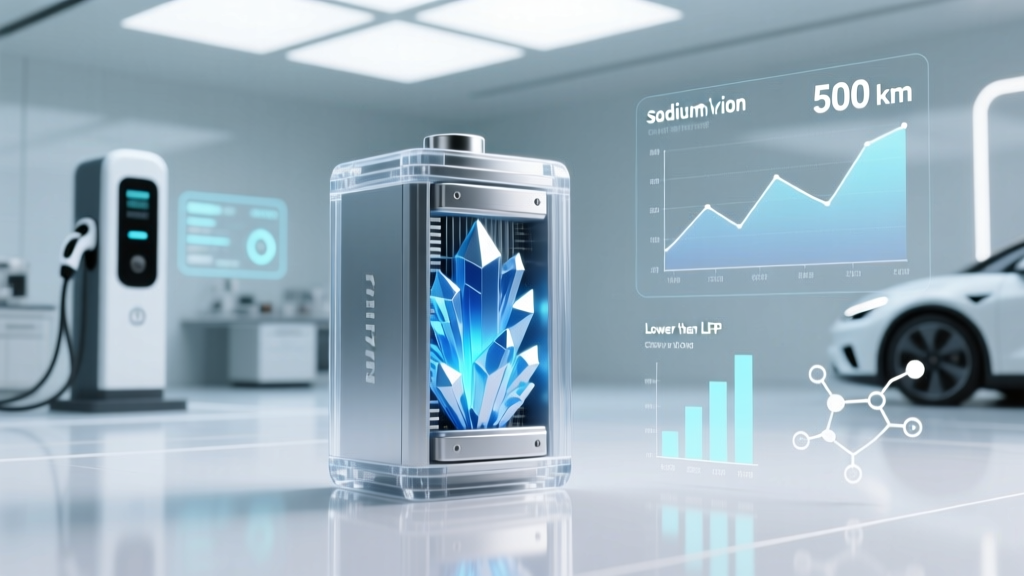
Open any EV news feed in 2026 and you'll see the phrase "sodium-ion battery for EV" at least once a week. CATL, BYD, HiNa, and Faradion have all shipped or announced SIB cells, and a handful of Chinese-market EVs — most notably the JAC Yiwei Sehol E10X (Na) and the Chery iCAR — have rolled off production lines with sodium-ion packs. The promise is irresistible on paper: a battery that ditches lithium, cobalt, and nickel for table salt, iron, and manganese, at a raw-material cost roughly 30-40% lower than lithium iron phosphate (LFP).
But raw-material cost is not the same as pack-level energy density, and energy density is what determines whether a sodium-ion battery can actually power the EV you want to buy in the U.S. market. Below, we break down the chemistry, the numbers, and the honest trade-offs — then stack SIB up against the LFP and NMC/NCA cells that dominate today's EVs.
The Chemistry: How a Sodium-Ion Cell Actually Works
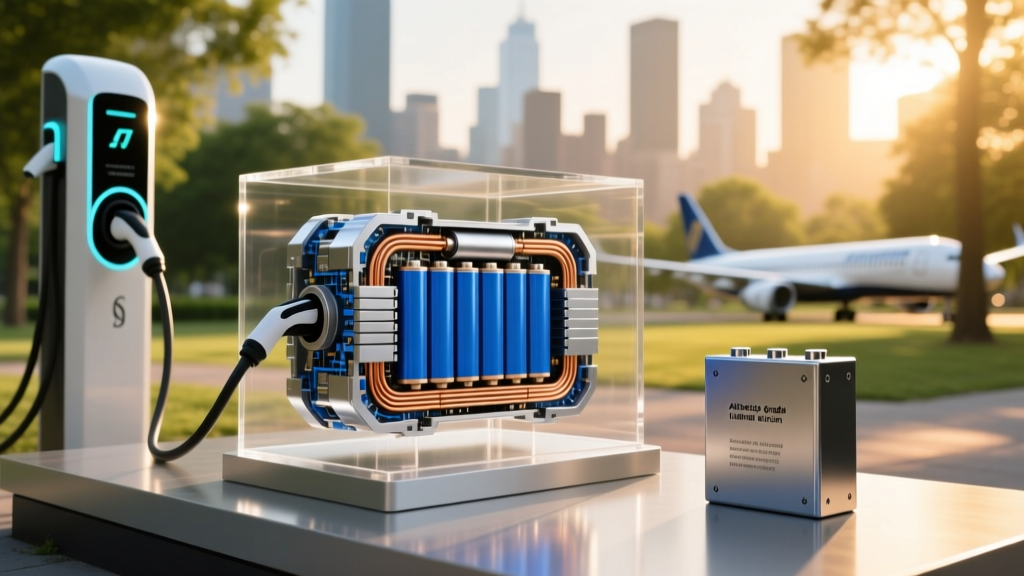
A sodium-ion cell operates on the same "rocking chair" principle as a lithium-ion cell: ions shuttle between an anode and a cathode through a liquid electrolyte during charge and discharge. The differences are in the materials:
- Cathode: Typically a Prussian Blue analog (PB-A) or a layered transition-metal oxide (O3/P2 type, often iron- and manganese-based). Neither requires lithium, cobalt, or nickel.
- Anode: Hard carbon (derived from biomass such as coconut shell or lignin) instead of graphite. Hard carbon's disordered structure gives sodium ions room to intercalate.
- Electrolyte: Sodium hexafluorophosphate (NaPF₆) dissolved in carbonate solvents — chemically similar to LiPF₆ but sourced from sodium.
- Current collector: Aluminum can be used on both the anode and cathode side (sodium does not alloy with Al at low potentials), eliminating the copper foil that accounts for roughly 8-10% of a lithium-ion cell's material cost.
The net result is a cell that is materially cheaper and geopolitically less fragile, but physically heavier and bulkier per unit of stored energy.
Sodium-Ion vs LFP vs NMC: The Chemistry Comparison That Matters
| Metric | Sodium-Ion (SIB) | LFP (LiFePO₄) | NMC 811 / NCA |
|---|---|---|---|
| Cell energy density (Wh/kg) | 140–175 | 160–200 | 250–300 |
| Pack energy density (Wh/kg) | 110–140 | 135–170 | 180–230 |
| Cell energy density (Wh/L, volumetric) | 280–340 | 350–420 | 550–700 |
| Cycle life (80% SoH, 1C/1C) | 3,000–5,000 | 4,000–6,000+ | 1,500–2,500 |
| Cold performance (capacity @ −20°C) | ~90% retained | ~70–75% retained | ~75–80% retained |
| Fast-charge capability (10–80%) | ~15 min (5C capable) | ~20–25 min | ~18–22 min |
| Thermal runaway onset | >300°C (very stable) | ~270°C | ~210°C |
| Raw-material cost index (vs NMC = 100) | ~45–55 | ~65–75 | 100 |
| Key supply-chain risk | Hard-carbon scale-up | Lithium carbonate price | Nickel, cobalt, graphite (China refining) |
Sources: CATL SIB spec sheet, BYD technical disclosures, Argonne National Laboratory battery cost models.
What the Numbers Mean for Real-World EV Range
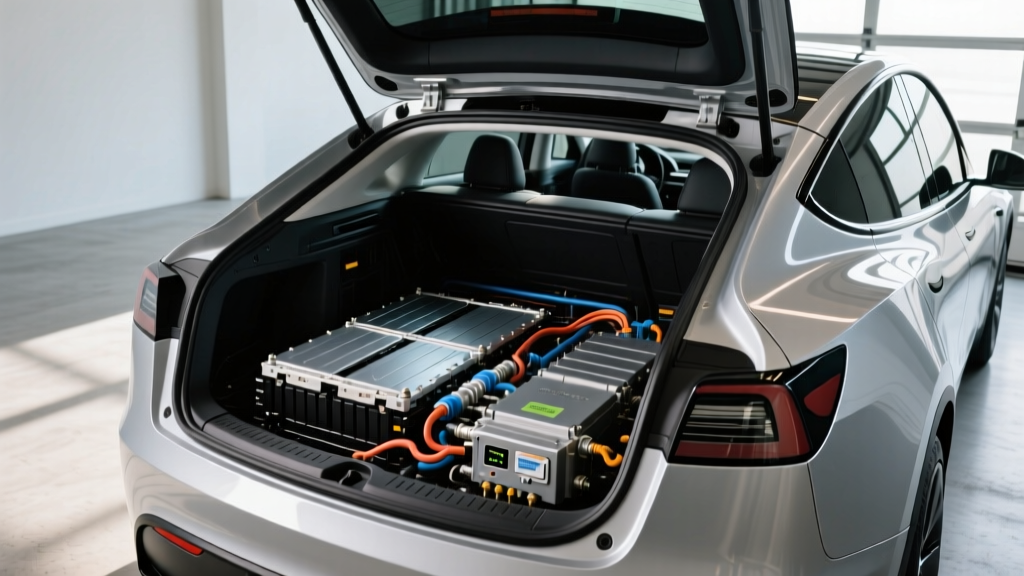
Back-of-the-envelope calculation. Take a 60 kWh LFP pack (BYD Blade, ~380 kg). To store the same 60 kWh with 2026 SIB cells at ~125 Wh/kg pack-level, you need roughly 480 kg — a 100 kg penalty. In a compact hatchback, that extra mass trims EPA range by roughly 8–12%, and packaging volume becomes the tighter constraint.
Practical implication: SIB makes most sense in city EVs and light commercial vans where 180–250 miles of EPA range is acceptable and the battery box can be made larger. For a 320-mile crossover, SIB in 2026 is still a weight and volume problem, which is why CATL's "AB battery" approach — mixing SIB and LFP cells in one pack — is the bridge solution for mainstream vehicles.
Real-world range caveats apply to every chemistry: expect ~10–15% below EPA sticker at sustained 75 mph highway driving, and another 15–25% drop in sub-20°F winter conditions. SIB's standout cold-weather retention (≈90% at −20°C vs ~70% for LFP) partially offsets that winter penalty — a genuine advantage for buyers in Minnesota, Quebec, or Scandinavia.
Degradation: What the Data Actually Shows
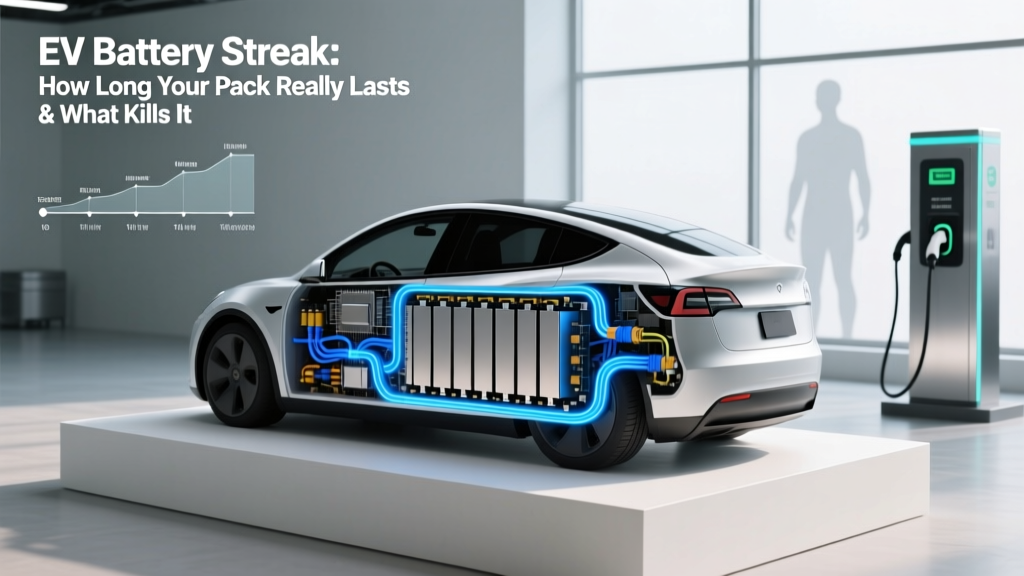
Battery degradation follows a curve: a steeper drop in the first 12–18 months (SEI layer formation, initial structural settling), then a long, slow linear decline. Here is what published fleet and lab data shows across chemistries:
| Chemistry | Year 1 | Year 4 | Year 8 / 100k mi | Source |
|---|---|---|---|---|
| NMC 811 (Tesla Model 3 LR, Hyundai Ioniq 5) | ~94% | ~88% | ~80–84% | Tesla Impact Report 2024, Geotab fleet data |
| LFP (Tesla Model 3 RWD, BYD Atto 3) | ~96% | ~92% | ~88–92% | Geotab, BYD long-term test |
| Sodium-Ion (lab, 1C cycling) | ~97% | ~94% (projected) | ~90–93% (projected) | CATL, HiNa published cycle data |
SIB's projected longevity is excellent on paper — hard-carbon anodes are structurally forgiving and the cathode does not suffer the manganese dissolution seen in NMC. But fleet-scale, in-vehicle data is still thin as of 2026; treat the 8-year figures as modeled, not measured in the wild.
Battery Warranties: What's Covered, What Isn't
U.S. federal minimum is 8 years / 100,000 miles for emissions-related components, and every major OEM extends that to the traction battery with a capacity-retention threshold. The 12V auxiliary battery is a separate, lead-acid or small lithium unit and is not covered under this warranty.
| OEM (2026 MY) | Battery Warranty | Capacity Threshold | Chemistry |
|---|---|---|---|
| Tesla (Model 3/Y RWD) | 8 yr / 120,000 mi | ≥70% SoH | LFP |
| Tesla (Model 3/Y Long Range) | 8 yr / 120,000 mi | ≥70% SoH | NMC/NCA |
| Hyundai / Kia (Ioniq 5, EV6) | 10 yr / 100,000 mi | ≥70% SoH | NMC |
| BYD (global, where sold) | 8 yr / 160,000 km | ≥70% SoH | LFP (Blade) |
| Ford (F-150 Lightning, Mustang Mach-E) | 8 yr / 100,000 mi | ≥70% SoH | NMC |
Warranties cover defects and abnormal degradation below the threshold. They do not cover gradual, normal capacity loss above 70%, damage from flooding or collision, or use of the pack as a stationary V2H power source outside OEM-approved configurations.
Replacement Cost: The Number Everyone Fears (and Misunderstands)
Most EV batteries outlive the car. Geotab's 2025 fleet study of 10,000+ EVs found that only ~1.5% required full-pack replacement under non-warranty conditions within the first 10 years. When replacement is needed — typically after collision damage, manufacturing defect outside warranty, or extreme high-mileage use (200k+ miles, rideshare) — here is what it costs in 2026:
| Vehicle / Pack Size | Chemistry | OEM Pack Price (2026) | Reman / Aftermarket |
|---|---|---|---|
| Tesla Model 3 RWD (~60 kWh) | LFP | $9,500–$12,000 | $6,500–$8,500 |
| Tesla Model Y LR (~82 kWh) | NMC | $13,000–$16,000 | $9,000–$11,500 |
| Hyundai Ioniq 5 (~77.4 kWh) | NMC | $12,000–$15,500 | $8,500–$11,000 |
| Ford F-150 Lightning Ext. Range (~131 kWh) | NMC | $20,000–$26,000 | Limited availability |
| Chevrolet Bolt EV (~65 kWh) | NMC | $9,000–$11,500 | $6,000–$8,000 |
For context: a sodium-ion pack of equivalent kWh would, at full commercial scale, undercut these figures by roughly 30%. But in 2026, no U.S.-market EV is sold with an SIB pack, so replacement pricing is theoretical for American buyers.
Factors That Actually Kill a Battery (and the Habits That Don't)
Do
- Keep daily state of charge between 20% and 80% for NMC/NCA packs. LFP packs tolerate 100% better and benefit from a weekly full charge for BMS cell-balancing.
- Use preconditioning before DC fast charging — most OEMs activate it automatically when you navigate to a charger.
- Park in shade or a garage during summer; battery temperature above 95°F accelerates calendar aging.
- Use Level 2 home charging as your primary routine. A nightly 7–11 kW Level 2 top-up is far gentler than daily DCFC.
Don't
- Don't fast-charge above 80% SoC unless you need the range — the charge curve tapers sharply above 80%, and heat generation spikes.
- Don't leave an NMC pack sitting at 100% for days (airport parking, vacations). Set the charge limit to 50–60% for long stops.
- Don't treat the 12V auxiliary battery as interchangeable with the traction pack — a dead 12V will brick the car even with a full high-voltage pack.
- Don't trust third-party "battery reconditioning" services; module-level replacement by a qualified HV technician is the legitimate path.
How to Check State of Health (SoH) Yourself
Most modern EVs expose SoH in one of three ways:
- In-car menu: Tesla (under Service → Battery Health on recent software), Hyundai/Kia (in the EV drive-info screen), and BYD all surface a percentage or a "good/normal" indicator.
- OBD-II dongle + app: Tools like OBDLink SX paired with apps such as LeafSpy (Nissan), ABRP OBD, or Car Scanner pull the BMS-reported SoH directly. Expect ±2% accuracy vs OEM dealer tools.
- Dealer diagnostic: A service-department HV battery report is the gold standard for pre-purchase inspections on used EVs. Ask for the printed SoH percentage and the pack's internal resistance delta across modules.
Rule of thumb: a used EV showing ≥90% SoH at 50,000 miles is aging well. Below 85% at that mileage warrants a deeper look — and a warranty claim if the pack is still in its coverage window.
Beyond Sodium: Solid-State, Silicon Anode, and What's Real in 2026
Sodium-ion is the most commercially advanced "next-gen" chemistry as of 2026, but it is not the only one in development:
- Solid-state (Toyota, QuantumScape, Samsung SDI): Promises 350–500 Wh/kg cell-level and 10-minute fast charges. Toyota has announced a 2027–2028 limited production target; QuantumScape is shipping A-sample cells to OEMs. Neither is in a vehicle you can buy today. Treat any "solid-state EV available now" claim as marketing for a semi-solid or hybrid-electrolyte cell, not a true all-solid-state pack.
- Silicon-dominant anode (Sila Nanotechnologies, Group14): Already shipping in limited applications (Mercedes G 580 EQ, Panasonic 4680 variants). Adds ~15–20% energy density over graphite but at higher cost and with cycle-life trade-offs the OEMs are still managing.
- Lithium-metal anode: Lab hero, production challenge. Expect pilot programs in premium sedans circa 2028–2030.
For a buyer deciding today, the realistic menu is LFP (best value and longevity), NMC/NCA (best range and performance), and — if you live in a market where Chinese-brand EVs are sold — sodium-ion as the emerging budget option.
So, Is a Sodium-Ion Battery for EVs Worth Waiting For?
Choose LFP now if: you want a U.S.-market EV with the best combination of longevity, safety, and price (Tesla Model 3 RWD, standard-range Ford and Hyundai offerings). LFP is the chemistry closest to SIB's value proposition that you can actually buy and charge today.
Choose NMC/NCA now if: you need 300+ miles of EPA range, tow regularly, or drive in mountainous terrain where energy density per kilogram matters.
Wait for sodium-ion if: you are shopping in a market with BYD/JAC/Chery availability, your daily commute is under 80 miles, you live in a cold climate where LFP's winter range loss stings, and you want the lowest possible pack cost for a second car or urban runabout.
Ignore the hype if: anyone tells you SIB will replace LFP in long-range U.S. crossovers before 2030. The pack-volume and weight penalty still excludes it from 300+ mile vehicles without a major cell-density breakthrough.
Frequently Asked Questions
How long do EV batteries last in years and miles?
Based on Geotab fleet data and OEM warranty thresholds, the average liquid-cooled EV battery retains 80–90% of original capacity at 100,000 miles / 8 years. Many packs reach 150,000–200,000 miles before falling below the 70% SoH warranty threshold. Full-pack failure is rare (<2% in the first decade).
How much does it cost to replace an EV battery in 2026?
Between $9,000 and $26,000 for a new OEM pack depending on kWh and chemistry, with remanufactured packs 25–40% cheaper. Most owners never pay this — warranty coverage and the pack's actual lifespan typically outlast the vehicle's economic life.
What does the battery warranty actually cover?
Defects and capacity loss below a stated threshold (typically 70% SoH) over 8 years / 100,000 miles (10/100,000 for Hyundai/Kia). It does not cover normal gradual loss above the threshold, accident damage, or unauthorized V2H use.
LFP vs NMC — which is better for me?
LFP wins on longevity, safety, and cost; NMC wins on range and cold-weather energy density. If your priority is a 10-year ownership horizon and mostly home charging, LFP. If you road-trip 300+ miles regularly and need every EPA mile, NMC.
How do I check my EV's battery health?
Use the in-car battery-health screen, an OBD-II dongle with ABRP/LeafSpy/Car Scanner, or a dealer HV diagnostic. For used-EV purchases, insist on a printed SoH report before signing.
Will sodium-ion EVs be sold in the U.S.?
As of 2026, no mass-market U.S.-spec EV ships with an SIB pack. CATL's AB (mixed SIB/LFP) pack is the most likely path to American-market vehicles, potentially in a budget crossover or commercial van by 2027–2028, subject to IRA battery-sourcing rules that complicate Chinese-manufactured cell eligibility for the §30D tax credit.
References: fueleconomy.gov (EPA range and MPGe data), IRS §30D clean vehicle credit guidance, Geotab EV Battery Degradation Study, CATL and BYD published technical disclosures.