If you've ever searched for "airplane batteries" while researching your EV's powertrain, you're not alone. Aviation battery systems and electric vehicle traction batteries share lithium-ion roots, but they diverge sharply in design priorities, chemistry choices, and operational demands. Aircraft batteries—whether for commercial airliners or emerging eVTOL platforms—must meet extreme safety margins and weight constraints that make EV batteries look almost relaxed by comparison.
For EV shoppers and owners, understanding these parallels (and differences) illuminates why your car's battery behaves the way it does, how long it will realistically last, and what you can do to maximize its lifespan. This guide covers the chemistry, degradation science, warranty protections, and replacement economics you need to make confident decisions.
Why Comparing EV Batteries to Airplane Batteries Matters
Modern commercial aircraft like the Boeing 787 use lithium-ion battery systems built by companies such as GS Yuasa—batteries that must operate flawlessly under FAA certification standards (RTCA DO-311A). These packs prioritize thermal runaway prevention, redundant monitoring, and energy density measured in watt-hours per kilogram down to the decimal.
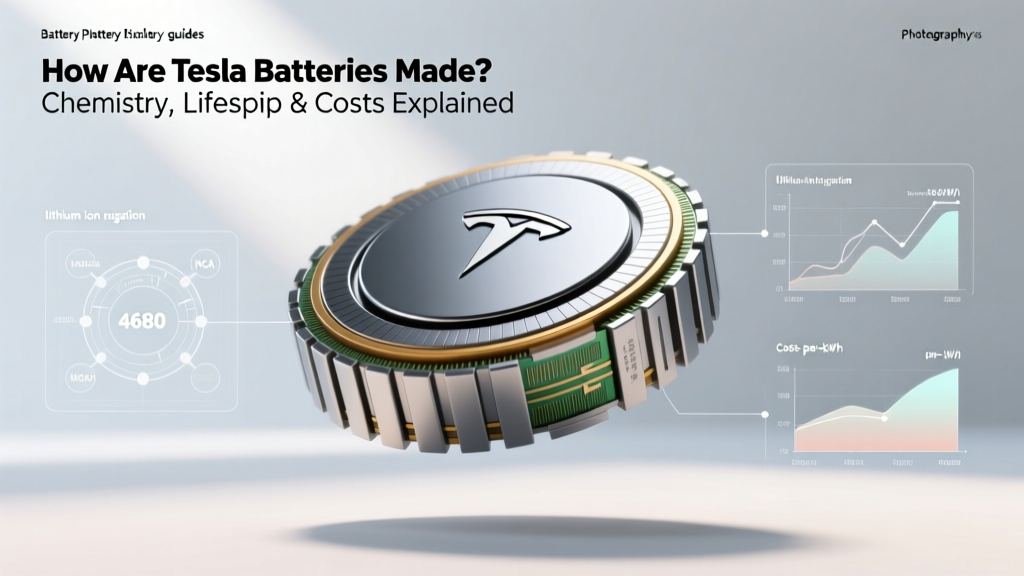
EV traction batteries, by contrast, optimize for cost per kilowatt-hour, cycle life over thousands of charge events, and manufacturing scale. A Boeing 787 main battery stores roughly 76 kWh across a compact, heavily monitored pack. A 2026 Tesla Model 3 Long Range carries approximately 79 kWh of usable capacity—but it costs a fraction of what an aviation-certified pack commands.
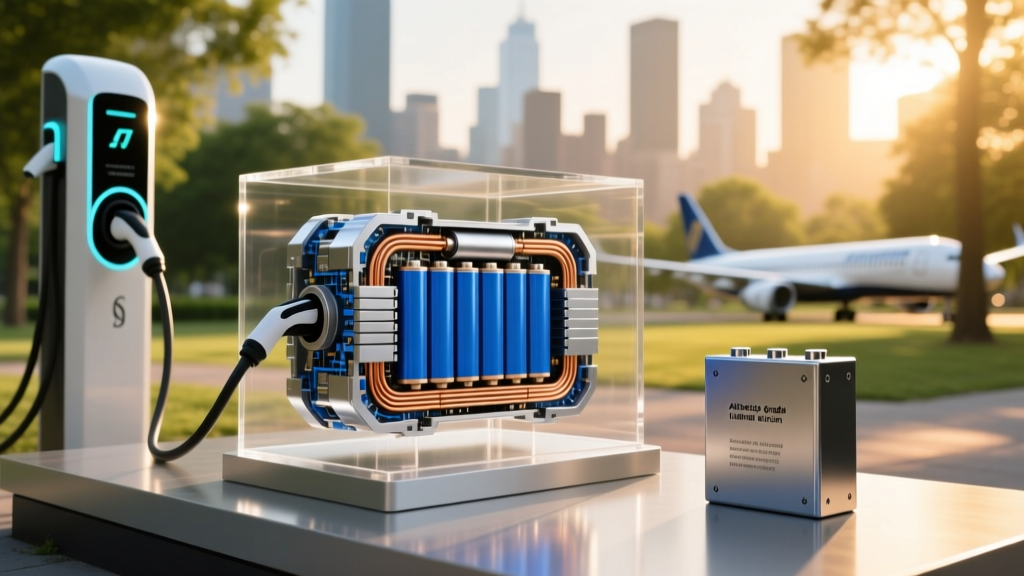
The emerging eVTOL (electric vertical takeoff and landing) sector, including companies like Joby Aviation and Archer, is driving battery innovation that will eventually trickle down to EVs. These aircraft demand energy densities above 300 Wh/kg at the cell level—far exceeding today's best EV cells at roughly 250–280 Wh/kg. But aviation certification timelines mean EV owners benefit from automotive-scale production economics long before aerospace-grade cells reach consumer vehicles.
LFP vs NMC/NCA: The Chemistry Decision That Defines Your Battery
Every EV sold in 2026 uses one of two dominant lithium-ion chemistries: Lithium Iron Phosphate (LFP) or Nickel Manganese Cobalt / Nickel Cobalt Aluminum (NMC/NCA). Your car's chemistry determines its range ceiling, charging behavior, cold-weather performance, and long-term degradation trajectory.
| Attribute | LFP (Lithium Iron Phosphate) | NMC/NCA (Nickel-based) |
|---|---|---|
| Cell-level energy density | 160–200 Wh/kg | 230–280 Wh/kg |
| Typical cycle life (to 80% SoH) | 3,000–5,000+ cycles | 1,500–2,500 cycles |
| Cold-weather range loss (~20°F) | 30–40% reduction | 20–30% reduction |
| Optimal daily charge limit | 100% SoC acceptable | 80% SoC recommended for daily |
| Thermal runaway risk | Very low (inherently stable) | Moderate (requires active management) |
| Cost per kWh (pack level, 2026) | ~$90–$110 | ~$120–$150 |
| Common in (2026 US models) | Tesla Model 3 RWD, Model Y RWD, Ford Mustang Mach-E Select (base) | Tesla Long Range/Performance, Hyundai Ioniq 5/6, Rivian, BMW iX |
The trade-off is straightforward: NMC/NCA gives you more range in a lighter, more compact pack—ideal for long-range and performance trims. LFP gives you dramatically longer cycle life and the ability to charge to 100% daily without accelerated degradation, making it ideal for commuters who charge at home every night.
Aviation batteries almost exclusively use NMC or NCA variants because weight is the overriding constraint. An eVTOL aircraft cannot afford the mass penalty of LFP cells. Your EV, however, can carry an extra 100–150 kg of LFP cells without meaningful efficiency loss—making LFP the smarter longevity play for many buyers.
How Long Do EV Batteries Actually Last? Real Degradation Data
The fear that EV batteries need replacement every few years is not supported by fleet data. According to analysis from Recurrent Auto, which tracks over 15,000 EVs in real-world conditions, the average battery retains approximately 90–95% of its original capacity after 3 years and 50,000 miles. By year 8 and 150,000 miles, most packs sit between 80–88% State of Health (SoH).
Typical EV Battery Degradation Curve (Fleet Averages):
- Year 1 / 15,000 mi: ~96–98% SoH (initial formation loss)
- Year 3 / 50,000 mi: ~92–95% SoH
- Year 5 / 80,000 mi: ~88–92% SoH
- Year 8 / 130,000 mi: ~83–88% SoH
- Year 10 / 160,000 mi: ~78–85% SoH (varies widely by chemistry and use)
LFP packs typically degrade more slowly and linearly. NMC packs may show steeper initial loss that plateaus, then gradually declines. Both chemistries commonly outlast the vehicle's useful economic life.
For context, airplane batteries undergo far more rigorous cycle-count tracking and are replaced on fixed schedules regardless of measured health—often every 2–4 years in commercial service. EV batteries benefit from less demanding duty cycles and superior thermal management systems in modern platforms.
Factors That Accelerate (or Preserve) Battery Health
Not all miles are created equal when it comes to battery wear. The following factors have the largest measurable impact on your pack's long-term State of Health:
Habits That Preserve Battery Health:
- Keep daily State of Charge between 20–80% for NMC/NCA packs (100% is fine for LFP)
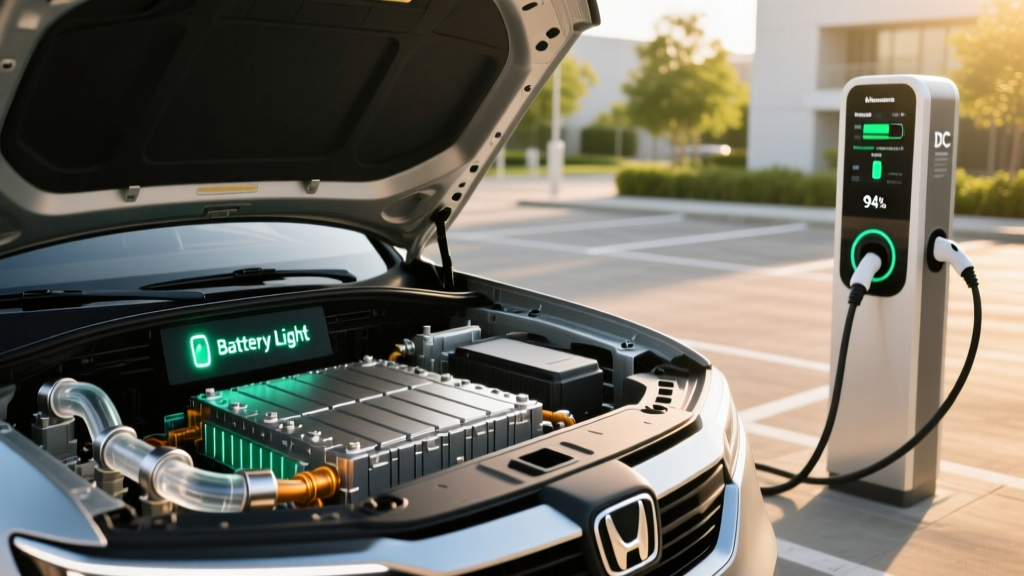
- Use Level 2 home charging as your primary method; reserve DC fast charging for road trips
- Precondition the battery before fast charging (most EVs do this automatically when you navigate to a charger)
- Park in shade or a garage during extreme heat; plug in during extreme cold so the thermal management system can maintain optimal temperature
- Avoid leaving the car at 100% SoC for extended periods (more than 24 hours) in hot weather
Habits That Accelerate Degradation:
- Frequent DC fast charging (3+ times per week) without preconditioning
- Regularly discharging below 10% SoC
- Sustained high SoC (above 90%) combined with high ambient temperatures
- Towing heavy loads in hot climates repeatedly (sustained high C-rate discharge)
According to data from Geotab's fleet battery study, vehicles that fast-charged more than 3 times per month in hot climates showed degradation rates approximately 1.5× faster than those that primarily used Level 2 charging. The absolute difference remains small—a few percentage points over 5 years—but it compounds.
What Does the EV Battery Warranty Actually Cover?
Federal law mandates that EV batteries carry a minimum warranty of 8 years / 100,000 miles (10 years / 150,000 miles in CARB states like California, New York, and Massachusetts). But the details matter enormously.
| Manufacturer | Warranty Term | Capacity Retention Threshold | What Triggers a Claim |
|---|---|---|---|
| Tesla (Model 3/Y) | 8 yr / 120,000 mi (Long Range: 8 yr / 120,000 mi) | 70% of original capacity | SoH drops below 70% as measured by Tesla diagnostics |
| Hyundai / Kia | 10 yr / 100,000 mi | 70% of original capacity | Measured capacity below threshold via dealer diagnostic tool |
| Ford (Mach-E, F-150 Lightning) | 8 yr / 100,000 mi | 70% of original capacity | Capacity below 70% confirmed by Ford diagnostic |
| BMW (i4, iX, i7) | 8 yr / 100,000 mi | 70% of original capacity | SoH below threshold via BMW service assessment |
| Rivian (R1T, R1S) | 8 yr / 175,000 mi | 70% of original capacity | Verified capacity loss below threshold |
The 70% threshold is industry standard, but it means your battery must lose nearly a third of its capacity before warranty coverage kicks in. Given that most EVs retain 80–88% after 8 years of typical use, warranty claims remain rare. The warranty protects against catastrophic failure and abnormal degradation—not the normal, gradual capacity loss every lithium-ion battery experiences.
Aviation batteries, by contrast, are replaced preemptively on time-based schedules regardless of measured capacity, because the cost of in-flight failure is unacceptable. EV manufacturers can afford to warranty to a capacity threshold because the consequence of a degraded EV battery is reduced range, not a safety emergency.
How Much Does an EV Battery Replacement Cost?
If your battery degrades beyond the warranty threshold—or if it fails outside the warranty period—replacement is a significant expense. However, pack-level battery prices have fallen from over $1,000/kWh in 2010 to approximately $110–$140/kWh in 2026, according to BloombergNEF pricing surveys.
| Vehicle / Battery Size | Usable Capacity | Estimated Pack Cost | Labor + Diagnostics | Total Estimated Range |
|---|---|---|---|---|
| Tesla Model 3 RWD (LFP) | ~57 kWh | $5,700–$7,400 | $1,500–$2,500 | $7,200–$9,900 |
| Tesla Model Y Long Range | ~75 kWh | $8,250–$11,250 | $1,500–$2,500 | $9,750–$13,750 |
| Hyundai Ioniq 5 (Long Range) | ~77.4 kWh | $9,300–$11,600 | $1,800–$3,000 | $11,100–$14,600 |
| Ford F-150 Lightning (Extended) | ~131 kWh | $14,400–$18,300 | $2,500–$4,000 | $16,900–$22,300 |
| Rivian R1T (Max Pack) | ~141 kWh | $15,500–$19,700 | $2,000–$3,500 | $17,500–$23,200 |
Important context: the vast majority of EV batteries never need replacement during the vehicle's ownership life. Data from Recurrent Auto and manufacturer warranty claim rates suggest fewer than 2–3% of EV batteries require replacement under warranty, and most vehicles are retired or sold before out-of-warranty replacement becomes necessary.
Some manufacturers and third-party shops now offer module-level repair—replacing individual degraded modules rather than the entire pack—for $3,000–$7,000 depending on the vehicle. This is particularly relevant for older models like the early Nissan Leaf or Chevrolet Bolt, where module-level service is well-established.
How to Check and Monitor Your Battery's State of Health
Most 2026 EVs provide a battery health indicator in the vehicle's settings menu or companion app, but the granularity varies widely by manufacturer:
- Tesla: The mobile app and in-car service menu display a battery health percentage. Third-party tools like Tessie or TeslaFi can log detailed SoH trends over time using the vehicle's API.
- Hyundai / Kia: The infotainment system's EV diagnostics page shows estimated battery capacity. Dealers can run a full diagnostic that provides a more precise SoH reading.
- BMW: The My BMW app includes a battery health report. A full capacity test at the dealer provides the most accurate measurement.
- Ford: FordPass shows estimated range based on current battery health. A dealer diagnostic provides the definitive SoH percentage.
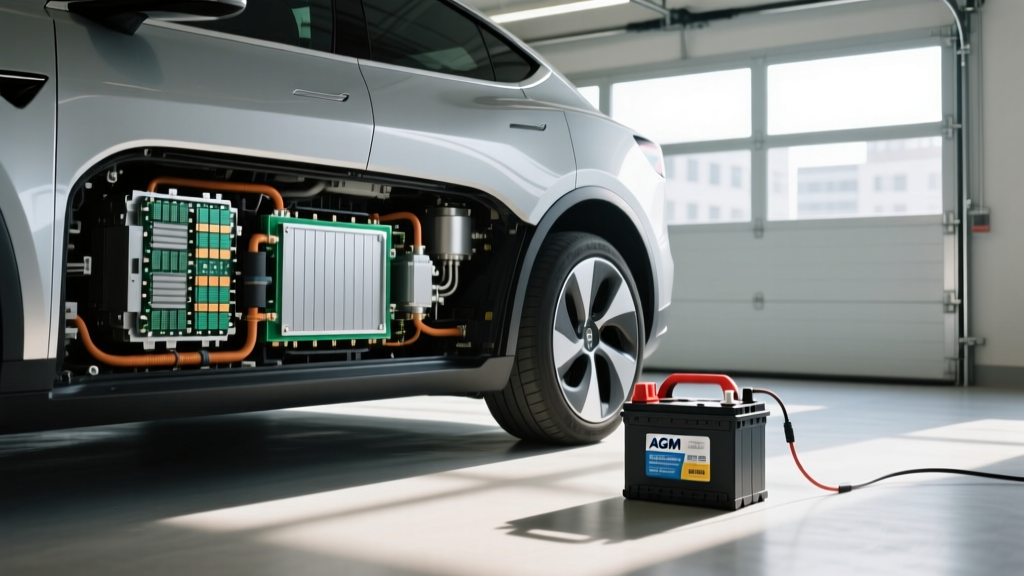
- OBD-II tools: Devices like the OBDLink MX+ paired with apps such as ABRP (A Better Route Planner) or Car Scanner can read real-time battery data from most EVs, including pack voltage, individual cell balance, and estimated capacity.
For the most accurate SoH assessment, perform a full charge-to-100% and discharge-to-10% cycle once or twice a year, logging the total kWh delivered. Compare this to the pack's original usable capacity to calculate your real-world SoH percentage. This is the same principle aviation maintenance crews use when capacity-testing aircraft batteries—just at a much less frequent interval.
What's Next: Solid-State, Silicon Anodes, and Aviation Crossover Tech
The battery technologies being developed for next-generation aircraft will eventually reshape EV powertrains—but timelines remain measured, not imminent.
Solid-state batteries replace the liquid electrolyte with a solid ceramic, polymer, or sulfide material, promising energy densities above 400 Wh/kg, faster charging, and near-zero thermal runaway risk. Toyota has announced a solid-state EV for 2027–2028, while companies like QuantumScape and Solid Power are in pre-production validation. Aviation applications (particularly eVTOL) may adopt solid-state cells earlier due to the extreme energy-density requirements, but automotive-scale production remains announced/preliminary as of early 2026.
Silicon anode technology increases the anode's lithium storage capacity by incorporating silicon (which holds roughly 10× more lithium ions than graphite). Companies like Sila Nanotechnologies and Group14 are shipping silicon-dominant anode materials to cell manufacturers now, with EV cells expected in 2026–2027 production vehicles. This technology offers a 15–25% energy density improvement without the manufacturing challenges of full solid-state cells.
Sodium-ion batteries (from CATL and others) offer a low-cost, cobalt-free alternative for budget EVs and stationary storage, though with lower energy density (~140–160 Wh/kg). These are unlikely to appear in US-market EVs before 2027–2028 but could power entry-level models in the 200-mile range class.
None of these technologies are currently available in production EVs sold in the US as of 2026. Treat any manufacturer claims about solid-state availability with skepticism until vehicles are actually in customer hands.
Frequently Asked Questions
How long do EV batteries last in years and miles?
Most modern EV batteries (2022 and newer) retain 80–88% of their original capacity after 8 years and 130,000–150,000 miles of typical use. LFP chemistries often exceed this, with some fleet data showing 90%+ retention at 100,000 miles. Many EV batteries will outlast the vehicle's economic life without requiring replacement.
How much does an EV battery cost to replace?
Out-of-warranty replacement costs range from approximately $7,000–$10,000 for a compact EV (Tesla Model 3 RWD, ~57 kWh) to $17,000–$23,000 for a large-pack truck (F-150 Lightning Extended, Rivian R1T Max Pack). Module-level repairs can reduce costs to $3,000–$7,000 for some models. The vast majority of owners never face this expense.
What does the EV battery warranty cover?
Federal law requires a minimum 8-year / 100,000-mile battery warranty (10 years / 150,000 miles in CARB states). Coverage triggers when measured capacity drops below 70% of original. The warranty covers abnormal degradation and manufacturing defects—not gradual, normal capacity loss that remains above the threshold.
How do I check my EV battery's State of Health?
Check your vehicle's app or infotainment diagnostics menu for a battery health percentage. For more precision, use an OBD-II adapter with EV-compatible software to read real-time pack data. A full 100%–to–10% charge cycle once or twice yearly, with kWh logging, provides the most accurate SoH calculation.
LFP vs NMC — which battery chemistry is better?
Neither is universally better. Choose LFP if you charge at home daily, want maximum cycle life, and can accept slightly lower range per kWh. Choose NMC/NCA if you need maximum range, better cold-weather performance, or are buying a long-range/performance trim. LFP is the longevity and value play; NMC is the range and performance play.
Are airplane batteries the same as EV batteries?
They share lithium-ion fundamentals but diverge significantly. Aviation batteries (like those in the Boeing 787 or eVTOL aircraft) use higher-cost NMC/NCA cells optimized for weight, undergo far more rigorous monitoring and certification (FAA RTCA DO-311A), and are replaced on fixed schedules regardless of measured health. EV batteries optimize for cost, cycle life, and manufacturing scale, with replacement driven by measured capacity loss rather than time-based schedules.