The Battery Chemistry Landscape: Where Sodium-Ion Fits in 2025
If you have followed EV battery headlines over the past two years, you have likely seen sodium-ion technology touted as the next disruptive force in energy storage. The promise is compelling: sodium is abundant, cheap, and free of the cobalt and nickel supply-chain headaches that plague lithium-ion chemistries. But as we survey the sodium-ion battery commercialization status in 2025 and look ahead, the reality for passenger EV buyers is more nuanced than the headlines suggest.
Sodium-ion cells from manufacturers like CATL and HiNa Battery have entered limited production in China, primarily powering small urban runabouts such as the Chery QQ Ice Cream and JAC Yiwei E10X. These vehicles use sodium-ion packs in the 25–35 kWh range, targeting city commuters with modest range requirements. The energy density of current sodium-ion cells sits around 140–160 Wh/kg at the cell level — significantly below the 200–260 Wh/kg typical of NMC (nickel-manganese-cobalt) lithium-ion cells and roughly on par with early-generation LFP (lithium iron phosphate).
For US-market EV buyers in 2026, sodium-ion is not yet a chemistry you will encounter at a dealership. Its commercialization remains concentrated in the Chinese domestic market and stationary energy storage applications. But understanding where it sits relative to the chemistries that do power today's EVs — and what the degradation, warranty, and replacement landscape actually looks like — is essential for any research-driven buyer.
LFP vs NMC vs NCA: The Chemistries Powering Today's EVs
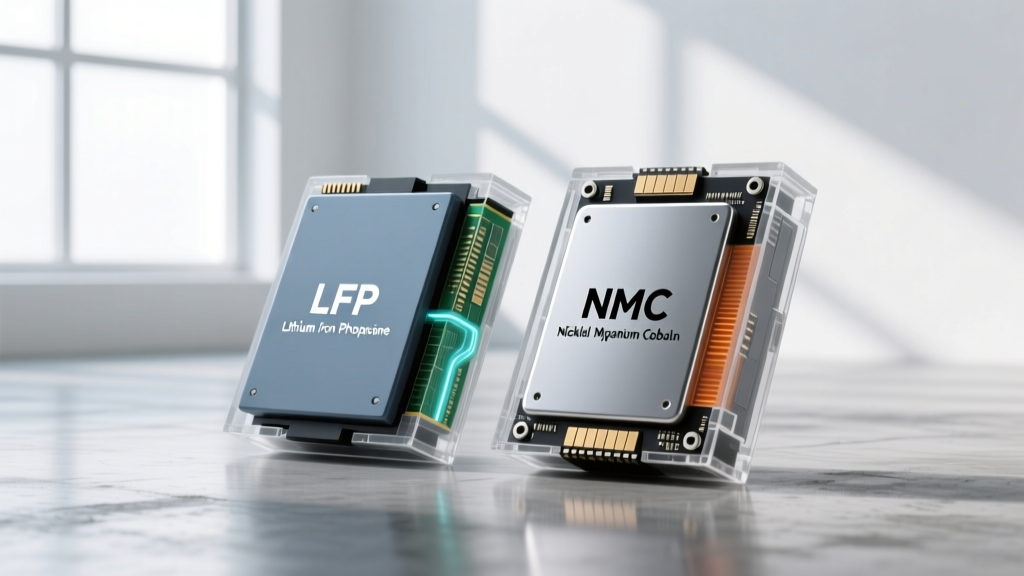
Before assessing sodium-ion's trajectory, it helps to ground yourself in the chemistries currently available in US-market vehicles. Nearly every EV sold today uses one of three lithium-ion cathode chemistries: LFP, NMC, or NCA (nickel-cobalt-aluminum, used primarily by Tesla and Panasonic).
| Attribute | LFP (Lithium Iron Phosphate) | NMC (Nickel Manganese Cobalt) | NCA (Nickel Cobalt Aluminum) |
|---|---|---|---|
| Energy Density (cell-level) | 150–180 Wh/kg | 200–260 Wh/kg | 220–270 Wh/kg |
| Cycle Life | 3,000–5,000+ cycles | 1,000–2,000 cycles | 1,000–1,500 cycles |
| Cold-Weather Performance | Moderate (slower charging below 32°F) | Better low-temp discharge | Better low-temp discharge |
| Cost per kWh (pack-level) | ~$90–$110 | ~$120–$150 | ~$125–$155 |
| Typical US Applications | Tesla Model 3/Y RWD, Ford Mustang Mach-E Select (2024+), Rivian R1S/R1T Standard | Hyundai Ioniq 5/6, Kia EV6/EV9, VW ID.4, Ford F-150 Lightning Extended | Tesla Model 3/Y Long Range, Lucid Air |
| Thermal Stability | Excellent (less prone to thermal runaway) | Good (requires robust BMS) | Good (requires robust BMS) |
The bottom line: LFP sacrifices some energy density for dramatically longer cycle life, lower cost, and superior thermal stability. NMC and NCA pack more energy into a smaller, lighter package — critical for vehicles targeting 300+ miles of EPA range — but degrade faster over time and cost more. Neither chemistry is universally "better." The right choice depends on your driving pattern, budget, and how long you plan to keep the vehicle.
How Long Do EV Batteries Actually Last? Degradation Data
The most common question from prospective EV buyers is some version of: "Will I need a $20,000 battery replacement in five years?" The data consistently says no — but the specifics matter.
Battery degradation is not linear. Most lithium-ion packs experience a steeper capacity drop in the first 1–2 years (roughly 2–5%), then settle into a slow, gradual decline for the remainder of their life. This initial drop is sometimes called the "break-in" loss and is related to solid electrolyte interphase (SEI) layer formation on the anode.
| Vehicle / Chemistry | Reported Degradation | Source / Notes |
|---|---|---|
| Tesla Model 3/Y (NCA/NMC Long Range) | ~12% average loss at 150,000 miles | Tesla 2023 Impact Report — fleet data |
| Nissan Leaf (NMC, passive air-cooled) | ~15–25% loss at 80,000–100,000 miles | Owner surveys; thermal management is a known factor |
| Chevrolet Bolt EV (NMC, liquid-cooled) | ~5–8% loss at 80,000 miles | Owner-reported data via Recurrent Auto |
| Tesla Model 3 RWD (LFP) | ~3–5% loss at 50,000 miles | Early fleet data; LFP cycle-life advantage visible |
| Hyundai Ioniq 5 (NMC) | ~4–6% loss at 60,000 miles | Recurrent Auto fleet averages |
Several patterns emerge from this data. First, liquid-cooled battery management systems dramatically outperform passively cooled packs — the Leaf's air-cooled design is a cautionary tale for high-temperature climates and frequent DC fast charging. Second, LFP chemistries are demonstrating the cycle-life advantages their lab specs promised. Third, the vast majority of modern EVs retain 85–95% of their original capacity well past the 100,000-mile mark.
For context, the average US driver covers approximately 14,000 miles per year according to the Federal Highway Administration. At that rate, reaching 150,000 miles takes nearly 11 years — and most current-generation packs will still hold 85%+ of their original capacity at that point.
What Does the Battery Warranty Actually Cover?
Federal law mandates that EV batteries carry a minimum warranty of 8 years or 100,000 miles (whichever comes first) in most states, and 10 years/150,000 miles in California Air Resources Board (CARB) states. But the details of what triggers a warranty claim vary by manufacturer.
| Manufacturer | Warranty Term | Capacity Retention Threshold | Notes |
|---|---|---|---|
| Tesla (Model 3/Y LFP) | 8 yr / 100,000 mi | 70% | Standard Range; covers defects and excessive degradation |
| Tesla (Model 3/Y LR/Performance) | 8 yr / 120,000 mi | 70% | Long Range and Performance trims |
| Hyundai / Kia | 10 yr / 100,000 mi | 70% | Among the longest terms in the industry |
| Ford (Mustang Mach-E, F-150 Lightning) | 8 yr / 100,000 mi | 70% | Covers battery components and excessive degradation |
| General Motors (Ultium platform) | 8 yr / 100,000 mi | 70% | Cadillac Lyriq, Chevy Blazer EV, Silverado EV |
| Rivian | 8 yr / 175,000 mi | 70% | Industry-leading mileage cap |
| Volkswagen (ID.4) | 8 yr / 100,000 mi | 70% | Standard coverage |
The 70% capacity retention threshold is the industry standard. If your battery's State of Health (SoH) drops below 70% of its original usable capacity within the warranty period, the manufacturer is obligated to repair or replace the pack — typically by swapping in a refurbished unit with at least 70% capacity, not necessarily a brand-new battery. In practice, very few owners hit this threshold under normal use. The warranty exists as a safety net, not a prediction.
EV Battery Replacement Costs: What the Numbers Actually Show
Out-of-warranty battery replacement is the scenario that fuels range-anxiety forums. Let's put concrete numbers to it — and then contextualize how rarely it occurs.
| Vehicle | Battery Size (usable kWh) | Estimated Replacement Cost | Notes |
|---|---|---|---|
| Tesla Model 3 RWD (LFP) | ~57 kWh | $12,000–$16,000 | LFP packs trending cheaper; module-level repair may reduce cost |
| Tesla Model Y Long Range (NMC) | ~75 kWh | $15,000–$20,000 | Varies by service center and refurb availability |
| Hyundai Ioniq 5 (NMC) | ~72.6 kWh | $14,000–$18,000 | Hyundai offers module-level service in some markets |
| Ford F-150 Lightning Extended Range | ~131 kWh | $25,000–$35,000 | Largest consumer EV pack; replacement cost scales with kWh |
| Chevrolet Bolt EV | ~65 kWh | $14,000–$17,000 | Post-recall replacement packs are updated chemistry |
| Nissan Leaf (40 kWh pack) | ~38 kWh | $8,000–$10,000 | Smaller pack, but passive cooling accelerated degradation in some units |
These are significant sums, but context is critical. First, the overwhelming majority of EV batteries never require replacement during the vehicle's useful life. Data from Recurrent Auto, which tracks over 15,000 EVs in real-world conditions, shows that battery replacement rates for vehicles less than 10 years old are well below 5%. Second, pack-level replacement is increasingly being supplanted by module-level repair — a faulty module (or a few) can be swapped without replacing the entire pack, reducing costs by 50–70%. Third, as the EV fleet ages and more packs enter the secondary market, refurbished replacement costs will continue to decline.
Factors That Accelerate (or Preserve) Battery Health
Battery degradation is not purely a function of time or mileage. How you charge, store, and drive your EV has a measurable impact on long-term State of Health.
Battery Care Best Practices
- Avoid sustained 100% State of Charge: For NMC/NCA batteries, daily charging to 80% is the consensus recommendation. LFP batteries are an exception — Tesla and BYD recommend periodic 100% charges to help the BMS calibrate cell balancing. Check your owner's manual for chemistry-specific guidance.
- Minimize DC fast charging frequency: Occasional road-trip fast charging is fine. Daily reliance on 150+ kW DC fast charging generates sustained heat that accelerates electrolyte decomposition. If you have Level 2 home charging, use it as your primary method.
- Precondition before fast charging: Most modern EVs automatically precondition the battery when a DC fast charger is set as your navigation destination. This brings the pack to its optimal temperature window (typically 77–95°F / 25–35°C), enabling faster charging and reducing thermal stress. If your car doesn't auto-precondition, do it manually.
- Avoid extreme SoC in extreme temperatures: Storing an EV at 100% SoC in 100°F+ heat, or at very low SoC in sub-zero cold, accelerates degradation. If parking long-term in extreme weather, aim for 40–60% SoC and plug in if possible to let the thermal management system maintain temperature.
- Don't baby it excessively: Modern battery management systems are sophisticated. The buffer (the difference between gross and usable kWh — typically 3–8 kWh) protects the cells from the most damaging extremes. Drive your EV normally; the engineering is on your side.
How to Check Your Battery's State of Health
State of Health (SoH) is expressed as a percentage of the battery's current maximum capacity relative to its original capacity when new. A brand-new EV has 100% SoH; one that can now store only 90% of its original energy has 90% SoH.
Most manufacturers do not expose a precise SoH percentage in the vehicle's infotainment system, though some (like Hyundai/Kia) provide a basic battery health indicator. Here are the primary ways to monitor your pack:
- OBD-II diagnostic tools: Devices like the OBDLink SX paired with apps such as LeafSpy (for Nissan) or TeslaFi/Stats (for Tesla) can read BMS-reported capacity data. Third-party tools like abrp (A Better Route Planner) OBD integration can also log degradation over time.
- Manufacturer service visits: Dealers can pull detailed SoH reports during scheduled service. Request this specifically — it is not always part of standard diagnostics.
- Range tracking: The simplest method. Track your real-world range at a consistent SoC (e.g., full charge) over time. If your 100% charge used to show 310 miles and now shows 285 miles after 40,000 miles, that suggests roughly 8% degradation. This is imprecise (weather, tire pressure, and driving style affect range), but it catches major deviations.
- Third-party fleet data services: Companies like Recurrent Auto offer free battery health reports that compare your vehicle's degradation to a fleet of identical models, giving you a percentile ranking.
Sodium-Ion and Beyond: What's Next (and When)
Sodium-ion is not the only emerging chemistry vying for a place in future EVs. Here is a realistic assessment of the technologies in the pipeline — and which ones are actually close to production vehicles you can buy.
Sodium-ion (Na-ion): As of 2025–2026, CATL's first-generation sodium-ion cells are in limited production in Chinese-market micro-EVs. CATL's announced AB battery pack — which interleaves sodium-ion and lithium-ion cells within the same pack — targets improved cold-weather performance and cost reduction. However, no sodium-ion vehicle is sold or announced for the US market. The most realistic timeline for US-market sodium-ion adoption in a mainstream EV is 2028–2030, and even then, it is most likely to appear in entry-level trims or as a supplement within hybrid battery packs rather than as a standalone chemistry in a 300-mile EV.
Solid-state batteries: Toyota has announced a solid-state battery targeting 745 km (463 miles) of range with a 10-minute 10–80% charge time, with initial production planned for 2027–2028 in limited volumes. QuantumScape, backed by Volkswagen, continues to advance its solid-state cells through prototype validation. Samsung SDI is targeting 2027 for solid-state production. These timelines should be treated as preliminary and subject to delay. Solid-state technology faces persistent manufacturing scalability challenges, and no solid-state EV is currently available for purchase anywhere in the world. Realistic widespread commercial availability in US-market vehicles: 2029–2032 at the earliest.
Silicon-dominant anodes: Companies like Sila Nanotechnologies and Group14 Technologies are replacing graphite anodes with silicon-based materials, boosting energy density by 10–20% without changing the cathode chemistry. Mercedes-Benz's upcoming G-Class EV (announced for 2025) will feature a Sila silicon-anode battery. This is the nearest-term technology upgrade most likely to appear in production US vehicles within the next 1–2 model years.
The common thread: battery technology advances incrementally, not through sudden revolutions. The lithium-ion chemistries available today — particularly LFP and NMC — are mature, well-understood, and backed by real-world data spanning millions of vehicle-miles. For buyers shopping today, these chemistries offer proven longevity and predictable economics.
Frequently Asked Questions
How long do EV batteries last in years and miles?
Based on current fleet data, most modern liquid-cooled EV batteries retain 85–93% of their original capacity at 100,000 miles (roughly 7–8 years of average US driving). Many packs will outlast the vehicle itself. LFP chemistries are showing even stronger longevity, with some fleet data suggesting 95%+ retention at 50,000 miles. The EPA's fuel economy site provides range and efficiency data to help baseline your expectations for specific models.
How much does it cost to replace an EV battery?
Full pack replacement ranges from approximately $8,000 for smaller packs (Nissan Leaf 40 kWh) to $25,000–$35,000 for large packs (F-150 Lightning 131 kWh). However, the majority of EVs never require battery replacement during their useful life. Module-level repairs — replacing individual degraded or defective cell modules rather than the entire pack — can reduce costs by 50–70% and are becoming standard practice at manufacturer service centers.
What does the EV battery warranty cover?
Federal law requires a minimum of 8 years/100,000 miles (10 years/150,000 miles in CARB states). Most manufacturers set a 70% capacity retention threshold — if your battery drops below 70% of its original usable capacity within the warranty period, the manufacturer will repair or replace it. The warranty covers both manufacturing defects and excessive degradation, but it does not cover damage from accidents, flooding, or unauthorized modifications.
How do I check and maximize my battery's health?
Monitor SoH via OBD-II apps (LeafSpy, TeslaFi), dealer diagnostics, or services like Recurrent Auto. To maximize longevity: charge NMC/NCA batteries to 80% for daily use (LFP batteries can be charged to 100% periodically per manufacturer guidance), rely on Level 2 home charging over frequent DC fast charging, precondition the battery before fast charging, and avoid storing the vehicle at extreme SoC levels in extreme temperatures.
LFP vs NMC — which battery chemistry is better for me?
Choose LFP if: you want maximum cycle life, lower cost, plan to keep the vehicle 8+ years, don't need the absolute longest range, and can accommodate slightly slower DC fast charging in cold weather. Choose NMC if: you need maximum range from a lighter, more energy-dense pack, frequently drive in cold climates, or prioritize the fastest possible DC fast charge times. Both chemistries are proven and reliable — the choice is about optimizing for your specific use case, not avoiding a "bad" option.
Will sodium-ion batteries be available in US-market EVs soon?
Not in the near term. As of 2026, sodium-ion production is concentrated in Chinese-market micro-EVs and stationary storage. No US-market vehicle currently uses or has announced a sodium-ion battery. The most realistic timeline for sodium-ion in a mainstream US EV is 2028–2030, likely in entry-level trims or as a supplemental chemistry within a multi-chemistry pack.