If you own a 2015 Toyota Sienna and are researching a battery replacement, you likely have questions that span two very different worlds: the hybrid battery pack inside your minivan, and the high-voltage lithium-ion traction batteries powering today's battery-electric vehicles (BEVs). The 2015 Sienna was never offered as a plug-in hybrid or a full EV in the U.S. market — it was sold exclusively with a 3.5-liter V6 gasoline engine. So a "2015 Toyota Sienna battery" search usually means one of two things: the 12-volt auxiliary battery (a standard lead-acell or AGM starting battery), or a broader curiosity about how hybrid and EV battery systems compare in longevity, cost, and chemistry.
This guide bridges that gap. We'll walk through what a 2015 Sienna owner actually needs to know about batteries, then expand into the lithium-ion traction battery technology that powers modern hybrids, plug-in hybrids, and full EVs — with exact degradation data, warranty terms, replacement costs, and chemistry trade-offs.
What Battery Does a 2015 Toyota Sienna Actually Have?
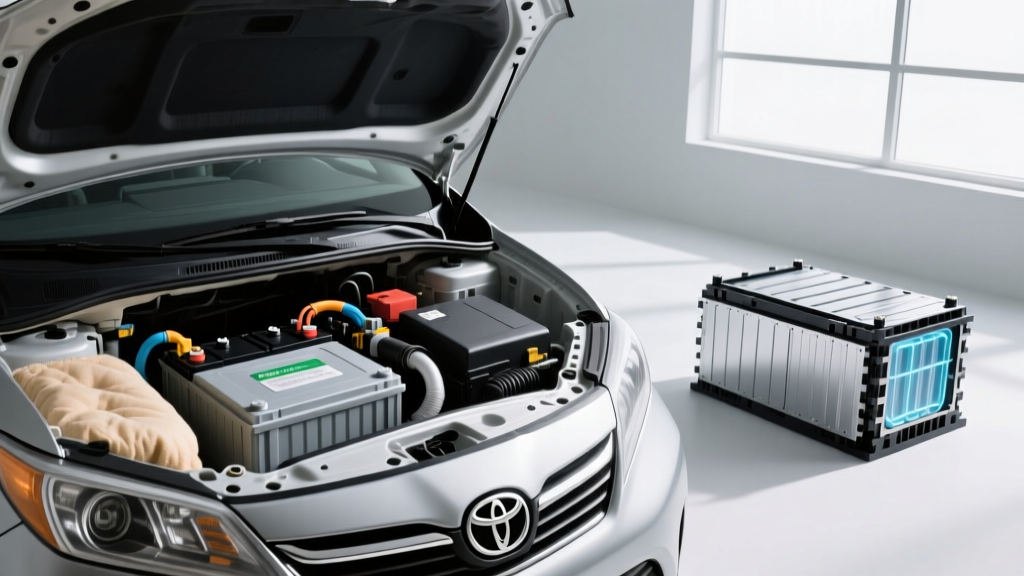
The 2015 Toyota Sienna uses a conventional 12V lead-acid auxiliary battery (group size 24F or 35 depending on trim) to power the starter, lights, infotainment, and ECU. This is not a hybrid or electric vehicle — there is no high-voltage traction battery in this model year. Toyota did not introduce a hybrid Sienna until the 2021 model year, when the fourth-generation Sienna became a hybrid-only lineup with a 1.6 kWh nickel-metal hydride (NiMH) battery pack paired with a 2.5-liter four-cylinder hybrid powertrain.
If your 2015 Sienna is having starting issues, the fix is straightforward: a replacement 12V battery costs roughly $120–$220 at an auto parts store, with installation taking about 15 minutes. This is entirely separate from the EV battery discussions below.
But if you're researching the 2015 Sienna battery because you're considering upgrading to a modern hybrid or EV — or you're curious how today's traction batteries compare — the rest of this guide covers exactly what you need to know.
EV and Hybrid Battery Chemistry: LFP vs NMC vs NiMH
Modern electrified vehicles use three primary battery chemistries, each with distinct trade-offs in energy density, cycle life, cold-weather performance, and cost.
| Attribute | LFP (Lithium Iron Phosphate) | NMC / NCA (Nickel-based) | NiMH (Nickel-Metal Hydride) |
|---|---|---|---|
| Energy Density | ~160–180 Wh/kg (lower) | ~220–300 Wh/kg (higher) | ~60–120 Wh/kg (lowest) |
| Cycle Life | 3,000–6,000+ cycles | 1,000–2,500 cycles | 500–1,500 cycles |
| Cold Performance | Moderate (slower charging below 32°F) | Better in cold conditions | Fair, less temp-sensitive |
| Cost per kWh | ~$80–$100 (2026 pricing) | ~$110–$140 | ~$150–$200 (legacy) |
| Thermal Stability | Excellent (inherently safer) | Good, requires active management | Very good |
| Typical Use (2026) | Tesla Model 3/Y RWD, Ford Mustang Mach-E Select, BYD | Long-range EVs, performance trims | Toyota hybrid Synergy Drive (non-plug-in) |
| Recommended SoC Range | 0–100% (can charge to full regularly) | 20–80% daily; 100% for trips | Managed by vehicle ECU |
LFP has become the dominant chemistry for standard-range and entry-level EVs. Tesla, Ford, and several Chinese manufacturers now use LFP packs in their base trims because the chemistry offers dramatically longer cycle life (you can charge to 100% daily without accelerating degradation) and lower cost, despite a roughly 15–20% energy-density penalty. For a buyer who charges at home daily and doesn't need 350+ miles of range, LFP is often the smarter long-term choice.
NMC (Nickel Manganese Cobalt) and NCA (Nickel Cobalt Aluminum) chemistries dominate long-range and performance EVs. The higher energy density translates directly to more miles in the same physical pack size — critical for vehicles targeting 300+ mile EPA range. The trade-off is a shorter cycle life and a recommendation to keep daily state of charge between 20–80% to minimize calendar degradation.
NiMH is now largely a legacy chemistry, but it persists in Toyota's non-plug-in hybrids (including the current Sienna Hybrid, Prius, and Camry Hybrid). These packs are small (1.1–1.6 kWh), rarely stressed, and managed conservatively by Toyota's Hybrid Synergy Drive system — which is why they routinely last 150,000–200,000+ miles with minimal capacity loss.
How Long Do EV and Hybrid Batteries Last? Real Degradation Data
The most common question from prospective EV buyers — and from Sienna owners considering a switch — is battery longevity. The data is reassuring: most modern lithium-ion traction batteries outlast the vehicles they're installed in.
Typical EV Battery Degradation Curve (fleet and owner-reported data):
- Year 1–2 / 15,000–30,000 miles: 2–5% capacity loss (initial formation period)
- Year 3–5 / 45,000–75,000 miles: Additional 3–5% loss (total: ~5–10%)
- Year 6–10 / 90,000–150,000 miles: Additional 3–7% loss (total: ~8–17%)
- Year 10+ / 150,000+ miles: Most packs retain 80–90% of original capacity
According to data compiled by Recurrent Auto from over 15,000 EVs in their fleet monitoring program, the median EV battery retains approximately 90% of its original range after 5 years and 85% after 100,000 miles. Tesla's own 2024 Impact Report (covering vehicles through 2023) showed Model 3/Y packs retaining 85% capacity at 200,000 miles. Hyundai and Kia have reported similar figures for their E-GMP platform vehicles.
For Toyota's NiMH hybrid packs (like those in the current Sienna Hybrid), degradation is even slower because the system never deeply cycles the battery — it operates in a narrow 40–80% state-of-charge window at all times. Taxi fleets using Toyota hybrids routinely exceed 300,000 miles on the original pack.
The critical insight: battery failure before 150,000 miles is rare in modern vehicles. When it does happen, it's usually a defective module or BMS issue covered under warranty, not natural end-of-life wear.
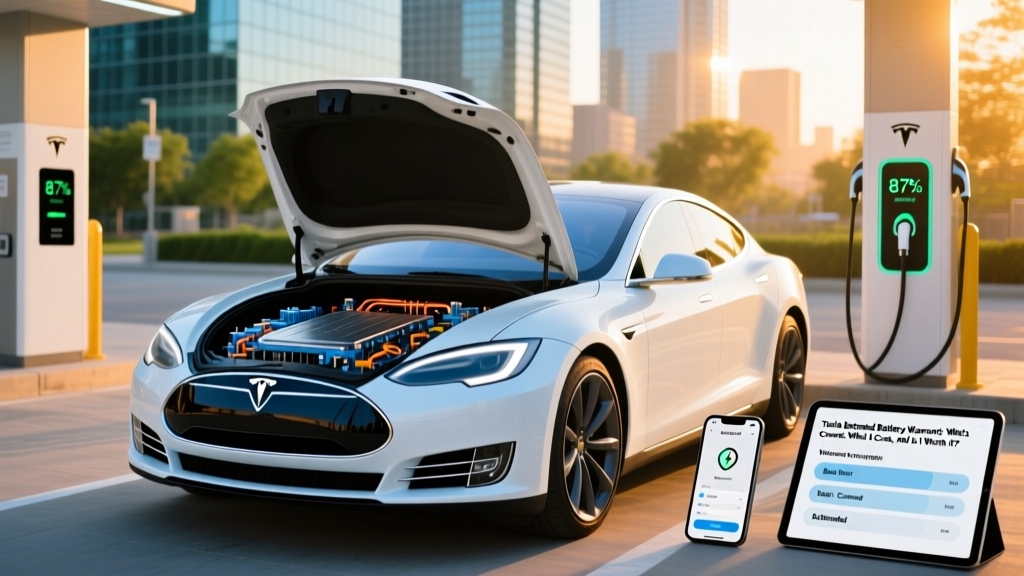
EV Battery Warranty Terms: What's Actually Covered
Federal law mandates a minimum 8-year / 100,000-mile warranty on EV and hybrid battery packs (10 years / 150,000 miles in California and states that follow CARB standards). Most manufacturers meet or exceed this floor.
| Manufacturer (2026 Models) | Battery Warranty | Capacity Threshold |
|---|---|---|
| Tesla (Model 3/Y LFP) | 8 yr / 120,000 mi | 70% retention |
| Tesla (Model S/X, Long Range) | 8 yr / 150,000 mi | 70% retention |
| Hyundai / Kia (E-GMP) | 10 yr / 100,000 mi | 70% retention |
| Ford (Mustang Mach-E, F-150 Lightning) | 8 yr / 100,000 mi | 70% retention |
| Chevrolet (Equinox EV, Blazer EV) | 8 yr / 100,000 mi | 60–70% retention |
| Toyota (Sienna Hybrid NiMH) | 10 yr / 150,000 mi | Hybrid system coverage |
| BMW / Mercedes (current EVs) | 8 yr / 100,000 mi | 70% retention |
The key detail buyers miss: capacity threshold. A warranty that guarantees 70% retention means the manufacturer will replace or repair the pack only if measured capacity drops below 70% of the original kWh within the warranty period. A 75 kWh pack at 70% still holds ~52.5 kWh — enough for roughly 200+ miles in most vehicles. You won't be stranded; you'll just have reduced range.
Warranties typically cover defects in materials and workmanship, plus capacity loss beyond the stated threshold. They do not cover damage from accidents, flooding, improper charging equipment, or aftermarket modifications. Always review the specific warranty document for your vehicle — terms vary by model year and trim.
EV Battery Replacement Cost: What to Expect in 2026
Battery replacement costs have declined significantly as pack-level pricing has dropped, but they remain the single largest repair expense on an electrified vehicle. Here's what current pricing looks like across vehicle categories:
| Vehicle Category | Battery Size | Replacement Cost Range (2026) | When Typically Needed |
|---|---|---|---|
| Compact EV (Chevy Bolt, Nissan Leaf) | 40–65 kWh | $6,500 – $12,000 | 150,000+ mi (rare under warranty) |
| Midsize EV (Tesla Model 3, Hyundai Ioniq 5) | 60–84 kWh | $10,000 – $18,000 | 200,000+ mi |
| Large EV / Truck (F-150 Lightning, Rivian) | 98–131 kWh | $15,000 – $28,000 | 200,000+ mi |
| Toyota Sienna Hybrid (NiMH) | 1.6 kWh | $2,500 – $4,500 | 150,000–200,000+ mi |
| PHEV (Toyota RAV4 Prime, Jeep 4xe) | 14–20 kWh | $6,000 – $12,000 | 150,000+ mi |
Important context: most EVs will never need a full battery replacement during typical first- or second-ownership periods. The data from Recurrent, Geotab, and manufacturer reports consistently shows that modern packs retain 80%+ capacity at 150,000 miles. When replacements do occur out of warranty, independent EV shops increasingly offer module-level repairs — replacing individual degraded cells or modules rather than the entire pack — for $2,000–$6,000, significantly reducing costs.
Refurbished and remanufactured packs are also becoming widely available. Companies like Repower Automotive and OEM certified-refurbished programs offer packs at 40–60% below new pricing, which is particularly relevant for older vehicles where a new pack would exceed the car's value.
Factors That Affect Battery Life — and How to Maximize It
Battery degradation is driven by three primary mechanisms: calendar aging (time and temperature), cycle wear (charge-discharge cycles), and extreme-state stress (prolonged high or low SoC, high temperatures during charging).
Practical Battery Care Checklist for EV and Hybrid Owners:
- Daily charging limit: Set to 80% for NMC/NCA packs; 100% is fine for LFP. Check your owner's manual for chemistry-specific guidance.
- Avoid prolonged low SoC: Don't leave the vehicle below 10% for more than a few days. If storing for weeks, leave at ~50%.
- Minimize DC fast charging when possible: Occasional road-trip fast charging is fine. Daily DCFC accelerates degradation by an estimated 2–4% over 5 years vs. Level 2 home charging, per Geotab fleet data.
- Precondition before fast charging: Use your vehicle's navigation-based preconditioning (or manually warm the battery) to bring pack temperature to 70–95°F before arriving at a DC fast charger. This reduces lithium plating risk and improves charge speed.
- Park in shade or a garage in summer: Sustained pack temperatures above 95°F accelerate calendar degradation. A garage or shaded spot meaningfully reduces this.
- Don't obsess over it: Modern battery management systems (BMS) actively protect the pack. Drive normally, charge at home on Level 2, and the battery will very likely outlast your ownership.
For Toyota hybrid owners (including current Sienna Hybrid drivers), the advice is simpler: the Hybrid Synergy Drive system manages battery state of charge automatically within a narrow, conservative window. There is no user setting to adjust. Just drive the vehicle, keep up with scheduled maintenance, and the NiMH pack will typically last 150,000–200,000+ miles with negligible driver-visible degradation.
How to Check Battery Health: State of Health (SoH) Monitoring
State of Health (SoH) is a percentage indicating how much usable capacity your battery retains compared to its original rated capacity. A new battery is 100% SoH; a battery that originally held 75 kWh and now holds 67.5 kWh is at 90% SoH.
How to check SoH on modern EVs:
- In-vehicle displays: Tesla, Hyundai/Kia, BMW, and Mercedes now include battery health metrics in their infotainment or app dashboards. Tesla's service mode (accessible via the software menu) shows pack capacity and degradation data directly.
- OBD-II diagnostic tools: Devices like the OBDLink MX+ paired with apps such as EV Notify, Leaf Spy (for Nissan), or ABRP can read real-time SoH data from the battery management system.
- Third-party monitoring: Services like Recurrent Auto offer free battery health reports for enrolled vehicles, using telematics data to track range and SoH over time.
- Dealer diagnostics: Any authorized dealer can pull a full battery health report during a service visit. Request this if you're evaluating a used EV purchase.
For hybrid vehicles like the Toyota Sienna Hybrid, SoH monitoring is less granular — the hybrid system doesn't expose detailed cell-level data to the driver. However, a dealer can run a hybrid battery health check using Toyota's Techstream diagnostic software, and you'll notice any significant degradation through reduced electric-only assist and slightly lower fuel economy over time.
What's Next: Solid-State and Silicon-Anode Batteries
Looking forward, two technologies are expected to meaningfully improve EV battery performance — but neither is commercially available in consumer vehicles as of early 2026.
Solid-state batteries replace the liquid electrolyte in current lithium-ion cells with a solid material (ceramic, sulfide, or polymer). The theoretical benefits are substantial: 40–50% higher energy density, faster charging (potentially 10–80% in under 10 minutes), improved safety (no flammable electrolyte), and longer cycle life. Toyota has announced plans for solid-state battery production beginning in 2027–2028, initially in limited-run vehicles. Samsung SDI, QuantumScape, and Solid Power are pursuing similar timelines. However, manufacturing scale-up and cost reduction remain significant challenges — expect solid-state packs to debut in premium vehicles at a substantial price premium before reaching mainstream pricing in the early 2030s.
Silicon-anode batteries are closer to market. Companies like Sila Nanotechnologies and Group14 are already supplying silicon-dominant anode materials to manufacturers including Mercedes-Benz (for the upcoming G-Class EV) and Panasonic. Silicon anodes offer 20–40% higher energy density than current graphite anodes and are expected to appear in production vehicles starting in 2026–2027. This is an incremental but meaningful improvement rather than a fundamental redesign.
For buyers shopping today: current lithium-ion technology (LFP and NMC) is mature, well-understood, and backed by extensive real-world durability data. Waiting for solid-state is not a practical strategy unless your purchase timeline is 3+ years out and budget is flexible.
From a 2015 Sienna to a Modern EV: The Battery Upgrade Path
If you're a 2015 Toyota Sienna owner considering an electrified vehicle, the battery technology landscape in 2026 is remarkably mature. Here's a practical decision framework:
Choose a Toyota Sienna Hybrid (2021–2026) if: You want Toyota reliability, need minivan space (35–36 MPG combined per the EPA), prefer a familiar brand, and don't have reliable home charging access for a full EV. The NiMH pack is proven, low-stress, and covered for 10 years / 150,000 miles.
Choose a full EV (Kia EV9, Tesla Model Y, Hyundai Ioniq 5) if: You can install a Level 2 home charger, drive under 250 miles daily, want the lowest per-mile fuel cost (electricity at $0.14/kWh averages ~$0.04/mile vs. ~$0.12/mile for a gas Sienna), and are comfortable with public charging for road trips. LFP-equipped trims offer the longest battery cycle life and the simplest daily charging routine.
Choose a PHEV (Toyota RAV4 Prime, Chrysler Pacifica Hybrid) if: You want electric-only commuting (30–44 miles EPA) but need gas-engine flexibility for long road trips without charging-planning. The smaller battery (14–18 kWh) means lower eventual replacement cost and less range-anxiety.
The bottom line: whether you're replacing a simple 12V battery in your 2015 Sienna or evaluating the traction battery in a new EV, the technology is robust, the warranties are strong, and real-world data consistently shows that modern battery packs outlive the cars they power.
Frequently Asked Questions
Does the 2015 Toyota Sienna have a hybrid battery?
No. The 2015 Toyota Sienna was sold only with a 3.5L V6 gasoline engine. It has a standard 12V lead-acid auxiliary battery, not a hybrid or EV traction battery. Toyota introduced the hybrid Sienna with the 2021 model year.
How long do modern EV batteries last in real-world use?
Fleet data from Recurrent Auto and Geotab shows that most modern EV batteries retain 85–90% of original capacity at 100,000 miles and 80–85% at 150,000 miles. Full pack failure before 150,000 miles is uncommon. Most EV batteries will outlast the vehicle's useful life or the typical ownership period.
How much does it cost to replace an EV battery in 2026?
Replacement costs range from approximately $6,500 for a compact EV (e.g., Chevrolet Bolt) to $28,000 for a large-pack truck (e.g., Ford F-150 Lightning Extended Range). Module-level repairs can reduce costs to $2,000–$6,000. Refurbished packs are increasingly available at 40–60% below new pricing. Most vehicles never need a replacement during typical ownership.
What does the federal EV battery warranty cover?
Federal law requires a minimum 8-year / 100,000-mile warranty on EV and hybrid battery packs (10 years / 150,000 miles in CARB states). The warranty covers defects and capacity loss below a stated threshold — typically 70% of original capacity. Review your specific vehicle's warranty document for exact terms.
Is LFP or NMC battery chemistry better for daily driving?
For daily driving with home charging, LFP is generally preferable: it tolerates daily 100% charging without accelerated degradation, offers 3,000–6,000+ cycle life, and costs less per kWh. NMC is better when you need maximum range in a given pack size (long-range trims, road trips). Both are well-proven in 2026 production vehicles.
How can I check my EV battery's State of Health?
Most modern EVs display SoH data in-vehicle or via their companion app. You can also use an OBD-II reader with EV-compatible apps (EV Notify, Leaf Spy), enroll in a free monitoring service like Recurrent Auto, or request a battery health report from your dealer during a service visit.