Sodium-ion batteries have moved from lab curiosity to limited production, and every major sodium battery manufacturer is racing to prove the chemistry belongs in electric vehicles. But for U.S. buyers shopping in 2026, the real question is practical: Does sodium change what you should buy today, and how does it compare to the lithium chemistries already proven on American roads?
This guide breaks down where sodium-ion stands, why LFP and NMC remain dominant in U.S. EVs, and the hard numbers on degradation, warranty, and replacement cost that actually drive purchase decisions.
Why Sodium-Ion Matters (And Why It Doesn't — Yet)
Sodium-ion uses abundant sodium instead of lithium, cutting raw-material cost and supply-chain risk. Chinese automaker BYD and battery supplier CATL — the world's largest sodium battery manufacturer by announced capacity — have begun installing sodium packs in small city EVs sold in China, where lower energy density is less penalizing on short urban commutes.
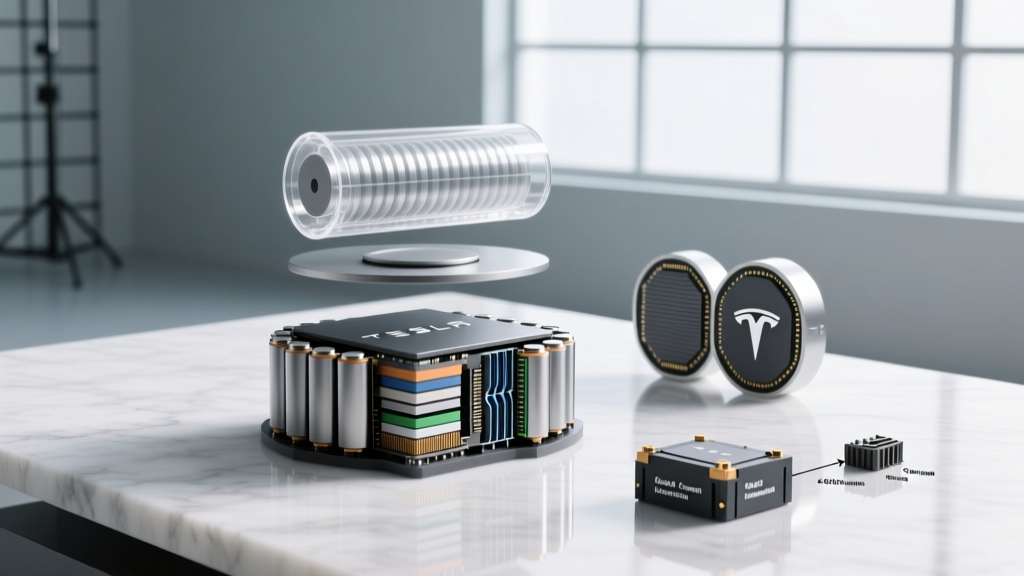
The trade-off is energy density. Current sodium-ion cells deliver roughly 140–160 Wh/kg at the cell level, compared to 160–180 Wh/kg for LFP and 250–300 Wh/kg for high-nickel NMC. That translates to either a heavier pack or a shorter-range vehicle for the same weight — a significant constraint for U.S. buyers expecting 300+ miles of EPA range.
For 2026, no mainstream EV sold in the United States uses sodium-ion as its primary traction battery. The chemistry's near-term role is stationary energy storage and low-speed urban vehicles in Asia and Europe. U.S. buyers will continue choosing between LFP and NMC/NCA for at least the next model generation.
LFP vs NMC/NCA: The Chemistries Actually in Your EV
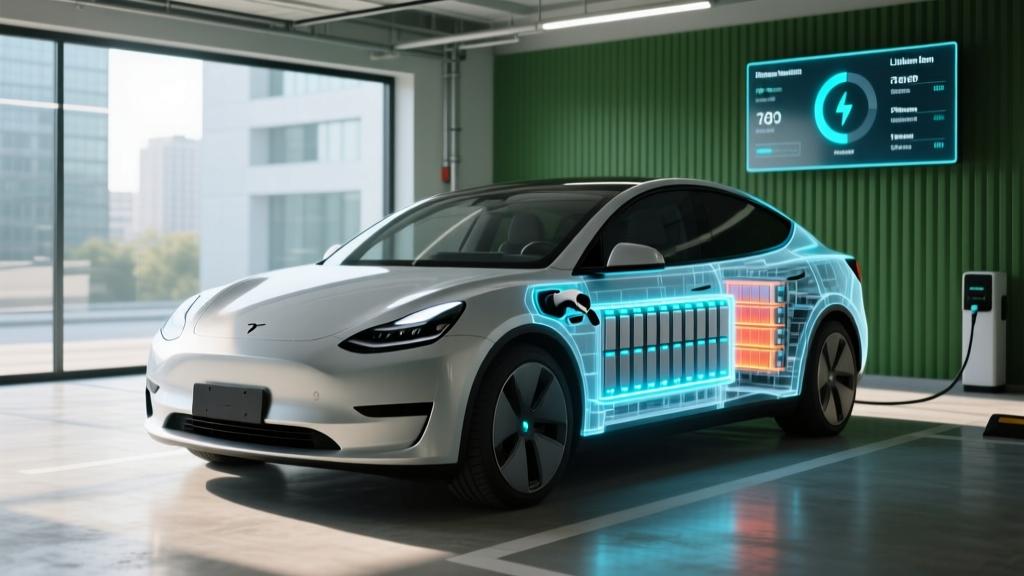
Every BEV on U.S. dealer lots in 2026 runs on one of two lithium chemistries. Here is how they compare on the metrics that matter:
| Attribute | LFP (Lithium Iron Phosphate) | NMC / NCA (Nickel-based) |
|---|---|---|
| Cell energy density | 160–180 Wh/kg | 250–300 Wh/kg |
| Typical pack size (U.S. EVs) | 50–82 kWh usable | 75–131 kWh usable |
| Cycle life (to 80% SoH) | 3,000–5,000+ cycles | 1,500–2,500 cycles |
| Cold-weather range loss (~20°F) | 25–35% reduction | 20–30% reduction |
| Recommended max SoC for daily use | 100% (no penalty) | 80% (prolongs life) |
| Thermal runaway risk | Very low | Higher, mitigated by pack engineering |
| Cell cost ($/kWh, 2026) | ~$70–85 | ~$95–120 |
| Examples in 2026 U.S. EVs | Tesla Model 3 RWD, Model Y RWD, Ford Mustang Mach-E Select (base) | Tesla Model S/X, Hyundai Ioniq 5 Long Range, Rivian R1S, Ford F-150 Lightning Extended |
Which is better? LFP wins on longevity, safety, and cost — ideal for standard-range models and daily commuters who charge to 100% nightly. NMC wins on energy density and cold-weather efficiency — necessary for long-range and performance trims where packing maximum kWh matters. Neither is universally superior; the right choice depends on your trim, commute, and climate.
How Long Do EV Batteries Last? Real Degradation Data
The fear that EV batteries need frequent replacement is not supported by fleet data. Most modern traction batteries outlast the vehicle they power.
Typical degradation for a liquid-cooled lithium pack in moderate climates:
- Year 1: 2–5% loss (initial formation)
- Year 3 / 45,000 mi: 5–8% total loss
- Year 5 / 75,000 mi: 7–12% total loss
- Year 8 / 120,000 mi: 10–18% total loss
- Year 10+ / 150,000+ mi: 12–25% total loss, depending on chemistry and care
LFP packs trend toward the lower end of those ranges due to superior cycle life. Tesla's 2025 Impact Report noted its LFP Model 3 fleet retained approximately 92% of original capacity at 100,000 miles. NMC packs in high-performance applications (frequent DC fast charging, track use) degrade faster but still typically hold 80%+ at the federal warranty threshold.
Data from fueleconomy.gov and manufacturer filings show no mainstream 2026 model-year EV has reached the replacement threshold under normal ownership within its warranty period.
What the Battery Warranty Actually Covers
Federal law mandates a minimum 8-year / 100,000-mile battery warranty for EVs (10 years / 150,000 miles in California Air Resources Board states). Most manufacturers exceed this floor:
| Vehicle | Chemistry | Warranty Term | Capacity Retention Threshold |
|---|---|---|---|
| Tesla Model 3 RWD | LFP | 8 yr / 100,000 mi | 70% |
| Tesla Model Y Long Range AWD | NMC | 8 yr / 120,000 mi | 70% |
| Hyundai Ioniq 5 Long Range | NMC | 10 yr / 100,000 mi | 70% |
| Ford F-150 Lightning Extended | NMC | 8 yr / 100,000 mi | 70% |
| Rivian R1S Dual-Motor | NMC | 8 yr / 120,000 mi | 70% |
| Chevrolet Equinox EV 3RS | NMC (Ultium) | 8 yr / 100,000 mi | 70% |
The 70% threshold is critical: a warranty claim requires measured capacity (via OBD-II diagnostic or manufacturer telemetry) to fall below 70% of original kWh — not the range displayed on the dash, which varies with temperature and driving style. Warranty covers defects and abnormal degradation; it does not cover damage from accidents, flooding, or unauthorized modifications.
How Much Does an EV Battery Cost to Replace?
Out-of-warranty replacement is rare but not unheard of for high-mileage commercial use or collision damage. Costs scale with pack size:
| Pack Size / Example Vehicle | Parts + Labor Range | Typical Trigger |
|---|---|---|
| 50–60 kWh (Tesla Model 3 RWD LFP, Chevy Bolt) | $8,000 – $12,000 | Collision, flood, >200k mi |
| 75–82 kWh (Tesla Model Y LR, Ioniq 5 LR) | $12,000 – $18,000 | Collision, rare defect post-warranty |
| 100–131 kWh (Model S, F-150 Lightning Ext, Rivian R1S Max) | $18,000 – $28,000 | Collision, fleet high-mileage |
Refurbished and remanufactured packs are increasingly available at 30–50% below new-pack pricing. Independent EV shops and OEM certified-refurbished programs now offer module-level repair (replacing only degraded cells) for $3,000–$8,000 in some platforms, though availability varies by model.
Context matters: the average age of a U.S. vehicle on the road is 12.6 years (per S&P Global Mobility, 2025). Most EV batteries will never require replacement during first- or second-ownership.
Factors That Accelerate (or Preserve) Battery Life
Battery wear is driven by electrochemical stress. The biggest factors, ranked by impact:
Battery Care Checklist for Maximum Longevity
- Avoid sustained high SoC on NMC: Store and commute at 50–80% SoC. LFP tolerates 100% daily — Tesla recommends a full charge weekly for LFP calibration.
- Minimize DC fast-charging frequency: Occasional Supercharging is fine; daily 150+ kW sessions add ~1–2% extra annual degradation vs. Level 2 home charging.
- Precondition before fast charging: Cold packs charge slowly and experience lithium plating if forced. Use the vehicle's nav-routed preconditioning (arriving at a DC station with pack at 30–40°C).
- Limit exposure to extreme heat: Parking in shade or a garage in 100°F+ climates measurably slows calendar degradation.
- Don't store at 0% or 100% for weeks: If leaving the vehicle unused, set charge limit to 50% (NMC) or 60–70% (LFP).
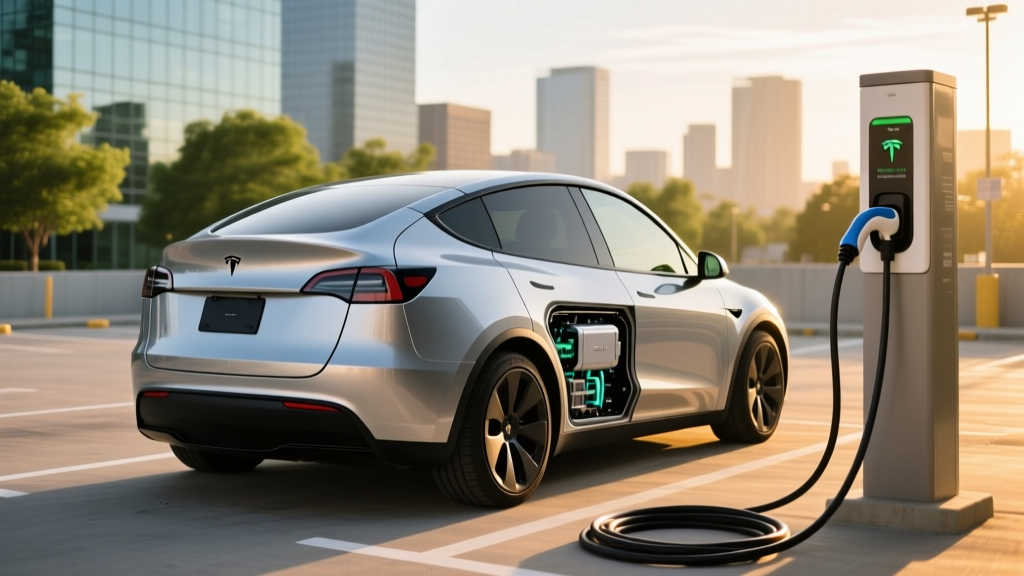
- Use Level 2 for daily charging: 7–11 kW home charging is gentler on cells and cheaper per kWh than DC public networks.
How to Check and Monitor Your Battery's State of Health
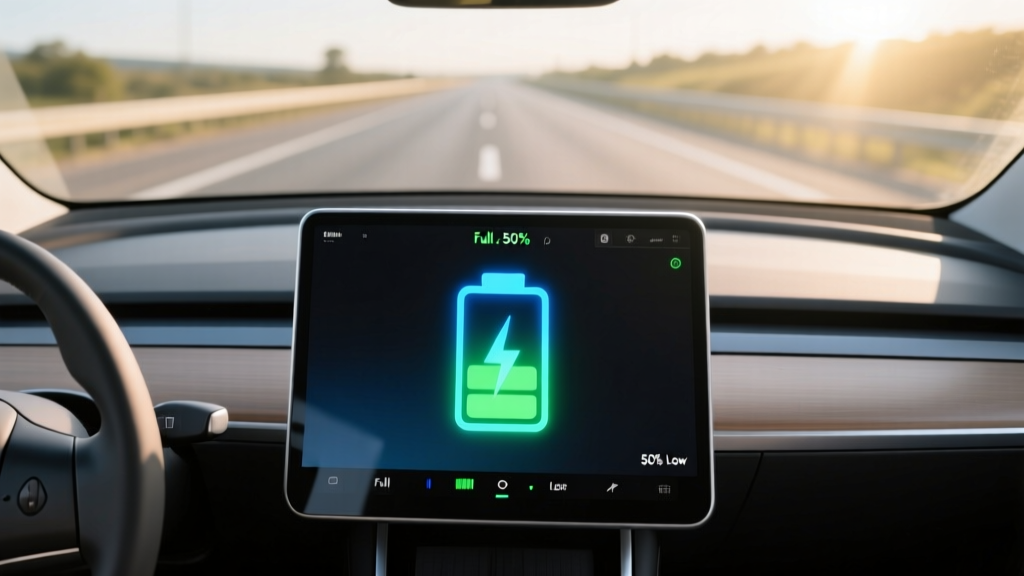
State of Health (SoH) is the ratio of current usable capacity to original factory capacity, expressed as a percentage. Most 2026 EVs surface SoH in one of three ways:
- In-vehicle display: Tesla, Hyundai, Kia, and Rivian show estimated SoH or a degradation graph in the service menu. Nissan LEAF exposes a 12-bar health indicator.
- Mobile app / telemetry: Tesla and Ford apps show range-vs-new comparisons; third-party services like Recurrent Auto (subscription) aggregate fleet data to benchmark your pack against peers.
- OBD-II diagnostic: Apps like LeafSpy (Nissan), TeslaFi (Tesla), or manufacturer dealer tools read raw BMS (battery management system) data for precise kWh-remaining figures.
For used-EV buyers, an OBD-II SoH reading is the single most important pre-purchase check. A pack reading 88% SoH at 60,000 miles is tracking well; one at 78% may be approaching warranty-claim territory and should be priced accordingly.
Emerging Chemistries: What's Real and What's 2028+
Sodium-ion is not the only chemistry vying for next-generation EV packs. Two others are frequently cited:
Solid-state batteries: Toyota and Samsung SDI have announced pilot production, targeting 2027–2028 for limited premium models. Promised benefits include 400+ Wh/kg cell density and faster charging. These are not yet available in any production vehicle sold in the U.S. Volume availability and pricing remain unproven.
Silicon-dominant anodes: Startups like Sila Nanotechnologies and Group14 supply silicon-composite anodes to Mercedes-Benz (EQG) and Porsche for performance applications, boosting energy density 10–20% over graphite. Limited production vehicles are shipping in 2026, but cost confines the tech to high-end trims.
Sodium-ion (context for U.S. buyers): Even the most aggressive sodium battery manufacturer roadmaps place U.S. passenger-vehicle adoption no earlier than 2028–2029, likely in entry-level trims of compact EVs where 200–250 miles of range is acceptable. For 2026 shoppers, sodium-ion is a technology to watch, not a purchase factor.
Frequently Asked Questions
How long do EV batteries last?
Data from fleets and OEM reports (including Tesla's Impact Report and Hyundai/Kia warranty filings) shows most liquid-cooled lithium packs retain 80–90% of original capacity at 100,000–150,000 miles. With proper care, a modern EV battery should last 15–20 years or 200,000+ miles before approaching the 70% warranty threshold.
How much does an EV battery cost to replace?
Out-of-warranty replacement ranges from $8,000 for a 50–60 kWh pack to $28,000 for a 130+ kWh pack, parts and labor included. Refurbished packs and module-level repairs can reduce cost by 30–50%. Most EVs never require a replacement during typical ownership.
What does the battery warranty cover?
Federal law requires 8 years / 100,000 miles minimum (10/150k in CARB states). Coverage applies if measured capacity falls below 70% of original due to defect or abnormal degradation. It does not cover collision damage, flood, or aftermarket modifications. Check IRS §30D guidance for how battery sourcing also affects tax-credit eligibility on new purchases.
LFP vs NMC — which is better and why?
LFP is better for daily commuters prioritizing longevity, safety, and lower cost; it tolerates 100% daily charging and delivers 3,000+ cycles. NMC is better for long-range and cold-climate buyers who need maximum kWh in a lighter pack. Neither is universally superior — match chemistry to your driving pattern and trim level.
How do I check my EV's battery health?
Use the in-vehicle service menu (Tesla, Hyundai, Rivian), the OEM mobile app, or an OBD-II reader with EV-specific software (TeslaFi, LeafSpy, CarScanner). For used-EV purchases, insist on a dealer or independent shop SoH reading before signing.
Will a sodium battery manufacturer ever supply U.S. EVs?
Likely yes, but not before 2028–2029 at the earliest, and initially in compact or budget models where lower energy density is acceptable. CATL, BYD, and HiNa are the leading sodium battery manufacturers globally, but none currently supply traction packs for U.S.-sold passenger vehicles.