That Battery Symbol on Your Dashboard: What It Actually Means in an EV
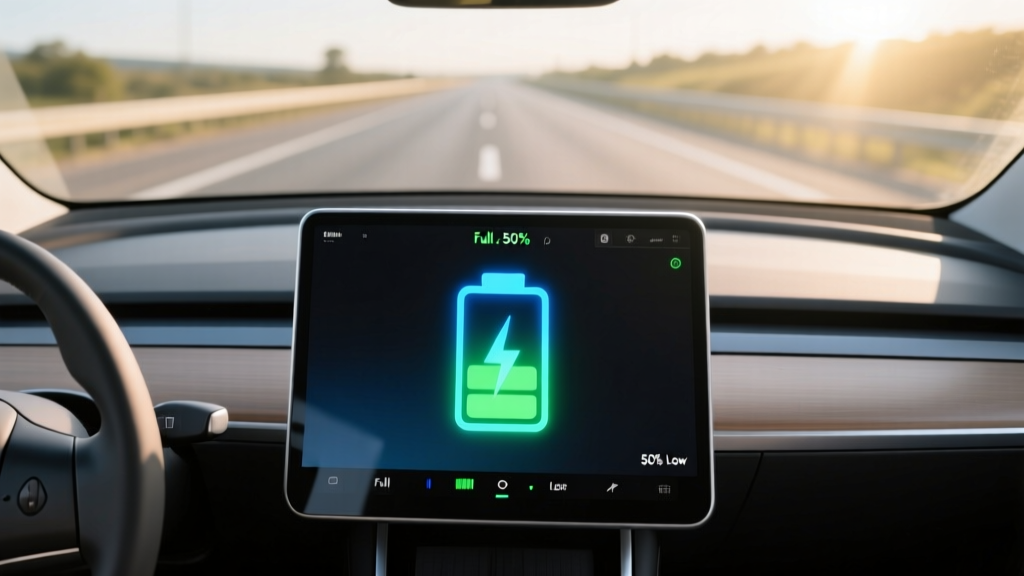
If you've seen a battery symbol in your car illuminate on the dashboard, your first instinct might be to pull over. In a conventional vehicle, that light usually points to a failing 12V alternator or auxiliary battery. But in an electric vehicle, the battery warning icon can signal something far more consequential — an issue with the high-voltage traction battery that powers the drivetrain.
Understanding what that symbol means, how your EV battery actually works, and what to expect over its lifespan is essential for any current or prospective EV owner. This guide covers the chemistry inside your pack, real degradation data, warranty protections, replacement economics, and the habits that maximize longevity — all grounded in numbers, not marketing.
LFP vs NMC: The Chemistry Inside Your EV Battery
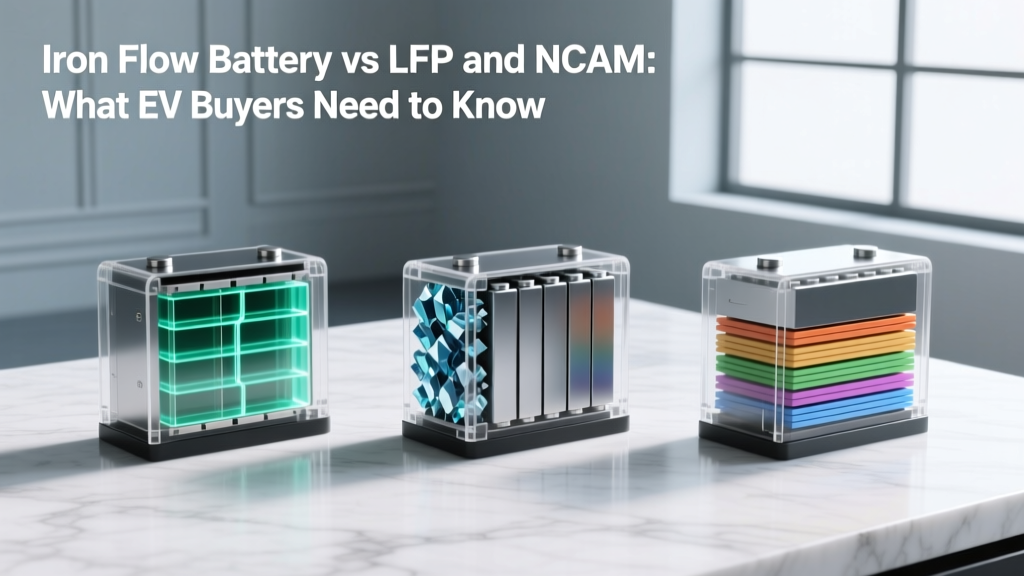
Not all EV batteries are built the same. The two dominant lithium-ion chemistries in 2026-model EVs are LFP (lithium iron phosphate) and NMC/NCA (nickel manganese cobalt / nickel cobalt aluminum). The chemistry determines your battery's energy density, lifespan, cold-weather behavior, and cost.
| Attribute | LFP (Lithium Iron Phosphate) | NMC / NCA (Nickel-based) |
|---|---|---|
| Energy Density | Lower (~160–180 Wh/kg cell-level) | Higher (~220–260 Wh/kg cell-level) |
| Typical Vehicles | Tesla Model 3 RWD, Model Y RWD, Ford Mustang Mach-E Select (standard range), BYD models | Tesla Long Range/Performance, Hyundai Ioniq 5/6, Kia EV6/EV9, Rivian, Ford extended-range |
| Cycle Life | 3,000–5,000+ cycles before significant degradation | 1,000–2,000 cycles before significant degradation |
| Cold-Weather Performance | More range loss in freezing temps (~35–40% loss at 20°F) | Better cold performance (~25–30% loss at 20°F) |
| Charging to 100% | Recommended periodically for cell balancing; daily 100% OK | Best kept 20–80% daily; 100% only for trips |
| Cost | Lower — no cobalt or nickel | Higher — commodity-priced metals |
| Thermal Stability | Excellent — lower thermal runaway risk | Good — requires robust thermal management |
| State of Charge Accuracy | Flatter voltage curve makes SoC estimation harder | More linear voltage curve — accurate SoC readout |
Which is better? Neither is universally superior. LFP wins on longevity and cost — ideal for standard-range models and daily commuting where you charge to 100% regularly. NMC wins on energy density and cold-weather range — the right pick for long-range models where maximizing miles per charge matters. According to Tesla's battery guidance, LFP owners should charge to 100% at least once weekly for accurate range estimation, while NMC owners should set a daily limit of 80%.
How Long Do EV Batteries Actually Last?
The short answer: almost certainly longer than you think. Real-world fleet data shows most modern EV batteries outlast the vehicles they're installed in.
Here's what the degradation data actually shows:
- Tesla fleet data (2024 Impact Report): Model S/X batteries retained ~88% capacity at 200,000 miles. Model 3/Y showed similar curves with NMC packs retaining ~90% at 150,000 miles.
- Recurrent Auto fleet study (2024, 15,000+ vehicles): Average EV battery degradation was ~5% at 3 years and ~8–10% at 5 years across all brands. Most vehicles showed a steep initial drop in year 1 (~2–3%), then a very gradual linear decline.
- Nissan Leaf (early air-cooled packs, pre-2018): Notable outlier — 24 kWh packs lost 20–30% capacity by year 5 in hot climates due to lack of active thermal management. Modern liquid-cooled packs have largely solved this.
- Hyundai/Kia E-GMP platform (Ioniq 5, EV6): Early data from 2022–2025 models shows ~3–5% loss at 50,000 miles with active thermal management maintaining consistent degradation curves.
Sources: Tesla Impact Reports, Recurrent Auto battery health studies, owner community data aggregations.
The pattern is consistent across chemistries: expect an initial 2–3% capacity loss in the first year as the battery "settles," followed by roughly 1–2% loss per year under normal use. A 2026-model EV with a 77 kWh NMC pack should realistically retain 85–90% of its original capacity after 8 years and 100,000 miles.
What Does the EV Battery Warranty Actually Cover?
Federal law mandates that EV batteries carry a minimum warranty of 8 years or 100,000 miles (whichever comes first). In California Air Resources Board (CARB) states — which include California, Colorado, Connecticut, Maine, Maryland, Massachusetts, New Jersey, New York, Oregon, Rhode Island, Vermont, Virginia, and Washington — the requirement extends to 10 years or 150,000 miles for certain emissions-related components, though traction battery coverage varies by manufacturer interpretation.
| Manufacturer | Warranty Period | Mileage Limit | Capacity Retention Threshold |
|---|---|---|---|
| Tesla (Model 3/Y RWD — LFP) | 8 years | 100,000 miles | 70% |
| Tesla (Model 3/Y LR — NMC) | 8 years | 120,000 miles | 70% |
| Hyundai (Ioniq 5/6) | 10 years | 100,000 miles | 70% |
| Kia (EV6/EV9) | 10 years | 100,000 miles | 70% |
| Ford (Mach-E, F-150 Lightning) | 8 years | 100,000 miles | 70% |
| Chevrolet (Equinox EV, Blazer EV) | 8 years | 100,000 miles | 60% (some trims 70%) |
| Rivian (R1T/R1S) | 8 years | 175,000 miles | 70% |
| BMW (iX, i4) | 8 years | 100,000 miles | 70% |
What triggers a warranty claim? If your battery's State of Health (SoH) drops below the stated threshold — typically 70% of original capacity — within the warranty period, the manufacturer must repair or replace the pack at no cost. In practice, most manufacturers will first attempt module-level repairs (replacing individual degraded modules rather than the entire pack), which is faster and less costly.
What's NOT covered: Damage from accidents, flooding, improper modifications, or using non-approved charging equipment. Gradual degradation above the threshold is considered normal wear — a battery at 72% capacity at year 9 is not a warranty claim.
EV Battery Replacement Cost: What to Expect
This is the question that haunts prospective EV buyers. Let's ground it in real numbers.
| Vehicle | Battery Capacity | Chemistry | Estimated Replacement Cost (Parts + Labor) |
|---|---|---|---|
| Tesla Model 3 RWD | 60 kWh | LFP | $12,000–$15,000 |
| Tesla Model Y Long Range | 75 kWh | NMC | $14,000–$18,000 |
| Hyundai Ioniq 5 | 77.4 kWh | NMC | $15,000–$20,000 |
| Ford F-150 Lightning (Extended Range) | 131 kWh | NMC | $25,000–$35,000 |
| Chevrolet Bolt EV (2023–2025) | 65 kWh | NMC | $14,000–$16,000 |
| Rivian R1T (Large Pack) | 135 kWh | NMC | $28,000–$38,000 |
| Kia EV9 (Long Range) | 100 kWh | NMC | $20,000–$28,000 |
When is replacement actually needed? For the vast majority of owners, it isn't — at least not within the vehicle's useful life. Based on current degradation curves, a 2026-model EV with an NMC pack would need to exceed 250,000–300,000 miles before dropping to 70% capacity under normal conditions. LFP packs may exceed 400,000 miles before reaching the same threshold.
That said, costs are declining. Battery pack prices fell from ~$150/kWh in 2022 to approximately $100–$115/kWh in 2025–2026, according to BloombergNEF tracking. Module-level repairs — replacing just the degraded section — typically cost $3,000–$8,000 and resolve most out-of-warranty issues without a full pack swap.
What Affects Your EV Battery's Lifespan?
Your daily habits have a measurable impact on how quickly your battery degrades. Here are the factors that matter most, ranked by impact:
🔴 High-Impact Factors
- Extreme heat exposure: Repeatedly parking in direct sun in 100°F+ climates accelerates degradation more than any other single factor. Use shaded parking or a garage when possible. Liquid-cooled packs mitigate this significantly.
- Sustained high State of Charge: Storing an NMC battery at 100% SoC for days or weeks (not just charging to 100% before a trip) stresses the cathode. Set your charge limit to 80% for daily use.
- Frequent DC fast charging in extreme conditions: Repeatedly using 150–350 kW DC fast chargers when the battery is very cold (below 32°F) or very hot (above 100°F) without preconditioning causes accelerated wear.
🟡 Moderate-Impact Factors
- Regular DC fast charging: Daily DCFC use shows a measurable but small effect — studies suggest ~1–2% additional degradation over 5 years compared to Level 2-only charging. Occasional road-trip fast charging has negligible impact.
- Deep discharges to 0%: Regularly running the battery to near-zero stresses cells. Most EVs have a "buffer" (typically 2–5 kWh below the displayed 0%) to protect the pack, but avoid making it a habit.
- Aggressive driving in cold weather: High-power draw from a cold battery increases internal resistance and stress. Use preconditioning — most EVs will warm the battery when you set a navigation route to a charger.
🟢 Low-Impact (But Worth Knowing)
- Calendar aging: Even a parked EV battery degrades slowly over time. A vehicle driven 5,000 miles/year will still see ~1–2% annual loss from chemistry alone.
- Regenerative braking settings: Max-regen modes generate high charge currents back into the battery. In practice, this effect is minor on modern packs with good thermal management.
How to Check Your EV Battery's State of Health (SoH)
State of Health (SoH) is the percentage of your battery's original capacity that remains usable. A brand-new pack is 100% SoH; a pack that held 77 kWh when new but now holds 70 kWh is at ~91% SoH.
Methods for checking SoH:
- In-vehicle display (limited): Some EVs — notably the Nissan Leaf, Hyundai Ioniq 5, and certain Tesla software versions — show a battery health metric in the settings menu. However, many manufacturers don't expose this directly to the driver.
- OBD-II diagnostic tools: Devices like the OBDLink SX/MX+ paired with apps such as EV Battery Health (Android) or Car Scanner ELM OBD2 can read the Battery Management System (BMS) directly and report SoH percentage, cell voltage variance, and pack temperature. This is the most accurate owner-accessible method.
- Dealer diagnostic check: Any authorized service center can run a full battery health report. Request this during routine service visits — it's typically included at no charge.
- Third-party services: Companies like Recurrent Auto offer free battery health monitoring by connecting to your vehicle's telematics data. You get a monthly SoH report and comparison against similar vehicles in your region.
- Manual range tracking: Charge to a known SoC (e.g., 100% for LFP, 90% for NMC) and compare the displayed range to the original EPA-rated range at the same SoC. A 310-mile EPA vehicle now showing 275 miles at 100% suggests roughly 88–89% SoH (accounting for the non-linear relationship between capacity and displayed range).
When that battery symbol illuminates: If the high-voltage battery warning light appears (usually yellow or red, often with an exclamation mark or "battery" text), it typically indicates a fault detected by the BMS — not necessarily degradation. Common triggers include cell voltage imbalance, thermal management system faults, or contactor issues. Safely pull over, consult your manual, and contact your dealer. Many battery-related warnings are software-resolvable and covered under warranty.
What's Next: Solid-State and Silicon-Anode Batteries
Next-generation battery technologies are advancing, but realistic timelines matter more than press-release promises.
Solid-state batteries replace the liquid electrolyte with a solid material, offering potentially 30–50% higher energy density, faster charging, and improved safety. Toyota has announced limited solid-state EV production for 2027–2028, while Samsung SDI targets 2027 for mass production. However, manufacturing scalability and cost remain unsolved challenges. Expect solid-state to appear in premium, low-volume models first, with mainstream adoption likely in the 2030–2032 timeframe.
Silicon-anode batteries (sometimes called silicon-dominant anodes) increase the silicon content in the anode to boost energy density by 20–40% over graphite anodes. Companies like Sila Nanotechnologies and Group14 Technologies are already supplying silicon-anode materials for limited production. The 2026 Mercedes-Benz G-Class EV uses a silicon-anode battery from Group14, achieving ~100 kWh in a pack lighter than comparable NMC packs. Expect broader silicon-anode adoption in premium EVs by 2028–2029.
Sodium-ion batteries are emerging as a low-cost alternative for entry-level EVs. CATL has begun shipping sodium-ion packs for Chinese-market vehicles. Energy density is ~30% lower than LFP, but cost per kWh is significantly less. US-market availability remains uncertain and likely limited to fleet/budget models initially.
Frequently Asked Questions
How long do EV batteries last in years and miles?
Based on fleet data from Tesla, Recurrent Auto, and manufacturer reports, modern liquid-cooled EV batteries typically retain 85–90% of their original capacity after 8–10 years and 100,000–150,000 miles. Many packs will exceed 200,000 miles before reaching the 70% capacity threshold that triggers a warranty claim. LFP chemistry packs often last significantly longer in terms of cycle life.
How much does it cost to replace an EV battery?
Full pack replacements range from approximately $12,000 for a 60 kWh LFP pack (Tesla Model 3 RWD) to $35,000+ for a 131 kWh NMC pack (Ford F-150 Lightning Extended Range). However, most out-of-warranty issues are resolved with module-level repairs costing $3,000–$8,000. Battery pack costs continue to decline, and replacement is rarely needed within a vehicle's typical ownership period.
What does the federal battery warranty cover?
US federal law requires a minimum 8-year/100,000-mile warranty on EV traction batteries. The warranty guarantees the battery will retain a specified percentage of its original capacity (typically 70%) for the warranty period. If SoH drops below the threshold, the manufacturer repairs or replaces the pack at no cost. In CARB states, extended coverage of 10 years/150,000 miles may apply. Check your specific manufacturer's warranty documentation for exact terms.
How do I check and maximize my EV battery health?
Check SoH using an OBD-II diagnostic tool with an EV-compatible app, request a dealer health report, or use a service like Recurrent Auto. To maximize longevity: set daily charge limits to 80% (NMC) or 100% (LFP), avoid leaving the car at 100% SoC for extended periods, use preconditioning before fast charging, park in shade during extreme heat, and minimize deep discharges to 0%.
LFP vs NMC — which battery chemistry is better for me?
Choose LFP if you want maximum cycle life, lower cost, and plan to charge at home daily (you can safely charge to 100% every day). Choose NMC/NCA if you need maximum range per charge, live in a cold climate where NMC's superior cold-weather performance matters, or frequently take long road trips. Both chemistries are proven and reliable — the "better" choice depends on your driving patterns and climate.
Does fast charging damage my EV battery?
The impact is real but smaller than commonly feared. Studies show that exclusive DC fast charging (vs. Level 2 only) adds approximately 1–2% additional degradation over 5 years. Modern battery management systems actively manage charge rates and temperatures during DCFC sessions. The bigger risk is fast charging in extreme temperatures without preconditioning. For daily use, Level 2 home charging is ideal; for road trips, DC fast charging is perfectly fine.
Is the battery symbol warning always serious?
Not always. A yellow battery warning light may indicate a minor BMS fault, sensor issue, or thermal management alert that doesn't affect drivability. A red battery warning typically indicates a more serious high-voltage system fault requiring immediate attention. In either case, consult your owner's manual for the specific icon meaning and contact your dealer's service department. Most battery-related warnings on newer EVs are diagnosable and many are covered under the battery warranty.