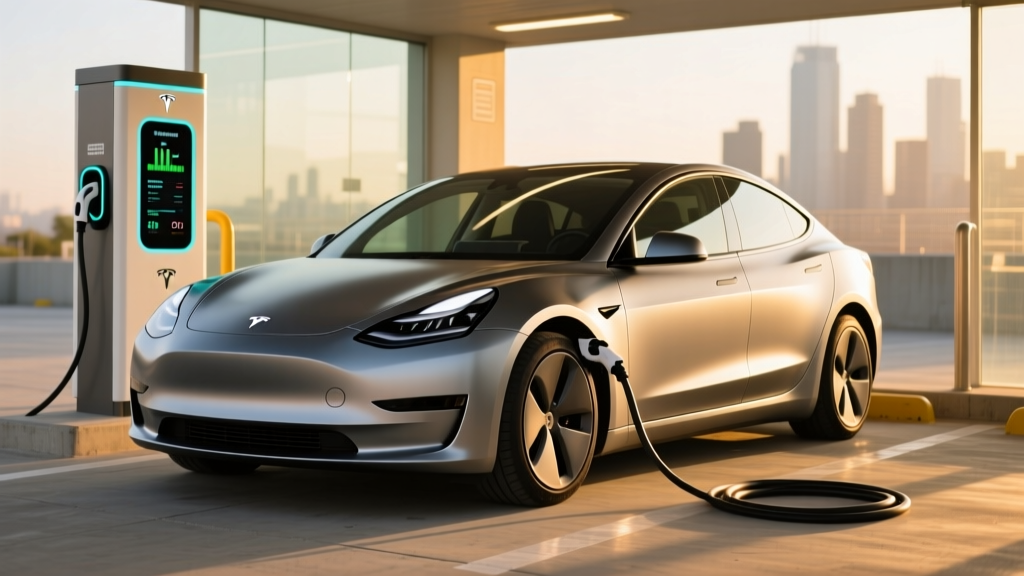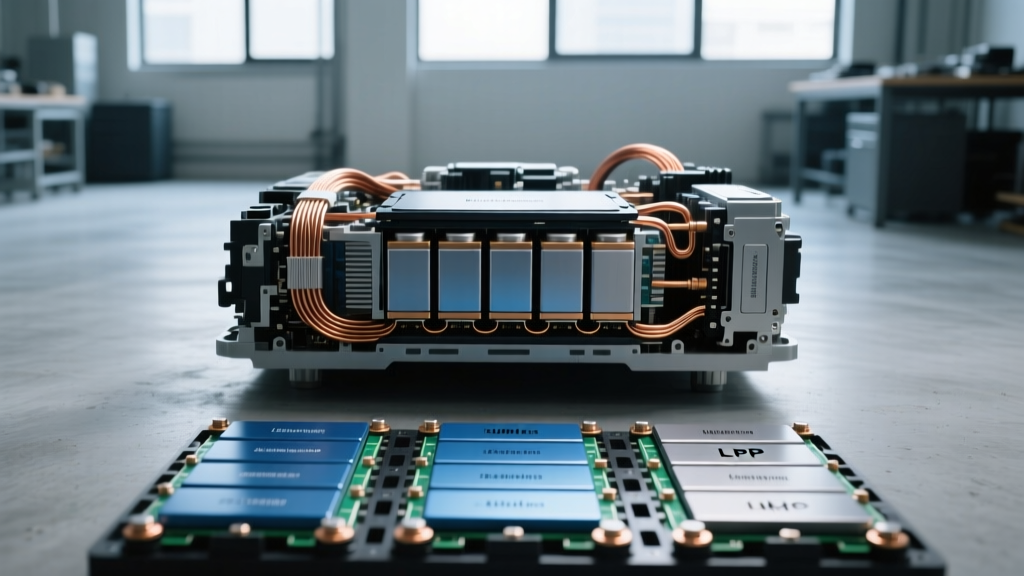
Search forums and EV owner groups long enough, and you'll see the question: "Do I need a smart battery tender for my electric vehicle?" The short answer is more nuanced than a yes or no. A smart battery tender — a device that maintains a battery at an optimal state of charge with microprocessor-controlled voltage regulation — is a staple for 12V lead-acid batteries in stored vehicles. But your EV's high-voltage traction battery operates under an entirely different paradigm, managed by a sophisticated Battery Management System (BMS) that makes traditional tenders largely irrelevant for the main pack.
That said, understanding why your EV battery doesn't need a tender — and what actually does preserve its health over 150,000+ miles — requires a deep look at chemistry, degradation mechanics, thermal management, and charging habits. This guide covers every data point you need to make informed decisions about EV battery longevity in 2026.
How EV Battery Management Replaces the Need for a Smart Battery Tender
A conventional smart battery tender (like a Battery Tender Plus or NOCO Genius) monitors voltage and delivers a maintenance charge to prevent sulfation in lead-acid 12V batteries. For your EV's 400V or 800V traction battery, the vehicle's onboard BMS performs this role continuously — even when the car is parked.
The BMS handles:
- Cell balancing: Equalizing voltage across hundreds of individual cells to prevent overcharge or deep discharge in any single cell.
- Thermal regulation: Activating liquid cooling or heating loops to keep cells within the optimal 15–35°C (59–95°F) range.
- State of Charge (SoC) buffering: Most manufacturers lock off a top and bottom buffer — for example, a 75 kWh battery may only allow 71 kWh of usable capacity, protecting cells from the damage of sitting at true 100% or 0%.
- Vampire drain management: Modern EVs draw 1–3 miles of range per day in standby for telematics, thermal management, and OTA updates — far less destructive than the deep discharge that kills an untended 12V battery.
Where a smart battery tender does remain relevant for EV owners: your EV's 12V auxiliary battery. This small lead-acid or lithium 12V battery powers the computers, lights, and door locks. If your EV sits unused for weeks, the 12V can die — bricking the car even though the main pack is full. A smart tender on the 12V battery during long storage is still practical advice.
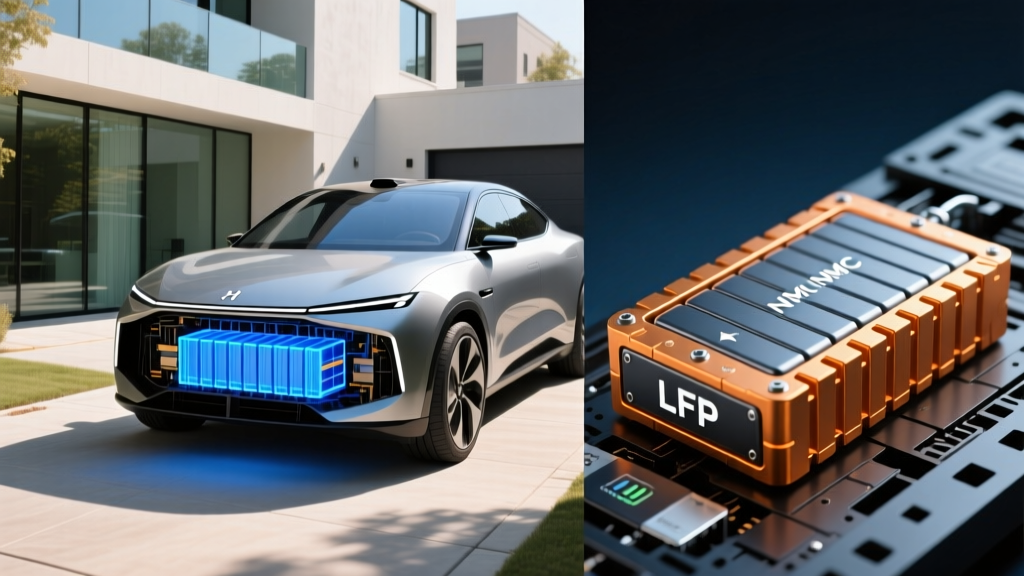
LFP vs NMC/NCA: The Chemistry That Determines Your Battery's Lifespan
The two dominant lithium-ion chemistries in 2026 EVs have fundamentally different aging characteristics, and understanding them is the single biggest factor in predicting how your battery will hold up.
| Attribute | LFP (Lithium Iron Phosphate) | NMC/NCA (Nickel Manganese Cobalt / Nickel Cobalt Aluminum) |
|---|---|---|
| Energy Density | ~160–180 Wh/kg (lower) | ~220–300 Wh/kg (higher) |
| Typical Cycle Life | 3,000–5,000+ cycles to 80% SoH | 1,000–2,000 cycles to 80% SoH |
| Cold-Weather Performance | Poor below -10°C; slower charging in cold | Better low-temp performance |
| Thermal Stability | Excellent — very low thermal runaway risk | Good, but requires more active cooling |
| Cost per kWh | ~$80–100/kWh (pack level) | ~$110–140/kWh (pack level) |
| Recommended Daily SoC | 100% is fine; periodic full charges help BMS calibration | 80% daily; 100% only for trips |
| Common 2026 Applications | Tesla Model 3/Y RWD, Ford Mustang Mach-E Select, BYD models | Tesla Long Range, Hyundai Ioniq 5/6, Kia EV6/EV9, Rivian, GM Ultium |
Which is better? It depends on your use case. If you want maximum cycle life and don't mind slightly less range per pound, LFP is the longevity champion — Tesla's own data and independent studies from Recurrent Auto show LFP packs losing less than 5% capacity over 100,000 miles. NMC/NCA delivers more range in a lighter package, making it the choice for long-range and performance trims, but it ages faster if routinely charged to 100% or exposed to sustained high temperatures.
Real EV Battery Degradation Data: What the Numbers Actually Show
Forget the fear-mongering. Aggregated fleet data from thousands of EVs tells a remarkably consistent story: modern EV batteries degrade far slower than most buyers expect.
Typical Degradation Curve (Aggregated Fleet Data, 2024–2026):
| Mileage | Average Capacity Retained (NMC) | Average Capacity Retained (LFP) |
|---|---|---|
| 0 miles (new) | 100% | 100% |
| 25,000 miles | ~96–97% | ~98–99% |
| 50,000 miles | ~93–95% | ~96–98% |
| 100,000 miles | ~88–92% | ~93–96% |
| 150,000 miles | ~83–88% | ~90–94% |
| 200,000 miles | ~78–85% | ~87–92% |
Sources: Recurrent Auto fleet data, Geotab fleet study. Individual results vary based on climate, charging habits, and chemistry.
The key insight: degradation is non-linear. Most capacity loss occurs in the first 20,000–30,000 miles as the solid electrolyte interface (SEI) layer forms on the anode. After that, degradation slows to roughly 1–2% per year under normal use. A 2026 Tesla Model 3 Long Range with an 82 kWh (usable ~79 kWh) NMC pack might lose ~8 kWh of capacity over 150,000 miles — reducing its EPA-rated 341-mile range to roughly 305 miles. Still very usable.
What the Battery Warranty Actually Covers — and What It Doesn't
Federal law mandates a minimum 8-year/100,000-mile warranty on EV batteries for emissions-related compliance, but most manufacturers exceed this. Here's how the major warranties stack up in 2026:
| Manufacturer | Warranty Period | Mileage Limit | Capacity Retention Threshold | Notes |
|---|---|---|---|---|
| Tesla (Model 3/Y) | 8 years | 100,000 mi (RWD) / 120,000 mi (LR/Perf) | 70% | Includes drive unit |
| Hyundai / Kia | 10 years | 100,000 mi | 70% | Among the longest coverage |
| GM (Ultium platform) | 8 years | 100,000 mi | 70% | Covers module-level repair |
| Ford (Mach-E, F-150 Lightning) | 8 years | 100,000 mi | 70% | Includes electrical components |
| Rivian | 8 years | 175,000 mi (R1T/R1S) | 70% | Higher mileage limit for trucks |
| BMW (iX, i4, i5) | 8 years | 100,000 mi | 70% | Modular pack allows partial replacement |
Critical detail: The 70% threshold means the manufacturer will repair or replace the battery only if capacity drops below 70% of original within the warranty period. Based on the degradation data above, the vast majority of EVs never hit this threshold during warranty coverage. Out-of-warranty failures are rare but not unheard of — which brings us to replacement costs.
EV Battery Replacement Cost: The Numbers for 2026
This is where anxiety peaks — but context matters. Most EV batteries will outlast the vehicle itself. When replacement is needed, it's usually due to a manufacturing defect (covered under warranty) or physical damage (covered by insurance), not end-of-life degradation.
| Vehicle | Battery Size (Usable) | Chemistry | Estimated Pack Cost (Parts) | Labor | Total Range |
|---|---|---|---|---|---|
| Tesla Model 3 RWD | 57.5 kWh | LFP | $7,000–$9,000 | $1,500–$2,500 | $8,500–$11,500 |
| Tesla Model Y Long Range | 78 kWh | NMC | $10,000–$14,000 | $1,500–$2,500 | $11,500–$16,500 |
| Hyundai Ioniq 5 | 77.4 kWh | NMC | $11,000–$15,000 | $2,000–$3,000 | $13,000–$18,000 |
| Ford F-150 Lightning Ext. Range | 131 kWh | NMC | $18,000–$25,000 | $2,500–$4,000 | $20,500–$29,000 |
| Chevrolet Equinox EV | 85 kWh | NMC (Ultium) | $10,000–$14,000 | $2,000–$3,000 | $12,000–$17,000 |
| Rivian R1T (Max Pack) | 141 kWh | NMC | $20,000–$28,000 | $3,000–$4,500 | $23,000–$32,500 |
Costs based on 2025–2026 industry averages and third-party repair estimates. Prices declining ~8–12% annually as pack-level costs fall below $120/kWh. Modular platforms (GM Ultium, BMW) may allow single-module replacement for $2,000–$5,000 instead of a full pack swap.
When is replacement typically needed? For most vehicles, it isn't. The median EV battery in 2026 is projected to retain 85%+ capacity at 150,000 miles. Replacement becomes a consideration when capacity drops below 70% — which, for a well-maintained NMC pack, typically occurs around 200,000–250,000 miles. LFP packs may never reach that point within the vehicle's structural lifespan.
Factors That Accelerate (or Slow) Battery Degradation
Your battery's aging rate is not fixed. These factors have measurable, data-backed impacts on how quickly capacity fades:
Fast-Charging Frequency
DC fast charging (50–350 kW) generates significant heat and forces lithium ions through the electrolyte at high C-rates. Occasional road-trip fast charging is fine, but data from Geotab's fleet study shows vehicles that DC fast charge more than 3 times per week degrade roughly 2–3% faster over 4 years than those primarily using Level 2. The sweet spot: home Level 2 for daily use, DCFC for road trips.
Extreme Temperatures
Sustained exposure to ambient temperatures above 35°C (95°F) accelerates electrolyte decomposition. Conversely, charging an LFP battery below -10°C (14°F) without preconditioning can cause lithium plating on the anode — permanent damage. Modern thermal management systems mitigate this significantly, but garage parking in Phoenix or preheating in Minnesota still pays dividends.
State of Charge Habits
For NMC/NCA batteries, storing at 100% SoC stresses the cathode lattice. The data consistently shows that vehicles kept between 20–80% SoC for daily use lose roughly half as much capacity over 5 years compared to those routinely charged to 100%. LFP batteries are more tolerant of 100% storage — Tesla and Ford both recommend periodic full charges for LFP packs to maintain BMS calibration accuracy.
Depth of Discharge
Running the battery to near 0% regularly causes copper dissolution in the anode current collector. The bottom buffer (typically 2–5 kWh) protects against catastrophic damage, but habitually arriving at 5% SoC is worse for longevity than arriving at 25%.
EV Battery Care Checklist — Maximize Longevity
- ✅ Set daily charge limit to 80% (NMC/NCA) or 100% (LFP — check your manual)
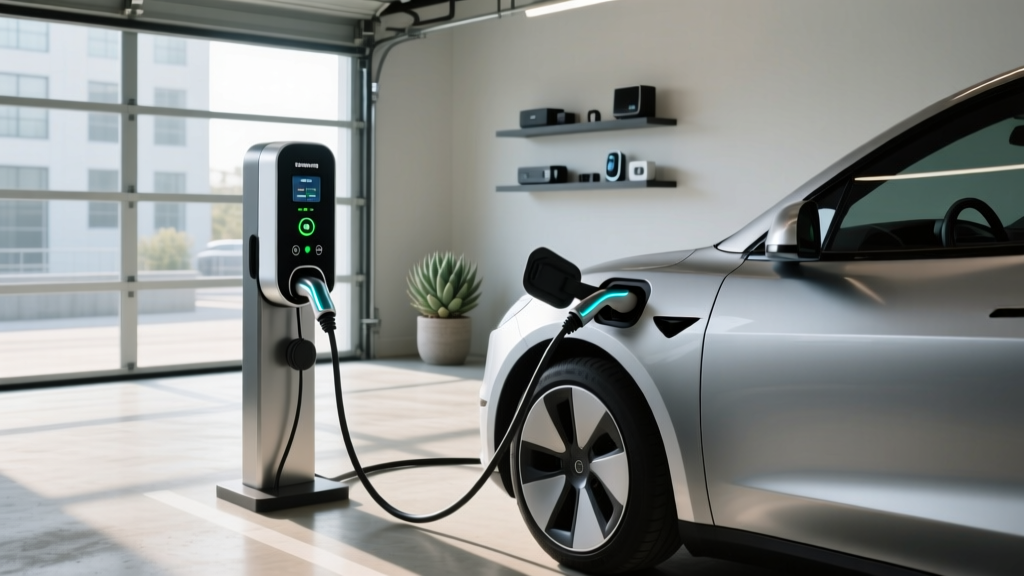
- ✅ Use Level 2 home charging as your primary method; reserve DCFC for road trips
- ✅ Precondition the battery before fast charging (most EVs do this automatically when you navigate to a charger)
- ✅ Avoid letting SoC drop below 10% for extended periods
- ✅ Park in shade or a garage in hot climates; plug in during extreme cold so the thermal system can maintain temperature
- ✅ If storing the EV for 2+ weeks, leave it plugged in with charge limit set to 50–60%
- ✅ Use a smart battery tender on the 12V auxiliary battery if the vehicle will sit unused for 30+ days
- ✅ Update firmware — OEMs regularly improve BMS algorithms via OTA updates
How to Check Your EV Battery's State of Health (SoH)
State of Health (SoH) is the percentage of original capacity your battery retains. A new battery is 100% SoH; at 70% SoH, your 341-mile EPA range becomes roughly 239 miles. Here's how to monitor it:
Manufacturer Apps and In-Car Displays
Some OEMs provide SoH directly. Hyundai/Kia's infotainment system includes a battery health diagnostic screen. Tesla does not surface SoH directly in the app, but you can estimate it by comparing your current displayed range at 100% charge to the original EPA figure. Note: displayed range recalculates based on recent driving efficiency, so this method has ±3% error.
Third-Party Diagnostics
Services like Recurrent provide battery health reports by connecting to your vehicle's telematics. Independent EV shops with OBD-II scanners (such as the Bosch EV kit or manufacturer-specific tools) can read individual cell voltages, internal resistance, and precise SoH percentages. A full diagnostic typically costs $75–$150.
The Manual Calculation Method
Charge to 100%, note the displayed range, and divide by the original EPA range. Example: Your 2023 Model Y Long Range originally rated at 330 miles EPA now shows 306 miles at 100%. Estimated SoH: 306 ÷ 330 = ~92.7%. Repeat this 3–4 times and average the results to account for temperature and driving-pattern variance.
Pre-Purchase Battery Reports
Buying a used EV? Request a battery health report before purchase. Services like Altelium and AVILOO offer remote battery tests that generate a certified SoH certificate — increasingly important as the used EV market matures.
Emerging Battery Tech: Solid-State and Silicon Anodes on the Horizon
Looking beyond 2026, two technologies promise to reshape EV battery longevity and performance:
Solid-state batteries replace the liquid electrolyte with a solid ceramic, polymer, or sulfide conductor. Benefits include higher energy density (~400+ Wh/kg projected), faster charging, reduced fire risk, and potentially 5,000+ cycle life. Toyota has announced limited production of solid-state EVs for 2027–2028, and Samsung SDI is targeting mass production by 2029. However, manufacturing yield challenges and cost remain significant barriers. Expect solid-state to debut in premium models first, with mainstream availability likely in the 2030–2032 timeframe.
Silicon anode technology replaces graphite anodes with silicon-dominant composites, increasing capacity by 20–40% at the cell level. Companies like Sila Nanotechnologies and Group14 are already supplying silicon anode materials to manufacturers including Mercedes-Benz (for the G-Class EV) and Panasonic. Silicon anodes are entering production in 2025–2027 and will likely become standard in NMC cells by the early 2030s, offering more range without increasing pack size.
Realistic timeline: These technologies will improve future EVs, but they are not available in any 2026 production vehicle at scale. If you're shopping today, current LFP and NMC chemistries offer proven longevity with extensive real-world data. Waiting for solid-state means waiting 4–6+ years for mainstream availability.
Frequently Asked Questions
How long do EV batteries last in years and miles?
Based on aggregated fleet data from Recurrent Auto and Geotab, the median EV battery retains 85–90% capacity at 150,000 miles and 10–12 years of age. LFP batteries often retain 90%+ at the same mileage. Most EV batteries will outlast the vehicle's structural and economic lifespan. Catastrophic failure (sudden death) is extremely rare — degradation is gradual and predictable.
How much does an EV battery cost to replace in 2026?
Full pack replacement ranges from ~$8,500 for a Tesla Model 3 RWD (57.5 kWh LFP) to ~$32,500 for a Rivian R1T Max Pack (141 kWh NMC), including labor. However, most owners will never need a replacement: degradation data shows the vast majority of packs retain 70%+ capacity well past 200,000 miles. Additionally, modular platforms like GM's Ultium allow individual module replacement for $2,000–$5,000 rather than a full pack swap. Pack costs continue declining 8–12% annually.
What does the EV battery warranty cover?
All major manufacturers cover the high-voltage battery for a minimum of 8 years/100,000 miles (Hyundai/Kia extend this to 10 years). The warranty guarantees the battery will retain at least 70% of its original capacity. Coverage includes defects, premature degradation, and module failures. It does not cover damage from accidents, flooding, or modifications. Some warranties (like Tesla's) also cover the drive unit. Always read your specific warranty booklet — terms vary by trim and model year.
How do I check and maximize my EV battery health?
Check SoH via your vehicle's diagnostic screen, the manufacturer app, a third-party service like Recurrent, or by manually comparing your 100% displayed range to the original EPA figure. To maximize health: charge NMC to 80% daily (100% for LFP), use Level 2 as your primary charging method, precondition before DC fast charging, avoid extreme SoC (below 10% or above 90%) for extended periods, and keep the vehicle plugged in during extreme temperatures so the thermal management system can operate.
LFP vs NMC — which battery chemistry is better and why?
Neither is universally "better" — they serve different priorities. LFP wins on longevity (3,000–5,000+ cycles vs 1,000–2,000), cost (~$80–100/kWh vs $110–140/kWh), safety, and the convenience of 100% daily charging. NMC/NCA wins on energy density (more range in a lighter, smaller pack), cold-weather performance, and fast-charging speed. If you want a vehicle that will retain the most range over 200,000 miles and don't need maximum EPA range, LFP is the longevity pick. If you need 330+ miles of range and drive in cold climates, NMC/NCA is the pragmatic choice.
Do I need a smart battery tender for my EV?
For the high-voltage traction battery: no. Your EV's BMS manages cell balancing, thermal regulation, and SoC buffering automatically. For the 12V auxiliary battery: yes, if your EV will sit unused for 30+ days. The 12V battery can discharge from vampire loads (telematics, security systems), and a dead 12V will prevent the vehicle from starting even with a full main pack. A smart tender like a Battery Tender Plus or NOCO Genius (~$40–$80) on the 12V during long storage is sound practice.