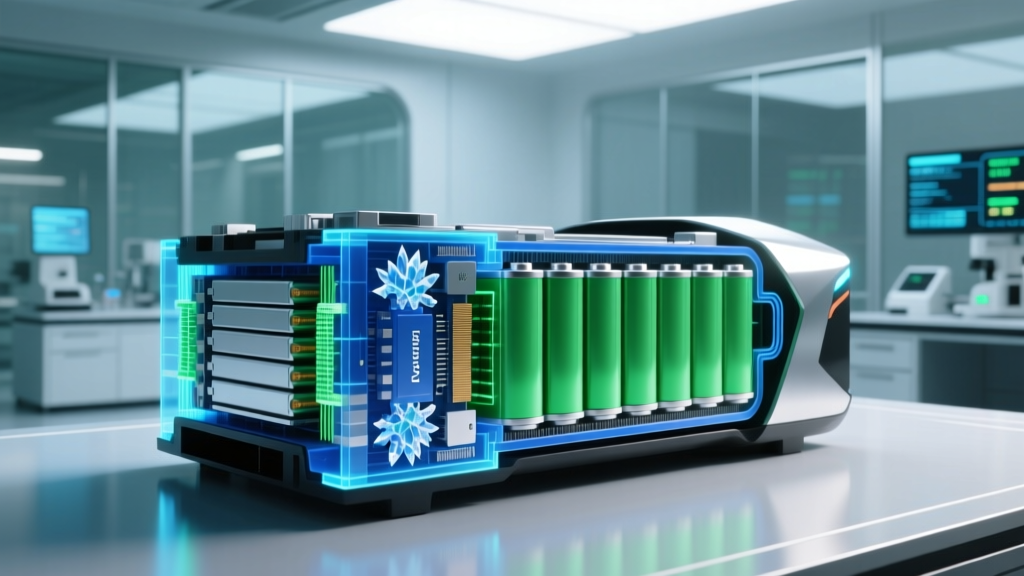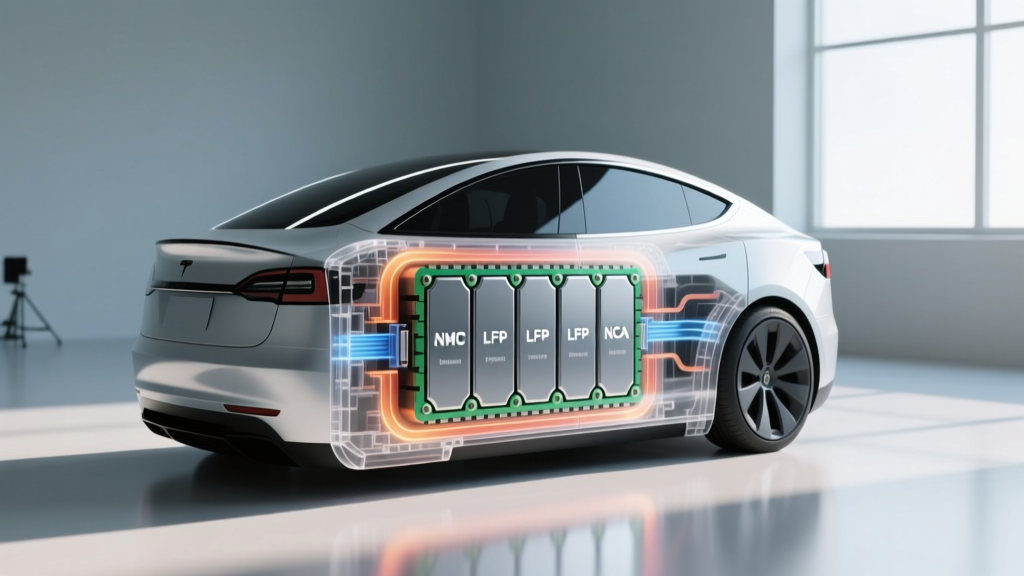
If you have shopped for an electric vehicle in the last two years, you have probably seen the same battery chemistries — NMC (nickel manganese cobalt) and LFP (lithium iron phosphate) — dominate every spec sheet. Both are mature, reliable, and well-understood. But a wave of silicon anode battery companies is working to fundamentally change what goes inside the cell, promising meaningful jumps in energy density and charge speed that could reshape the EV landscape before the end of the decade.
Before we get to what is coming, it is worth understanding what you are buying today. This guide covers current battery chemistry trade-offs, real-world degradation data, warranty coverage, replacement economics, and daily habits that maximize pack life — then examines where silicon anodes and solid-state technology actually stand in 2026.
LFP vs NMC: The Chemistry Decision You Make at Purchase
Every EV sold in the US today uses one of two dominant cathode chemistries: NMC/NCA (nickel-based) or LFP (lithium iron phosphate). The anode in both cases is overwhelmingly graphite. This distinction matters because it dictates your vehicle's range ceiling, how you should charge it daily, and how the pack ages over time.
| Attribute | LFP (LiFePO₄) | NMC / NCA |
|---|---|---|
| Energy density (cell-level) | ~160–180 Wh/kg | ~220–260 Wh/kg |
| Typical EPA range (midsize SUV) | 250–310 mi | 290–370 mi |
| Cycle life (to 80% SoH) | 3,000–5,000+ cycles | 1,000–2,000 cycles |
| Daily charging recommendation | 100% SoC is fine | Limit to ~80% SoC daily |
| Cold-weather range loss (~20°F) | ~30–40% reduction | ~20–30% reduction |
| Cost per kWh (pack-level, 2026) | ~$80–$100 | ~$110–$140 |
| Cobalt / nickel content | None | Significant |
| Common in (2026 models) | Tesla Model 3/Y RWD, Ford Mustang Mach-E Select (LFP option), BYD (global) | Hyundai Ioniq 5, Rivian R1T, Chevy Equinox EV, most long-range trims |
The trade-off is straightforward: NMC delivers more range in a smaller, lighter pack but degrades faster if habitually charged to 100% and stored at high state of charge. LFP sacrifices energy density (and therefore range for a given pack size) but tolerates full charges, lasts far longer in cycle count, and costs less. If your daily commute is under 50 miles and you charge at home nightly, an LFP pack is arguably the more durable choice. If you need 300+ miles for road trips and live in a cold climate, NMC's higher density and better cold performance make it the pragmatic pick.
How Long Do EV Batteries Actually Last?
The short answer: longer than most buyers assume. Data from fleet operators and long-term owners consistently shows that modern liquid-cooled battery packs lose roughly 10–15% of original capacity over the first 150,000 miles, with degradation slowing significantly after the initial break-in period (first 20,000–30,000 miles).
Typical Degradation Curve (NMC, liquid-cooled, moderate use):
- Year 1 / 15,000 mi: ~3–5% loss (initial formation drop)
- Year 3 / 45,000 mi: ~7–9% total loss
- Year 5 / 75,000 mi: ~9–12% total loss
- Year 8 / 120,000 mi: ~12–15% total loss
- Year 10 / 150,000 mi: ~14–18% total loss
LFP packs in similar duty cycles typically show 2–4% less total loss at each interval, owing to superior cycle life. Tesla's 2025 Impact Report noted that Model 3/Y packs retain an average of ~88% capacity at 200,000 miles — well above the 70% warranty threshold.
The key insight is that degradation is non-linear. The steepest drop occurs early as the solid electrolyte interphase (SEI) layer forms on the anode. After that, capacity loss slows to roughly 1–2% per year under normal conditions. Most EVs will be retired, totaled, or traded in before the battery reaches end-of-life (defined as 70% of original capacity).
What Does the Battery Warranty Actually Cover?
Federal law mandates that EV batteries carry a minimum warranty of 8 years / 100,000 miles (10 years / 150,000 miles in California and states that follow CARB standards). Every major automaker meets or exceeds this floor. The warranty covers capacity loss below a specified threshold — typically 70% retention — as well as manufacturing defects and module failures.
| Manufacturer / Model | Warranty Term | Capacity Threshold | Chemistry |
|---|---|---|---|
| Tesla Model 3 / Y (Long Range) | 8 yr / 120,000 mi | ≥70% retention | NMC |
| Tesla Model 3 / Y (RWD) | 8 yr / 100,000 mi | ≥70% retention | LFP |
| Hyundai Ioniq 5 / Ioniq 6 | 10 yr / 100,000 mi | ≥70% retention | NMC |
| Chevrolet Equinox EV / Blazer EV | 8 yr / 100,000 mi | ≥60% retention | NMC |
| Ford Mustang Mach-E | 8 yr / 100,000 mi | ≥70% retention | NMC / LFP |
| Rivian R1T / R1S | 8 yr / 120,000 mi | ≥70% retention | NMC |
| BMW iX / i4 | 8 yr / 100,000 mi | ≥70% retention | NMC |
A critical nuance: warranties cover capacity degradation, not range. If your 300-mile EPA-rated vehicle drops to 240 miles of real-world range due to a combination of battery degradation (say, 12% loss) and cold weather or tire wear, that does not trigger a warranty claim. The manufacturer measures SoH (State of Health) through the BMS (Battery Management System), and you would need to demonstrate that the pack itself has fallen below the stated threshold under controlled conditions.
EV Battery Replacement Cost: What to Budget For
Full pack replacement is rare in the first 10–12 years of ownership, but it is the single largest potential expense an EV owner faces. Pricing varies enormously by pack size, chemistry, and whether the replacement uses new, refurbished, or remanufactured modules.
| Vehicle Class / Example | Pack Size (kWh) | New Pack (Parts + Labor) | Refurbished / Module Repair |
|---|---|---|---|
| Compact (Chevy Bolt, Nissan Leaf) | 60–65 kWh | $12,000–$16,000 | $5,000–$9,000 |
| Midsize sedan (Tesla Model 3, Ioniq 6) | 75–82 kWh | $14,000–$20,000 | $7,000–$12,000 |
| Midsize SUV (Model Y, Mach-E, EV6) | 78–90 kWh | $16,000–$22,000 | $8,000–$14,000 |
| Full-size truck/SUV (Rivian R1T, F-150 Lightning) | 110–135 kWh | $22,000–$32,000 | $12,000–$18,000 |
Module-level repair is increasingly common: rather than replacing the entire pack, a technician identifies and swaps out the degraded or failed modules (a pack contains 4–16+ modules depending on architecture). This can cut costs by 40–60%. Independent EV shops and mobile technicians are expanding this service, though it remains more limited outside major metro areas.
For context, the average age of a scrapped vehicle in the US is roughly 12 years (S&P Global Mobility). Most EV batteries will outlast the rest of the vehicle's useful life — suspension, interior electronics, body corrosion — before reaching end-of-capacity.
Factors That Accelerate (or Preserve) Battery Life
Battery degradation is driven by heat, voltage stress, and calendar aging. Understanding these mechanisms lets you make informed daily choices.
Practices That Reduce Degradation
- Limit NMC daily SoC to 80% — set your charge limit in the vehicle's app. Reserve 100% for road-trip mornings only.
- LFP owners: charge to 100% at least weekly — this calibrates the BMS and prevents SoC estimation drift.
- Minimize DC fast charging above 150 kW when possible — occasional use is fine, but daily 350 kW sessions generate sustained heat that accelerates SEI growth.
- Avoid prolonged storage above 90% or below 10% SoC — if leaving the car for a week+, set SoC to ~50%.
- Precondition in cold weather — warming the pack before driving and charging reduces lithium plating risk. Most EVs do this automatically when a charger is set as a navigation destination.
- Park in shade or a garage during summer — sustained pack temperatures above 95°F (35°C) while parked at high SoC are the single worst aging condition.
Practices That Accelerate Degradation
- Daily DC fast charging to 100% (especially without preconditioning)
- Leaving the vehicle at 100% SoC for multiple days in hot weather
- Repeatedly draining below 10% SoC
- Towing heavy loads in high ambient temperatures (sustained high C-rate discharge)
- Ignoring thermal management system coolant service intervals
Monitoring Your Battery's State of Health
State of Health (SoH) represents the remaining usable capacity of your pack as a percentage of its original factory capacity. Most modern EVs surface this data — some directly, some through indirect signals.
In-vehicle methods:
- Tesla: Navigate to Service → Battery Health Test (available in recent software updates). The car performs a controlled discharge measurement and reports SoH percentage.
- Hyundai / Kia: The BMS reports SoH through the dealer diagnostic tool. Request a printout during service visits.
- General Motors (Ultium): The myChevrolet / myCadillac app provides a battery health indicator, though it is less granular than a full BMS readout.
Third-party tools: OBD-II dongles paired with apps like OBDeleven, Leaf Spy (Nissan-specific), or Scan My Tesla can pull raw BMS data including individual cell voltages, pack capacity in kWh, and degradation counters. For serious owners, this is the most transparent method.
A healthy pack should show cell voltage variance (delta) of less than 30–50 mV at rest. A widening delta between the highest and lowest cell groups signals module imbalance that may warrant a service visit — often fixable with a balancing charge cycle, but occasionally indicative of a failing module.
Where Silicon Anode Battery Companies Fit In
Current lithium-ion cells use graphite anodes, which can store one lithium ion for every six carbon atoms (LiC₆). Silicon, by contrast, can theoretically alloy with lithium at a ratio that delivers roughly 10× the specific capacity of graphite (~4,200 mAh/g vs ~372 mAh/g for graphite). This is why silicon anode battery companies have attracted billions in investment.
The catch is physics: silicon expands by ~300% in volume during lithiation. This swelling cracks the anode structure, breaks the SEI layer, and causes rapid capacity fade within dozens of cycles. Solving this is the central engineering challenge.
As of 2026, the leading silicon anode battery companies and their approaches include:
- Sila Nanotechnologies: Uses a silicon-dominant anode material embedded in a porous scaffold that absorbs expansion. Partnered with Mercedes-Benz (announced for the G-Class electric, targeted 2028+ production). Claims ~20% energy density improvement at the cell level in current-generation material.
- Group14 Technologies: Produces a silicon-carbon composite (SCC55) that replaces a portion of graphite. Already in limited production for consumer electronics; automotive partnerships with Porsche (announced for future models) and Farasis Energy. Targets 20–40% energy density gains.
- Enovix: Uses a 3D silicon anode architecture with constrained expansion. Focused initially on consumer and defense applications, with automotive samples in testing.
- Amprius Technologies: Ships 100% silicon nanowire anode cells at ~450 Wh/kg (cell-level) — far exceeding graphite — but currently in low-volume production for aerospace and defense. Automotive cost targets remain distant.
Realistic timeline for consumer EVs: Expect initial silicon-dominant or high-silicon anode cells to appear in premium vehicles in the 2028–2030 window, likely in limited-production or high-performance trims where cost-per-kWh is less constrained. Mass-market adoption at cost parity with graphite anodes is unlikely before 2031–2033. This is incremental progress, not an overnight revolution.
The more immediate evolution is silicon-graphite blends — cells that incorporate 5–15% silicon content alongside graphite to gain a modest 5–10% energy density bump. Several 2025–2026 model-year cells from CATL, LG Energy Solution, and SK On already use this approach. It is a meaningful but unspectacular improvement.
Solid-State Batteries: The Other Future Tech
Solid-state batteries replace the liquid electrolyte with a solid ceramic, sulfide, or polymer conductor. The theoretical advantages are significant: higher energy density (enabling lithium metal anodes), faster charging (reduced dendrite risk), and improved safety (non-flammable electrolyte).
However, no solid-state battery is in mass production for consumer EVs as of 2026. Toyota has announced a target of 2027–2028 for limited production in a next-generation EV, with claims of ~750 km (WLTP) range and 10-minute 10–80% charging. Samsung SDI and QuantumScape (backed by Volkswagen) continue to report progress on prototype cells but have not committed to specific vehicle integration dates.
The engineering hurdles remain substantial: solid electrolyte brittleness, interfacial resistance between the electrolyte and electrodes, and manufacturing scalability at automotive volumes and costs. Treat all solid-state announcements as preliminary and forward-looking until vehicles are in customer hands.
Frequently Asked Questions
How long do EV batteries last in years and miles?
Modern liquid-cooled EV batteries typically retain 80–88% of original capacity at 150,000–200,000 miles (10–15 years). Most packs outlast the vehicle's structural and electronic components. Complete failure before 150,000 miles is rare and usually covered under warranty.
How much does it cost to replace an EV battery?
A full new pack replacement ranges from ~$12,000 for a compact EV (60 kWh) to $22,000–$32,000 for a large truck or SUV (110–135 kWh). Module-level repair — replacing only the degraded sections — can cut this to $5,000–$18,000 depending on the vehicle. Prices have declined roughly 15–20% since 2022 as pack architectures have become more modular.
What does the EV battery warranty cover?
All manufacturers warrant the battery against capacity loss below a threshold (typically 70% retention) for 8 years / 100,000 miles minimum (10 years / 150,000 miles in CARB states). Manufacturing defects and module failures are covered. The warranty does not cover range loss caused by weather, tire condition, or driving habits — only measured pack capacity degradation.
How do I check my EV battery health?
Some vehicles (Tesla, recent GM Ultium models) provide in-app or in-vehicle health checks. For a detailed read, an OBD-II scanner paired with a BMS-compatible app can pull raw SoH data, individual cell voltages, and cycle counts. Your dealer can also run a diagnostic during service visits — request a printout.
LFP vs NMC — which battery is better for me?
Choose LFP if you charge at home daily, your commute is under 60 miles, and you want maximum cycle life with the simplicity of charging to 100%. Choose NMC if you need 300+ miles of EPA range, regularly road-trip in cold weather, or tow. Neither is universally superior — the right choice depends on your driving pattern.
Will silicon anode batteries make my current EV obsolete?
Not for years. Silicon anode battery companies are targeting 2028–2030 for initial premium-vehicle integration, with mass-market availability unlikely before 2031+. Your current EV's battery will age naturally on its own timeline. The 20% energy density improvement silicon anodes promise translates to roughly 40–60 additional miles of range in a comparable pack — meaningful, but not a reason to defer a purchase you need today.
Does fast charging damage my EV battery?
Occasional DC fast charging (1–3 times per week) causes negligible additional degradation in a properly preconditioned, liquid-cooled pack. Daily use of 350 kW chargers without preconditioning — particularly in hot weather — accelerates wear. For daily use, Level 2 home charging at 7–11 kW remains the lowest-stress option.
The battery remains the most expensive and most consequential component in any electric vehicle. Understanding what is inside it today — and what may be inside it in five years — is the single highest-leverage piece of knowledge an EV buyer can have. Current chemistries are proven and durable. Silicon anode battery companies are pushing real but gradual improvements. And the best battery care strategy is still the simplest one: charge smart, keep it cool, and let the engineering do its work.