Sentry Mode Battery Drain: What the Numbers Actually Show
Owners frequently ask: how much does Sentry Mode drain battery when parked? The answer depends on your battery chemistry, ambient temperature, and how long the car sits. For Tesla vehicles — which pioneered Sentry Mode as a camera-based surveillance feature — the system keeps the onboard computer, cameras, and touchscreen partially active to monitor surroundings and record events.
Based on aggregated owner data and Tesla's own energy logs, Sentry Mode consumes approximately 200–300 watts continuously while active. Over a 24-hour period, that translates to roughly 4.8–7.2 kWh of energy, or about 15–25 miles of EPA-rated range per day depending on the vehicle's efficiency (measured in Wh/mi).
A Tesla Model Y (EPA 310 mi, ~75 kWh usable battery, NMC chemistry) parked for 48 hours with Sentry Mode active will lose approximately 30–50 miles of range. In cold weather (below 32°F / 0°C), expect that loss to increase by 15–25% due to additional battery thermal management overhead.
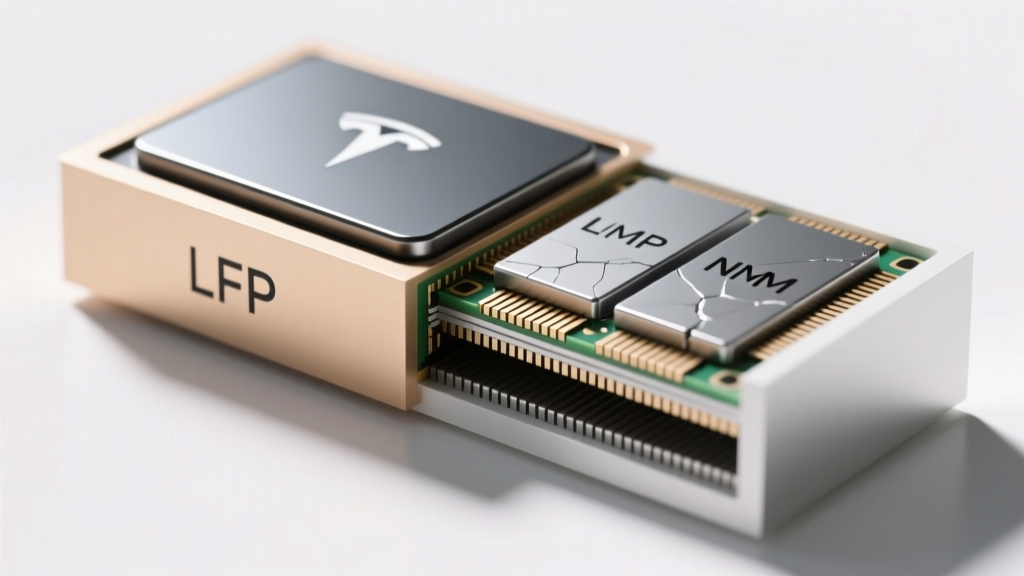
For vehicles with LFP (lithium iron phosphate) batteries — such as the Tesla Model 3 RWD or Model Y RWD — the percentage drain may appear slightly higher on the gauge because LFP packs have lower total energy density. However, LFP chemistry tolerates sustained high and low states of charge far better than NMC, making occasional Sentry Mode use less concerning for long-term degradation.
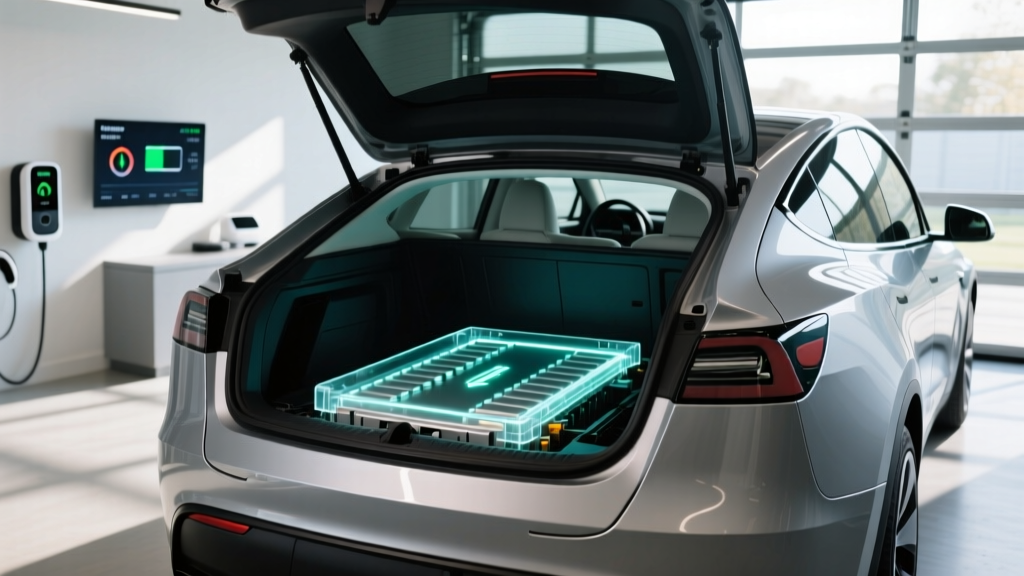
If you park at home with access to a Level 2 charger, the simplest mitigation is to leave the car plugged in. Sentry Mode will draw from the wall rather than the traction battery, eliminating range loss entirely and keeping the battery at your target state of charge.
EV Battery Chemistry: LFP vs NMC/NCA Explained
Understanding how Sentry Mode and other parasitic loads affect your battery requires knowing what chemistry is inside your pack. The two dominant chemistries in 2026 EVs are LFP and NMC/NCA (nickel-manganese-cobalt / nickel-cobalt-aluminum).
| Attribute | LFP (Lithium Iron Phosphate) | NMC / NCA (Nickel-based) |
|---|---|---|
| Energy Density | ~160–180 Wh/kg (lower) | ~220–260 Wh/kg (higher) |
| Typical EV Range | 220–272 mi EPA (smaller packs) | 280–400+ mi EPA |
| Cycle Life | 3,000–5,000+ cycles to 80% SoH | 1,000–2,000 cycles to 80% SoH |
| Cold Performance | Moderate — slower charge below 32°F | Better — preconditioning more effective |
| Cost per kWh | ~$80–100/kWh (2026 pack-level) | ~$110–140/kWh (2026 pack-level) |
| SoC Flexibility | Can charge to 100% daily without harm | Best kept 20–80% for longevity |
| Common Vehicles (2026) | Tesla Model 3/Y RWD, Ford Mustang Mach-E Select, BYD models | Tesla Long Range, Hyundai Ioniq 5/6, Rivian, BMW iX |
Which is better? It depends on your use case. If you drive under 250 miles daily, charge at home, and want maximum cycle life and lower cost, LFP is the practical winner. If you need maximum range for road trips, tow frequently, or live in a very cold climate where every kWh of capacity matters, NMC/NCA remains the stronger choice. Sentry Mode drain is a concern for both chemistries, but LFP's superior cycle life means the repeated shallow discharges from overnight Sentry use are far less impactful over the pack's lifetime.
How Long Do EV Batteries Last? Real Degradation Data
The fear of a dead traction battery is the single biggest barrier to EV adoption — but real-world data consistently shows that modern EV batteries outlast most owners' time with the vehicle.
According to data published by Tesla in its 2024 Impact Report (the most recent comprehensive dataset available), Tesla's fleet showed an average battery degradation of approximately 15% after 200,000 miles. That means a vehicle originally rated at 310 miles of EPA range would still deliver roughly 263 miles at that mileage — well within usable territory.
Independent analysis from Recurrent Auto, which tracks over 15,000 EVs in real-world conditions, shows similar patterns across brands:
- Year 1–2: 2–5% capacity loss (initial formation period)
- Year 3–5: Gradual decline, reaching ~8–12% total loss by year 5
- Year 8–10: 12–20% total loss for most NMC packs; 8–15% for LFP
- Beyond 150,000 miles: Degradation curve flattens significantly
NMC packs: ~5% loss at 30k mi → ~10% at 75k mi → ~15% at 150k mi → ~18% at 200k mi.
LFP packs: ~3% loss at 30k mi → ~7% at 75k mi → ~10% at 150k mi → ~12% at 200k mi.
Sources: Tesla Impact Report, Recurrent Auto fleet data, Geotab battery health studies.
The critical insight: most EV batteries will retain 75–85% of original capacity at 150,000 miles. Given that the average American drives ~13,500 miles per year (FHWA data), that's over 11 years of driving before hitting that threshold. The battery will likely outlive the car's body, suspension, and interior.
What Does the EV Battery Warranty Cover?
Federal law in the United States mandates that EV batteries carry a minimum warranty of 8 years or 100,000 miles (whichever comes first). In California Air Resources Board (CARB) states — which include California, Colorado, Connecticut, Maine, Massachusetts, New Jersey, New York, Oregon, Rhode Island, Vermont, Virginia, and Washington — the mandate extends to 10 years or 150,000 miles.
| Manufacturer | Warranty Term | Capacity Retention Threshold | Coverage Details |
|---|---|---|---|
| Tesla (Model 3/Y) | 8 yr / 100,000–120,000 mi | 70% of original capacity | Defects + excessive degradation |
| Hyundai / Kia | 10 yr / 100,000 mi | 70% of original capacity | Defects + excessive degradation |
| Ford (Mach-E, F-150 Lightning) | 8 yr / 100,000 mi | 70% of original capacity | Defects + excessive degradation |
| GM (Ultium platform) | 8 yr / 100,000 mi | 70% of original capacity | Defects + excessive degradation |
| Rivian | 8 yr / 120,000–175,000 mi | 70% of original capacity | Varies by model (R1T/R1S/EDV) |
| BMW | 8 yr / 100,000 mi | 70% of original capacity | Defects + excessive degradation |
Key detail: The warranty threshold is typically 70% state of health (SoH). If your battery drops below 70% capacity within the warranty period, the manufacturer will repair or replace it — usually with a refurbished pack that meets the 70% threshold, not necessarily a brand-new unit. In practice, warranty claims for degradation alone are extremely rare; most claims involve manufacturing defects or cell failures.
How Much Does an EV Battery Cost to Replace?
Out-of-warranty battery replacement is the nightmare scenario — but it's important to contextualize how rarely it happens. Industry data suggests fewer than 2–3% of EV batteries require full replacement over the vehicle's life, and the vast majority of those are covered under warranty.
| Vehicle / Battery Size | Pack Chemistry | Replacement Cost Range (2026) | Typical Replacement Trigger |
|---|---|---|---|
| Tesla Model 3 RWD (~60 kWh) | LFP | $8,000–$12,000 | Cell failure, physical damage |
| Tesla Model Y LR (~75 kWh) | NMC | $12,000–$16,000 | Cell failure, physical damage |
| Hyundai Ioniq 5 (~77.4 kWh) | NMC | $14,000–$18,000 | Module failure, degradation beyond threshold |
| Ford F-150 Lightning Ext. Range (~131 kWh) | NMC | $20,000–$30,000 | Large pack, higher material cost |
| Chevrolet Equinox EV (~85 kWh) | NMC (Ultium) | $12,000–$16,000 | Module-level repair often possible |
| Rivian R1T Dual Motor (~106 kWh) | NMC | $18,000–$24,000 | Cell/module failure |
Several important nuances:
- Module-level repair: Many modern packs (especially GM's Ultium and Hyundai's E-GMP) are designed for module-level service. A single faulty module can be replaced for $2,000–$5,000 rather than swapping the entire pack.
- Cost trajectory: Pack-level prices have dropped roughly 10–15% per year since 2022. By 2026, LFP packs are approaching $100/kWh at the cell level, making replacements increasingly affordable.
- Insurance coverage: If battery damage results from a collision, flooding, or other covered event, your auto insurance typically covers replacement.
- Remanufactured packs: Third-party and OEM remanufactured packs are increasingly available at 40–60% of new-pack cost.
Factors That Accelerate Battery Degradation
Sentry Mode drain is a minor factor in overall battery health. The following habits have a far greater impact on long-term state of health:
- Avoid sustained 100% SoC (NMC only): For NMC/NCA packs, set your daily charge limit to 80%. Reserve 100% for road trips. LFP owners should charge to 100% at least weekly for BMS calibration.
- Minimize DC fast charging above 150 kW: Occasional fast charging is fine, but daily use of 250–350 kW chargers accelerates degradation by 1–3% over 100,000 miles vs. Level 2 charging. The charge curve tapers above 80% SoC specifically to protect the cells.
- Avoid extreme heat exposure: Parking in direct sun in 100°F+ climates for extended periods stresses the battery. Use a garage or shaded parking when possible. The thermal management system runs even when parked, consuming energy.
- Precondition before fast charging: Navigate to a DC fast charger using the car's built-in routing (e.g., Tesla navigation, Ford's built-in nav). This activates battery preconditioning, warming the pack to optimal temperature and reducing charge-induced stress.
- Don't store at 0% or 100%: If leaving the car for more than a week, set SoC to 50–60%. A car stored at 100% in hot weather for a month can lose 1–2% permanent capacity.
- Sentry Mode best practice: If parked for more than 24 hours without a charger, disable Sentry Mode or set it to "Home" mode (which disables it at known locations). The 5–7 kWh/day drain is manageable short-term but compounds if the battery drops below 20% SoC.
How to Check and Monitor Battery Health (SoH)
State of Health (SoH) is the percentage of your battery's current maximum capacity compared to its original capacity when new. Here's how to check it across major brands:
- Tesla: No native SoH display in the app. Use third-party tools like Tessie or Stats (iOS apps that read Tesla's API) to estimate SoH from charge/discharge logs. Alternatively, charge to 100% and compare the displayed range to the original EPA rating — a rough but useful proxy.
- Hyundai / Kia: The infotainment system's EV diagnostics menu shows battery health percentage. The dealer can also pull a detailed SoH report via the diagnostic tool.
- Ford: FordPass app displays estimated battery health. Dealers can run a full Battery State of Health report.
- GM (Chevrolet, Cadillac, GMC): The myChevrolet/myCadillac app includes a battery health indicator. OnStar can also provide detailed reports.
- Rivian: The Rivian app shows estimated range at full charge; compare to original EPA spec. Service centers can provide a formal SoH reading.
- OBD-II tools: Devices like the OBDLink MX+ paired with apps such as EV Battery Health or Car Scanner can read SoH data from most EVs via the CAN bus.
When to be concerned: If your SoH drops more than 3–4% in a single year after the first two years (the initial formation period), contact your dealer. This could indicate a defective module that may be covered under warranty.
Looking Ahead: Solid-State and Silicon-Anode Batteries
Emerging battery technologies promise to make degradation concerns even less relevant — but realistic timelines matter.
Solid-state batteries replace the liquid electrolyte with a solid material, offering higher energy density (potentially 400+ Wh/kg), faster charging, and dramatically improved cycle life. Toyota has announced solid-state production for select 2027–2028 models, while Samsung SDI and QuantumScape are targeting 2028–2030 for broader commercialization. Expect initial solid-state packs to appear in premium vehicles first, with mainstream adoption likely post-2030.
Silicon-anode batteries (used in limited form by GM's Ultium platform and startups like Sila Nanotechnologies) replace graphite anodes with silicon, boosting energy density by 20–40%. These are already in limited production and will become more common through 2026–2028. They don't fundamentally change degradation behavior but allow smaller, lighter packs for the same range.
Sodium-ion batteries are entering the market for lower-cost, shorter-range EVs (particularly from Chinese manufacturers like BYD and CATL). They offer excellent cycle life and cold performance at lower energy density — a viable LFP alternative for urban commuters.
None of these technologies are currently available at scale for consumer purchase. If you're buying an EV in 2026, today's LFP and NMC packs are mature, well-understood, and backed by extensive warranty coverage.
Frequently Asked Questions
How much does Sentry Mode drain battery per hour?
Sentry Mode draws approximately 200–300 watts, consuming about 0.2–0.3 kWh per hour. Over 8 hours of parking, expect roughly 1.6–2.4 kWh of drain — equivalent to 5–8 miles of range in a typical mid-size EV.
Does Sentry Mode damage the battery long-term?
No. The shallow discharge cycles from Sentry Mode (typically 5–10% SoC drop overnight) are well within normal operating parameters. LFP batteries handle thousands of such cycles with minimal impact. NMC batteries experience marginally more stress, but the effect is negligible compared to factors like fast-charging frequency and high-SoC storage.
Can I leave Sentry Mode on while plugged in at home?
Yes — and this is the recommended approach. When plugged into a Level 2 home charger, Sentry Mode draws power from the wall, not the battery. Your car stays protected without any range loss, and the battery maintains its target SoC.
What's the difference between the 12V battery and the high-voltage traction battery?
EVs have two batteries: a small 12V auxiliary battery (lead-acid or lithium) that powers lights, computers, and door locks, and the large high-voltage traction battery (60–131 kWh) that drives the motors. Sentry Mode draws from the traction battery via the DC-DC converter, which also keeps the 12V battery charged. If the traction battery is depleted (extremely rare), the 12V system can also fail — which is why Tesla and others prevent the car from being driven below ~2% SoC.
How long do EV batteries last in years?
Based on current degradation data, most EV batteries retain 75–85% capacity after 10–12 years of typical use (13,500 mi/year). With proper care — avoiding daily 100% charges on NMC, minimizing extreme heat exposure, and using Level 2 charging predominantly — many packs will exceed 200,000 miles before dropping below the 70% warranty threshold.
Is LFP really better than NMC for daily driving?
For daily commuting under 250 miles with home charging, LFP offers clear advantages: you can charge to 100% daily without degradation concern, cycle life is 2–3x longer, and the cost per kWh is lower. The trade-off is less total range (typically 220–272 mi EPA vs. 300+ mi for NMC) and somewhat slower DC fast charging in cold weather. For road-trip-heavy drivers or those who tow, NMC's higher energy density remains worthwhile.
Will my EV battery need to be replaced?
Statistically, probably not. Industry data indicates fewer than 2–3% of EV batteries require full replacement. Of those, the majority are covered under the 8-year/100,000-mile federal warranty. Most EV batteries will outlast the vehicle's useful life. When replacement is needed (typically due to physical damage or rare cell failure), costs range from $8,000 to $30,000 depending on pack size, with module-level repairs often possible for $2,000–$5,000.