When Your EV Battery Retires, It's Not Really Retired
The average electric vehicle battery pack is engineered to outlast the car it powers. By the time most EVs reach end-of-life — whether from collision damage, mechanical wear, or simply age — the high-voltage traction battery still holds 70% to 80% of its original capacity. That remaining energy storage capability is exactly what makes the second life battery market one of the most important developments in the EV ecosystem heading into the late 2020s.
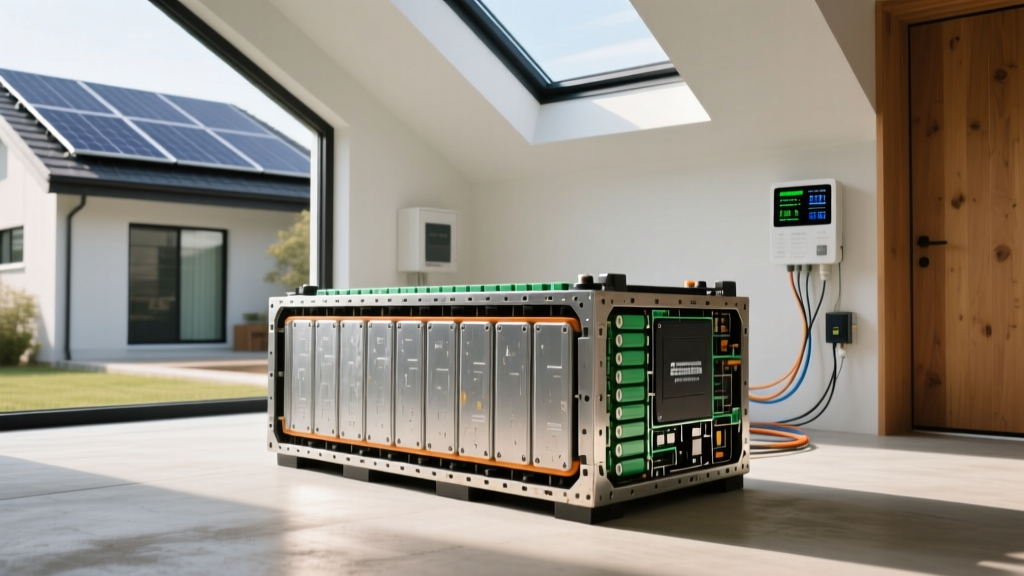
A second life battery is an EV traction pack that has been removed from its original vehicle and repurposed for stationary energy storage, grid stabilization, or backup power applications. These packs don't need to deliver 500 horsepower or sustain 250 kW fast-charging rates anymore. They just need to store and discharge energy steadily — something a degraded battery handles perfectly well.
But understanding what makes a battery a viable second-life candidate requires understanding what happens inside the cells during a decade of driving. Let's work through the chemistry, the degradation data, the warranty safety net, and what replacement actually costs if your pack fails before second life becomes an option.
LFP vs NMC: The Chemistry That Determines Second Life Potential
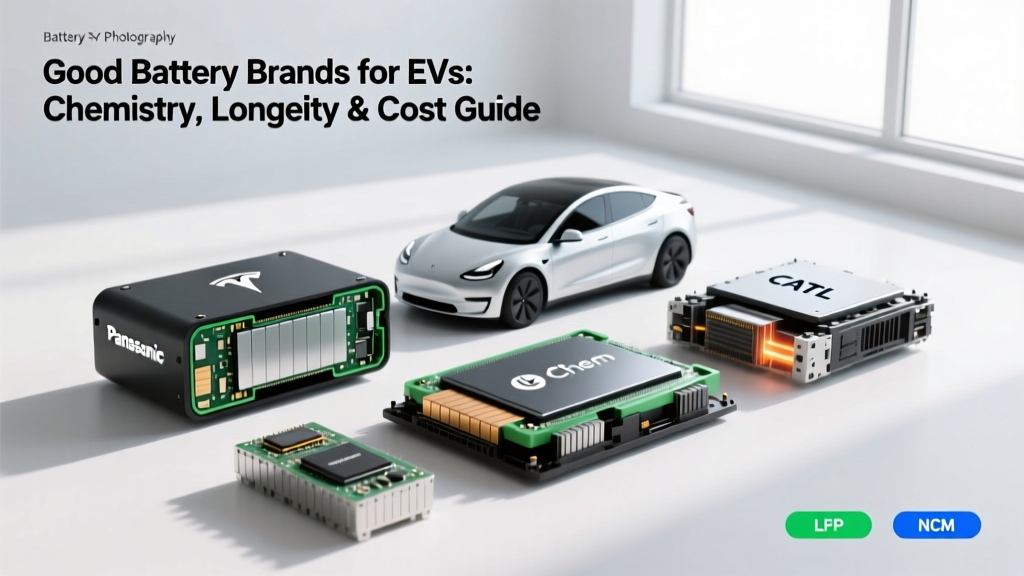
Not all EV batteries age equally. The cathode chemistry inside your pack dictates not only how your car performs on a cold January morning but also how many useful years remain when the battery leaves the vehicle. Two chemistries dominate the 2026 EV market:
| Attribute | LFP (Lithium Iron Phosphate) | NMC/NCA (Nickel Manganese Cobalt / Nickel Cobalt Aluminum) |
|---|---|---|
| Energy Density | Lower (~160 Wh/kg cell-level) | Higher (~250-300 Wh/kg cell-level) |
| Cycle Life | 3,000–5,000+ full cycles | 1,000–2,500 full cycles |
| Cold-Weather Performance | Moderate loss; slower charging below 32°F | Better low-temp discharge; preconditioning helps |
| Cost per kWh (2026) | ~$80–100/kWh at pack level | ~$110–140/kWh at pack level |
| Second Life Suitability | Excellent — high cycle count means more remaining life | Good — but fewer total cycles limits stationary lifespan |
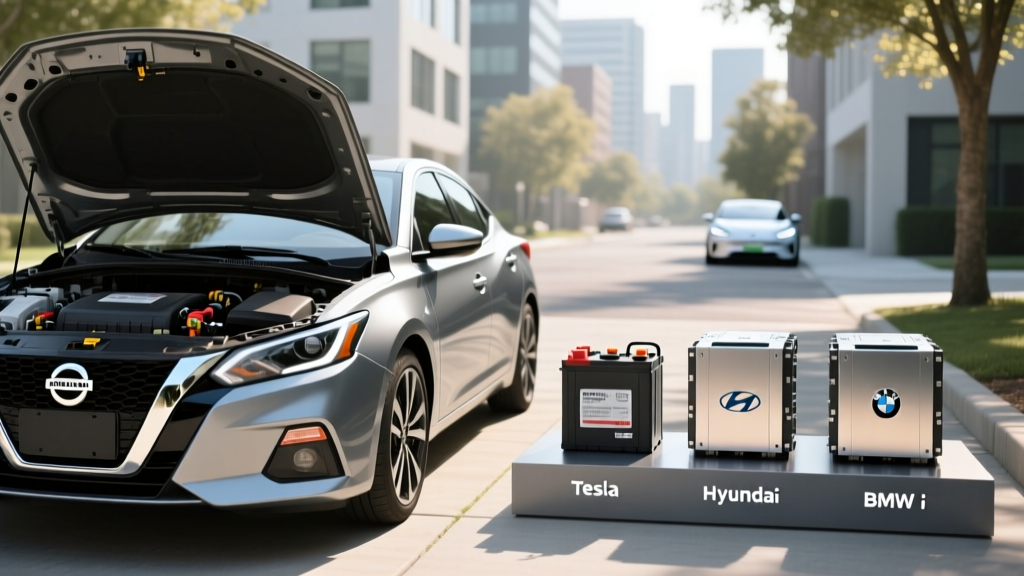
| Common in (2026 models) | Tesla Model 3 RWD, BYD, standard-range Ford, base Rivian | Tesla Long Range, Hyundai Ioniq 5/6, BMW iX, Porsche Taycan |
| Cobalt Content | None | Yes (supply-chain and ethical considerations) |
The trade-off is straightforward: NMC packs deliver more range in a smaller, lighter package — which is why they dominate long-range and performance trims. But LFP packs degrade more slowly, tolerate daily 100% charging without accelerated wear, and offer substantially more cycle life. For second life applications, LFP chemistry is increasingly preferred because a pack pulled from a vehicle after 150,000 miles may still have 3,000+ cycles of stationary storage ahead of it.
How Long Do EV Batteries Actually Last?
The fear that EV batteries need replacement every few years is not supported by fleet data. According to analysis from Geotab's long-term battery health study covering over 10,000 EVs, the average battery loses roughly 1.8% of its capacity per year under normal use. That translates to approximately 82–90% State of Health (SoH) after 10 years.
Here's what the degradation curve actually looks like across popular 2024–2026 model-year vehicles:
| Timeframe | Approximate Capacity Retained | Notes |
|---|---|---|
| Year 1 / 15,000 mi | 97–98% | Initial formation loss; steepest early drop |
| Year 3 / 45,000 mi | 94–96% | Curve flattens significantly after year 2 |
| Year 5 / 75,000 mi | 91–94% | Most owners notice minimal range change |
| Year 8 / 120,000 mi | 86–90% | Warranty threshold period; most packs well above 70% |
| Year 10 / 150,000 mi | 82–88% | Typical end-of-vehicle-life; prime second life candidate |
| Year 15 / 200,000+ mi | 75–83% | High-mileage outliers; LFP packs often outperform |
Several factors shift these numbers in either direction. Frequent DC fast charging (more than 3–4 sessions per week consistently), regularly sitting at 100% State of Charge in hot climates, and repeated deep discharges to near 0% all accelerate degradation. Conversely, LFP chemistry, moderate climates, and Level 2 home charging at 80% daily SoC keep packs closer to the upper end of these ranges.
The practical takeaway: most EV batteries will outlast the vehicles they're installed in. The car's suspension, interior, and electronics will wear out before the traction battery becomes unusable for driving. That's precisely why the second life battery pipeline exists.
What the Battery Warranty Actually Covers
Federal law mandates that EV battery warranties cover a minimum of 8 years or 100,000 miles. California Air Resources Board (CARB) states extend this to 10 years or 150,000 miles. But the details matter — particularly the capacity retention threshold that triggers a warranty claim.
| Manufacturer | Warranty Period | Capacity Threshold | Notes |
|---|---|---|---|
| Tesla (Model 3/Y LFP) | 8 yr / 100,000 mi | 70% retention | Standard range models |
| Tesla (Long Range/Performance) | 8 yr / 120,000 mi | 70% retention | NMC packs, higher mileage limit |
| Hyundai / Kia | 10 yr / 100,000 mi | 70% retention | Among the longest coverage |
| Ford (Mustang Mach-E, F-150 Lightning) | 8 yr / 100,000 mi | 70% retention | Transferable to second owner |
| Rivian | 8 yr / 120,000 mi | 70% retention | Adventure and commercial fleets |
| BMW (i4, iX, i7) | 8 yr / 80,000 mi | 70% retention | Lower mileage cap than some rivals |
| CARB-state vehicles (all brands) | 10 yr / 150,000 mi | 70% retention | CA, NY, MA, WA, OR, CO, and others adopting CARB rules |
The 70% threshold is critical context. A battery must lose more than 30% of its original capacity within the warranty period to qualify for replacement or repair. Given that average degradation runs 1.8% per year, hitting 70% within 8 years would require abnormally severe use or a manufacturing defect. In practice, warranty claims are rare — most involve individual cell or module failures rather than wholesale capacity loss.
Importantly, the warranty covers the high-voltage traction battery only. Your vehicle's 12V auxiliary battery (which powers lights, infotainment, and door locks) is a separate component with its own shorter warranty, typically 3 years/36,000 miles.
EV Battery Replacement Cost: The Real Numbers
If your battery does fail outside of warranty — or if you're evaluating a used EV with a degraded pack — replacement costs remain significant but have declined steadily. Pack-level pricing in 2026 averages $110–140/kWh for NMC and $80–100/kWh for LFP, before labor.
| Vehicle (example) | Battery Size | Chemistry | Estimated Replacement Cost |
|---|---|---|---|
| Tesla Model 3 RWD | ~60 kWh | LFP | $8,000–$12,000 |
| Hyundai Ioniq 5 (Long Range) | 77.4 kWh | NMC | $12,000–$16,000 |
| Ford F-150 Lightning (Extended) | ~131 kWh | NMC | $18,000–$28,000 |
| Chevrolet Equinox EV | ~85 kWh | NMC | $13,000–$17,000 |
| BMW iX xDrive50 | ~105 kWh usable | NMC | $18,000–$25,000 |
| Rivian R1T (Max Pack) | ~149 kWh | NMC | $22,000–$32,000 |
These are out-of-warranty estimates including parts and labor at authorized service centers. Independent EV shops may offer module-level repairs (replacing only failed cell groups) for $3,000–$8,000 depending on the failure. Labor alone typically accounts for $1,500–$3,500 of the total.
When is replacement actually needed? Almost never for capacity loss alone. A pack at 75% SoH still provides substantial range — a 300-mile EPA vehicle at 75% capacity delivers ~225 real-world miles, which remains practical for most daily driving. Full replacements are most common after collision damage, coolant intrusion, or isolated manufacturing defects.
The Second Life Battery Pipeline: From Driveway to Grid
When an EV is retired — scrapped, salvaged, or simply aged out — its battery enters one of three pathways:
- Direct reuse in another vehicle (if SoH is above ~85% and the pack is compatible)
- Second life repurposing for stationary storage (the most common and economically valuable path)
- Recycling to recover lithium, cobalt, nickel, and other raw materials (typically reserved for packs below 60% SoH or those with physical damage)
The second life battery market has matured considerably. Companies like Redwood Materials, Battery Resources, and B2U Storage Solutions are building grid-scale storage systems from retired EV packs. A typical second life installation might use 40–100 repurposed battery modules to create a 500 kWh to 2 MWh stationary storage system for solar farms, commercial buildings, or utility peaker-plant replacement.
Why does this work economically? Because the battery has already been paid for by the original vehicle buyer. The second life operator acquires the pack at salvage value ($30–60/kWh), tests and rebalances the modules, integrates them with new battery management systems and inverters, and deploys them at a cost significantly below new stationary storage. A second life system can provide 8–12 additional years of service in stationary applications where the demands are far less punishing than automotive use.
For the original EV owner, the second life market is beginning to influence resale values. Buyers of used EVs increasingly check battery State of Health before purchasing, and a well-maintained pack with documented charging history commands a premium. Some automakers, including Nissan with its "4R Energy" joint venture, have built formal programs to buy back retired packs for second life deployment.
How to Check and Maximize Your Battery's Health
Knowing your battery's State of Health isn't just useful for resale — it helps you optimize charging habits and plan for the pack's entire lifecycle, including its eventual second life.
Checking State of Health (SoH)
- In-vehicle diagnostics: Many 2024–2026 models (Tesla, Hyundai/Kia, BMW, Rivian) display battery health percentage in the service menu or mobile app
- OBD-II tools: Devices like the OBDLink SX paired with apps such as EV-BatMon or Car Scanner can read the BMS-reported SoH on most vehicles
- Dealer inspection: A service center can pull a full battery health report showing individual cell-group voltage variance and capacity estimates
- Range tracking: Compare your current full-charge range estimate to the original EPA rating. A consistent 10% drop from new suggests ~90% SoH
Battery Care Best Practices
- Daily charging limit: Set to 80% for NMC packs; LFP packs can be charged to 100% regularly without penalty (check your owner's manual — Tesla and BYD recommend 100% at least weekly for LFP to keep the BMS calibrated)
- Avoid prolonged low SoC: Don't leave the vehicle sitting below 10% for more than a few days — this stresses cell chemistry
- Fast charging moderation: DC fast charging is convenient on road trips, but daily use accelerates degradation. Rely on Level 2 home charging (7–11 kW) for routine needs
- Thermal management: Use your vehicle's preconditioning feature before fast charging in cold weather; garage parking in extreme heat reduces thermal cycling stress
- Storage: If leaving the vehicle unused for weeks, set SoC to 50–60% and keep it plugged in so the thermal management system can maintain optimal temperature
- Software updates: Keep your vehicle's BMS firmware current — manufacturers regularly refine charge algorithms to extend battery longevity
Factors That Accelerate (or Slow) Battery Degradation
Battery aging isn't linear, and it isn't random. The following variables have the most measurable impact on long-term capacity retention:
Temperature extremes are the single largest environmental factor. Packs operated consistently above 95°F ambient (Arizona, Texas summers) degrade 1.5–2x faster than those in moderate climates. Cold weather itself doesn't cause permanent damage, but charging at high rates in sub-freezing temperatures without preconditioning can cause lithium plating on the anode — an irreversible capacity loss mechanism.
Charge rate frequency matters more than most owners realize. Research published by the National Renewable Energy Laboratory (NREL) shows that packs subjected to frequent 150+ kW DC fast charging lose capacity roughly 30–40% faster than those charged predominantly at Level 2 rates. The heat generated during high-current charging accelerates electrolyte decomposition and solid-electrolyte interphase (SEI) layer growth.
Depth of discharge patterns also play a role. Regularly cycling between 10% and 90% puts more mechanical stress on electrode materials than shallow cycles between 30% and 70%. This is why fleet vehicles (delivery vans, rideshare) that charge opportunistically in small increments often show better-than-expected SoH despite high mileage.
Calendar aging occurs regardless of use. A garage-kept EV driven 3,000 miles per year will still lose capacity over time — roughly 1–1.5% annually from chemical processes alone. This is unavoidable but slow enough that it rarely becomes the limiting factor.
Looking Ahead: Solid-State and Silicon Anode Batteries
The battery landscape is evolving, and future packs may enter the second life stream with fundamentally different characteristics:
Solid-state batteries replace the liquid electrolyte with a solid ceramic or polymer, promising higher energy density (potentially 400+ Wh/kg), faster charging, and improved safety. Toyota, Samsung SDI, and QuantumScape have announced production timelines targeting 2027–2029 for initial vehicle deployments. These are still preliminary — no solid-state EV is currently available for purchase, and early production will be limited to premium models. If solid-state packs achieve their projected 5,000+ cycle life, they could make second life applications even more viable.
Silicon anode technology (used in limited form in the 2026 GMC Hummer EV and Porsche Taycan Turbo GT) increases energy density by replacing graphite anodes with silicon-dominant composites. Current implementations show 20–30% energy density gains, but long-term cycle life data is still accumulating. These packs are expected to become more common across mainstream models by 2028–2030.
Neither technology changes the fundamental second life proposition: any battery with remaining capacity above ~60% SoH has economic value in stationary storage. As pack sizes grow (many 2026 models carry 80–130 kWh), the energy available per retired battery increases, making second life installations more impactful per unit.
Frequently Asked Questions
How long do EV batteries last before needing replacement?
Most EV batteries retain 82–90% of their original capacity after 10 years of normal use. Full replacement due to capacity loss alone is rare — the majority of packs outlast the vehicles they're installed in. When replacement does occur, it's typically due to collision damage, coolant leaks, or isolated cell failures rather than gradual degradation.
How much does it cost to replace an EV battery in 2026?
Out-of-warranty replacement costs range from approximately $8,000 for a smaller LFP pack (Tesla Model 3 RWD, ~60 kWh) to $28,000–$32,000 for large NMC packs (Ford F-150 Lightning Extended, Rivian R1T Max Pack). These figures include parts and labor at authorized service centers. Module-level repairs at independent shops can reduce costs to $3,000–$8,000.
What does the EV battery warranty cover?
Federal minimum coverage is 8 years/100,000 miles with a 70% capacity retention threshold. CARB states extend this to 10 years/150,000 miles. If your battery degrades below 70% of original capacity within the warranty period, the manufacturer must repair or replace it. The warranty covers the high-voltage traction battery only — not the 12V auxiliary battery.
How do I check my EV battery's State of Health?
Most modern EVs display SoH through the vehicle's service menu or companion app. Third-party OBD-II tools (OBDLink SX with EV-BatMon) can read BMS data on most vehicles. Your dealer can pull a detailed health report showing cell-level voltage variance. As a rough check, compare your current full-charge range estimate to the original EPA rating.
Is LFP or NMC better for long-term battery health?
LFP chemistry offers superior cycle life (3,000–5,000+ cycles vs. 1,000–2,500 for NMC) and tolerates daily 100% charging without accelerated degradation. NMC delivers higher energy density, meaning more range per pound, but degrades slightly faster. For owners prioritizing longevity and second life value, LFP is the stronger choice. For maximum range and cold-weather performance, NMC remains preferred.
What is a second life battery and why does it matter?
A second life battery is a retired EV traction pack repurposed for stationary energy storage — solar farms, grid stabilization, commercial backup power, or residential systems. Because most EV batteries still hold 70–85% capacity when the vehicle is retired, they can provide 8–12 additional years of useful service in less demanding applications. This reduces waste, lowers the cost of grid storage, and improves the overall economics and sustainability of EV ownership.