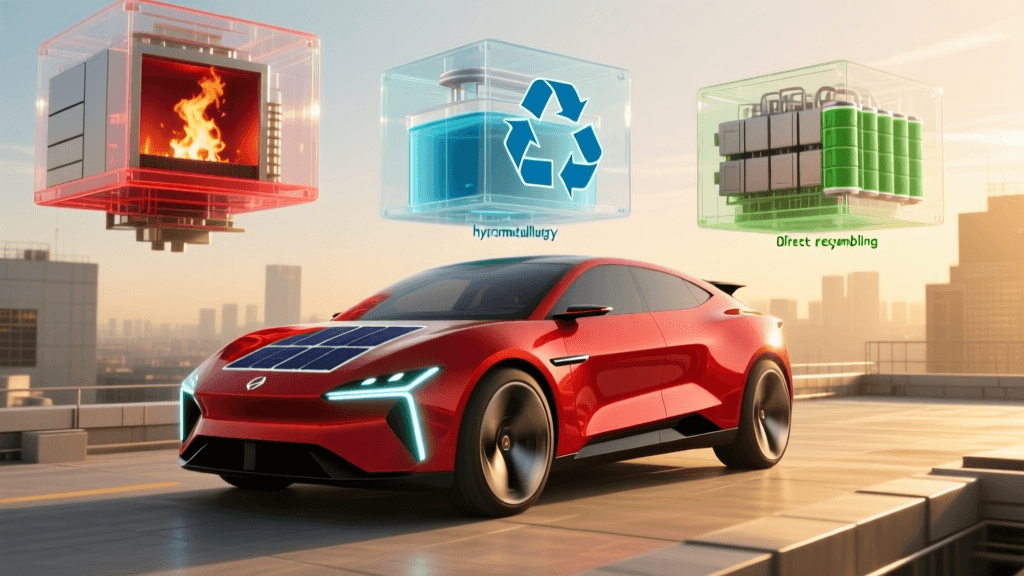
As the first major wave of modern electric vehicles approaches the end of their primary automotive lifespans, a massive secondary market is emerging. When an EV battery degrades to the point where it compromises vehicle range and performance, it is retired from automotive duty. However, these packs still retain significant energy capacity. Repurposing them for stationary energy storage—commonly known as "second-life" applications—represents a critical intersection of sustainable technology and grid economics.
For fleet managers, EV owners, and energy investors, understanding the technological deep dive behind battery repurposing is essential for accurately valuing these assets. Below, we explore the engineering realities, diagnostic requirements, and economic valuations of second-life EV batteries.
The Automotive Retirement Threshold: Why 80% SoH?
In the automotive industry, an EV battery is generally considered to have reached the end of its first life when its State of Health (SoH) drops to between 70% and 80%. This threshold is not arbitrary; it is dictated by the physics of lithium-ion degradation and the demanding performance requirements of modern vehicles.
As battery cells age, they experience both capacity fade (loss of total kWh) and power fade (increased internal resistance). While a 20% loss in capacity translates to a proportional drop in driving range, the increase in internal resistance is far more detrimental to the driving experience. High internal resistance causes severe voltage sag during heavy acceleration and limits the battery's ability to accept high-current DC fast charging without overheating. Consequently, the vehicle's Battery Management System (BMS) must artificially restrict power output to protect the cells, resulting in sluggish performance and prolonged charging times.
However, stationary grid storage does not demand extreme power density or rapid C-rates. A battery pack with 75% SoH that is practically useless for a highway road trip is perfectly suited for slowly storing solar energy over four hours and discharging it over another four hours.
Technology Deep Dive: Diagnostics and Cell Grading
Before a retired EV pack can be deployed in a second-life application, it must undergo rigorous diagnostic testing. Unlike new cells manufactured to exact specifications, retired packs have experienced varied thermal and cycling histories. Repurposers utilize advanced diagnostic techniques to grade and match cells.
- Electrochemical Impedance Spectroscopy (EIS): This non-destructive testing method applies an alternating current across a range of frequencies to measure the internal impedance of the cell. EIS helps technicians identify micro-shorts, electrolyte depletion, and solid electrolyte interphase (SEI) layer growth without putting the cell through a full charge cycle.
- Rapid Charge/Discharge Profiling: Cells are subjected to specific current pulses to map their exact remaining capacity and internal resistance.
- Cell Matching and Rebalancing: To build a reliable second-life rack, cells with similar impedance and capacity profiles must be grouped together. If a high-resistance cell is paired with a low-resistance cell in a parallel string, it will create a parasitic drain and localized heating, accelerating the degradation of the entire module.
BMS Recalibration: Automotive vs. Stationary
One of the most significant engineering hurdles in second-life applications is the Battery Management System (BMS). Automotive BMS architectures are designed for highly dynamic environments. They must manage extreme temperature fluctuations, regenerative braking spikes, and complex liquid cooling loops. Furthermore, OEM BMS software is often locked and proprietary, making it difficult to integrate with third-party stationary inverters.
To solve this, advanced repurposing facilities strip the OEM BMS and install a stationary-optimized BMS. Stationary BMS units prioritize calendar life and deep-cycling stability over dynamic power delivery. They utilize simpler, more cost-effective passive air cooling or low-flow liquid cooling systems, and their algorithms are tuned to keep the cells in the optimal 20% to 80% State of Charge (SoC) window, drastically slowing down further degradation.
Chemistry Considerations: NMC vs. LFP in Second Life
The cathode chemistry of the retired battery heavily dictates its second-life viability and value:
Nickel Manganese Cobalt (NMC)
NMC batteries offer high energy density but degrade faster, particularly when exposed to high temperatures and high SoC levels. For second-life applications, NMC packs are best suited for short-duration, high-value grid services where space is at a premium, such as frequency regulation.
Lithium Iron Phosphate (LFP)
LFP chemistry is the undisputed king of second-life storage. LFP cells exhibit a remarkably flat discharge curve and can endure 3,000 to 5,000+ cycles before reaching 80% SoH. Even after a decade in an EV, an LFP pack often has thousands of cycles remaining, making it highly lucrative for daily commercial peak-shaving applications.
Primary Second-Life Applications & Value Matrix
The economic value of a retired battery depends entirely on its deployed application. Below is a comparison of the primary second-life use cases, their technical requirements, and their estimated revenue potential.
| Application | Min. SoH Required | Typical C-Rate | Revenue Model | Est. Residual Value ($/kWh) |
|---|---|---|---|---|
| Frequency Regulation | 65% - 70% | 1C to 2C (Fast) | Grid ancillary service markets | $35 - $50 |
| Commercial Peak Shaving | 70% - 75% | 0.25C to 0.5C | Demand charge reduction | $40 - $60 |
| Residential Solar Backup | 75% - 80% | 0.2C to 0.5C | Time-of-use arbitrage / Backup | $50 - $75 |
| Telecom Tower Backup | 60%+ | 0.1C (Very Slow) | Lead-acid replacement | $25 - $40 |
The Economics: Valuing a Retired EV Battery
Valuing a second-life battery requires analyzing the cost of acquisition, refurbishment, and the competitive threat of new batteries. According to data tracked by the International Energy Agency (IEA), the price of new battery packs, particularly LFP, has plummeted in recent years due to raw material stabilization and manufacturing scale.
With new commercial LFP storage systems approaching $100–$120/kWh (installed), second-life systems must be priced aggressively to justify the perceived risk of using degraded cells. Currently, the wholesale acquisition cost for a retired 60 kWh Nissan Leaf or Chevy Bolt pack ranges from $1,500 to $2,500 ($25–$41/kWh). After the costs of diagnostic testing, BMS replacement, and system integration are factored in, the final second-life system is typically sold for $80 to $110 per kWh.
As highlighted by research from the ReCell Center at Argonne National Laboratory, the true economic sweet spot for second-life batteries emerges when they delay the need for expensive grid infrastructure upgrades. By deploying cheap, repurposed batteries for localized peak shaving, utilities can defer millions of dollars in substation upgrades, creating a massive return on investment that easily absorbs the cost of the second-life hardware.
Actionable Advice: Maximizing Your EV Battery's Residual Value
For current EV owners and fleet operators, the eventual second-life value of your vehicle's battery is an asset you can actively protect. To ensure your battery commands a premium on the secondary market, follow these guidelines:
- Avoid Routine 100% Charges: For NMC batteries, sitting at 100% SoC accelerates electrolyte oxidation and SEI layer thickening. Limit daily charging to 80% unless a long trip is imminent.
- Minimize DC Fast Charging: Frequent high-current DC charging generates immense localized heat, which physically degrades the cathode structure. Rely on Level 2 AC charging for daily use.
- Maintain Battery Health Records: Second-life buyers pay a premium for verified data. Use third-party battery health monitoring services (like Recurrent or AVILOO) to generate a continuous, verifiable "Battery Passport" showing the pack's thermal and cycling history.
- Thermal Preconditioning: Always precondition your battery before fast charging or driving aggressively in extreme cold. Forcing high currents through a cold battery causes lithium plating, a permanent and dangerous degradation mechanism that will instantly disqualify a module from second-life repurposing, forcing it straight to raw material recycling.
Conclusion
The transition from automotive propulsion to stationary grid storage is not merely a recycling effort; it is a sophisticated re-engineering process. By understanding the nuances of cell diagnostics, BMS recalibration, and application-specific economics, stakeholders can unlock immense residual value from retired EV packs. As the National Renewable Energy Laboratory (NREL) continues to model grid storage demands, it is clear that second-life EV batteries will form a foundational pillar of the decentralized, renewable energy grid of the future.