If you are researching the SDCP battery rebate—or any utility-driven incentive tied to electric-vehicle battery ownership—you first need a clear picture of what is actually inside your EV, how long it lasts, what the warranty covers, and what a replacement would cost. This guide breaks down every number that matters, from chemistry trade-offs to real-world degradation curves, so you can evaluate any rebate program with confidence.
What Is the SDCP Battery Rebate and How Does It Relate to EV Ownership?
SDCP (San Diego Community Power) is a Community Choice Aggregator serving San Diego-area residents. Like many CCAs and utilities, SDCP has periodically offered rebates and incentives tied to clean transportation, including EV purchase incentives, home-charging equipment rebates, and programs that reward battery-friendly behavior (such as managed charging or vehicle-to-grid participation). The exact availability, dollar amount, and eligibility criteria of any SDCP battery rebate or EV incentive change from year to year and are subject to funding availability.
Before applying, confirm the current program details directly on the SDCP website or through your local utility portal. Key items to verify:
- Whether the rebate applies to new EV purchases, used EVs, or battery-related equipment (e.g., home chargers, V2H hardware)
- Income or residency eligibility requirements
- Stacking rules—can you combine the SDCP incentive with the federal §30D tax credit and any California state rebates (such as those administered through the California Energy Commission)
- Application deadlines and required documentation (proof of purchase, VIN, charger installation receipt)
Understanding your EV's battery is critical because many utility programs now tie incentives to how you charge, not just what you drive. Programs increasingly reward off-peak charging, moderate state-of-charge habits, and participation in demand-response events—all of which also extend your battery's useful life.
LFP vs. NMC/NCA: Which Battery Chemistry Is in Your EV?
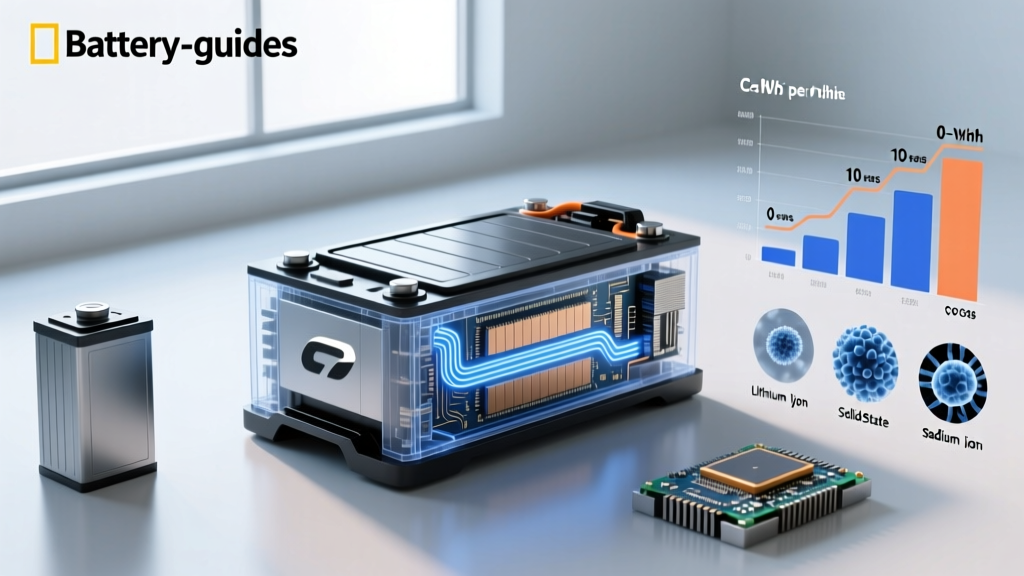
Every EV sold in the U.S. uses one of two dominant lithium-ion chemistries for its high-voltage traction battery: LFP (lithium iron phosphate) or NMC/NCA (nickel manganese cobalt / nickel cobalt aluminum). The chemistry affects range, longevity, charging behavior, and cost.
| Attribute | LFP (Lithium Iron Phosphate) | NMC / NCA (Nickel-based) |
|---|---|---|
| Energy density | ~160–180 Wh/kg (lower) | ~220–270 Wh/kg (higher) |
| Typical cycle life | 3,000–5,000+ cycles | 1,000–2,000 cycles |
| Cold-weather performance | Moderate; greater range loss below 32°F | Better low-temp discharge capability |
| Recommended daily SoC | 100% OK (manufacturer often recommends periodic full charge for BMS calibration) | 80% daily; 100% only for trips |
| Fast-charge tolerance | Good; less degradation from frequent DCFC | Moderate; frequent DCFC accelerates wear |
| Cost per kWh (pack level) | ~$100–$120 | ~$130–$160 |
| Common in (2026 models) | Tesla Model 3/Y RWD, base Ford Mustang Mach-E Select, BYD (where available) | Hyundai Ioniq 5/6, Kia EV6/EV9, long-range Tesla, Rivian, Ford F-150 Lightning Extended |
Which is better? Neither is universally superior. LFP wins on longevity and cost, making it ideal for daily commuters who charge at home and don't need maximum range. NMC/NCA wins on energy density, giving longer-range vehicles a lighter, more compact pack—better for road-trippers and cold-climate drivers who need every mile of EPA-rated range.
How Long Do EV Batteries Actually Last?
The short answer: in most cases, the traction battery outlasts the vehicle itself. Real-world fleet data and manufacturer testing show the following degradation trajectory:
Typical EV Battery Degradation Curve (NMC Chemistry)
| Time / Mileage | Average Capacity Retained | Notes |
|---|---|---|
| Year 1 / 15,000 mi | ~95–97% | Initial "break-in" drop; steepest early loss |
| Year 3 / 45,000 mi | ~91–94% | Curve flattens significantly |
| Year 5 / 75,000 mi | ~88–92% | Most owners notice minimal day-to-day difference |
| Year 8 / 100,000 mi | ~83–90% | Still well above warranty threshold |
| Year 10+ / 150,000 mi | ~78–87% | Gradual; many packs still functional at 200k+ mi |
Sources: Recurrent Auto fleet data (2025 report), manufacturer warranty disclosures. LFP packs typically show 2–5% less degradation at equivalent milestones.
A critical nuance: degradation is non-linear. Most capacity loss occurs in the first 20,000–30,000 miles as the solid electrolyte interphase (SEI) layer stabilizes. After that, the curve flattens dramatically. A 2026 Hyundai Ioniq 5 with a 77.4 kWh NMC pack, for example, might lose ~4% in year one and then average ~0.5–0.8% per year afterward.
EV Battery Warranty Terms: What's Actually Covered?
Federal law mandates a minimum 8-year / 100,000-mile warranty on EV battery packs (10 years / 150,000 miles in CARB states like California). Most manufacturers meet or exceed this baseline:
| Vehicle | Warranty Term | Capacity Threshold | Chemistry |
|---|---|---|---|
| Tesla Model 3 RWD | 8 yr / 100,000 mi | ≥70% retention | LFP |
| Tesla Model 3 Long Range | 8 yr / 120,000 mi | ≥70% retention | NMC |
| Hyundai Ioniq 5 | 10 yr / 100,000 mi | ≥70% retention | NMC |
| Ford F-150 Lightning | 8 yr / 100,000 mi | ≥70% retention | NMC |
| Kia EV9 | 10 yr / 100,000 mi | ≥70% retention | NMC |
| Rivian R1S / R1T | 8 yr / 175,000 mi | ≥70% retention | NMC |
| Chevrolet Equinox EV | 8 yr / 100,000 mi | ≥60% retention | NMC |
What the warranty covers: Defects in materials or workmanship, and capacity loss below the stated threshold (typically 70% of original capacity). It does not cover damage from accidents, flooding, or unauthorized modifications. If your pack drops below 70% within the warranty window, the manufacturer must repair or replace it at no cost.
In California and other CARB states, the extended 10-year / 150,000-mile requirement applies to all EVs sold there—worth verifying if you're evaluating an SDCP battery rebate, since San Diego falls under this jurisdiction.
How Much Does an EV Battery Replacement Cost?
This is the number that generates the most anxiety—and the most misinformation. Here are the actual out-of-warranty replacement figures for common 2026-era packs:
| Vehicle | Pack Size (kWh) | Estimated Replacement Cost | Typical Need Timeline |
|---|---|---|---|
| Tesla Model 3 RWD | ~60 kWh (LFP) | $8,000–$12,000 | Rarely needed; 200,000+ mi expected |
| Hyundai Ioniq 5 | 77.4 kWh (NMC) | $12,000–$16,000 | Rarely needed; 150,000–200,000 mi |
| Ford Mustang Mach-E Extended | 91 kWh (NMC) | $15,000–$20,000 | 150,000+ mi |
| Ford F-150 Lightning Extended | 131 kWh (NMC) | $20,000–$30,000 | 150,000+ mi |
| Chevrolet Bolt EV (used) | 65 kWh (NMC) | $9,000–$14,000 | 150,000+ mi |
| Rivian R1T (Large Pack) | 135 kWh (NMC) | $22,000–$28,000 | 175,000+ mi |
Key context: The vast majority of EV owners will never need a full battery replacement. Fleet data from Recurrent Auto (2025) shows that fewer than 1.5% of EVs have required a traction battery replacement outside of recall campaigns. When replacements do occur, they are typically due to manufacturing defects caught under warranty, not end-of-life wear. Pack prices continue to decline—BloombergNEF reports average pack-level pricing fell below $130/kWh in 2025, and refurbished/remanufactured packs are increasingly available at 30–50% below new-pack pricing.
Factors That Accelerate (or Preserve) Battery Life
Your daily habits have a measurable impact on long-term State of Health (SoH). Here is what the data shows:
Battery Care Checklist — Maximize Your Pack's Lifespan
- Avoid sustained 100% SoC (NMC/NCA): Store between 20–80% for daily use. Set your charge limit to 80% and only charge to 100% when departing on a road trip. LFP owners can charge to 100% regularly without significant penalty.
- Minimize DC fast charging frequency: Occasional DCFC (road trips) is fine. Daily reliance on 150+ kW DCFC accelerates degradation by an estimated 1–3% over 5 years compared to Level 2 home charging. If you must DCFC daily, precondition the battery and avoid charging above 80%.
- Precondition in extreme cold: Below 32°F, use your vehicle's scheduled departure or preconditioning feature. A cold battery charges slower and experiences more lithium plating risk during DCFC. Preconditioning warms the pack to ~68–77°F, protecting chemistry and restoring charge speed.
- Avoid prolonged storage at extremes: Don't leave the car at 100% or below 10% for weeks. If storing for vacation, set SoC to ~50% and plug into Level 1 or Level 2 to let the BMS maintain it.
- Use a heat pump if equipped: Vehicles with heat pumps (Hyundai Ioniq 5, Tesla Model Y, Kia EV6) use less battery energy for cabin heating, reducing deep-discharge cycles in winter.
- Limit exposure to extreme heat: Park in shade or a garage when ambient temps exceed 95°F. Sustained high temperatures accelerate electrolyte decomposition.
How to Check and Monitor Your Battery's State of Health
State of Health (SoH) is the percentage of original capacity your battery currently holds. A new pack is 100% SoH; at 70% SoH, your 77.4 kWh pack effectively holds ~54 kWh. Here is how to check it:
- In-vehicle displays: Tesla shows battery health in the service menu (Software → Service → Battery Health). Hyundai/Kia provides SoH via the dealer diagnostic tool; some third-party OBD2 apps can read it. Ford's Pass app shows estimated range trends but not direct SoH.
- OBD2 diagnostic tools: Devices like the OBDLink MX+ paired with apps such as ABRP (A Better Route Planner) or LeafSpy (Nissan) can read the BMS-reported SoH directly.
- Third-party fleet services: Recurrent Auto offers a free battery health report that compares your degradation to a fleet of identical vehicles. You connect your vehicle's telematics, and they generate a SoH certificate—useful for resale.
- Dealer inspection: Request a battery health printout during scheduled service. Most dealers can pull the BMS log showing capacity retention, cell balance, and fault codes.
Monitoring SoH quarterly is sufficient for most owners. If you notice a sudden drop (more than 3–5% in a month), schedule a diagnostic—this could indicate a faulty cell module rather than normal degradation.
Emerging Battery Tech: Solid-State and Silicon Anodes
Forward-looking context — not currently available in production vehicles.
Two next-generation technologies are in advanced development:
- Solid-state batteries: Replace the liquid electrolyte with a solid ceramic or polymer, promising 30–50% higher energy density, faster charging, and improved safety. Toyota has announced a solid-state pack targeting 2027–2028 production, initially in limited volumes for premium models. Samsung SDI and QuantumScape are also in pilot production. Expect mainstream availability no earlier than 2029–2030.
- Silicon anode batteries: Replace graphite anodes with silicon-dominant materials, boosting energy density by 20–40%. Group14 Technologies and Sila Nanotechnologies are supplying early production cells. Mercedes-Benz's next-generation EQ models (announced for 2027) are expected to feature silicon anode packs. These are closer to market than solid-state but still in initial rollout.
Neither technology is available in any 2026 production vehicle. If you are evaluating an SDCP battery rebate or any current incentive, base your decision on today's proven LFP and NMC chemistry—not future announcements.
Frequently Asked Questions
How long do EV batteries last in years and miles?
Most modern EV batteries are engineered for 150,000–200,000+ miles and 10–15+ years of service before reaching 70–80% of original capacity. Fleet data shows fewer than 1.5% of packs require replacement within the first decade. LFP chemistry packs often exceed 3,000 charge cycles—equivalent to roughly 300,000 miles for a 300-mile-range vehicle—before significant degradation.
How much does an EV battery cost to replace out of warranty?
Replacement costs range from approximately $8,000 for a smaller LFP pack (Tesla Model 3 RWD, ~60 kWh) to $20,000–$30,000 for large NMC packs (Ford F-150 Lightning Extended, 131 kWh). Refurbished packs are increasingly available at 30–50% below new pricing. However, the vast majority of EV owners never need a replacement—the pack typically outlasts the vehicle.
What does the EV battery warranty actually cover?
Federal law requires a minimum 8-year / 100,000-mile warranty (10 years / 150,000 miles in California and CARB states). The warranty covers defects and capacity loss below a specified threshold—usually 70% of original capacity. If your battery drops below that threshold within the warranty period, the manufacturer repairs or replaces it at no cost. Damage from accidents, floods, or unauthorized modifications is excluded.
How do I check and maximize my EV battery health?
Check SoH through your vehicle's service menu, an OBD2 diagnostic app, or a service like Recurrent Auto. To maximize longevity: keep NMC packs between 20–80% SoC for daily use, minimize frequent DC fast charging, precondition the battery in cold weather, avoid prolonged storage at 100% or near 0%, and park in shade during extreme heat. LFP owners can charge to 100% regularly without significant penalty.
LFP vs. NMC — which battery chemistry should I choose?
Choose LFP if you prioritize longevity (3,000–5,000+ cycles), lower cost, and mostly drive in moderate climates with home charging. Choose NMC/NCA if you need maximum range per charge, live in a cold climate (better low-temperature performance), or frequently take long road trips. Neither is universally "better"—the right choice depends on your driving pattern and climate.
Can I stack the SDCP battery rebate with the federal §30D tax credit?
Generally, yes—utility rebates and federal tax credits are separate programs and can typically be combined. However, the federal §30D credit has strict requirements: buyer income caps ($150,000 single / $300,000 joint), MSRP caps ($55,000 for sedans, $80,000 for SUVs/trucks/vans), and battery component/critical mineral sourcing requirements. Always verify current eligibility on IRS.gov and confirm SDCP program rules directly with the provider before purchasing.