Every few years, a battery breakthrough headline promises to eliminate range anxiety overnight. The latest wave of attention centers on the Samsung 600-mile battery — a solid-state cell prototype that Samsung SDI has demonstrated in lab settings, claiming a range potential exceeding 600 miles on a single charge. For EV shoppers weighing a purchase today, the question is practical: does this technology change what you should buy now, or is it still years from your driveway?
This guide separates the solid-state hype from the electrochemistry reality. We'll cover what Samsung's prototype actually is, how today's proven lithium-ion batteries (LFP and NMC/NCA) compare, what degradation data really shows, and what ownership costs look like across a typical EV lifespan.
What Samsung's 600-Mile Solid-State Battery Actually Is
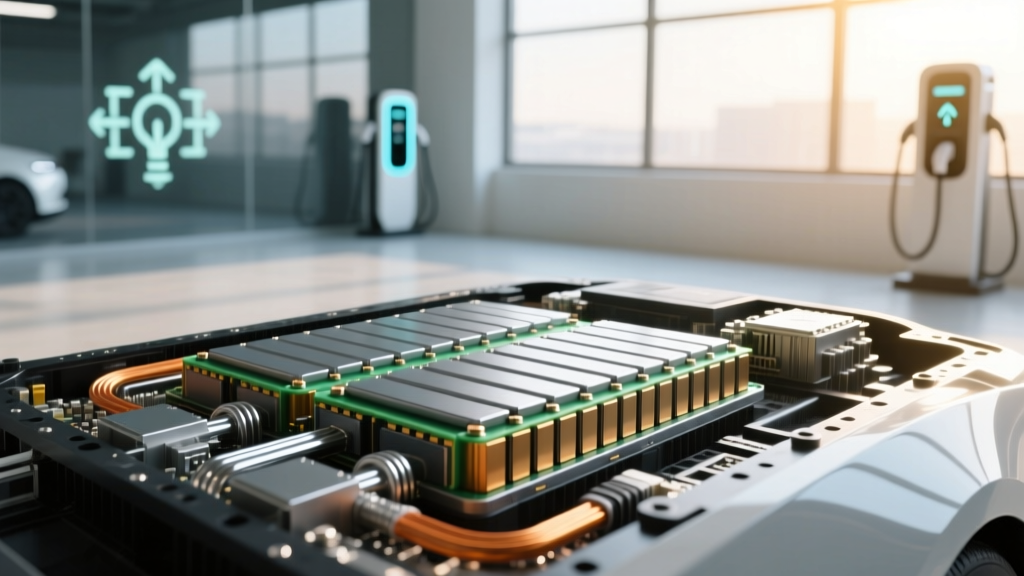
Samsung SDI has been developing an all-solid-state battery (ASSB) that replaces the liquid electrolyte in conventional lithium-ion cells with a solid ceramic or sulfide-based material. The theoretical advantages are significant:
- Energy density: Samsung SDI has targeted 900 Wh/L volumetric energy density — roughly double that of current high-nickel NMC cells (~450–500 Wh/L at the cell level).
- Safety: Solid electrolytes are non-flammable, eliminating the thermal runaway risk inherent in liquid-electrolyte cells.
- Range potential: At pack level, this energy density could theoretically enable 600+ miles of EPA range in a sedan-sized battery pack of ~120–130 kWh.
- Fast charging: Samsung SDI has claimed the ability to charge in approximately 9 minutes under lab conditions, though sustained real-world charge curves remain unproven at scale.
Samsung SDI announced plans to begin mass production of solid-state batteries around 2027, with initial deployment likely in premium vehicles from partners like BMW and potentially Hyundai Motor Group. However, no vehicle currently on sale uses Samsung's solid-state cells. Every 2026-model EV on the market today uses conventional lithium-ion chemistry — either NMC/NCA or LFP.
Today's Battery Chemistry: LFP vs NMC/NCA Trade-Offs
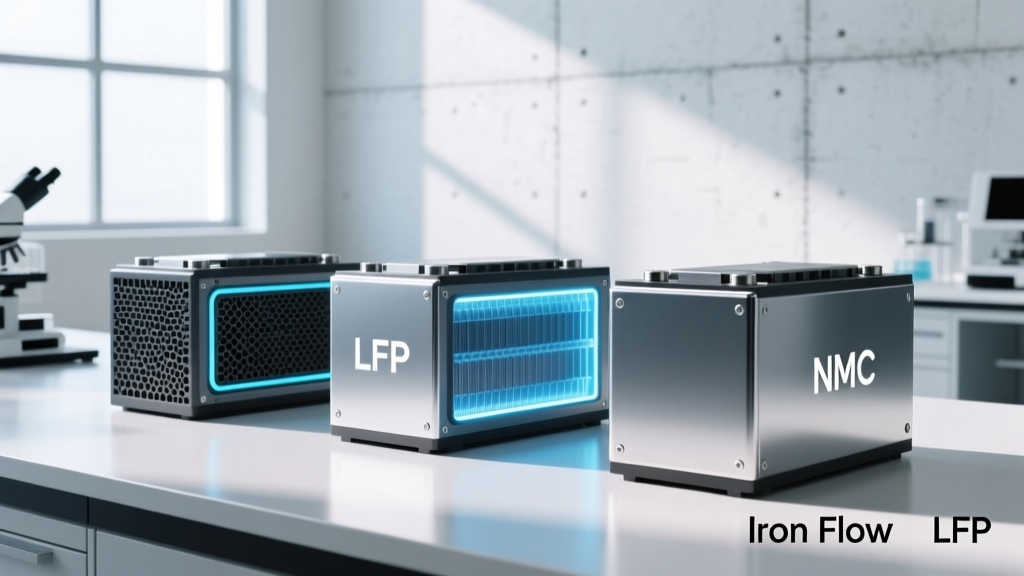
While solid-state remains on the horizon, today's EV buyers choose between two dominant lithium-ion chemistries. Each has distinct strengths that make it better suited to different ownership patterns.
| Attribute | LFP (Lithium Iron Phosphate) | NMC/NCA (Nickel Manganese Cobalt / Nickel Cobalt Aluminum) |
|---|---|---|
| Energy Density (cell-level) | ~160–180 Wh/kg | ~220–260 Wh/kg |
| Typical EPA Range (midsize SUV) | 230–290 miles | 280–340+ miles |
| Cycle Life (to 80% capacity) | 3,000–5,000+ cycles | 1,500–2,500 cycles |
| Cold-Weather Performance | Moderate — greater range loss below 32°F | Better — less resistance at low temps |
| Charging to 100% Regularly | Recommended (helps BMS calibration) | Not recommended (accelerates degradation) |
| Cobalt/Nickel Content | None — lower supply-chain risk | Contains cobalt and/or nickel |
| Cost (per kWh at pack level) | ~$90–$110 | ~$120–$150 |
| Examples (2026 models) | Tesla Model 3 RWD, Ford Mustang Mach-E Select (Standard Range) | Hyundai Ioniq 5 Long Range, BMW iX, Rivian R1S |
Which is better? There is no universal winner. If you prioritize maximum range and cold-weather usability, NMC/NCA delivers higher energy density. If you plan to keep the vehicle 10+ years, charge to 100% daily, and want lower upfront cost, LFP's superior cycle life makes it the pragmatic choice. Tesla's Standard Range models and BYD's global lineup have validated LFP at massive scale.
How Long Do EV Batteries Actually Last?
The fear that EV batteries need frequent, wallet-destroying replacement is one of the most persistent myths in the market. Real-world fleet data tells a different story.
- Tesla fleet data (2025 Impact Report): Model 3/Y batteries retain approximately 85% of original capacity after 200,000 miles — roughly 15 years of average US driving (13,500 mi/yr).
- Geotab fleet study (6,300 EVs): Average annual capacity loss of 2.3% across all chemistries, meaning ~85% retention at year 7.
- NMC cells under heavy DC fast charging: Studies show an additional 1–3% loss over 100,000 miles compared to predominantly Level 2 charging.
- LFP cells (CATL, BYD): Lab testing demonstrates 80% capacity retention at 3,000+ full cycles — equivalent to 750,000+ miles in a 250-mile-range vehicle.
The practical takeaway: the vast majority of EV batteries outlast the vehicle's useful economic life. Battery replacement before 150,000 miles is uncommon under normal use and is typically covered by warranty when it does occur due to defect.
Battery Warranty: What's Covered and What Isn't
Federal law mandates a minimum 8-year/100,000-mile warranty on EV battery packs for emissions-related components, and most manufacturers exceed this baseline. Here's how major brands structure coverage in 2026:
| Manufacturer | Warranty Term | Capacity Retention Threshold | What Triggers a Claim |
|---|---|---|---|
| Tesla (Model 3/Y Long Range) | 8 years / 120,000 miles | 70% of original capacity | SoH drops below 70% as measured by Tesla diagnostics |
| Hyundai / Kia (E-GMP platform) | 10 years / 100,000 miles | 70% of original capacity | Verified capacity loss below threshold |
| Ford (Mustang Mach-E, F-150 Lightning) | 8 years / 100,000 miles | 70% of original capacity | Battery capacity below 70% or component failure |
| BMW (iX, i4) | 8 years / 100,000 miles | 70% of original capacity | Capacity below threshold or cell module defect |
| Rivian (R1S, R1T) | 8 years / 175,000 miles | 70% of original capacity | Verified degradation or defect |
Important nuance: Warranty coverage applies to defects and excessive degradation — not to normal, gradual capacity loss above the threshold. A battery at 72% SoH after 9 years is functioning within warranty specifications, even though range has noticeably decreased. Always review the specific warranty language in your purchase agreement.
EV Battery Replacement Cost: When and How Much
Out-of-warranty battery replacement is the scenario that generates the most anxiety. Here are the actual costs based on 2025–2026 service data:
| Vehicle / Pack Size | Battery Capacity | Replacement Cost (Parts + Labor) | Typical Need Scenario |
|---|---|---|---|
| Tesla Model 3 RWD (LFP) | ~60 kWh | $10,000 – $13,000 | Rare before 200,000+ mi; physical damage or cell failure |
| Tesla Model Y Long Range (NMC) | ~75 kWh | $13,000 – $16,000 | Out-of-warranty degradation claim or collision damage |
| Hyundai Ioniq 5 Long Range | ~77.4 kWh | $14,000 – $18,000 | Module-level repair possible; full pack rare |
| Ford F-150 Lightning Extended Range | ~131 kWh | $22,000 – $30,000 | Largest consumer packs; module replacement preferred |
| Chevrolet Bolt EV (older, NMC) | ~65 kWh | $9,000 – $14,000 | Recall-related replacements largely completed; aging packs |
Context that matters: Most EV batteries never need full replacement. When issues arise, manufacturers increasingly perform module-level repairs — replacing individual cell modules rather than the entire pack — at a fraction of full-pack cost. Additionally, the used-EV battery market and third-party remanufacturers are driving prices down. According to BloombergNEF battery price surveys, pack-level costs have declined roughly 14% year-over-year through 2025.
Factors That Accelerate (or Preserve) Battery Life
Battery longevity isn't random — it's heavily influenced by how you charge, drive, and store the vehicle. Here's what the electrochemistry actually rewards:
- Limit DC fast charging to road trips: Frequent 150+ kW sessions generate sustained heat. Use Level 2 (7–11 kW) for daily charging. Data shows vehicles that DC-fast-charge more than 3x/week degrade ~2–4% faster over 100,000 miles.
- Keep SoC between 20% and 80% for NMC/NCA: Storing at 100% accelerates electrolyte decomposition. LFP owners can charge to 100% regularly — it's recommended for BMS accuracy.
- Precondition before fast charging: Most modern EVs do this automatically when a charger is nav-routed. Cold batteries charge slower and experience more lithium plating risk.
- Avoid prolonged storage at extreme SoC: If leaving the car for weeks, set charge limit to ~50%. Storing at 100% or below 10% for extended periods stresses cells.
- Use scheduled departure charging: This charges the battery to finish near your departure time rather than sitting at full SoC overnight — reducing time at high voltage.
- Park in shade or a garage in extreme heat: Sustained battery temps above 95°F accelerate calendar degradation. Thermal management systems help, but they can't fully offset ambient heat while parked.
Monitoring Battery Health: How to Check Your SoH
State of Health (SoH) is the percentage of original capacity your battery currently holds. A new battery is 100% SoH; at 70% SoH, a 300-mile EPA vehicle delivers roughly 210 miles of range.
How to check SoH:
- Tesla: The mobile app displays battery health percentage under the "Battery Health" section (available since late 2024 software updates). Service centers can provide detailed cell-balance reports.
- Hyundai/Kia: The Bluelink/UVO connected app shows estimated battery condition. Dealers can pull detailed BMS logs.
- OBD-II diagnostic tools: Third-party apps like LeafSpy (Nissan), OBDeleven (VW Group), and Scan My Tesla can read SoH directly from the BMS via the OBD-II port.
- Manual calculation: Charge to 100%, note the displayed range, and compare to original EPA range. This is approximate (displayed range varies with driving history) but directionally useful.
If your SoH approaches the warranty threshold (typically 70%) within the warranty period, document it with screenshots and contact the manufacturer's service department to initiate a warranty claim before expiration.
Beyond Lithium-Ion: Solid-State and Silicon Anode Timelines
The Samsung 600-mile battery prototype is part of a broader wave of next-generation battery R&D. Here's where the most promising technologies stand as of 2026:
- Solid-state batteries (Samsung SDI, Toyota, QuantumScape): Pilot production lines are operational. Toyota has announced a 2027–2028 target for limited commercial deployment in a Lexus model. Samsung SDI targets 2027 mass production. These timelines have slipped before — treat them as optimistic estimates, not guarantees.
- Silicon-dominant anodes (Sila Nanotechnologies, Group14): Already entering production in 2025–2026. Sila's silicon anode material is being used in the Mercedes-AMG G63e (announced) to boost energy density by ~20% within existing cell form factors. This is the most near-term improvement buyers may actually see.
- Sodium-ion batteries (CATL, BYD): Entering mass production in China for lower-cost, shorter-range EVs. Energy density (~140 Wh/kg) limits them to city cars and micro-EVs. Not expected in US-market vehicles before 2028.
- Lithium-sulfur and lithium-air: Remain in early-stage research. No commercial timeline before 2030.
For buyers deciding today: waiting for solid-state means waiting at minimum 2–3 years for limited availability in premium-priced vehicles, likely 5+ years for mainstream adoption. Today's NMC and LFP batteries are mature, well-understood, and backed by substantial warranty protection.
Frequently Asked Questions
How long do EV batteries last in years and miles?
Based on fleet data from Tesla, Geotab, and manufacturer reports, modern EV batteries typically retain 80–85% of original capacity after 150,000–200,000 miles, which translates to 12–17 years of average US driving. LFP batteries often exceed 3,000 full cycles, which could theoretically mean 750,000+ miles in a 250-mile-range EV. Most batteries outlive the vehicle's economic lifespan.
How much does it cost to replace an EV battery?
Full pack replacement costs range from approximately $9,000 for smaller packs (Chevrolet Bolt, Tesla Model 3 RWD) to $22,000–$30,000 for the largest packs (Ford F-150 Lightning Extended Range, 131 kWh). However, full replacement is rare — most issues are resolved through module-level repair at lower cost, and the vast majority of packs never need replacement within the vehicle's useful life.
What does the EV battery warranty actually cover?
Federal law requires a minimum 8-year/100,000-mile battery warranty. Most manufacturers guarantee the battery will retain at least 70% of original capacity during the warranty period. Coverage includes defects, cell failures, and excessive degradation below the threshold. Normal gradual capacity loss above 70% is considered expected wear and is not covered.
How do I check and maximize my EV battery health?
Check SoH through your vehicle's connected app (Tesla, Hyundai, Ford), OBD-II diagnostic tools, or by comparing displayed range at 100% charge to original EPA range. To maximize longevity: use Level 2 charging daily, limit NMC/NCA SoC to 80% for routine use, precondition before DC fast charging, avoid extreme-temperature storage, and minimize frequent fast-charging sessions.
LFP vs NMC — which battery chemistry should I choose?
Choose NMC/NCA if you need maximum range (280–340+ miles), live in a cold climate, or prioritize energy density. Choose LFP if you plan long-term ownership (10+ years), want to charge to 100% daily without degradation concerns, prefer lower purchase price, and your daily range needs fit within 230–290 miles. Neither is universally superior — the right choice depends on your driving pattern and ownership horizon.
Is Samsung's 600-mile solid-state battery available in any car today?
No. As of 2026, Samsung SDI's solid-state battery remains in pre-production. Mass production is targeted for approximately 2027, with initial deployment in premium vehicles. No currently purchasable EV uses solid-state cells. All 2026-model EVs use proven lithium-ion chemistry (LFP or NMC/NCA).