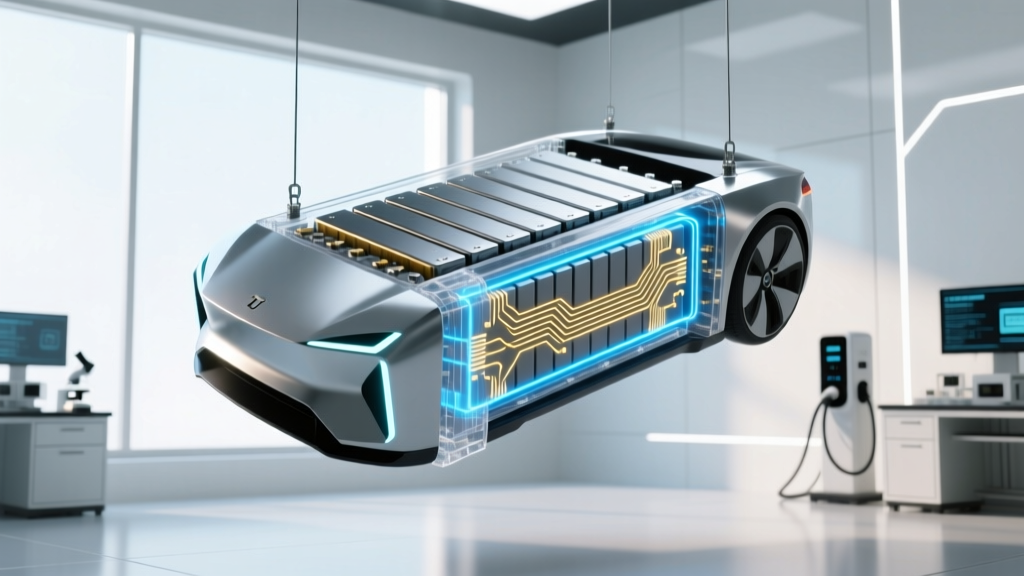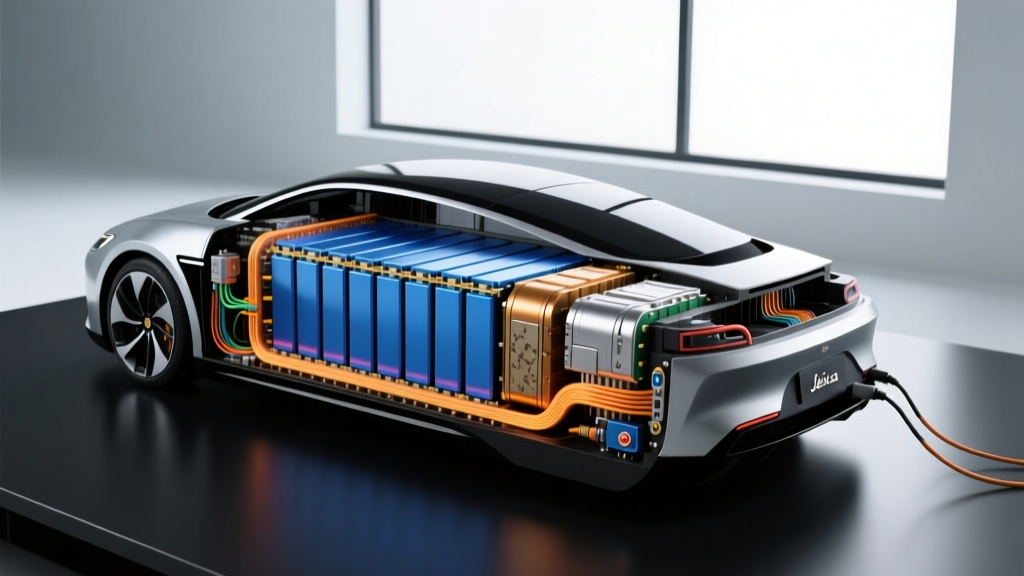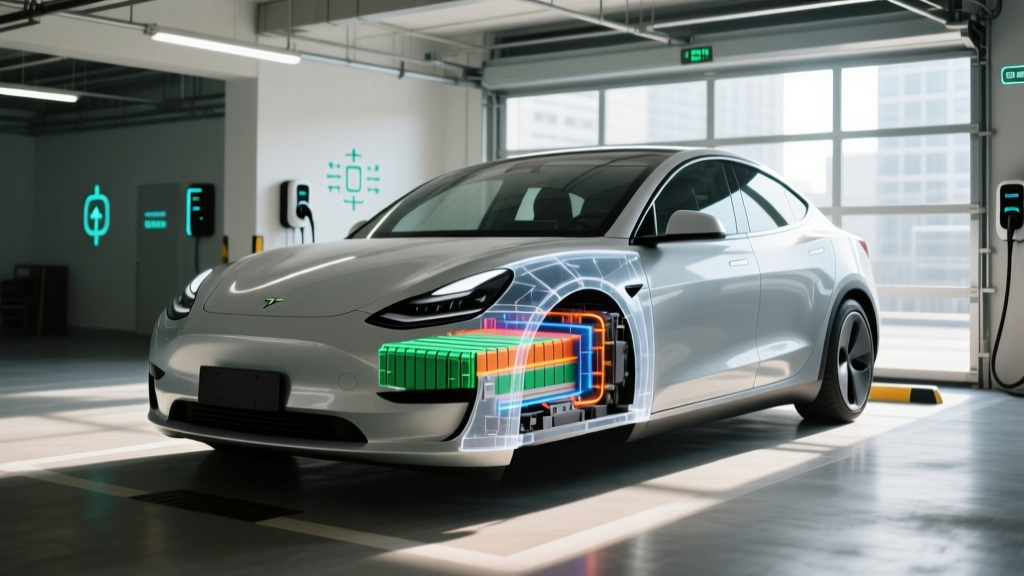
If you live near the coast or drive on salted winter roads, you've probably wondered whether corrosive salt and sea air affect your electric vehicle's high-voltage traction battery. A wave of interest in "salt and air battery Germany" searches traces back to German automotive research into how marine and road-salt environments influence EV battery longevity. The short answer: the sealed battery pack itself is remarkably well protected, but the surrounding high-voltage electronics, cooling lines, and connectors deserve your attention.
This guide unpacks what the science says, then covers everything you actually need to know about EV battery chemistry, degradation data, warranties, replacement costs, and daily care — whether you're parked on a North Sea coast or a Midwest cul-de-sac.
What German Research Says About Salt, Air, and EV Batteries
Germany's automotive engineering sector — including institutions like Fraunhofer and major OEM battery labs — has studied how saline environments affect electrified powertrains. The findings are consistent:
- The battery cells themselves are sealed. Modern EV traction packs are housed in welded aluminum or steel enclosures rated to IP67 or IP69K, meaning they're protected against dust ingress and high-pressure water jets. Salt air does not penetrate the cell module.
- External high-voltage components are the vulnerability. Coolant lines, HV cable connectors, onboard charger housings, and the battery management system (BMS) external contacts can experience surface corrosion in persistently salty, humid environments over many years.
- Road salt is more aggressive than sea air. German and Scandinavian studies on winter road maintenance show that calcium chloride and sodium chloride brine sprayed on undercarriages accelerates corrosion of cooling plates and structural fasteners more than coastal humidity alone.
For EV owners, the practical takeaway is that your battery cells will degrade from charge cycling and thermal stress long before salt air reaches them. But if you're in a coastal or heavy-road-salt region, an annual undercarriage inspection and fresh-water rinse of the underbody during winter is smart preventive maintenance.
LFP vs NMC/NCA: Which Battery Chemistry Should You Choose?
The two dominant lithium-ion chemistries in 2026 EVs are LFP (lithium iron phosphate) and NMC/NCA (nickel manganese cobalt / nickel cobalt aluminum). Each has distinct trade-offs that matter for range, longevity, and cost.
| Factor | LFP (Lithium Iron Phosphate) | NMC / NCA (Nickel-based) |
|---|---|---|
| Energy Density | ~160–180 Wh/kg (lower) | ~220–270 Wh/kg (higher) |
| Cycle Life | 3,000–5,000+ cycles to 80% SoH | 1,000–2,000 cycles to 80% SoH |
| Cold-Weather Performance | More range loss below 20°F; slower charge acceptance | Better low-temp conductivity; preconditioning helps |
| Cost per kWh | ~$80–100/kWh (lower) | ~$110–140/kWh (higher) |
| Thermal Stability | Excellent; very low thermal runaway risk | Good; requires robust BMS and cooling |
| Recommended SoC Range | Can charge to 100% daily; benefits from periodic full calibration | Best kept 20–80% daily; 100% for trips only |
| Common 2026 Applications | Tesla Model 3/Y RWD, BYD models, base-trim EVs | Long-range AWD trims, Hyundai/Kia E-GMP, premium EVs |
Which is better? If your priority is maximum range in a lighter package and you drive in cold climates, NMC/NCA is the stronger fit. If you want a battery that can outlast the vehicle itself with minimal degradation and you mostly charge at home, LFP is the durability champion. Many 2026 buyers are choosing LFP for daily commuting and NMC for road-trip-heavy use cases.
How Long Do EV Batteries Actually Last?
The fear that EV batteries need replacement every few years is not supported by fleet data. Here's what real-world degradation looks like across major platforms:
- Tesla Model 3/Y (NMC, 2018–2022 fleet data): Average ~10–12% capacity loss at 100,000 miles, with degradation curve flattening significantly after year 3. Many packs retain 85%+ State of Health (SoH) past 150,000 miles.
- Chevrolet Bolt EV/EUV (NMC, 65 kWh): Post-recall replacement packs show minimal degradation; original packs averaged ~8–10% loss at 80,000 miles based on owner-reported fueleconomy.gov data.
- Hyundai Ioniq 5 (NMC, 77.4 kWh): Early fleet data (2022–2025) suggests ~5–7% loss at 60,000 miles, aided by aggressive thermal management.
- BYD Blade Battery (LFP): Chinese fleet and taxi data indicates less than 5% degradation at 100,000 km (~62,000 miles), with LFP's cycle-life advantage showing clearly.
Most EV batteries in 2026 are engineered to retain 70–80% of original capacity after 150,000–200,000 miles or 15+ years. For the average American driver covering 13,500 miles per year, that translates to well over a decade of usable service. Complete battery failure before 100,000 miles is rare and usually tied to manufacturing defects covered under warranty.
Battery Warranty Terms: What's Actually Covered
Federal law in the U.S. mandates a minimum EV battery warranty of 8 years / 100,000 miles. Most automakers meet or exceed this. Here's how the major warranties compare:
| Manufacturer | Warranty Term | Capacity Retention Threshold | Notes |
|---|---|---|---|
| Tesla (Model 3/Y) | 8 yr / 120,000 mi (LR/AWD); 8 yr / 100,000 mi (RWD) | 70% minimum SoH | Includes battery and drive unit |
| Hyundai / Kia | 10 yr / 100,000 mi | 70% minimum SoH | Among the longest terms |
| Ford (Mustang Mach-E, F-150 Lightning) | 8 yr / 100,000 mi | 70% minimum SoH | Covers battery and HV components |
| General Motors (Ultium platform) | 8 yr / 100,000 mi | 70% minimum SoH | Transferable to second owner |
| Volkswagen / BMW | 8 yr / 100,000 mi | 70% minimum SoH | Includes module-level replacement option |
Key detail: The warranty triggers a replacement (or module repair) only when measured capacity drops below the stated threshold — typically 70% of original. Normal gradual loss from 100% to 75% over eight years is considered expected wear and is not a warranty claim. Always check whether your warranty covers labor and whether module-level replacement (swapping individual cell groups) is an option, as this can dramatically reduce out-of-pocket cost if you're outside warranty.
EV Battery Replacement Cost: What to Budget For
If your battery does need replacement — whether from age, damage, or degradation beyond warranty — here's what the market looks like in 2026:
| Vehicle | Battery Size | Estimated Replacement Cost | Typical Need Timeline |
|---|---|---|---|
| Tesla Model 3 RWD (LFP) | ~60 kWh | $8,000–$12,000 | Rarely before 200,000 mi |
| Tesla Model Y Long Range (NMC) | ~82 kWh | $12,000–$16,000 | Rarely before 180,000 mi |
| Hyundai Ioniq 5 | 77.4 kWh | $11,000–$15,000 | Rarely before 180,000 mi |
| Ford F-150 Lightning (Extended) | ~131 kWh | $18,000–$25,000 | Rarely before 150,000 mi |
| Chevrolet Equinox EV | ~85 kWh | $10,000–$14,000 | Rarely before 180,000 mi |
Context matters here. The vast majority of EV owners will sell or trade their vehicle before a battery replacement is needed. Pack-level costs have fallen roughly 40% since 2020, and module-level repairs (replacing individual cell groups rather than the entire pack) are increasingly common at specialized EV service centers, often cutting costs by 50–70%. If you're buying a used EV, a pre-purchase battery health check is far more valuable than worrying about hypothetical replacement.
Five Factors That Actually Affect Battery Life
Whether you're dealing with salt air in Hamburg, Florida, or road salt in Minnesota, these five factors have the greatest measurable impact on your traction battery's lifespan:
- State of Charge habits. For NMC batteries, routinely sitting at 100% SoC accelerates calendar degradation. Keeping daily charge between 20–80% is the single highest-impact habit. LFP batteries tolerate 100% better and actually benefit from periodic full charges for BMS calibration.
- DC fast-charging frequency. Occasional fast charging (1–2 times per week) causes negligible extra wear. Daily fast charging at 150+ kW, especially in hot weather without preconditioning, can add 1–3% additional degradation per year compared to Level 2 home charging.
- Extreme temperatures. Sustained operation above 95°F or below 10°F stresses cells. Vehicles with active liquid thermal management (Tesla, Hyundai E-GMP, GM Ultium) handle this far better than passively cooled packs.
- Depth of discharge cycles. Shallow cycles (e.g., 60% → 30% → 60%) are easier on cells than deep cycles (95% → 10% → 95%). You don't need to obsess over this, but avoiding running the battery to near-zero regularly helps.
- Storage conditions. Leaving an EV parked at 100% SoC in a hot garage for weeks causes more calendar degradation than driving it daily. If storing for 2+ weeks, set SoC to ~50% and keep the vehicle in shade or a garage.
- Rinse the undercarriage with fresh water every 2–3 weeks during winter or after beach driving
- Inspect HV cable connectors and coolant line fittings annually for surface corrosion
- Set daily charge limit to 80% (NMC) or 100% (LFP) via the vehicle app
- Use scheduled departure preconditioning to warm/cool the battery before driving
- Limit DC fast charging to road trips when Level 2 home charging is available
- Check SoH via the vehicle's battery health screen or third-party OBD-II tool annually
- Store at ~50% SoC if the vehicle will sit unused for more than two weeks
How to Check Your Battery's State of Health
State of Health (SoH) is the percentage of original capacity your battery can still hold. A new battery is 100% SoH; at 70% SoH, a 80 kWh pack holds roughly 56 kWh of usable energy, reducing your real-world range proportionally.
Built-in methods:
- Tesla: Service mode (accessible via the software menu) displays measured battery capacity in kWh. Compare this to the original spec to calculate SoH.
- Hyundai/Kia: The EV-specific menu in the infotainment system shows battery health percentage on 2024+ models.
- GM Ultium vehicles: The myChevrolet/myCadillac app displays estimated battery capacity.
Third-party tools: OBD-II readers like the OBDeleven or apps like Tessie (for Tesla) and LeafSpy (for Nissan LEAF) can pull detailed cell-level voltage data and calculate SoH independently. A full diagnostic at a dealer service center typically costs $100–$150 and provides the most authoritative reading.
Emerging Battery Tech: Solid-State and Beyond
Several next-generation technologies are in active development, though none are widely available in consumer vehicles as of 2026:
- Solid-state batteries: Toyota, Samsung SDI, and QuantumScape are targeting limited production in 2027–2029 vehicles. Promised benefits include 2–3x energy density, 10-minute fast charging, and improved safety. Real-world availability in volume production models remains announced/preliminary — expect initial deployment in premium or fleet vehicles first.
- Silicon-dominant anodes: Companies like Sila Nanotechnologies and Group14 are supplying silicon-carbon anode materials that boost energy density by 20–40% over graphite. These are beginning to appear in select 2026 model-year packs, with broader adoption expected by 2028.
- Sodium-ion batteries: CATL and BYD are producing sodium-ion cells for lower-cost, shorter-range applications (city cars, energy storage). Not yet in U.S.-market EVs, but potentially relevant for budget segments by 2027–2028.
For buyers in 2026, today's LFP and NMC chemistries are mature, well-understood, and backed by extensive warranty coverage. Waiting for solid-state is a personal choice, but current technology is already delivering 250–350+ miles of EPA range with 15+ year lifespans for most owners.
Frequently Asked Questions
Does salt air or road salt damage EV batteries?
The sealed battery pack itself is protected against corrosion. However, external HV connectors, coolant lines, and undercarriage components can experience surface corrosion over many years in salty environments. Annual inspection and periodic fresh-water undercarriage rinses are sufficient preventive care.
How long do EV batteries last in years and miles?
Most 2026 EV batteries are designed to retain 70–80% of original capacity after 150,000–200,000 miles or 15+ years. Fleet data from Tesla, Hyundai, and GM supports these timelines. Complete failure before 100,000 miles is rare and typically warranty-covered.
How much does it cost to replace an EV battery?
Full pack replacement ranges from ~$8,000 for smaller LFP packs to $25,000 for large truck packs like the F-150 Lightning Extended Range. Module-level repairs cost 50–70% less. Most owners sell the vehicle before replacement is needed.
What does the EV battery warranty actually cover?
Federal minimum is 8 years / 100,000 miles with a 70% capacity retention threshold. Hyundai/Kia extend to 10 years. The warranty covers replacement or repair if measured capacity drops below the threshold — not normal gradual degradation above it.
LFP vs NMC — which chemistry should I choose?
Choose LFP if you prioritize longevity, lower cost, and can charge at home daily (100% SoC is fine). Choose NMC if you need maximum range, drive in very cold climates, or take frequent road trips. Both are excellent choices with strong 2026 track records.
Does frequent DC fast charging hurt my battery?
Occasional fast charging has minimal impact. Daily 150+ kW sessions without preconditioning can add 1–3% extra degradation per year. Use Level 2 home charging as your default and reserve DC fast charging for road trips.