Why Would Anyone Be Removing a Battery from an Electric Car?
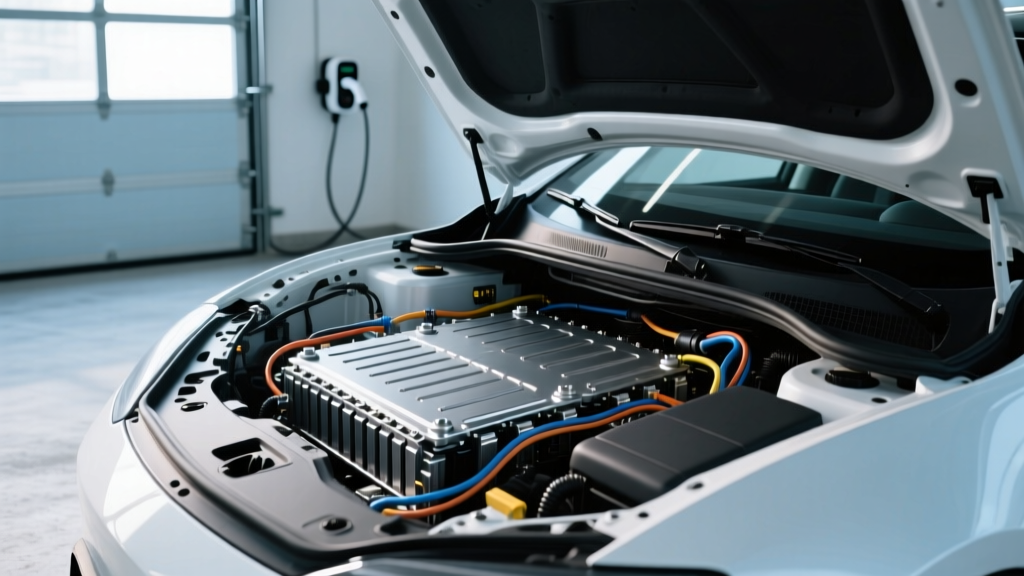
For most EV owners, the high-voltage traction battery is a sealed, maintenance-free component designed to outlast the vehicle itself. But there are legitimate scenarios where removing a battery from an EV becomes necessary: a manufacturing defect triggering a warranty replacement, collision damage requiring a pack swap, a module-level failure in an older vehicle, or end-of-life recycling. Unlike a 12V auxiliary battery swap at an auto parts store, high-voltage EV battery removal is a specialized procedure requiring certified technicians, insulated tooling, and manufacturer-specific diagnostic equipment.
This guide covers the real data behind EV battery longevity, degradation patterns, replacement economics, and chemistry trade-offs — so you can assess whether a battery removal is a concern worth worrying about, or a once-in-a-lifetime event covered under warranty.
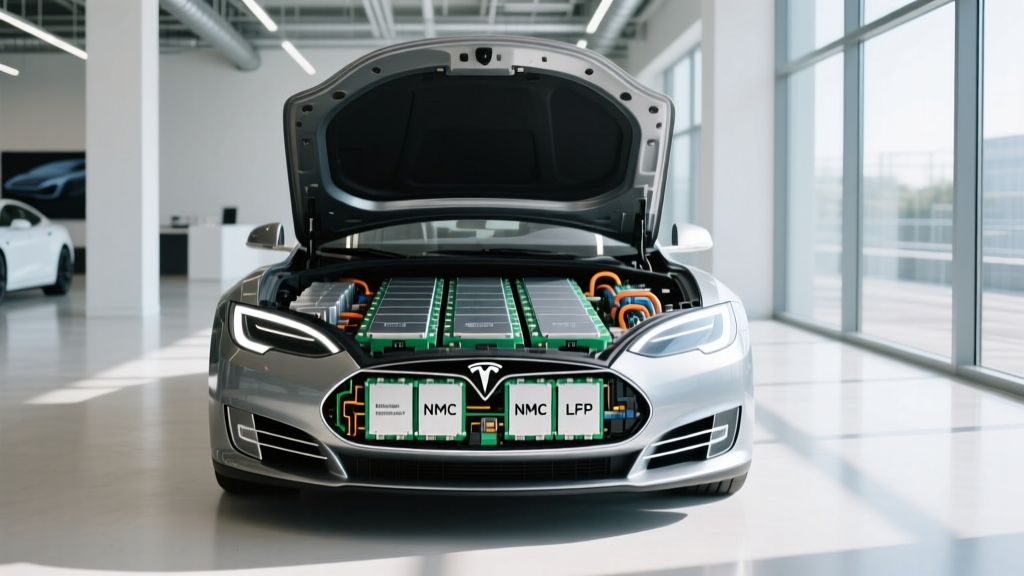
EV Battery Chemistry: LFP vs NMC vs NCA Explained
The two dominant lithium-ion chemistries in modern EVs are LFP (Lithium Iron Phosphate) and NMC/NCA (Nickel Manganese Cobalt / Nickel Cobalt Aluminum). The chemistry inside your pack dictates energy density, cycle life, cold-weather behavior, and ultimately, how often you'd ever need to think about removing a battery from your car.
| Attribute | LFP (LiFePO₄) | NMC / NCA |
|---|---|---|
| Energy Density | Lower (~160 Wh/kg cell-level) | Higher (~250–300 Wh/kg cell-level) |
| Typical Cycle Life | 3,000–5,000+ cycles | 1,000–2,500 cycles |
| Cold Performance | Moderate; slower charging below 32°F | Better low-temp charge acceptance |
| Cost per kWh | Lower (~$80–100/kWh at pack level) | Higher (~$110–140/kWh at pack level) |
| Thermal Stability | Excellent; higher runaway threshold | Good; requires more active cooling |
| Typical Vehicles (2026) | Tesla Model 3 RWD, Ford Mustang Mach-E Select, BYD models | Tesla Model Y LR, Hyundai Ioniq 5, Rivian R1T, BMW iX |
| SoC Recommendation | 100% daily OK; benefits from periodic full charge for BMS calibration | 80% daily preferred; 100% for trips only |
The takeaway: LFP packs sacrifice some range-per-kWh for dramatically longer cycle life and lower cost. If your priority is maximum longevity and you don't need 350+ miles of EPA range, LFP is the durability winner. NMC/NCA packs deliver higher energy density for long-range and performance trims but require more careful state-of-charge management to minimize degradation over 150,000+ miles.
How Long Do EV Batteries Actually Last? Degradation Data
The question behind most battery-removal anxiety is simple: how long until my pack degrades enough to need replacement? The data is reassuring for modern vehicles.
Typical Degradation Curves (Real-World Fleet Data)
| Milestone | Average Capacity Retention | Notes |
|---|---|---|
| Year 1 / 15,000 mi | 95–98% | Initial calibration loss; steepest early drop |
| Year 3 / 45,000 mi | 91–95% | Degradation rate slows significantly |
| Year 5 / 75,000 mi | 88–93% | Most packs well above warranty threshold |
| Year 8 / 100,000 mi | 85–90% | Warranty period ends; most packs retain >80% |
| Year 10 / 150,000 mi | 80–87% | Still functional; reduced range noticeable |
| Year 12+ / 200,000 mi | 75–82% | Approaching practical end-of-life for some owners |
Sources: Geotab fleet battery health study, Recurrent Auto battery data reports, manufacturer warranty filings.
Critically, degradation is non-linear. Most packs lose 2–5% in the first year as the solid electrolyte interphase (SEI) layer stabilizes, then settle into a slow, predictable decline of roughly 1–2% per year. Catastrophic failure — the kind that forces an unplanned battery removal — is rare and typically covered under warranty as a manufacturing defect rather than wear-related degradation.
Real-world example: Tesla's 2025 Impact Report showed their Model S/X fleet retaining approximately 88% capacity at 150,000 miles. The Chevrolet Bolt EV fleet, tracked by Recurrent Auto, demonstrated similar retention curves with most 2017–2022 packs holding above 85% at 80,000 miles.
Battery Warranty Terms: What's Actually Covered
Federal law mandates a minimum 8-year/100,000-mile warranty on EV battery packs for emissions-related components, and most manufacturers exceed this baseline. Understanding your warranty is essential before considering any out-of-pocket battery removal and replacement.
| Manufacturer (2026 Models) | Warranty Period | Capacity Threshold | Notes |
|---|---|---|---|
| Tesla (Model 3/Y) | 8 yr / 120,000 mi (LR/AWD); 8 yr / 100,000 mi (RWD) | 70% retention | Includes modules and BMS |
| Hyundai / Kia (Ioniq 5, EV6) | 10 yr / 100,000 mi | 70% retention | Among the longest coverage |
| Ford (Mach-E, F-150 Lightning) | 8 yr / 100,000 mi | 70% retention | Covers pack, modules, BMS |
| General Motors (Ultium platform) | 8 yr / 100,000 mi | 70% retention | Modular design allows partial pack service |
| BMW (iX, i4) | 8 yr / 100,000 mi | 70% retention | Extended warranty available for purchase |
| Rivian (R1T, R1S) | 8 yr / 175,000 mi | 70% retention | Higher mileage cap for adventure use |
Key warranty nuance: These warranties cover capacity loss below the threshold and manufacturing defects — not damage from accidents, flooding, or unauthorized modifications. If a diagnostic scan confirms your pack has dropped below 70% State of Health (SoH) within the warranty window, the manufacturer will repair or replace the pack at no cost. Some OEMs, notably GM with their Ultium architecture, can replace individual modules rather than the entire pack, reducing complexity and downtime.
The Real Cost of Removing and Replacing an EV Battery
If you're outside warranty coverage — perhaps on a 10-year-old EV with 140,000 miles — here's what a battery removal and replacement actually costs in 2026.
| Vehicle / Pack Size | Battery kWh | Estimated Replacement Cost (Parts + Labor) | Typical Scenario |
|---|---|---|---|
| Tesla Model 3 RWD (LFP) | ~60 kWh | $8,000–$12,000 | Post-warranty; remanufactured packs available |
| Chevrolet Bolt EV / EUV | 65 kWh | $9,000–$14,000 | Post-recall replacement pricing stabilized |
| Hyundai Ioniq 5 / Kia EV6 | 77.4 kWh | $12,000–$18,000 | Modular service may reduce cost |
| Ford F-150 Lightning Ext. Range | 131 kWh | $18,000–$28,000 | Largest consumer packs; labor-intensive removal |
| Tesla Model S / X (Plaid) | ~100 kWh | $15,000–$22,000 | Third-party remanufactured options growing |
| Rivian R1T (Max Pack) | 149 kWh | $22,000–$32,000 | Large pack; limited third-party market |
Context that matters: Battery pack prices have declined from roughly $1,200/kWh in 2010 to approximately $100–130/kWh at the cell level in 2026, according to BloombergNEF tracking. However, the total replacement cost includes labor (typically $1,500–$4,000 for 4–10 hours of certified technician time), diagnostic fees, coolant replacement, and BMS reprogramming. The good news: the vast majority of EVs will never need an out-of-warranty battery replacement. Most packs retain 75–85% capacity at 200,000 miles — still enough for daily driving, just with reduced range.
The growing market for remanufactured and refurbished packs is also bringing costs down. Companies like Redwood Materials and established dealer networks are offering remanufactured packs at 30–50% below new OEM pricing for popular models like the Model 3 and Bolt EV.
Factors That Accelerate Degradation (and How to Minimize Them)
Not all battery removals are equal. Packs that live in Phoenix, Arizona and see daily DC fast charging will degrade faster than those in San Francisco with Level 2 home charging. Here are the primary degradation accelerators, ranked by impact:
Battery Longevity Checklist
- Charging to 100% daily (NMC/NCA): Sustained high SoC stresses cathode material. Set charge limit to 80% for daily use; reserve 100% for road trips. LFP packs are exempt from this — charge to 100% regularly for BMS calibration.
- Frequent DC fast charging above 150 kW: High C-rates generate heat and accelerate SEI growth. Occasional fast charging is fine; daily 250 kW sessions add measurable wear. Preconditioning the battery before fast charging (most EVs do this automatically when a charger is navigated to) significantly reduces stress.
- Extreme heat exposure: Sustained ambient temperatures above 95°F with a high SoC is the worst-case degradation scenario. Park in shade or garages when possible. Active thermal management (liquid cooling) in modern EVs mitigates this substantially versus early-generation air-cooled packs (looking at you, 2011–2017 Nissan Leaf).
- Deep discharges below 10%: Regularly draining to near-zero stresses the anode. Plug in when you hit 15–20%.
- Cold-weather fast charging without preconditioning: Charging a cold battery at high power causes lithium plating — metallic lithium deposits on the anode that permanently reduce capacity. Always use your EV's preconditioning feature before winter fast charging.
- Long-term storage at extreme SoC: If storing an EV for weeks, leave it at 50–60% SoC. Avoid storing at 100% or below 20%.
How to Check Your EV Battery's State of Health (SoH)
Before anyone considers removing a battery from a car, they need accurate health data. Here's how to monitor SoH in 2026:
Method 1: Built-In Vehicle Displays
Most modern EVs display battery health or estimated range degradation in the settings menu. Tesla added a dedicated battery health percentage in software updates starting in 2023. Hyundai/Kia vehicles show a battery health indicator under the EV-specific settings. These are convenient but may use simplified algorithms.
Method 2: OBD-II Dongles and Third-Party Apps
Tools like the OBDLink SX paired with apps such as Leaf Spy (Nissan), TeslaFi, or ABRP (A Better Route Planner) can read detailed BMS data including individual cell voltages, pack impedance, and precise SoH percentage. This is the method fleet managers and informed buyers use for pre-purchase inspections on used EVs.
Method 3: Dealer Diagnostic Scan
A manufacturer-certified service center can pull a full battery health report, including module-level balancing data and historical charge/discharge profiles. This is the gold standard for warranty claims — if your SoH reads below the warranty threshold, this report is what triggers a covered replacement.
Method 4: Third-Party Battery Health Certificates
Services like Recurrent Auto and AVILOO offer independent battery health certificates based on telemetry data. These are increasingly requested during used EV transactions, functioning similarly to a vehicle history report but for the battery specifically.
Emerging Battery Technology: What's Coming (and When)
If you're evaluating whether to invest in a battery replacement or wait for next-generation technology, here's the realistic timeline for advances that could make future battery removals less costly and less frequent:
Solid-State Batteries: Promising 2x energy density, faster charging, and near-zero degradation over thousands of cycles. Toyota, Samsung SDI, and QuantumScape have announced pilot production, but mass-market availability is not expected before 2028–2030. Early deployments will likely be in premium vehicles at significant cost premiums. This is forward-looking technology — no consumer EV on sale in 2026 uses a solid-state pack.
Silicon-Dominant Anodes: Companies like Sila Nanotechnologies and Group14 are replacing graphite anodes with silicon composites, boosting energy density by 20–40%. The Mercedes G-Class EQ (2025+) uses Sila's silicon anode chemistry. Expect broader adoption by 2027–2028 across mid-range vehicles.
Sodium-Ion Batteries: Lower cost and excellent cold performance, but lower energy density limits them to urban/short-range EVs. CATL and BYD are producing sodium-ion packs for Chinese-market micro-EVs. US-market adoption for mainstream vehicles is estimated at 2027+ and will likely appear first in fleet and budget segments.
LFP Advancements: LMFP (Lithium Manganese Iron Phosphate) adds manganese to the LFP formula, boosting energy density by ~15–20% while retaining LFP's cycle-life advantage. CATL's second-generation LMFP cells are expected in 2026–2027 model-year vehicles.
None of these technologies change the calculus for a current EV owner facing a battery issue today. But they do reinforce that replacement costs will continue declining and longevity will continue improving for the next generation of packs.
Frequently Asked Questions
How long do EV batteries last in years and miles?
Modern EV batteries (2020+ model years) typically retain 85–90% capacity at 100,000 miles and 80–87% at 150,000 miles based on fleet data from Geotab and Recurrent Auto. In practical terms, most packs remain functional for 150,000–250,000 miles before degradation makes range loss meaningfully inconvenient. That translates to 10–15+ years for the average driver covering 12,000–15,000 miles annually. The battery will almost certainly outlast the vehicle's body, suspension, and interior.
How much does it cost to replace an EV battery in 2026?
Out-of-warranty replacement costs range from approximately $8,000 for a 60 kWh pack (Tesla Model 3 RWD, Chevrolet Bolt) to $28,000+ for a 131+ kWh pack (F-150 Lightning Extended Range, Rivian Max Pack). This includes the battery, labor (4–10 hours at certified rates), coolant, and BMS reprogramming. Remanufactured packs are increasingly available at 30–50% below new OEM pricing. However, the vast majority of EV owners will never face this cost — their packs outlast the vehicle or are replaced under warranty.
What does the EV battery warranty actually cover?
Federal law requires a minimum 8-year/100,000-mile battery warranty. Most manufacturers guarantee that the pack will retain at least 70% of its original capacity within that period. The warranty covers capacity degradation below the threshold and manufacturing defects — it does not cover accident damage, flood damage, or unauthorized modifications. Some manufacturers (GM Ultium, BMW) can replace individual modules rather than the entire pack, which reduces repair time and complexity. Always check your specific owner's manual for exact terms, as they vary by model and trim.
LFP vs NMC — which battery chemistry is better?
Neither is universally "better" — it depends on your priorities. Choose LFP if you want maximum cycle life (3,000–5,000+ cycles), lower replacement cost, the ability to charge to 100% daily without degradation concern, and superior thermal stability. The trade-off is lower energy density, meaning less range per kWh and typically shorter EPA range ratings. Choose NMC/NCA if you need maximum range (300–400+ miles), better cold-weather fast-charging performance, and are willing to manage daily charge limits (80% recommended). NMC packs have shorter cycle life but are still rated for 1,000–2,500 cycles — enough for 200,000+ miles of real-world driving.
Can I check my EV battery health myself?
Yes. Start with your vehicle's built-in battery health display (available on most 2023+ EVs). For more detailed data, use an OBD-II adapter with apps like TeslaFi, Leaf Spy, or ABRP to read precise SoH percentage, cell-level voltage variance, and pack impedance. For the most authoritative assessment — especially before buying a used EV or filing a warranty claim — request a dealer diagnostic scan or a third-party battery health certificate from Recurrent Auto or AVILOO.
Is it worth replacing the battery in an older EV?
It depends on the vehicle's overall condition and the replacement cost relative to the car's value. For a 2018–2020 model with a $10,000–$14,000 replacement cost and otherwise solid mechanical condition, a new or remanufactured battery can extend the vehicle's useful life by another 8–10 years at a fraction of the cost of a new EV. For vehicles with significant body, suspension, or interior wear, the economics are less favorable. Get a full vehicle inspection before committing to a battery replacement on any EV over 8 years old.