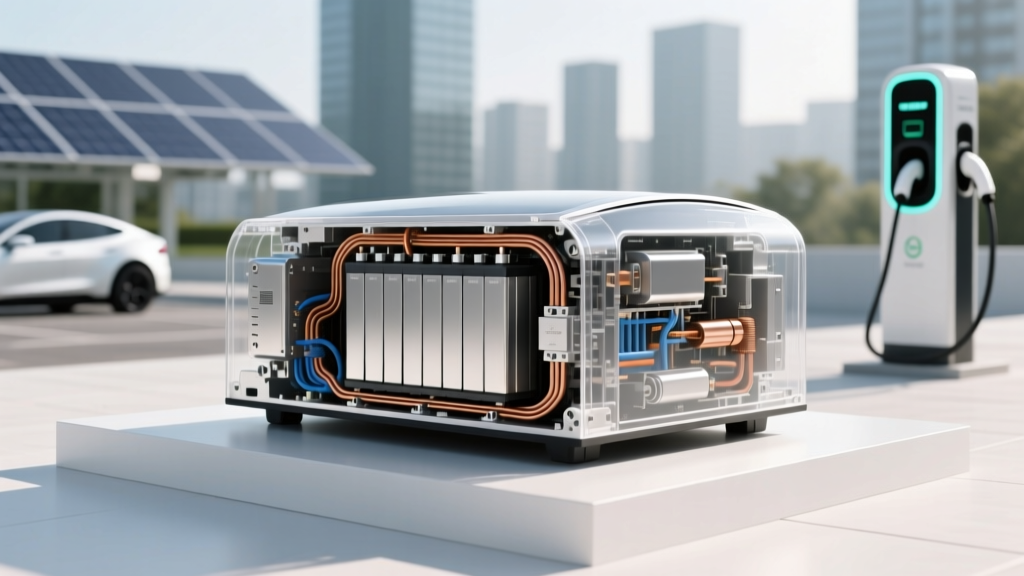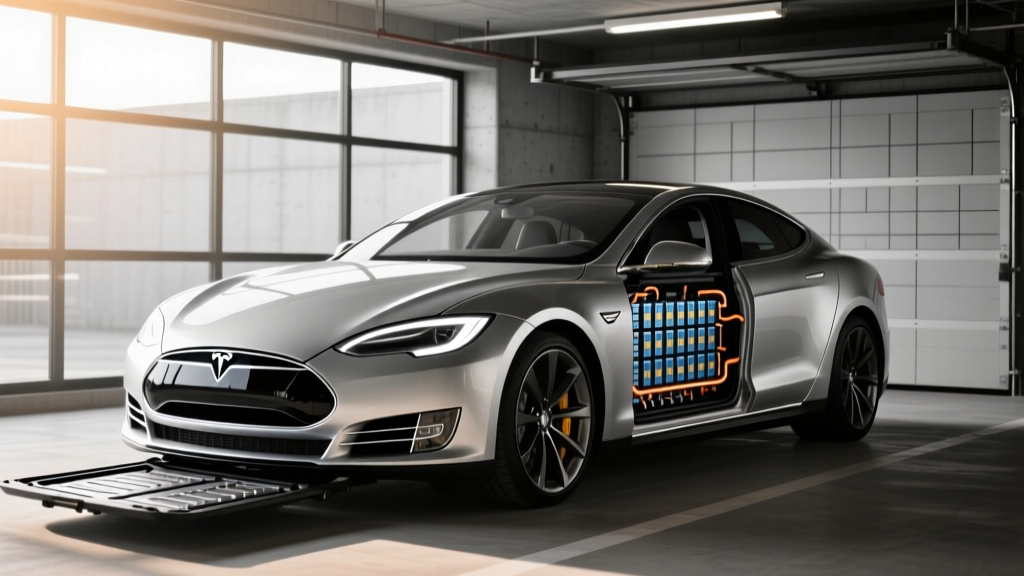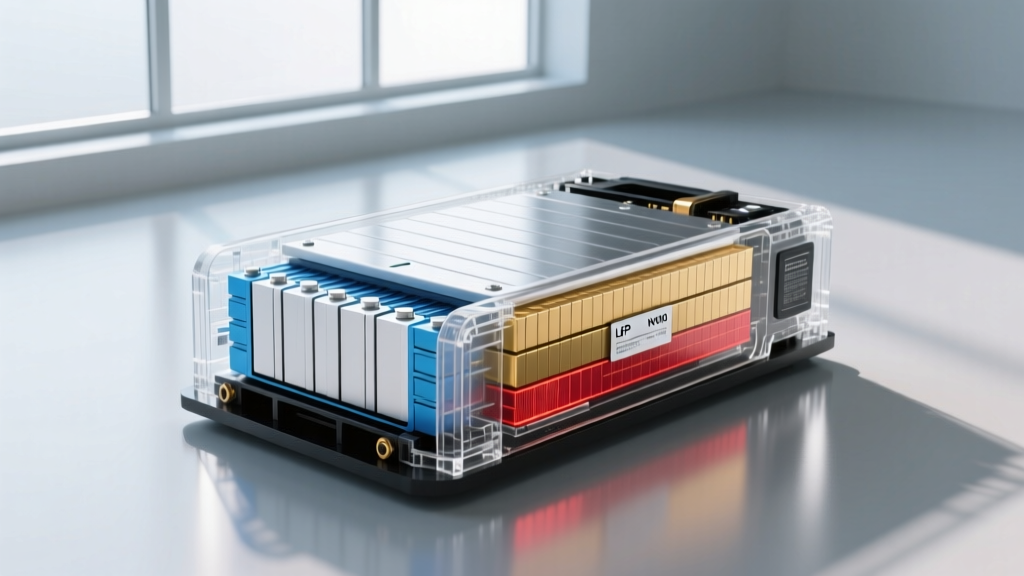
When you see the term "Project Lonestar lithium" surfacing in EV battery discussions, you're looking at the broader push to secure a domestic, resilient supply chain for lithium-ion cells — an effort that intersects with everything from Tesla's Texas-based cell manufacturing ambitions to DOE-backed critical-mineral initiatives. For EV buyers and owners in 2026, the real question isn't the project name itself but what it signals: which battery chemistry ends up under your car's floor, how long it lasts, and what it costs when it eventually needs replacing.
This guide cuts through the hype and gives you the numbers that matter — chemistry trade-offs, degradation curves, warranty fine print, and the real cost of ownership over a decade or 200,000 miles.
LFP vs NMC: The Chemistry Decision That Shapes Your EV
Every EV sold in the US in 2026 uses one of two dominant lithium-ion chemistries for its high-voltage traction battery: LFP (lithium iron phosphate) or NMC/NCA (nickel manganese cobalt / nickel cobalt aluminum). The chemistry determines your car's range, charging behavior, longevity, and even how you should manage daily state of charge.
| Attribute | LFP (Lithium Iron Phosphate) | NMC / NCA (Nickel-based) |
|---|---|---|
| Energy density | Lower (~160–180 Wh/kg cell-level) | Higher (~220–260 Wh/kg cell-level) |
| Cycle life | 3,000–5,000+ full cycles | 1,000–2,500 full cycles |
| Cold-weather performance | Weaker — greater range loss below 32°F | Better — more resilient in sub-freezing temps |
| Daily charging recommendation | Charge to 100% regularly (BMS calibration benefits) | 80% daily, 100% only for trips |
| Cost per kWh (pack-level) | Lower (~$90–$110/kWh in 2026) | Higher (~$120–$150/kWh in 2026) |
| Cobalt / critical minerals | Zero cobalt — simpler supply chain | Contains cobalt, nickel — more sourcing complexity |
| Common in | Tesla Model 3/Y RWD, Ford Mustang Mach-E Select, Rivian Standard | Long-range & performance trims, Hyundai Ioniq 5/6, BMW iX |
How Long Do EV Batteries Actually Last?
The short answer: most EV traction batteries will outlast the vehicle they're installed in. The fear of a sudden $20,000 battery swap at 100,000 miles is not supported by fleet data. But degradation is real, and it's not linear.
Based on aggregated fleet data from sources including Recurrent Auto and manufacturer telemetry, here's what typical degradation looks like:
| Timeframe / Mileage | LFP Typical Capacity Loss | NMC Typical Capacity Loss | Notes |
|---|---|---|---|
| Year 1 / ~15,000 mi | 2–4% | 3–5% | Initial "break-in" drop — steepest part of the curve |
| Year 3 / ~45,000 mi | 4–7% | 6–10% | Degradation rate slows significantly after year 1 |
| Year 5 / ~75,000 mi | 6–9% | 8–13% | Most owners notice ~5–10 fewer miles of range |
| Year 8 / ~120,000 mi | 8–12% | 12–18% | Approaching or within warranty threshold territory |
| Year 10+ / 150,000+ mi | 10–15% | 15–22% | LFP packs still functional; some NMC packs may approach replacement consideration |
For context, a Tesla Model 3 Long Range with an NMC pack rated at 341 miles EPA new would typically retain roughly 290–300 miles of range at 100,000 miles. An LFP-equipped Model 3 RWD (272 mi EPA) might hold 245–255 miles at the same mileage. Both remain entirely practical daily drivers.
Tesla's own 2024 impact report noted that Model 3/Y batteries showed an average of roughly 15% degradation at 200,000 miles — meaning most packs never need replacement during the vehicle's usable life. Hyundai/Kia, BMW, and other manufacturers report similar internal fleet data, though published numbers vary by model year and thermal-management design.
What the Battery Warranty Actually Covers
Federal law mandates a minimum battery warranty of 8 years / 100,000 miles for EVs certified as partial zero-emission vehicles (PZEV), and many manufacturers extend this further. California-emissions states (CARB states) often see even longer mandated coverage. Here's how the major warranties stack up in 2026:
| Manufacturer | Battery Warranty | Capacity Retention Threshold |
|---|---|---|
| Tesla (Model 3/Y) | 8 yr / 100,000 mi (LR/AWD); 8 yr / 120,000 mi (RWD LFP) | 70% minimum |
| Hyundai / Kia (Ioniq 5, EV6) | 10 yr / 100,000 mi | 70% minimum |
| Ford (Mach-E, F-150 Lightning) | 8 yr / 100,000 mi | 70% minimum |
| GM (Ultium-based: Blazer EV, Equinox EV) | 8 yr / 100,000 mi | 70% minimum (some trims 60% for fleet) |
| Rivian (R1T, R1S) | 8 yr / 120,000 mi (Standard); 8 yr / 175,000 mi (Max) | 70% minimum |
| BMW (iX, i4) | 8 yr / 100,000 mi | 70% minimum |
What's covered: Capacity loss below the stated threshold, manufacturing defects, and module/pack failure. The warranty is not pro-rated — if your pack drops below 70% capacity within the warranty window, the manufacturer replaces or repairs it at no cost.
What's NOT covered: Damage from accidents, flooding, or unauthorized modifications. Normal degradation above the threshold is considered expected wear — you won't get a new battery just because range dropped 15% at year 7 if you're still above 70%.
EV Battery Replacement Costs: The Real Numbers
Out-of-warranty battery replacement is the single biggest fear among prospective EV buyers. Here's what it actually costs in 2026, based on manufacturer service bulletins and independent repair-shop data:
| Vehicle (Example) | Battery Size (kWh usable) | Full Pack Replacement Cost | Typical Replacement Timing |
|---|---|---|---|
| Tesla Model 3 RWD (LFP) | ~57 kWh | $12,000–$15,000 | Rarely needed before 250,000+ mi |
| Tesla Model Y Long Range (NMC) | ~75 kWh | $14,000–$18,000 | 200,000+ mi if at all |
| Hyundai Ioniq 5 (NMC) | ~77.4 kWh | $14,000–$17,000 | 200,000+ mi |
| Ford F-150 Lightning Ext. Range | ~131 kWh | $22,000–$28,000 | 200,000+ mi; large pack = high cost |
| Chevrolet Bolt EV (NMC) | ~65 kWh | $14,000–$16,000 | Post-recall replacement packs show strong longevity |
| Rivian R1T Max Pack | ~149 kWh | $25,000–$32,000 | Very limited long-term data; unlikely before 200k mi |
A few critical points on replacement:
- Module-level repair is increasingly common. Many shops can replace individual modules (2–6 kWh each) for $2,000–$5,000 rather than swapping the entire pack.
- Refurbished packs are becoming available as lease-return vehicles enter the secondary market, cutting costs 30–40% versus new OEM packs.
- Most batteries never need replacement. According to data from fueleconomy.gov and fleet operators, fewer than 2% of EVs require a full battery replacement within the first 150,000 miles, and the majority of those are due to manufacturing defects covered under warranty.
What Kills an EV Battery (And What Doesn't)
Battery degradation isn't random. Five factors drive the majority of capacity loss, and understanding them lets you meaningfully extend your pack's life.
Battery Care Checklist: Maximize Longevity
- Avoid sustained 100% SoC (NMC): For NMC/NCA packs, set your daily charge limit to 80%. Charge to 100% only when you're leaving within a few hours for a long trip. LFP packs are the exception — charge to 100% at least weekly for BMS calibration.
- Minimize DC fast-charging frequency: Occasional Supercharging or Electrify America stops are fine. But if you DC fast-charge daily (especially above 150 kW), expect 2–5% additional degradation over 5 years versus Level 2-only charging. The heat generated at high C-rates stresses cell chemistry.
- Precondition before fast charging: Most modern EVs do this automatically when you navigate to a charger. Preconditioning warms the pack to ~30–35°C, enabling faster charging and reducing lithium plating risk. Never fast-charge a cold-soaked pack if you can avoid it.
- Avoid extreme SoC storage: Don't leave your EV sitting at 100% or below 10% for weeks. If storing for a vacation, aim for 50–60% SoC.
- Park in shade or a garage in hot climates: Sustained high ambient temperatures (above 95°F) accelerate calendar degradation. A pack sitting at 80% SoC in Phoenix heat degrades faster than one at 60% SoC in a Seattle garage. Thermal management systems mitigate this, but they can't fully eliminate calendar aging.
- Don't baby it too much: The difference between "perfect" battery care and "normal" use is typically 3–5% capacity over a decade. Drive your car. The engineering margin is substantial.
How to Check Your Battery's State of Health (SoH)
State of Health (SoH) is the percentage of original capacity your battery retains. A new pack is 100% SoH; at 70% SoH, you've hit the typical warranty threshold. Here's how to monitor it:
In-car displays: Tesla's app and service menu now show battery health percentage directly (added in 2025 software updates). Hyundai/Kia's infotainment includes an EV battery diagnostics page showing SoH. BMW's iDrive system provides a similar readout.
Third-party tools: Apps like Recurrent, Tessie (for Tesla owners), and OBD-II dongles paired with Scan My Tesla or LeafSpy (for Nissan Leaf) can pull SoH data directly from the BMS (Battery Management System). These tools read actual cell voltage variance, internal resistance, and capacity estimates — more granular than the dashboard display.
Manual estimation: If your car lacks a SoH readout, you can estimate it. Charge to 100% (on an LFP car, or temporarily on NMC) and note the displayed range. Compare it to the original EPA range adjusted for your typical efficiency. For example, if your Ioniq 5 originally showed 303 miles at 100% and now shows 270 miles at 100% under similar conditions, your SoH is roughly 89%.
Dealer/service center diagnostics: Any authorized service center can run a full BMS diagnostic and provide a printed SoH report. This is worth doing annually after year 4, or before buying a used EV.
Project Lonestar, Domestic Lithium, and What It Means for Your Next EV
"Project Lonestar lithium" references reflect a constellation of efforts — from Tesla's in-house 4680 cell production in Austin, to DOE loan-program funding for domestic lithium extraction and refining, to Texas's positioning as a battery-manufacturing hub. The strategic goal is reducing dependence on Chinese-processed lithium and Korean-manufactured cathodes.
For buyers, the practical implications are:
- LFP adoption is accelerating in standard-range trims because it sidesteps nickel and cobalt sourcing entirely. Iron and phosphate are abundant domestically.
- §30D tax credit eligibility is increasingly tied to battery sourcing. Under current IRS rules, the $7,500 federal credit requires that critical minerals and battery components meet phased-in domestic-content thresholds. Vehicles with LFP packs sourced from China have faced credit restrictions, while domestically assembled LFP cells (from CATL-Ford partnerships or similar) are working toward compliance. Always verify current eligibility on irs.gov before purchasing.
- Cell costs are declining. Pack-level pricing has fallen from roughly $200/kWh in 2020 to approximately $90–$130/kWh in 2026 depending on chemistry. This trend makes replacement cheaper over time and enables lower MSRP on new models.
What's Next: Solid-State, Silicon Anodes, and Realistic Timelines
The battery landscape is shifting, but it's critical to separate laboratory announcements from showroom reality.
Solid-state batteries — which replace the liquid electrolyte with a solid ceramic or polymer layer — promise higher energy density (potentially 400+ Wh/kg), faster charging, and improved safety. Toyota has announced a solid-state battery targeting 2027–2028 production, initially in limited-run vehicles. Samsung SDI and QuantumScape are targeting similar timelines. However, these will debut in low-volume, premium applications. Expect mainstream solid-state EVs no earlier than 2030–2032.
Silicon-dominant anodes are closer to market. Companies like Sila Nanotechnologies and Group14 are supplying silicon-carbon composite anodes that increase energy density by 15–25% without the cycle-life penalties of pure silicon. These are already appearing in some 2025–2026 model-year cells and will become more widespread through 2028.
Sodium-ion batteries are emerging for low-cost, short-range applications. CATL has begun producing sodium-ion cells for Chinese-market EVs. US availability is unlikely before 2028, and the chemistry's lower energy density limits it to urban runabouts and commercial fleet vehicles.
Frequently Asked Questions
How long do EV batteries last in years and miles?
Most modern EV batteries will last 15–20 years or 200,000+ miles before degrading to a point where replacement is worth considering. LFP chemistries often exceed 3,000 full charge cycles, which translates to 500,000+ miles in many cases. The car's body, suspension, and electronics typically wear out before the traction battery fails.
How much does an EV battery cost to replace in 2026?
Full pack replacement costs range from roughly $12,000 for a ~57 kWh LFP pack (Tesla Model 3 RWD) to $25,000–$32,000 for a ~149 kWh pack (Rivian Max). Most owners never pay this — the failure rate within the warranty period is under 2%, and post-warranty failures remain rare before 200,000 miles. Module-level repairs cost $2,000–$5,000.
What does the battery warranty cover?
Federally mandated minimum coverage is 8 years / 100,000 miles with a 70% capacity-retention threshold. Hyundai/Kia extend this to 10 years. The warranty covers capacity loss below the threshold, manufacturing defects, and module failures. It does not cover accident damage, unauthorized modifications, or normal degradation above the threshold.
How do I check and maximize my battery's health?
Check SoH through your car's built-in diagnostics, third-party apps (Tessie, Recurrent, LeafSpy), or a dealer BMS scan. Maximize longevity by avoiding daily 100% charges on NMC packs, minimizing DC fast-charging frequency, preconditioning before fast charges, and avoiding prolonged storage at extreme SoC levels.
LFP vs NMC — which is better for me?
Choose LFP if you want maximum cycle life, lower cost, and don't need the longest possible single-charge range. Charge it to 100% regularly. Choose NMC if you need 300+ miles of range, live in a cold climate, or prioritize fast DC charging speeds. Keep daily charges to 80%. Both chemistries will comfortably outlast a typical ownership period.
Does Project Lonestar lithium affect which EV I should buy?
Not directly — it's a supply-chain and manufacturing initiative, not a consumer product. But the broader push for domestic lithium sourcing is accelerating LFP adoption in US-market EVs, which means more affordable, longer-lasting battery options in standard-range trims. It also affects §30D tax credit eligibility, since battery-component sourcing rules are tightening through 2026 and beyond.