Sodium-ion batteries have moved from laboratory curiosity to production reality, and Peak Energy is among the companies pushing the technology toward mainstream EV adoption. But how does a Peak Energy sodium-ion battery actually compare to the lithium-ion chemistries — LFP and NMC — powering virtually every EV on the road today? And more importantly, should the chemistry influence your next purchase?
This guide breaks down the current state of sodium-ion technology, maps it against proven lithium chemistries, and gives you the exact data points on degradation, warranty coverage, replacement costs, and daily care habits you need to evaluate any EV battery — current or upcoming.
Understanding EV Battery Chemistries: LFP, NMC, and Sodium-Ion
Every EV traction battery uses a specific cathode chemistry that determines its energy density, cycle life, thermal behavior, and cost. The three chemistries relevant to today's buyers are:
LFP (Lithium Iron Phosphate): Used in Tesla Model 3/Y Standard Range, Ford Mustang Mach-E Select (2025+), and most Chinese-market EVs. Lower energy density but exceptional cycle life and thermal stability. Tolerates 100% state-of-charge (SoC) storage better than NMC.
NMC/NCA (Nickel Manganese Cobalt / Nickel Cobalt Aluminum): Found in most long-range and performance EVs — Hyundai Ioniq 5, Kia EV6, BMW iX, Rivian R1T. Higher energy density enables longer range in a given package, but more sensitive to high-SoC storage and thermal stress.
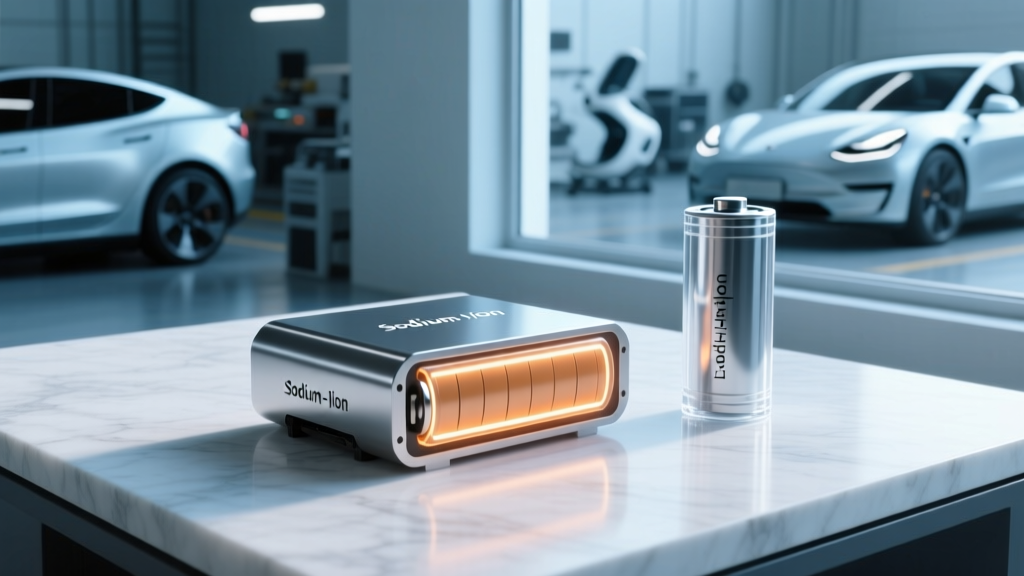
Sodium-Ion (Na-ion): An emerging chemistry that replaces lithium with abundant, cheap sodium. Peak Energy is one of several manufacturers developing sodium-ion cells targeting EV and energy-storage applications. CATL has already deployed sodium-ion packs in select Chinese-market vehicles. In the U.S. market, sodium-ion remains in the announced/preliminary stage for passenger EVs as of early 2026.
| Attribute | LFP | NMC/NCA | Sodium-Ion (Peak Energy / Gen-1 Na-ion) |
|---|---|---|---|
| Energy Density (Wh/kg, cell-level) | 160–180 | 220–300 | 120–160 (estimated) |
| Cycle Life (to 80% capacity) | 3,000–6,000+ | 1,000–2,500 | 2,000–4,000 (lab data) |
| Cold Performance (−20°C capacity retention) | ~60–70% | ~55–65% | ~80–90% (claimed advantage) |
| Thermal Runaway Risk | Very Low | Moderate (requires BMS management) | Very Low |
| Raw Material Cost Sensitivity | Moderate (lithium price) | High (nickel, cobalt) | Low (sodium is abundant) |
| Current U.S. EV Availability | Widely available | Widely available | Not yet in U.S. passenger EVs |
| Best Use Case | Daily commuting, fleet, budget EVs | Long-range, performance, towing | Cold-climate, low-cost, energy storage |
The key trade-off with any Peak Energy sodium-ion battery — or sodium-ion in general — is energy density. At roughly 120–160 Wh/kg at the cell level, a sodium-ion pack would need to be heavier and larger to match the range of an equivalent NMC pack. For a vehicle targeting 250+ miles of EPA-rated range, that means more mass and potentially less cargo or cabin space. Sodium-ion's advantages — cold resilience, lower material cost, and strong cycle life — make it better suited for shorter-range urban EVs, commercial fleets, and stationary storage in the near term.
How Long Do EV Batteries Actually Last?
The single most persistent concern among EV shoppers is battery lifespan. The data is reassuring: modern EV batteries are outlasting initial projections by a significant margin.
Typical degradation data points:
- Tesla Model 3/Y (NMC and LFP): Tesla's 2024 Impact Report showed average degradation of approximately 12% after 200,000 miles across the fleet. Many vehicles retain 88–90% capacity at 100,000 miles.
- Hyundai/Kia E-GMP platform (Ioniq 5, EV6 — NMC): Owner-reported data and third-party testing show roughly 8–12% loss over 5 years / 75,000 miles under normal use.
- LFP-equipped vehicles (Tesla Model 3 RWD, BYD models): LFP packs show slower degradation curves — typically 5–8% loss over 100,000 miles, with a flatter long-term trajectory.
- Nissan Leaf (early generations, passive cooling): The cautionary tale — first-generation Leafs with air-cooled packs showed 20–30% degradation in hot climates after 5–7 years, underscoring the importance of active thermal management.
Degradation Curve Pattern: Most lithium-ion EV batteries follow a two-phase degradation curve: a steeper initial drop of 2–5% in the first year or 10,000–20,000 miles (calendar and formation losses), followed by a much gentler linear decline of roughly 1–2% per year thereafter. Batteries rarely degrade linearly from day one. A sudden capacity "cliff" is uncommon in well-managed packs but can occur in cells with manufacturing defects or extreme abuse.
For context, a modern EV battery retaining 80% of its original capacity at 150,000–200,000 miles is typical, not exceptional. Most owners will sell or trade the vehicle before the battery reaches end-of-life. A Peak Energy sodium-ion battery, based on published lab cycle life data of 2,000–4,000 cycles, could theoretically deliver 300,000+ miles before reaching 80% capacity — though real-world vehicle integration data is not yet available in the U.S. market.
What Does the Battery Warranty Cover?
Federal law mandates a minimum 8-year / 100,000-mile warranty on EV battery packs. Most manufacturers exceed this baseline, and California Air Resources Board (CARB) states require even longer coverage (typically 10 years / 150,000 miles).
| Manufacturer / Model | Warranty Period | Mileage Limit | Capacity Retention Threshold |
|---|---|---|---|
| Tesla (Model 3/Y LFP — RWD) | 8 years | 100,000 miles | 70% |
| Tesla (Model 3/Y Long Range — NMC) | 8 years | 120,000 miles | 70% |
| Hyundai / Kia (Ioniq 5, EV6) | 10 years | 100,000 miles | 70% |
| Ford (Mustang Mach-E, F-150 Lightning) | 8 years | 100,000 miles | 70% |
| Rivian (R1T, R1S) | 8 years | 175,000 miles | 70% |
| BMW (iX, i4) | 8 years | 100,000 miles | 70% |
What triggers a warranty claim: If your battery's State of Health (SoH) drops below the stated threshold (almost universally 70%) within the warranty period, the manufacturer will repair or replace modules or the full pack to bring capacity back above the threshold. This is not a cosmetic guarantee — 70% capacity on a 300-mile EPA-rated vehicle still yields ~210 miles of range, which is functional but noticeably reduced.
What's typically excluded: Damage from accidents, flooding, unauthorized modifications, or use outside the vehicle's specified parameters. Some warranties also exclude capacity loss from consistently charging to 100% on NMC packs if the owner ignored the manufacturer's recommended SoC limits — though this is rarely enforced in practice.
Any future U.S.-market vehicle equipped with a Peak Energy sodium-ion battery would be subject to the same federal minimums. Given sodium-ion's projected cycle-life advantages, warranty terms could potentially be more generous — but this is speculative until a production vehicle ships.
EV Battery Replacement Costs: The Real Numbers
This is the topic that generates the most anxiety, and it deserves honest context. Yes, a full EV battery replacement is expensive. But the vast majority of EV batteries never need replacement during the ownership life of the vehicle.
| Vehicle / Platform | Battery Size (kWh usable) | Full Pack Replacement Cost (Parts + Labor) | Module-Level Repair Cost |
|---|---|---|---|
| Tesla Model 3/Y (LFP, ~60 kWh) | 57–60 | $12,000–$16,000 | $2,500–$5,000 per module group |
| Hyundai Ioniq 5 / Kia EV6 (~77 kWh) | 72–77 | $15,000–$22,000 | $3,000–$6,000 per module |
| Ford F-150 Lightning Extended Range (~131 kWh) | 131 | $25,000–$35,000 | $4,000–$8,000 per module |
| Rivian R1T Large Pack (~128 kWh) | 128 | $22,000–$30,000 | $4,000–$7,000 per module |
| Chevrolet Bolt EV/EUV (~65 kWh) | 65 | $14,000–$17,000 | N/A (recall replacement program completed) |
Key context: Module-level repair is increasingly common. Most modern packs are composed of multiple modules, and a failure in one module doesn't require replacing the entire pack. A technician can swap individual modules for a fraction of the full-pack cost.
When replacement is actually needed: Full-pack replacement is rare before 200,000+ miles. More commonly, individual cell or module failures occur due to manufacturing defects (covered under warranty) or physical damage. Gradual degradation to 70–80% capacity over 10–15 years is the typical end-of-life scenario, and many owners find that a vehicle with 75% battery health is still perfectly usable for daily driving.
One potential long-term advantage of sodium-ion chemistry: if Peak Energy's cells achieve their projected cost targets (sodium raw materials cost a fraction of lithium and cobalt), replacement packs could be significantly cheaper than current lithium equivalents — potentially 30–50% less per kWh. This remains speculative until production pricing is established.
Factors That Affect Battery Life — and How to Manage Them
Battery degradation isn't random. It's driven by identifiable stressors that owners can control.
Battery Care Checklist for Maximum Longevity
- Avoid frequent DC fast charging above 150 kW. Occasional fast charging is fine, but daily reliance on 250–350 kW chargers accelerates degradation. Studies show batteries fast-charged predominantly lose 1–3% more capacity over 100,000 miles vs. primarily Level 2 charging. Use Level 2 (7–11 kW) at home as your baseline.
- Keep SoC between 20% and 80% for NMC/NCA. Storing an NMC battery at 100% SoC for extended periods (days or weeks) stresses the cathode. LFP batteries tolerate 100% SoC better and Tesla actually recommends periodic 100% charges for LFP to recalibrate the BMS.
- Minimize extreme temperature exposure. Batteries degrade faster when stored or charged in sustained heat above 95°F (35°C) or extreme cold below −4°F (−20°C). Active thermal management systems mitigate this, but garage parking in hot climates meaningfully extends battery life.
- Use preconditioning before fast charging. Most modern EVs will precondition the battery (warm it to optimal temperature) when you navigate to a DC fast charger. This protects the cells and enables faster charging. If your vehicle doesn't auto-precondition, allow 10–15 minutes of driving before plugging into a high-power charger in cold weather.
- Don't let the battery sit at 0% SoC. Deep discharge is more harmful than high-SoC storage. If you must store the vehicle for weeks, leave it at 40–60% SoC and plugged in if possible so the thermal management system can operate.
- Limit sustained high-speed driving in extreme heat. High discharge rates combined with high ambient temperatures compound stress. This doesn't mean avoid road trips — just be aware that repeated track days or towing in 110°F heat represents worst-case battery stress.
How to Check and Monitor Battery Health (SoH)
State of Health (SoH) is the percentage of original battery capacity remaining. A new battery is 100% SoH; one that has degraded to hold only 85 kWh out of an original 100 kWh is at 85% SoH.
Manufacturer tools:
- Tesla: No direct SoH readout in the vehicle UI, but third-party apps like Tessie or TeslaFi can pull SoH data from the vehicle's API. Service centers can provide a battery health report on request.
- Hyundai/Kia: Some models display battery health percentage in the EV settings menu. Dealers can run a diagnostic scan for a detailed report.
- BMW: The iDrive system includes a battery health indicator. BMW dealerships can generate a capacity test report.
- Ford: The FordPass app and SYNC system provide battery state information. Dealers can run a full diagnostic.
Third-party diagnostics: Services like Recurrent offer battery health reports based on connected vehicle data, and some independent EV shops can perform controlled discharge tests for a precise SoH measurement. When buying a used EV, a battery health report should be as standard a request as a vehicle history report.
OBD-II tools: Devices like the OBDLink SX paired with apps such as LeafSpy (for Nissan) or ABRP's OBD integrations can read real-time cell voltage data, pack temperature, and estimated SoH. This is particularly valuable for used-EV buyers evaluating vehicles from brands with less transparent battery reporting.
Emerging Battery Technologies: Solid-State, Silicon Anode, and Beyond
Sodium-ion isn't the only next-generation chemistry in development. Here's a realistic assessment of what's coming and when — marked clearly as forward-looking:
Solid-State Batteries: Promising 30–50% higher energy density and improved safety by replacing the liquid electrolyte with a solid conductor. Toyota has announced a 2027–2028 target for limited production in Japan. QuantumScape is working with Volkswagen on pilot cells. Realistic U.S. consumer availability: 2029–2032 at the earliest, initially in premium vehicles. Solid-state is not currently available in any production EV.
Silicon Anode Batteries: Replacing graphite anodes with silicon can boost energy density by 20–40%. Sila Nanotechnologies and Group14 are supplying early-production cells. Mercedes-Benz has announced silicon-anode cells for the upcoming G-Class EV. Expect limited deployment in 2026–2028 model-year luxury vehicles, with broader availability post-2028.
Sodium-Ion (Peak Energy and others): Peak Energy is developing sodium-ion cells with a focus on U.S. domestic manufacturing and energy-storage applications. For passenger EVs, CATL's first-generation sodium-ion packs are in limited Chinese-market deployment. A U.S.-market vehicle with a sodium-ion pack is plausible by 2028–2030, most likely in a budget-oriented or fleet-targeted model where lower energy density is an acceptable trade-off for reduced cost.
Sodium-ion + lithium hybrid packs: CATL has demonstrated a "battery integration" approach that combines sodium-ion and lithium-ion modules in a single pack, using sodium-ion for cold-weather resilience and lithium-ion for energy density. This hybrid architecture could arrive sooner than pure sodium-ion EVs — potentially 2027–2028.
None of these technologies replace the need to understand and care for today's batteries. If you're buying an EV in 2026, you're choosing between LFP and NMC/NCA — both proven, well-understood chemistries with strong track records.
LFP vs NMC: Which Chemistry Should You Choose?
There's no universally "better" chemistry — only the right chemistry for your driving pattern.
Choose LFP if:
- You charge at home daily and don't need maximum range
- You prefer simpler SoC management (charging to 100% is fine)
- You prioritize longevity and plan to keep the vehicle 8+ years
- You live in a warm climate (LFP's thermal stability is a plus)
- Lower purchase price matters — LFP packs cost less per kWh
Choose NMC/NCA if:
- You need maximum EPA-rated range (300+ miles)
- You tow or carry heavy loads regularly
- You take frequent long road trips and want fewer charging stops
- You live in a cold climate and need every mile of range (NMC's higher density offsets cold losses somewhat)
- Performance matters — NMC cells deliver higher peak discharge rates
For the sodium-ion question specifically: if a Peak Energy sodium-ion battery eventually reaches U.S. passenger EVs, it would likely compete most directly with LFP on cost while offering superior cold-weather performance. The trade-off — lower energy density and therefore shorter range or heavier packs — means it's best evaluated for urban, short-range, and cold-climate applications rather than as a long-range replacement for NMC.
Frequently Asked Questions
How long do EV batteries last in years and miles?
Most modern EV batteries retain 70–85% of original capacity after 150,000–200,000 miles or 10–15 years. Degradation is front-loaded (2–5% in year one) then slows to 1–2% per year. Many batteries outlast the vehicle they're installed in. Early-generation EVs with passive cooling (like the first Nissan Leaf) degraded faster, but active thermal management in current vehicles has largely solved this.
How much does it cost to replace an EV battery?
Full-pack replacement ranges from $12,000 for a ~60 kWh pack (Tesla Model 3 LFP) to $35,000 for a ~131 kWh pack (F-150 Lightning Extended Range). However, most replacements are module-level repairs at $2,500–$8,000. The vast majority of EV batteries never need replacement during typical ownership. If your battery fails within the 8-year / 100,000-mile federal warranty window, replacement is covered at no cost.
What does the EV battery warranty actually cover?
Federal law requires at minimum 8 years / 100,000 miles of battery coverage (10 years / 150,000 miles in CARB states). The warranty guarantees the battery will retain at least 70% of original capacity. If it drops below that threshold within the warranty period, the manufacturer repairs or replaces it. Warranties typically exclude physical damage, accidents, and unauthorized modifications but cover degradation and manufacturing defects.
How do I check my EV battery's State of Health?
Methods vary by brand: Tesla owners can use third-party apps (TeslaFi, Tessie) or request a service center report; Hyundai/Kia and BMW offer in-menu health indicators; Ford provides data through FordPass. OBD-II diagnostic tools can read detailed cell-level data on most EVs. When buying used, always request a battery health report — it's as important as a Carfax.
Is LFP better than NMC for daily driving?
For daily commuting with home charging, LFP has clear advantages: longer cycle life, tolerance for 100% SoC charging, lower cost, and better thermal stability. The trade-off is 15–25% lower energy density, which means shorter range for the same battery weight. If your daily driving is under 60 miles and you charge at home, LFP is the pragmatic choice. If you regularly drive 200+ miles between charges or tow, NMC's energy density advantage matters more.
Will a Peak Energy sodium-ion battery be available in U.S. EVs soon?
As of early 2026, no U.S.-market passenger EV ships with a Peak Energy sodium-ion battery. The technology is in development and pilot production, with initial applications likely in energy storage and commercial/fleet vehicles. A consumer passenger EV with sodium-ion cells in the U.S. is plausible by 2028–2030. CATL has deployed sodium-ion in limited Chinese-market vehicles, providing early real-world validation of the chemistry.
Does fast charging damage my EV battery?
Occasional DC fast charging is not harmful. However, exclusive reliance on high-power (150–350 kW) fast charging accelerates degradation by approximately 1–3% over 100,000 miles compared to primarily Level 2 charging. Modern battery management systems actively manage charge rates and temperatures to minimize damage, but physics favors slower charging. The practical recommendation: use Level 2 at home as your default, and fast-charge on road trips without worry — just don't make 350 kW your daily routine.