Why Panasonic's Solid-State Battery Matters for Today's EV Buyers
If you've been following EV battery news, you've likely encountered the phrase "solid-state battery" attached to Panasonic — the company that co-developed the cells powering millions of Tesla vehicles and supplies cylindrical lithium-ion cells to several other automakers. The promise is compelling: solid-state batteries replace the liquid electrolyte in current lithium-ion cells with a solid material, potentially doubling energy density, cutting charge times to under 10 minutes, and eliminating the flammability risk inherent in today's NMC and NCA chemistries.
But here's the reality check every prospective EV buyer needs in 2026: solid-state batteries are not yet in production vehicles. Panasonic has demonstrated prototype cells and has outlined a commercialization roadmap targeting the late 2020s, but the EVs you can buy today rely on proven liquid-electrolyte lithium-ion technology — and that technology is far more durable and capable than most buyers assume.
This guide covers what Panasonic's solid-state battery development means for the market, how today's EV batteries actually perform over time, what warranties protect you, and how to make an informed purchase decision without waiting for a technology that remains years away from showroom floors.
Current EV Battery Chemistry: LFP vs NMC vs NCA Explained
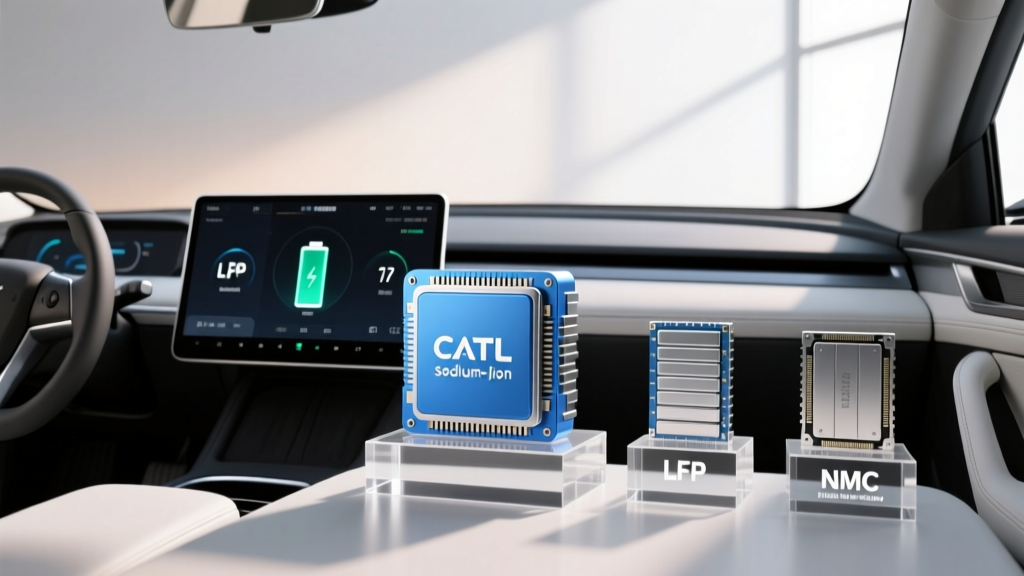
Before evaluating what solid-state might change, you need to understand what's under the floor of today's EVs. Three dominant cathode chemistries power the current market, each with distinct trade-offs in energy density, longevity, cost, and cold-weather performance.
NMC (Nickel Manganese Cobalt) and NCA (Nickel Cobalt Aluminum) are the high-energy-density chemistries. Panasonic's 2170 and 4680 cylindrical cells — used in Tesla Model 3, Model Y, and Cybertruck — use NCA and NMC variants. These cells pack more kilowatt-hours into a smaller, lighter package, which translates directly to longer EPA range ratings. The trade-off is a higher cost per kWh, greater sensitivity to high state-of-charge storage, and a somewhat faster degradation curve compared to LFP.
LFP (Lithium Iron Phosphate) has surged in popularity, particularly in standard-range Tesla Model 3 and Model Y vehicles, as well as models from BYD, Ford (base Mustang Mach-E trims), and several Chinese-market EVs. LFP sacrifices roughly 15–20% in energy density compared to NMC but gains substantially in cycle life, thermal stability, and cost. LFP cells tolerate daily charging to 100% without the degradation penalties that NMC/NCA cells face, and they contain no cobalt or nickel — reducing both cost and supply-chain risk.
| Attribute | LFP (Lithium Iron Phosphate) | NMC (Nickel Manganese Cobalt) | NCA (Nickel Cobalt Aluminum) |
|---|---|---|---|
| Energy Density | 160–200 Wh/kg (cell level) | 220–300 Wh/kg (cell level) | 250–300 Wh/kg (cell level) |
| Typical Cycle Life | 3,000–6,000+ cycles to 80% SoH | 1,000–2,000 cycles to 80% SoH | 1,000–1,500 cycles to 80% SoH |
| Cold-Weather Performance | Moderate — greater range loss below 20°F | Better low-temp discharge capability | Better low-temp discharge capability |
| Thermal Stability | Excellent — higher thermal runaway threshold | Good — requires active thermal management | Good — requires active thermal management |
| Cost per kWh (cell) | ~$60–80 (2026 estimates) | ~$90–120 | ~$95–125 |
| Daily Charge to 100% | Recommended — no degradation penalty | Not recommended — store at 80% for daily use | Not recommended — store at 80% for daily use |
| Common Applications | Tesla Model 3 RWD, BYD Seal, Ford Mach-E SR | Hyundai Ioniq 5/6, VW ID.4, Rivian R1T/R1S | Tesla Model 3/Y LR, Model S/X, Cybertruck |
The key decision for buyers isn't which chemistry is "best" — it's which fits your usage pattern. If you charge at home nightly and want maximum range for road trips, NMC/NCA delivers. If you commute daily, charge to 100% without worry, and prioritize longevity over peak range, LFP is the pragmatic choice.
Panasonic's Solid-State Battery Roadmap: What's Realistic
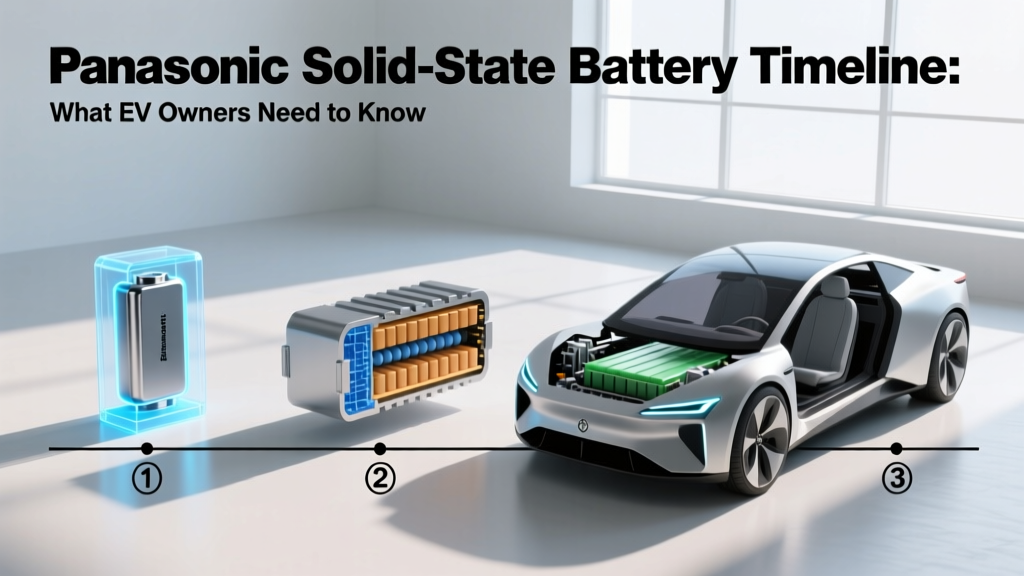
Panasonic has invested heavily in solid-state battery R&D, partnering with academic institutions and signaling intent to commercialize all-solid-state cells for automotive applications. The company's approach focuses on sulfide-based solid electrolytes, which offer the highest ionic conductivity among solid-state candidates but present manufacturing challenges around moisture sensitivity and production scalability.
As of 2026, Panasonic's publicly stated timeline targets initial production in the late 2020s, with volume manufacturing likely not arriving until the early 2030s. This aligns with the broader industry consensus: Toyota, Samsung SDI, and QuantumScape have all outlined similar timeframes. The engineering hurdles are not about whether solid-state cells work in a lab — they demonstrably do — but about producing them at the billions-of-cells-per-year scale and cost-per-kWh that the automotive market demands.
What solid-state could eventually deliver: energy densities exceeding 400 Wh/kg at the cell level (roughly double current NMC), 10–80% charge times under 10 minutes, and inherent safety advantages from eliminating flammable liquid electrolyte. But these benefits will first appear in premium vehicles at significant cost premiums before trickling down to mainstream models — a pattern that mirrors how lithium-ion itself entered the market through the Tesla Roadster in 2008 before reaching affordable models a decade later.
How Long Do EV Batteries Actually Last? Degradation Data
The most persistent fear among EV shoppers is battery replacement — the idea that a $10,000–$20,000 bill will arrive a few years into ownership. The data tells a different story. Modern EV batteries are engineered for longevity that typically exceeds the practical lifespan of the vehicle itself.
Real-world degradation data from fleet operators, owner surveys, and manufacturer reports consistently shows the following patterns:
- Year 1–2: 2–5% capacity loss (initial formation loss, steepest part of the curve)
- Year 3–5: Approximately 1–2% loss per year (linear degradation phase)
- Year 6–10: Degradation continues to slow; most packs retain 80–90% of original capacity at 100,000–150,000 miles
- Beyond 150,000 miles: Data is more limited, but Tesla's 2023 Impact Report cited an average of ~12% degradation at 200,000 miles across Model 3/Y fleets
LFP chemistry shows even stronger retention. Studies of LFP-equipped Tesla Model 3 Standard Range vehicles indicate degradation curves that flatten earlier, with many packs retaining 90%+ capacity past 100,000 miles when charged primarily via Level 2 home charging.
A practical example: a 2022 Tesla Model 3 Long Range with an 82 kWh usable NCA battery pack and an EPA range of 358 miles. After 60,000 miles and 3 years of mixed use (home Level 2 charging with occasional Supercharging), owners commonly report 93–95% State of Health — translating to roughly 335–340 miles of real-world range. That's a reduction you'll notice on the longest road trips but not in daily driving.
The EPA's fueleconomy.gov database provides official range ratings for every EV sold in the U.S., which serve as your baseline for measuring degradation over time.
Battery Warranty Coverage: What's Protected and for How Long
Federal law mandates that EV battery packs carry a minimum warranty of 8 years or 100,000 miles (whichever comes first) in most states, and 10 years or 150,000 miles in California Air Resources Board (CARB) states including California, New York, Massachusetts, and several others. Most major automakers meet or exceed these minimums.
| Manufacturer | Warranty Period | Mileage Limit | Capacity Retention Threshold |
|---|---|---|---|
| Tesla (Model 3/Y NCA) | 8 years | 120,000 miles | 70% |
| Tesla (Model 3 RWD LFP) | 8 years | 100,000 miles | 70% |
| Hyundai / Kia | 10 years | 100,000 miles | 70% |
| Ford (Mustang Mach-E) | 8 years | 100,000 miles | 70% |
| Volkswagen (ID.4) | 8 years | 100,000 miles | 70% |
| Rivian (R1T/R1S) | 8 years | 175,000 miles | 70% |
| Chevrolet (Equinox EV / Blazer EV) | 8 years | 100,000 miles | 60% (some trims 70%) |
The critical detail is the capacity retention threshold. A warranty claim is valid only when the battery's State of Health drops below the stated percentage — typically 70% — within the warranty window. This means a battery that degrades from 100% to 72% over 8 years has performed within warranty expectations, even though you've lost 28% of original capacity. In practice, very few EV batteries fall below the 70% threshold within the warranty period under normal use conditions.
The warranty covers defects in materials and workmanship, as well as abnormal degradation. It does not cover damage from accidents, flooding, improper modifications, or use of non-approved charging equipment. Always review your specific vehicle's warranty documentation for exact terms.
EV Battery Replacement Costs: What the Numbers Actually Show
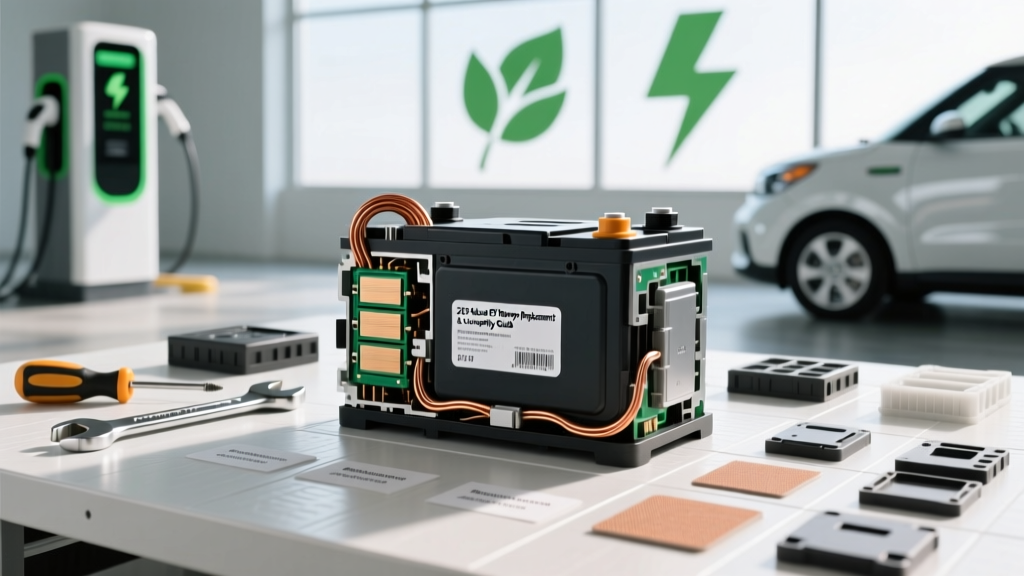
Replacement cost is the single biggest anxiety in EV ownership, and it deserves a data-driven answer rather than speculation. The truth is that complete battery pack replacements are rare — most issues involve individual modules or the battery management system, not the entire pack.
| Vehicle | Battery Capacity | Chemistry | Estimated Replacement Cost (Parts + Labor) |
|---|---|---|---|
| Tesla Model 3 RWD | 60 kWh | LFP | $8,000–$12,000 |
| Tesla Model 3/Y Long Range | 82 kWh | NCA | $12,000–$16,000 |
| Hyundai Ioniq 5 | 77.4 kWh | NMC | $10,000–$15,000 |
| Ford Mustang Mach-E ER | 91 kWh | NMC | $14,000–$20,000 |
| Volkswagen ID.4 | 82 kWh | NMC | $12,000–$17,000 |
| Rivian R1T (Large Pack) | 128 kWh | NMC | $18,000–$25,000 |
| Chevrolet Silverado EV | 200 kWh | NMC | $25,000–$35,000 |
Context matters enormously here. These costs are comparable to — or in some cases less than — a complete engine and transmission replacement on a gasoline vehicle. More importantly, the vast majority of EV owners will never need a battery replacement. Data from warranty claim rates across major manufacturers suggests fewer than 1–2% of EV battery packs require replacement during the warranty period, and most of those are due to manufacturing defects caught early, not age-related degradation.
Cell costs have declined from over $1,000/kWh in 2010 to roughly $70–120/kWh in 2026 (depending on chemistry and form factor), according to BloombergNEF tracking. This trend means replacement costs will continue to fall over the ownership life of any EV purchased today. By the time a 2026 model year EV might need an out-of-warranty replacement in the 2030s, pack costs could be substantially lower than today's figures.
Factors That Affect Battery Life — and How to Maximize It
Battery degradation is not random. It follows predictable electrochemical patterns driven by temperature, charge state, charge speed, and time. Understanding these factors lets you add years and tens of thousands of miles to your pack's useful life.
EV Battery Care Checklist
- Limit DC fast charging frequency: Occasional Supercharging or Electrify America stops on road trips are fine. Daily DC fast charging at 150+ kW accelerates degradation by stressing cells with high current and heat. Prioritize Level 2 home charging for daily use.
- Avoid prolonged storage at 100% SoC (NMC/NCA): If you don't need full range tomorrow, set your charge limit to 80%. Storing an NMC or NCA battery at 100% for days or weeks accelerates calendar aging. LFP owners can charge to 100% daily without concern.
- Don't let the battery sit at very low SoC: Storing any lithium-ion battery below 10% for extended periods risks cell damage. If leaving your EV for a vacation, set the charge limit to 50% and leave it plugged in.
- Use preconditioning for fast charging: Most modern EVs precondition the battery when you navigate to a DC fast charger. This warms the cells to the optimal temperature for accepting high-power charge, reducing lithium plating risk. Always use the vehicle's built-in navigation to chargers to trigger preconditioning.
- Minimize extreme temperature exposure: Parking in a garage or shaded area in summer, and using a garage in winter, reduces thermal stress. Battery thermal management systems work harder — and consume energy — when ambient temperatures exceed 95°F or drop below 10°F.
- Drive moderately when the battery is cold: In sub-freezing temperatures, limit aggressive acceleration for the first 10–15 minutes of driving until the battery warms up. Regenerative braking may also be limited when cold — plan for longer stopping distances.
The single most impactful habit is simple: charge at home on Level 2, set your daily limit to 80% (for NMC/NCA), and save DC fast charging for road trips. Owners who follow this pattern consistently report the lowest degradation rates in fleet studies.
How to Check Your EV Battery's State of Health
State of Health (SoH) is the percentage of original battery capacity remaining. A new EV has 100% SoH; a pack that has degraded to hold 77 kWh out of its original 82 kWh sits at roughly 94% SoH. Monitoring this metric helps you track degradation trends and identify potential issues early.
Built-in vehicle displays: Tesla provides a battery health estimate in the service menu of recent software updates. Hyundai, Kia, and Ford offer SoH readouts through their infotainment systems or companion apps. The accuracy of these built-in estimates varies — they're useful for trend tracking but may not match independent diagnostic results exactly.
OBD-II diagnostic tools: Devices like the OBDLink SX paired with apps such as EV Health or Car Scanner can read the battery management system's SoH estimate directly. This method provides more granular data, including individual cell voltage variance, which can flag a weak module before it becomes a larger problem.
Dealer diagnostics: Any authorized service center can perform a full battery health check, typically as part of scheduled maintenance. Request this if you're approaching a warranty threshold and want documentation of current SoH.
Real-world range tracking: The simplest method requires no tools. Track your vehicle's displayed range at full charge over time and compare it to the original EPA rating. A 2022 Ioniq 5 that originally displayed 303 miles at 100% and now shows 285 miles has experienced roughly 6% degradation — well within normal expectations at 40,000+ miles.
Frequently Asked Questions
How long do EV batteries last in years and miles?
Based on current degradation data, most modern EV batteries retain 80–90% of original capacity at 150,000 miles and 8–10 years of typical use. Many packs will outlast the vehicle's useful life. LFP-chemistry batteries generally show stronger long-term retention, with some fleet data suggesting 90%+ SoH at 100,000 miles.
How much does it cost to replace an EV battery?
Out-of-warranty replacement costs range from approximately $8,000 for smaller LFP packs (Tesla Model 3 RWD) to $25,000+ for large packs (Rivian R1T, Chevrolet Silverado EV). However, complete pack replacements are rare — fewer than 1–2% of batteries require replacement under warranty, and cell costs continue to decline annually.
What does the EV battery warranty actually cover?
Federal minimum is 8 years/100,000 miles (10 years/150,000 miles in CARB states). The warranty covers defects and abnormal degradation below a stated threshold — typically 70% of original capacity. It does not cover accident damage, improper use, or normal gradual degradation above the threshold.
Is LFP better than NMC for my EV?
Neither is universally better — it depends on your priorities. LFP offers longer cycle life, lower cost, and the ability to charge to 100% daily without degradation concern, making it ideal for commuters and daily drivers. NMC/NCA delivers higher energy density and better cold-weather performance, better suited for buyers prioritizing maximum range and road-trip capability. Check the IRS §30D tax credit rules as battery sourcing requirements may affect credit eligibility by chemistry and supply chain.
When will Panasonic's solid-state battery be available in EVs?
Panasonic has targeted the late 2020s for initial solid-state battery production, with volume manufacturing expected in the early 2030s. No production vehicle currently on sale uses solid-state cells. The technology is promising but remains in the prototype and pilot stage. Today's lithium-ion batteries are proven, reliable, and warrantied for 8–10 years — there is no practical reason to delay an EV purchase while waiting for solid-state commercialization.
Does frequent DC fast charging damage my battery?
Occasional DC fast charging during road trips has minimal impact on long-term battery health. However, daily use of 150+ kW DC fast charging does accelerate degradation compared to Level 2 home charging. The heat and high current stress cells more than slower charging. Most fleet studies show a measurable but not catastrophic difference — expect perhaps 2–4% additional capacity loss over 100,000 miles if DC fast charging is your primary method versus exclusive Level 2 charging.