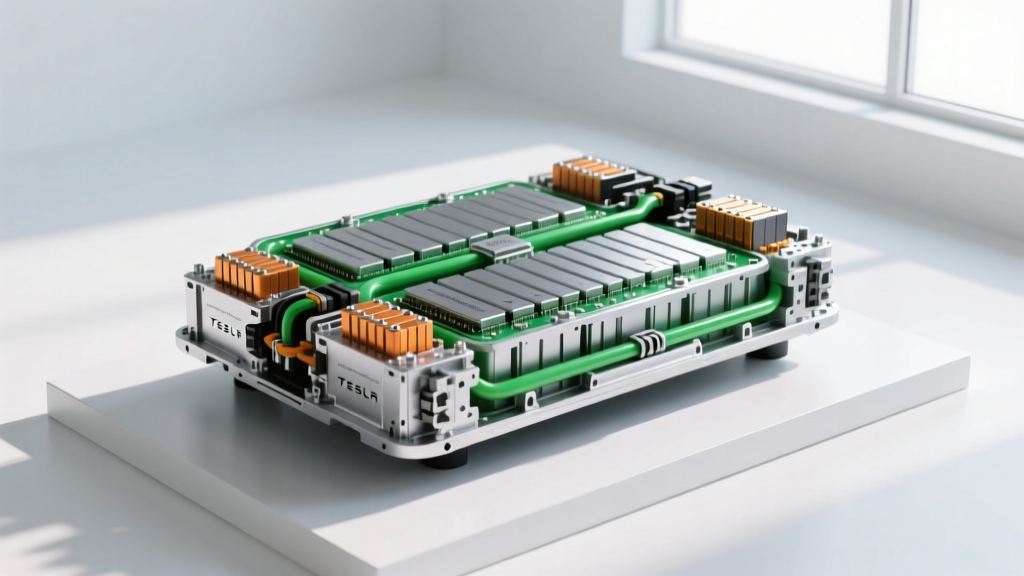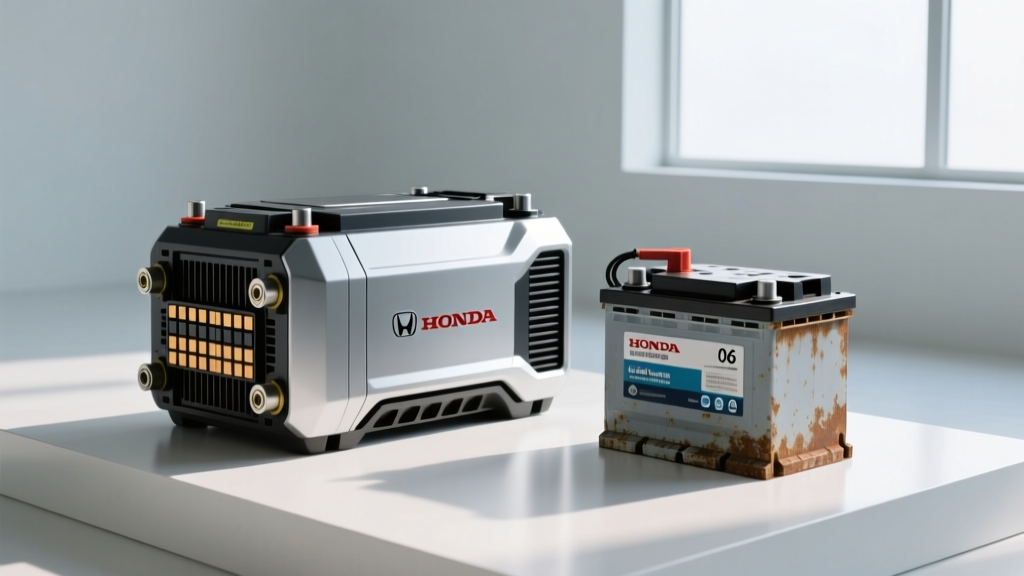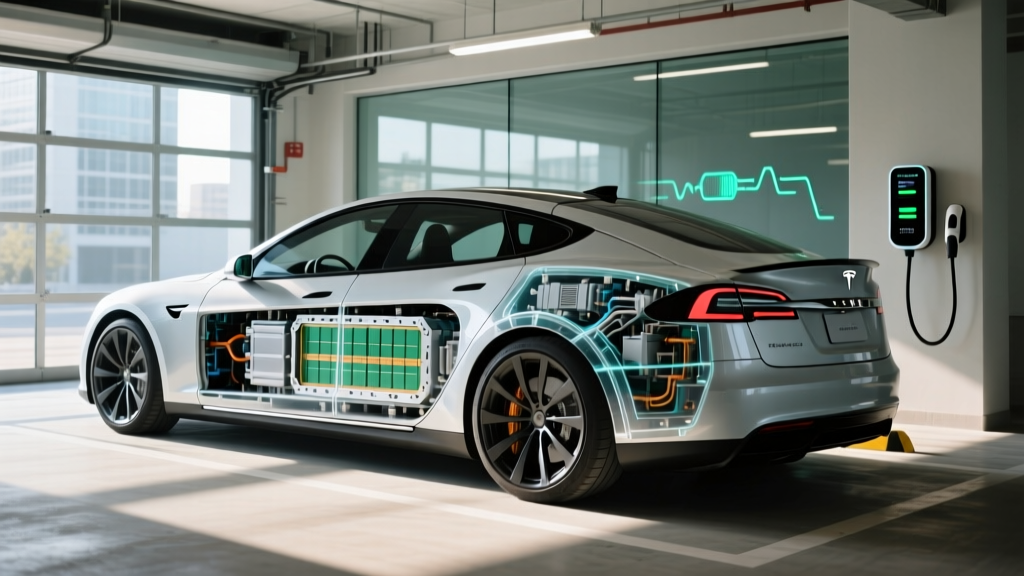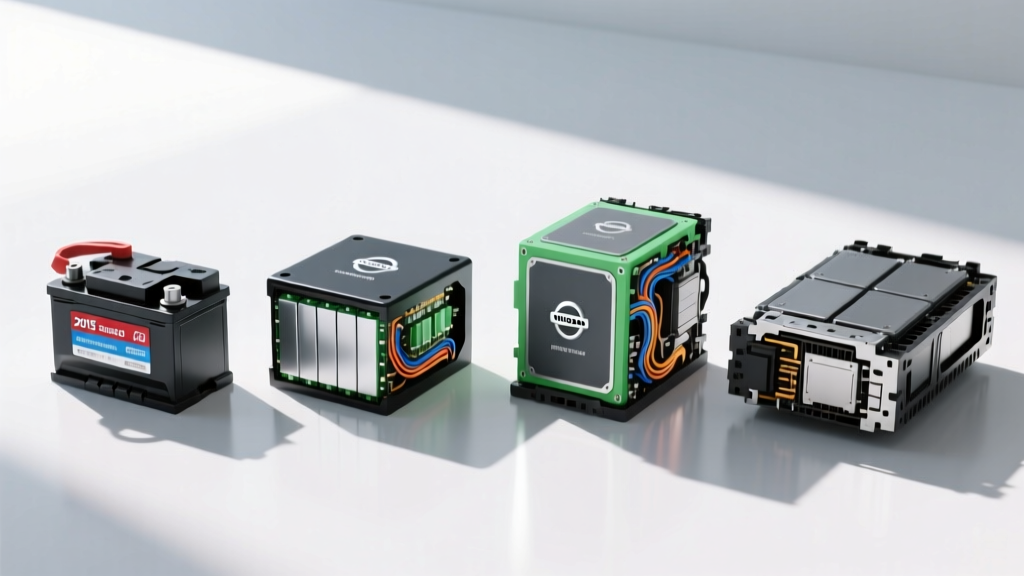
If you've landed here searching for a battery for Nissan Sentra 2015, you're likely dealing with a dead 12-volt starter battery in a conventional gas-powered compact sedan. That's a straightforward $150–$220 Group 35 lead-acid or AGM replacement at any auto parts store. But if you're researching EV batteries — whether you're considering an upgrade to an electric vehicle or you own one and want to understand what's under the floor — the conversation changes entirely.
This guide covers high-voltage EV traction batteries in depth: the chemistry inside them, how they degrade, what warranties actually protect, what replacement really costs, and how to maximize longevity. We'll also briefly address the Sentra's 12V battery so you leave with a complete answer.
The 2015 Nissan Sentra Battery: Quick 12V Answer
The 2015 Nissan Sentra is a gasoline-powered compact sedan with a 1.8L four-cylinder engine. It uses a standard 12-volt lead-acid battery (typically Group 35, ~550 CCA) to crank the engine and run accessories. There is no high-voltage traction battery, no electric motor, and no regenerative braking. Replacement is a simple swap costing $150–$220 for the battery itself, with a typical lifespan of 3–5 years depending on climate and driving habits.
If that's all you needed, you can stop here. But if you're curious about how electric vehicle batteries work — the large lithium-ion packs that power EVs for hundreds of miles — read on. The technology, economics, and ownership experience are fundamentally different.
EV Battery Chemistry: LFP vs NMC Explained
Modern EV batteries use lithium-ion cells, but not all lithium-ion is the same. The cathode chemistry determines energy density, lifespan, cost, cold-weather performance, and safety. The two dominant chemistries in 2026 are LFP (lithium iron phosphate) and NMC (nickel manganese cobalt), with NCA (nickel cobalt aluminum) used primarily by Tesla and a few others.
| Attribute | LFP (Lithium Iron Phosphate) | NMC / NCA |
|---|---|---|
| Energy Density | Lower (~160–180 Wh/kg cell-level) | Higher (~220–300 Wh/kg cell-level) |
| Typical Cycle Life | 3,000–5,000+ cycles to 80% SoH | 1,000–2,000 cycles to 80% SoH |
| Cold-Weather Performance | Weaker below 32°F; slower charging in cold | Better low-temp discharge and charge acceptance |
| Cost (per kWh) | Lower — no cobalt or nickel | Higher — commodity-priced nickel and cobalt |
| Thermal Stability / Safety | Excellent — less prone to thermal runaway | Good but requires more active thermal management |
| Recommended Daily Charge | 100% SoC is fine; LFP benefits from periodic full charges for BMS calibration | 80% SoC for daily use; 100% only before long trips |
| Common In (2026) | Tesla Model 3 RWD, BYD models, Ford Mustang Mach-E Select (LFP variant) | Hyundai Ioniq 5, Chevy Equinox EV, Tesla Long Range, Rivian, most long-range models |
Which is better? It depends on your priorities. NMC wins on range-per-pound, making it the choice for long-range and performance models where packing maximum kWh into limited space matters. LFP wins on longevity and cost — ideal for standard-range models, fleet vehicles, and owners who plan to keep their EV for 10+ years. LFP's weaker cold-weather charging is a real trade-off if you live in northern climates and rely on DC fast charging in winter.
How Long Do EV Batteries Last? Real Degradation Data
The short answer: most EV batteries outlast the car they're installed in. The long answer requires looking at actual degradation curves from fleet data and manufacturer reports.
Typical degradation trajectory:
- Year 1 / 15,000 mi: ~2–5% capacity loss (initial "break-in" drop)
- Year 3 / 45,000 mi: ~6–10% total loss
- Year 5 / 75,000 mi: ~8–14% total loss
- Year 8 / 120,000 mi: ~10–18% total loss (varies heavily by chemistry and usage)
- Year 10 / 150,000 mi: ~12–22% total loss for NMC; ~8–15% for LFP
According to data compiled by Recurrent Auto from over 15,000 EVs in their fleet monitoring program, the median EV retains roughly 90–95% of its original range at 5 years. LFP-equipped vehicles trend toward the higher end of that range. Catastrophic battery failure (sudden, total loss) is exceedingly rare — well under 1% of packs in major manufacturer datasets.
For context, a 2026 Hyundai Ioniq 5 with a 77.4 kWh NMC battery and 303 miles of EPA range might realistically show 265–280 miles of range at year 5. That's noticeable but livable — and still sufficient for most daily driving.
Battery Warranty Terms: What's Actually Covered
Federal law mandates a minimum 8-year/100,000-mile warranty on EV battery packs for emissions-related components, and most manufacturers match or exceed this for the traction battery specifically. California Air Resources Board (CARB) states require 10 years / 150,000 miles.
| Manufacturer | Warranty Term | Capacity Retention Threshold | Coverage Type |
|---|---|---|---|
| Tesla (Model 3/Y RWD — LFP) | 8 yr / 100,000 mi | 70% | Defect + degradation below threshold |
| Tesla (Long Range / Performance) | 8 yr / 120,000 mi | 70% | Defect + degradation below threshold |
| Hyundai / Kia | 10 yr / 100,000 mi | 70% | Defect + degradation below threshold |
| Ford (Mustang Mach-E, F-150 Lightning) | 8 yr / 100,000 mi | 70% | Defect + degradation below threshold |
| Chevrolet (Equinox EV, Blazer EV) | 8 yr / 100,000 mi | 70% | Defect + degradation below threshold |
| Rivian | 8 yr / 120,000 mi (Standard) / 8 yr / 175,000 mi (Max Pack) | 70% | Defect + degradation below threshold |
| BMW (iX, i4) | 8 yr / 100,000 mi | 70% | Defect + degradation below threshold |
Key nuances: The 70% threshold means the warranty only triggers if your battery drops below 70% of its original usable capacity within the term. A pack that degrades to 75% at year 7 is functioning "normally" by warranty standards, even if you've lost 25% of your range. Warranties typically exclude damage from collisions, flooding, improper modifications, or unauthorized service. Always read the fine print in your owner's manual.
EV Battery Replacement Cost: When and How Much
Replacement cost is the number-one fear for prospective EV buyers. Here's the reality: most EV batteries never need replacement during typical ownership. But if one does — due to defect, damage, or extreme degradation — the costs are significant.
| Vehicle Class / Example | Battery Size | Replacement Cost Range (Parts + Labor) | Typical Replacement Trigger |
|---|---|---|---|
| Compact / Standard Range (e.g., Chevy Bolt EV) | ~65 kWh | $9,000 – $14,000 | Post-warranty defect or collision damage |
| Mid-size Crossover (e.g., Tesla Model Y, Ioniq 5) | ~75–82 kWh | $12,000 – $18,000 | Post-warranty defect or collision damage |
| Full-size Truck / SUV (e.g., F-150 Lightning, Rivian R1T) | ~100–135 kWh | $18,000 – $28,000 | Post-warranty defect or collision damage |
| Luxury / Performance (e.g., Porsche Taycan, Mercedes EQS) | ~90–108 kWh | $20,000 – $32,000 | Post-warranty defect or collision damage |
These figures include the battery pack and labor but can vary by region, dealer vs. independent shop, and whether modules can be replaced individually (some packs allow single-module swaps for $2,000–$5,000 rather than a full pack). Third-party remanufactured packs are becoming available for older models like the Nissan Leaf and Chevy Bolt, typically 30–50% cheaper than OEM new.
When is replacement typically needed? In practice, very few packs are replaced for degradation alone. Most replacements stem from collision damage, manufacturing defects caught under warranty (free to the owner), or coolant intrusion. A pack that degrades to 75% capacity at 150,000 miles is still functional — just with reduced range.
Factors That Accelerate (or Preserve) Battery Life
Battery longevity isn't random. Specific behaviors and environmental conditions measurably impact how quickly your pack loses capacity.
What Hurts Battery Health
- Frequent DC fast charging to 100%: High C-rates combined with high SoC stress the cathode. Occasional road-trip fast charges are fine; daily 150 kW+ sessions to full are not.
- Sustained high SoC storage: Leaving an NMC battery at 100% for days or weeks, especially in heat, accelerates calendar degradation. (LFP tolerates this better.)
- Extreme heat exposure: Prolonged ambient temps above 95°F without thermal management active. Parking in shade or a garage matters.
- Deep discharge cycles: Regularly draining below 10% SoC. The buffer protects against true 0%, but habitually running the pack very low adds stress.
- Cold-weather fast charging without preconditioning: Charging a cold battery at high power causes lithium plating on the anode, permanently reducing capacity.
What Preserves Battery Health
- Daily charge limit of 80% (NMC) or 100% (LFP): Follow your manufacturer's recommendation.
- Level 2 home charging as primary method: Slow, steady charging generates less heat and stress than repeated DCFC.
- Precondition before fast charging: Most EVs do this automatically when you navigate to a charger. It warms the battery to optimal temperature for charge acceptance.
- Store at ~50% SoC if the vehicle will sit unused for weeks.
- Keep the thermal management system active: Don't disable preheating or cooling features to "save energy."
Monitoring Battery Health: Checking Your State of Health (SoH)
State of Health (SoH) is the percentage of original usable capacity your battery retains. A new pack is 100% SoH; at 70% SoH, you've lost 30% of your range.
How to check SoH:
- In-vehicle displays: Some EVs (notably the Nissan Leaf with its "battery health bars" and Hyundai/Kia with a dedicated SoH readout in the cluster or infotainment) show this directly. Most Tesla models do not display a percentage natively but show estimated range at full charge, which you can compare to the original EPA figure.
- OBD-II diagnostic tools: Third-party apps like Leaf Spy (Nissan), Scan My Tesla, or generic EV OBD readers can pull SoH data directly from the Battery Management System (BMS). A $30–$50 OBD-II dongle plus a smartphone app gives you dealer-level data.
- Manufacturer apps: Tesla, Ford, Hyundai, and BMW apps show estimated range at full charge. Track this number over time — a consistent decline indicates degradation.
- Dealer diagnostic report: Request a battery health printout during service visits. This provides the most authoritative SoH reading and is useful for warranty claims.
Pro tip: When buying a used EV, always check SoH before purchase. A 2020 model with 92% SoH is a better buy than one at 82%, even if the latter is cheaper upfront — that 10% gap represents real range and resale value.
Emerging Battery Technology: What's Coming (and When)
Several next-generation battery technologies are in development. None are available in production vehicles as of early 2026, but timelines are becoming clearer:
- Solid-state batteries: Replace the liquid electrolyte with a solid material, promising higher energy density (~400+ Wh/kg), faster charging, and improved safety. Toyota has announced limited production in select models by 2027–2028, but at premium pricing and limited volume. Mass-market availability is realistically 2030+. Companies like QuantumScape and Samsung SDI are progressing through validation phases.
- Silicon-dominant anodes: Replacing graphite anodes with silicon can boost energy density by 20–40%. Sila Nanotechnologies and Group14 are supplying early production cells, with Mercedes and others targeting 2026–2027 model-year integration in limited trims. Expect gradual rollout, not a sudden revolution.
- Sodium-ion batteries: Cheaper than lithium, no critical minerals, but lower energy density (~120–160 Wh/kg). CATL and BYD are deploying these in Chinese-market city cars. US-market availability is uncertain and likely limited to low-range, budget models if it arrives.
- LMFP (lithium manganese iron phosphate): An evolution of LFP with manganese added to boost energy density by ~15–20% while retaining LFP's cost and safety advantages. Expected in several 2027–2028 models from Tesla and Chinese OEMs.
These technologies are real but not imminent. If you're buying an EV in 2026, today's LFP and NMC packs are mature, well-understood, and backed by substantial warranties. Waiting for solid-state is like waiting for the next iPhone — there's always something better on the horizon, and current tech is already excellent.
EV Battery FAQ
How long do EV batteries last in years and miles?
Based on fleet data from Recurrent Auto and manufacturer reports, most modern EV batteries retain 85–92% of their original capacity at 100,000 miles (roughly 7–8 years). LFP chemistries trend toward the higher end. Many packs will serve 200,000+ miles before dropping below the 70% warranty threshold. Catastrophic failure is rare — well under 1%.
How much does an EV battery cost to replace in 2026?
Full pack replacement ranges from roughly $9,000 for a compact EV (65 kWh) to $28,000+ for a large truck or luxury sedan (100–135 kWh). However, most packs never need replacement during typical ownership. Individual module replacement (when supported) costs $2,000–$5,000. Warranty covers defects and excessive degradation for 8–10 years.
What does the EV battery warranty actually cover?
Standard warranties cover manufacturing defects and capacity loss below a defined threshold (typically 70% of original capacity) for 8 years / 100,000 miles (10 years / 150,000 miles in CARB states). They do not cover collision damage, flooding, unauthorized modifications, or normal gradual degradation above the threshold. Check your specific manufacturer's terms.
How do I check my EV battery's State of Health?
Options include the vehicle's native display (some models show SoH directly), OBD-II diagnostic tools with EV-specific apps (Leaf Spy, Scan My Tesla), manufacturer mobile apps showing estimated range at full charge, or a dealer diagnostic report. For used-EV purchases, always verify SoH before buying.
LFP vs NMC — which battery chemistry should I choose?
Choose LFP if you prioritize longevity, lower cost, and plan to keep the vehicle 8+ years; you'll accept somewhat lower range and weaker cold-weather fast charging. Choose NMC if you need maximum range, live in a cold climate, or want faster DC charging in winter. Both chemistries are proven and reliable — the right choice depends on your driving patterns and ownership timeline.
Does fast charging damage my EV battery?
Occasional DC fast charging is fine and expected. The risk comes from frequent high-power fast charging (especially to 100% SoC) without proper battery preconditioning. Modern BMS systems manage charge rates to protect the pack, but habitual daily DCFC will accelerate degradation compared to Level 2 home charging. Think of DCFC as a road-trip tool, not a daily routine.
Is a 2015 Nissan Sentra an electric vehicle?
No. The 2015 Nissan Sentra is a conventional gasoline-powered sedan. It uses a standard 12V lead-acid battery for engine starting and accessories. If you're looking for a Nissan EV, the Nissan Leaf (produced since 2011) is Nissan's electric model. The Sentra's 12V battery replacement is a $150–$220 job at any auto parts store.
Sources: fueleconomy.gov (EPA range and efficiency data), Recurrent Auto (fleet degradation data), manufacturer warranty documentation (Tesla, Hyundai, Ford, GM).