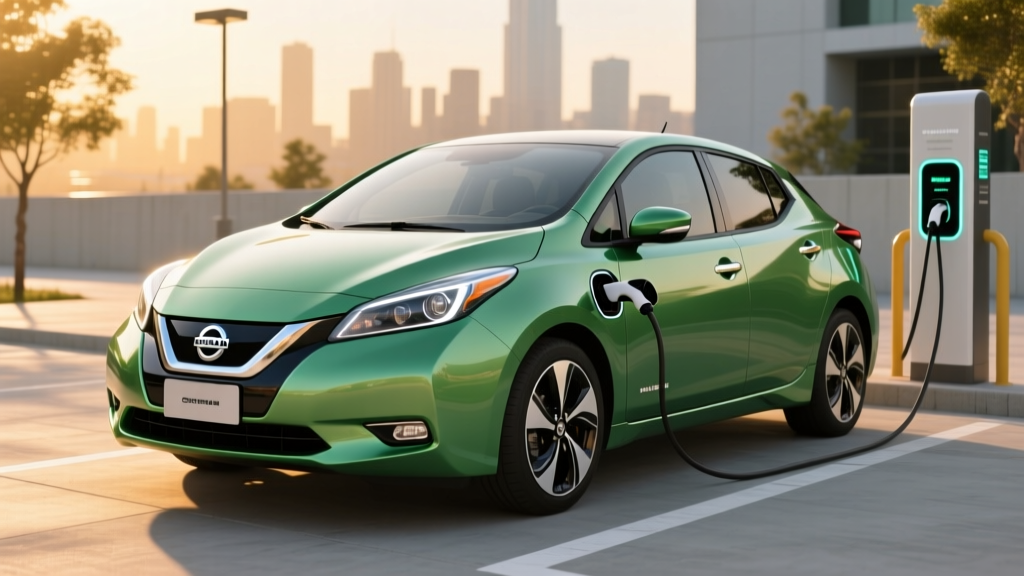
If you own a Nissan Leaf — or are considering a used one — the traction battery is the single most expensive component on the vehicle. Unlike a gas car where a transmission rebuild might hit $4,000, a Leaf battery replacement can exceed that figure substantially. But context matters: most Leaf batteries outlast the car's useful life, and Nissan's warranty coverage protects against premature failure. Below, we break down the exact costs, degradation realities, chemistry specifics, and care practices that determine whether you'll ever write that check.
How Much Does a Nissan Leaf Battery Replacement Actually Cost?
As of 2026, Nissan Leaf battery replacement pricing depends on which pack your model uses. The Leaf has been offered with two primary battery sizes in recent model years: a 40 kWh pack (base S trim) and a 62 kWh pack (SV Plus and SL Plus trims). Replacement costs reflect both the raw battery price and dealership labor.
| Battery Pack | Model Years / Trims | Battery Part Cost | Labor (Dealership) | Total Estimated Cost |
|---|---|---|---|---|
| 40 kWh (NMC) | 2018–2026 S trim | $5,500 – $6,500 | $1,000 – $1,500 | $6,500 – $8,000 |
| 62 kWh (NMC) | 2019–2026 SV Plus / SL Plus | $7,000 – $8,500 | $1,000 – $1,500 | $8,000 – $10,000 |
These figures represent out-of-warranty, OEM replacement through a Nissan dealer. Third-party refurbished packs can sometimes be sourced for $3,500–$5,500 (40 kWh) or $5,000–$7,000 (62 kWh), though availability is limited and warranty terms vary. Independent EV shops may charge less for labor, but Nissan strongly recommends dealer installation to maintain system calibration and safety compliance.
A critical point: most Leaf owners never pay for a battery replacement. The pack typically retains enough capacity to remain functional well beyond 150,000 miles, and many Leafs are retired or traded in before the battery requires service. The replacement cost is a worst-case scenario, not an expected ownership expense.
Nissan Leaf Battery Degradation: What the Data Shows
The Leaf uses passive air cooling for its battery pack rather than the active liquid thermal management found in vehicles like the Chevrolet Bolt or Tesla Model 3. This design choice makes the Leaf more susceptible to heat-related degradation, particularly in hot climates or with frequent DC fast charging.
Real-world degradation data from Leaf owner communities and fleet studies shows the following typical capacity loss patterns:
Typical Nissan Leaf Battery Degradation Curve (NMC Chemistry)
- Year 1–2 (0–30,000 mi): 3–5% capacity loss — initial settling phase common to all lithium-ion cells
- Year 3–5 (30,000–75,000 mi): Additional 5–8% loss — total State of Health (SoH) typically 87–92%
- Year 6–8 (75,000–120,000 mi): Additional 5–10% loss — SoH typically 80–88% for garaged vehicles; 72–82% for hot-climate, fast-charge-heavy usage
- Year 9–12 (120,000–180,000+ mi): Degradation rate slows; SoH typically 70–82% depending on climate and usage history
Sources: Nissan Leaf owner forums (mynissanleaf.com), Recurrent Auto battery data studies, fueleconomy.gov
The Leaf's dashboard displays battery health using a simple bar system — originally 12 bars (on 2011–2017 models) and a percentage-based State of Health readout on 2018+ models accessed through the Leaf Spy third-party app via an OBD-II dongle. A Leaf showing 11 of 12 bars or 85%+ SoH at 60,000 miles is tracking well within normal expectations.
Heat is the Leaf's primary degradation enemy. Owners in Arizona, Texas, and the Southeast US report measurably faster capacity loss than those in the Pacific Northwest or Northeast. A 2019 Leaf in Phoenix that DC fast-charges daily may lose 15–20% capacity by year five, while the same car in Seattle, Level-2-charged at home, might lose only 8–10%.
Nissan Leaf Battery Warranty: What's Covered and for How Long
Nissan provides two distinct warranty layers for the Leaf's high-voltage battery system. Understanding both is essential before you worry about out-of-pocket replacement costs.
| Warranty Type | Duration | Mileage Limit | Coverage Details |
|---|---|---|---|
| Lithium-Ion Battery Capacity Warranty | 8 years | 100,000 miles | Covers battery if capacity drops below 9 bars (out of 12) on 2011–2017 models, or below approximately 70% SoH on 2018+ models. Nissan will repair or replace to restore above the threshold. |
| EV System Warranty | 5 years | 60,000 miles | Covers defects in materials or workmanship for the battery pack, inverter, charger, and related high-voltage components. |
The capacity warranty is the one that matters most for replacement cost concerns. If your Leaf's battery falls below the 9-bar / 70% threshold within 8 years or 100,000 miles (whichever comes first), Nissan replaces or refurbishes the pack at no cost to you. This is consistent with industry norms — the IRS §30D tax credit requires manufacturers to offer at minimum an 8-year/100,000-mile battery warranty, and Nissan complies.
One nuance: Nissan's capacity warranty replaces the battery to restore it above the threshold — not necessarily to brand-new capacity. You may receive a refurbished pack with ~80% SoH rather than a fresh 100% pack. This is standard practice across the industry.
Battery Chemistry: What's Inside the Leaf and Why It Matters
All Nissan Leaf models use NMC (nickel manganese cobalt) lithium-ion cells. Nissan has not adopted LFP (lithium iron phosphate) chemistry for the Leaf as of the 2026 model year, though LFP is increasingly common in competitors like the Tesla Model 3 Standard Range and BYD vehicles sold internationally.
Understanding the NMC vs. LFP trade-off helps explain the Leaf's degradation behavior and positions it relative to newer EV platforms.
| Factor | NMC (Nissan Leaf) | LFP (e.g., Tesla Model 3 RWD) |
|---|---|---|
| Energy Density | Higher — enables 149–212 mi EPA range in a compact pack | Lower — requires larger/heavier pack for equivalent range |
| Cycle Life | ~1,000–1,500 full cycles before 80% SoH | ~2,500–4,000+ full cycles before 80% SoH |
| Cold-Weather Performance | Better low-temp energy delivery | Reduced range and slower charging below freezing |
| Heat Tolerance | More susceptible to heat-driven degradation | More thermally stable; degrades slower in hot climates |
| Cost per kWh | Higher (cobalt/nickel supply chain) | Lower (iron/phosphate — abundant materials) |
| Recommended Charge Habit | 20–80% daily; 100% only for trips | Can be charged to 100% regularly without harm |
For the Leaf, NMC was the logical choice: its compact platform benefits from NMC's higher energy density, and the Leaf's relatively modest pack sizes (40 and 62 kWh) don't require the ultra-long cycle life that LFP provides. The trade-off is that Leaf owners need to be more disciplined about charging habits and heat exposure to maximize longevity.
Factors That Accelerate Leaf Battery Degradation
Not all Leafs age equally. The following factors have the most significant measurable impact on how quickly your Leaf's battery loses capacity:
- Frequent DC fast charging: The Leaf's CHAdeMO DC fast-charging capability peaks at ~50 kW (40 kWh) or ~100 kW (62 kWh). While useful for road trips, daily DC fast charging — especially in warm weather — accelerates degradation by 2–5% over a battery's life compared to exclusive Level 2 home charging. The passive air-cooling system cannot shed heat as effectively during sustained high-power charging.
- Prolonged high State of Charge: Storing a Leaf at 100% SoC for days or weeks stresses NMC cells. If you don't need the full range daily, charge to 80% and only top up to 100% immediately before a long drive. The Leaf's built-in charge timer can automate this.
- Extreme heat exposure: Parking outdoors in 95°F+ temperatures, especially at high SoC, drives chemical degradation. Garage parking in hot climates can add 3–5% SoH retention over five years.
- Deep discharges: Regularly driving the Leaf below 10% SoC stresses the cells. The battery management system (BMS) maintains a hidden buffer, but routinely arriving at 0% displayed charge is not ideal.
- High-mileage fast-charge cycles: Fleet Leafs used for delivery routes with multiple DC fast charges per day show measurably higher degradation — sometimes 20–25% loss by year four.
The inverse is also true: a Leaf that's Level 2-charged at home, kept between 20–80% SoC, garaged in a temperate climate, and driven 10,000–12,000 miles annually can retain 88–92% SoH at the 8-year mark.
How to Check Your Leaf's Battery Health (State of Health)
Monitoring your Leaf's battery SoH is straightforward, though the method depends on your model year:
2018 and newer Leafs (ZE1 generation): The NissanConnect app and in-car display provide a basic battery health indicator. For a precise SoH percentage, most owners use the Leaf Spy Pro app paired with an OBD-II Bluetooth dongle (approximately $30–$50 for the dongle, $20 for the app). Leaf Spy reads the BMS directly and reports SoH to one decimal place, along with individual cell voltages, battery temperature, and charge/discharge history.
2011–2017 Leafs (ZE0 generation): The dashboard displays 12 capacity bars. Each lost bar represents roughly 7–8% capacity loss. A car showing 10 bars has approximately 85–87% SoH. Leaf Spy also works on these models for precise readings.
When to be concerned: If your Leaf drops below 80% SoH before the 8-year/100,000-mile warranty expires, you likely qualify for a warranty replacement. If you're outside the warranty window and SoH falls below 70%, the vehicle's practical range drops significantly — a 40 kWh Leaf at 70% SoH delivers only ~105 miles of real-world range, down from the original ~150 miles.
When Is a Battery Replacement Actually Needed?
A battery replacement is typically warranted in three scenarios:
- Warranty-covered capacity loss: Battery drops below 9 bars / ~70% SoH within 8 years or 100,000 miles. Nissan handles the replacement at no charge.
- Physical damage: Collision damage, flood submersion, or manufacturing defect causing cell failure outside normal degradation. This may be covered by insurance or the 5-year/60,000-mile EV system warranty depending on the cause.
- Out-of-warranty end of life: Extremely rare before 150,000+ miles. At this point, the cost-benefit analysis usually favors trading in the vehicle rather than paying $6,500–$10,000 for a new battery in a car with diminished resale value.
According to data from Recurrent Auto, the average EV battery retains roughly 90% of its original capacity at 100,000 miles across all models. The Leaf's air-cooled design puts it slightly below this average in hot climates, but the vast majority of Leafs never reach the point where a paid replacement is economically justified.
Emerging Battery Technology: What's on the Horizon
Nissan has been vocal about its next-generation battery plans, though none are currently available in production vehicles:
Solid-state batteries: Nissan has announced plans to pilot solid-state battery production by the late 2020s, with a target of halving charging times and doubling energy density compared to current NMC cells. These remain in the research and prototype phase — no Nissan vehicle on sale in 2026 uses solid-state technology. Industry-wide commercial availability is projected for 2028–2030 at the earliest, likely debuting in premium models before reaching the Leaf's price segment.
Silicon-dominant anodes: Companies like Sila Nanotechnologies and Group14 are developing silicon-anode materials that increase energy density by 20–40% over current graphite anodes. These are beginning to appear in limited production applications but have not been confirmed for any Nissan model.
LFP adoption: As LFP costs continue to fall and energy density improves, it's plausible that a future Leaf generation could adopt LFP for base trims — trading some range for dramatically longer cycle life and lower replacement costs. This would be a significant shift for Leaf owners concerned about long-term degradation.
All of these technologies are forward-looking. For current Leaf owners and buyers, the existing NMC pack with proper care remains a reliable, well-understood system.
Frequently Asked Questions
How long do Nissan Leaf batteries last in real-world use?
Most Leaf batteries remain functional for 150,000–200,000+ miles, though with reduced range. At 100,000 miles, a well-maintained Leaf typically retains 82–90% of its original capacity. The battery doesn't "die" at a specific mileage — it gradually loses range over time. Many first-generation Leafs (2011–2017) are still on their original batteries at 120,000+ miles, albeit with 70–80% SoH.
Is it worth replacing the battery in an older Nissan Leaf?
It depends on the vehicle's condition and your budget. A 2015 Leaf with a failing battery might be worth only $4,000–$6,000 on the used market, making a $6,500+ replacement uneconomical. However, a 2020 Leaf Plus with 80,000 miles and otherwise excellent condition could justify a battery replacement if it falls outside warranty. In most cases, trading in is the more practical path.
Does the Nissan Leaf battery warranty transfer to a second owner?
Yes. Nissan's 8-year/100,000-mile battery capacity warranty and 5-year/60,000-mile EV system warranty are tied to the vehicle, not the original owner. If you buy a 2021 Leaf with 45,000 miles, you retain battery capacity warranty coverage until 2029 or 100,000 miles — whichever comes first.
Can I upgrade my 40 kWh Leaf to a 62 kWh battery?
Nissan does not offer an official battery upgrade path. While some independent shops have performed swaps using salvaged 62 kWh packs, this is not supported by Nissan, may void remaining warranty coverage, and can cause software/calibration issues. It's generally more practical to trade in for a Plus model if you need more range.
How does the Leaf's battery cost compare to other EVs?
The Leaf's battery replacement cost ($6,500–$10,000) is moderate for the industry. A Chevrolet Bolt EV battery replacement runs $14,000–$16,000 out of warranty. A Tesla Model 3 battery replacement is estimated at $12,000–$16,000. The Leaf's smaller pack sizes keep its absolute replacement cost lower, though its air-cooled design means it may need that replacement sooner in adverse conditions.
Does fast charging ruin the Leaf's battery?
"Ruin" is too strong, but frequent DC fast charging does measurably accelerate degradation. Occasional fast charging on road trips has minimal impact. Daily fast charging in hot weather — the worst-case scenario — can add 5–10% extra capacity loss over the battery's life compared to exclusive Level 2 charging. If DC fast charging is your only option, try to limit sessions to 80% SoC and avoid charging during peak afternoon heat.
The Nissan Leaf remains one of the most affordable entry points into EV ownership, and its battery — while not immune to degradation — is a known quantity with well-documented behavior. The Nissan Leaf battery replacement cost is a real number to be aware of, but for the vast majority of owners, it's a number they'll never actually pay. Proper charging habits, climate awareness, and regular SoH monitoring via Leaf Spy are the three practices that keep Leaf batteries healthy for the long haul.