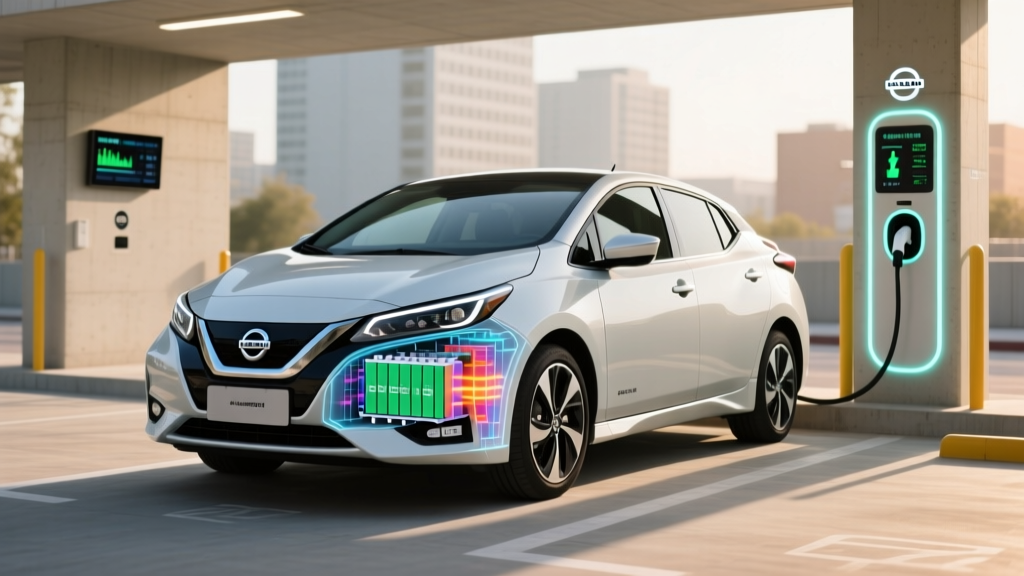
If you own or are considering a used Nissan Leaf, one question almost certainly looms: how much to replace a Nissan Leaf battery when the time comes? The Leaf has been on sale since 2011 and remains one of the most recognizable EVs in the U.S. market, but its air-cooled battery design makes thermal management—and long-term degradation—a legitimate ownership concern. This guide breaks down the real replacement costs, the data behind Leaf battery degradation, what the warranty actually covers, and how to maximize the pack's lifespan.
Nissan Leaf Battery Replacement Cost Breakdown
Replacement pricing depends on the battery pack size, whether you go through a Nissan dealer or an independent EV shop, and whether the pack is new, refurbished, or salvaged. Here's what the market looks like in 2026:
| Pack Size | New (Dealer) | Refurbished / Remanufactured | Salvaged (Used) | Labor (est.) |
|---|---|---|---|---|
| 24 kWh (2011–2017) | $6,500 – $8,500 | $4,000 – $5,500 | $2,500 – $3,500 | $1,000 – $1,800 |
| 40 kWh (2018–2025) | $7,500 – $9,500 | $5,000 – $6,500 | $3,000 – $4,500 | $1,200 – $2,000 |
| 62 kWh (Leaf Plus, 2019–2025) | $12,000 – $16,000 | $8,000 – $11,000 | $5,000 – $7,500 | $1,500 – $2,500 |
Why the wide range? Nissan dealer pricing for OEM-new packs carries a premium, while independent EV repair shops often source refurbished modules or salvaged packs from low-mileage wrecked Leafs. Labor varies by region—expect higher rates in metro areas. The 62 kWh Leaf Plus pack commands a significant premium because of its higher cell count and more complex internal architecture.
Critical context: These costs only apply when the battery falls below warranty coverage. If your Leaf is still within the 8-year/100,000-mile battery warranty period and the pack has degraded below 70% of original capacity (as measured by Nissan's diagnostic tool), the replacement is covered at no charge to you.
How Long Do Nissan Leaf Batteries Last?
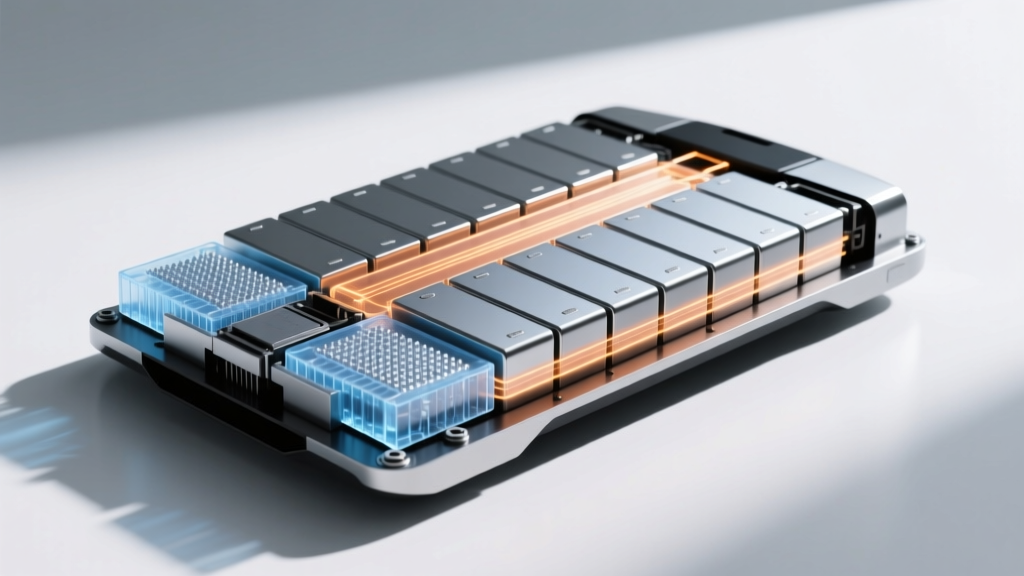
The Nissan Leaf uses a lithium-ion battery pack with NMC (nickel manganese cobalt) cathode chemistry. Unlike most modern EVs from Tesla, Hyundai, and others, the Leaf has historically relied on passive air cooling rather than active liquid thermal management. This design choice has real consequences for degradation rates, particularly in hot climates or with frequent DC fast charging.
Real-World Degradation Data
Based on aggregated owner reports and fleet data, here's what Leaf battery degradation looks like in practice:
| Milestone | 24 kWh Pack (Gen 1) | 40 kWh Pack (Gen 2) | 62 kWh Leaf Plus |
|---|---|---|---|
| After 50,000 miles | ~8–12% loss | ~5–8% loss | ~4–7% loss |
| After 100,000 miles | ~15–25% loss | ~10–15% loss | ~8–12% loss |
| After 150,000 miles | ~25–35% loss | ~15–22% loss | ~12–18% loss |
The 24 kWh first-generation Leafs (2011–2017) showed the most aggressive degradation, with some Arizona and Texas owners reporting 30%+ capacity loss before 100,000 miles due to extreme heat exposure combined with frequent CHAdeMO DC fast charging. The 40 kWh and 62 kWh packs use improved cell chemistry and slightly better thermal design, though they still lack active liquid cooling.
The takeaway: Most 40 kWh and 62 kWh Leaf packs will retain 78–85% of original capacity at 100,000 miles under moderate use. Reaching the 70% warranty threshold within the 8-year window is uncommon but not unheard of in hot-climate, high-fast-charge-use scenarios.
Nissan Leaf Battery Warranty Explained
Nissan provides a dedicated lithium-ion battery capacity warranty separate from the general powertrain warranty. Here are the terms for U.S.-spec Leafs:
| Coverage | Duration | Mileage Limit | Threshold |
|---|---|---|---|
| Battery Capacity Warranty | 8 years / 100,000 miles (whichever comes first) | 100,000 miles | Below 70% of original capacity (9 bars or fewer on the capacity gauge for Gen 1; diagnostic tool reading for Gen 2+) |
| Battery Defect Warranty | 5 years / 60,000 miles | 60,000 miles | Manufacturing defect, not gradual degradation |
| EV Powertrain Warranty | 5 years / 60,000 miles | 60,000 miles | Motor, inverter, reducer, and related EV components |
How to make a warranty claim: Visit a Nissan dealer for a battery capacity diagnostic. For 2011–2017 Leafs, the dashboard capacity bar gauge (12 bars when new) provides a quick visual—if you've dropped to 9 bars or fewer within the warranty period, you likely qualify. For 2018+ models, the dealer runs a proprietary diagnostic that outputs a precise State of Health (SoH) percentage. If SoH is below 70% and you're within the 8-year/100,000-mile window, Nissan replaces or refurbishes the pack at no cost.
Important caveat: The capacity warranty covers gradual degradation only. Damage from accidents, flooding, improper modifications, or unauthorized repairs voids coverage. Source: Nissan USA Warranty Information.
LFP vs. NMC Battery Chemistry: What Leaf Owners Should Know
The Nissan Leaf uses NMC (nickel manganese cobalt oxide) lithium-ion cells. However, the broader EV market is rapidly adopting LFP (lithium iron phosphate) chemistry in many models. Understanding the difference matters if you're comparing the Leaf to newer EVs or considering a future purchase.
| Attribute | LFP (Lithium Iron Phosphate) | NMC (Nickel Manganese Cobalt) |
|---|---|---|
| Energy Density | Lower (~160–180 Wh/kg cell-level) | Higher (~220–280 Wh/kg cell-level) |
| Cycle Life | 3,000–5,000+ cycles to 80% SoH | 1,000–2,000 cycles to 80% SoH |
| Cold-Weather Performance | Weaker—more range loss below 32°F | Better low-temperature discharge |
| Thermal Stability | Excellent—higher runaway threshold | Good—requires more active management |
| Cost | Lower—no cobalt or nickel | Higher—cobalt/nickel price exposure |
| Recommended Charge Habit | Can charge to 100% regularly | Best kept 20–80% for daily use |
Which is better? It depends on the use case. NMC wins on energy density—critical for maximizing range in a compact pack like the Leaf's. LFP wins on longevity and cost, which is why Tesla, BYD, and Ford use it in standard-range models. The Leaf's air-cooled NMC pack is a product of its era: reasonable energy density but more vulnerable to heat-driven degradation than a liquid-cooled LFP pack would be.
Factors That Accelerate Leaf Battery Degradation
Not all Leafs degrade at the same rate. The following factors have the most significant impact on how quickly your pack loses capacity—and how soon you might face that replacement bill:
- Extreme heat exposure: Ambient temperatures above 90°F, combined with the Leaf's passive air cooling, cause cell temperatures to climb during both driving and charging. Phoenix, Las Vegas, and Houston Leafs historically show the steepest degradation curves.
- Consistently charging to 100%: NMC chemistry experiences more stress at high states of charge. Regularly charging to 100% and letting the car sit at full charge accelerates calendar aging. Aim for 80% daily; reserve 100% for road trips.
- Deep discharges: Routinely driving the battery below 10% SoC stresses cells. Try to keep the pack above 15–20% whenever practical.
- High-mileage driving patterns: More charge cycles = more cycle-based degradation. A Leaf driven 25,000 miles/year will age faster than one driven 8,000 miles/year, all else equal.
- Storage conditions: Parking a Leaf at 100% SoC in a hot garage for weeks causes calendar degradation. If storing, leave the pack at ~50% SoC in a shaded or climate-controlled space.
How to Check Your Nissan Leaf's Battery Health
Monitoring State of Health (SoH) is essential for anticipating whether you'll need a replacement or qualify for a warranty claim. Here are the methods available to Leaf owners:
Dashboard Capacity Bars (2011–2017 Models)
First-generation Leafs display a capacity bar gauge on the far right of the instrument cluster. A new battery shows 12 bars. Each lost bar represents roughly 6–8% capacity loss. At 9 bars, you've likely crossed below the 70% warranty threshold. This is a rough indicator—Nissan's dealer diagnostic provides a more precise reading.
Leaf Spy Pro (All Model Years)
The third-party app Leaf Spy Pro (paired with an OBD-II Bluetooth dongle) reads the battery management system directly. It provides:
- State of Health (SoH) percentage — the most precise degradation reading available outside a dealer
- Cell voltage differentials — identifying weak or imbalanced modules
- Battery temperature — real-time pack temperature during driving and charging
- Charge cycle count and total energy throughput
This tool is widely used in the Leaf community and is invaluable when evaluating a used Leaf purchase.
Nissan Dealer Diagnostic
Any Nissan dealer can run a battery health check that outputs a formal SoH percentage. This is the reading Nissan uses for warranty claim decisions. Request this annually or before the warranty period expires to document your pack's condition.
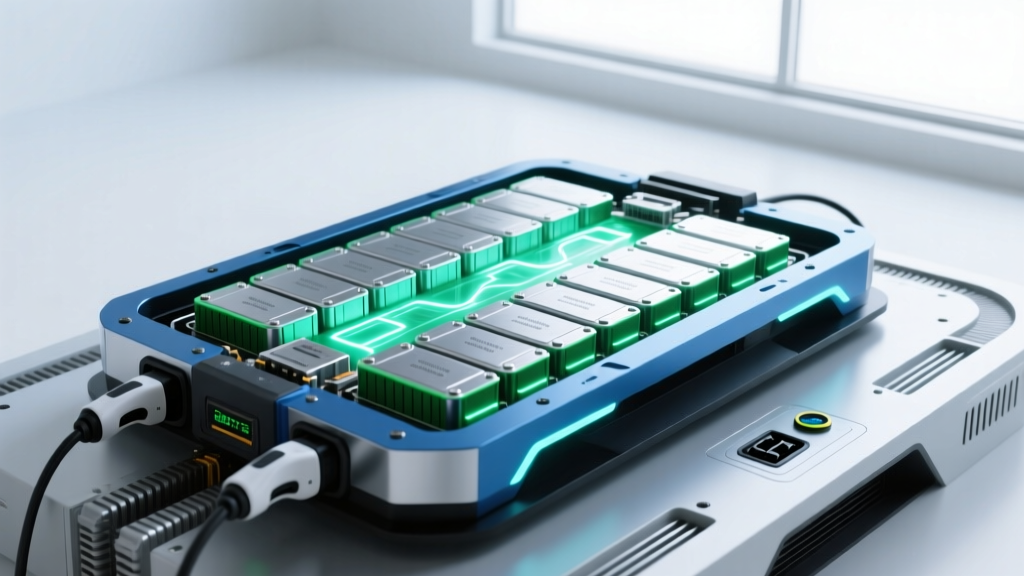
- Use Level 2 home charging (240V, 6.6 kW) as your primary charging method
- Limit DC fast charging to road trips or when necessary—avoid daily use in hot weather
- Set charge limit to 80% for daily driving (configurable in the vehicle settings on Gen 2+ models)
- Park in shade or a garage during summer months
- Avoid leaving the car at 100% SoC for extended periods
- Check SoH via Leaf Spy or dealer diagnostic at least once per year
- In cold weather, precondition the battery while plugged in to reduce stress
When Is a Battery Replacement Actually Needed?
Here's the reassuring reality: most EV batteries, including the Leaf's, outlast the economic life of the vehicle. According to data from fueleconomy.gov, modern lithium-ion packs are engineered for 150,000–200,000+ miles of service before reaching 70–80% of original capacity. The Leaf's air-cooled design shortens this somewhat compared to liquid-cooled competitors, but catastrophic failure is rare.
You typically need a battery replacement when:
- Capacity drops below a practical threshold for your needs. If your 40 kWh Leaf has degraded to 70% (effectively ~28 kWh usable), your EPA-rated 149-mile range shrinks to roughly 100–110 miles real-world. If that no longer covers your daily driving, replacement may be justified.
- The warranty has expired and degradation is severe. Post-warranty Leafs with 200,000+ miles and 30%+ degradation face the economic question: does a $7,000–$16,000 battery investment make sense on a car worth $8,000–$15,000?
- A specific module or cell fails. Some independent shops can replace individual modules for $500–$1,500 rather than swapping the entire pack—a cost-effective option when the issue is localized.
Future Battery Tech: What's on the Horizon
If you're weighing a Leaf battery replacement against upgrading to a newer EV, it's worth noting the battery technology pipeline:
- Solid-state batteries: Companies including Toyota, Nissan, and Samsung SDI have announced solid-state prototypes promising higher energy density, faster charging, and improved safety. Nissan has publicly targeted solid-state production by the late 2020s. However, these remain announced/preliminary—no mass-market vehicle currently uses solid-state cells, and commercial availability at scale is realistically 2028–2032.
- Silicon-dominant anodes: Startups like Sila Nanotechnologies and Group14 are producing silicon-anode materials that boost energy density by 20–40%. These are entering production in limited applications (2025–2027) but won't be retrofit-compatible with existing Leaf packs.
- Sodium-ion batteries: Lower-cost and cobalt-free, sodium-ion cells are entering the market in Chinese-market EVs. Energy density is lower than LFP, making them better suited for city cars and stationary storage.
Bottom line: These technologies are forward-looking and will not provide a replacement option for current Leaf owners in the near term. If your pack needs replacing now, your options are OEM, refurbished, or salvaged NMC packs.
Frequently Asked Questions
How long do EV batteries last in years and miles?
Most modern EV batteries are designed to last 15–20 years and 150,000–200,000+ miles before degrading to 70–80% of original capacity. The Nissan Leaf's air-cooled design may reduce this to 120,000–180,000 miles in hot climates with frequent fast charging. Calendar aging also matters—even a low-mileage Leaf will lose 1–2% capacity per year from chemical aging alone.
How much does an EV battery cost to replace?
Across the EV market, battery replacement costs range from roughly $5,000 to $20,000+ depending on pack size and vehicle. For the Nissan Leaf specifically, expect $6,500–$9,500 for the 40 kWh pack and $12,000–$16,000 for the 62 kWh Leaf Plus pack at a dealer. Refurbished and salvaged options can reduce costs by 30–50%.
What does the Nissan Leaf battery warranty cover?
Nissan covers battery capacity loss below 70% of original for 8 years or 100,000 miles (whichever comes first). A separate defect warranty covers manufacturing faults for 5 years/60,000 miles. The warranty does not cover damage from accidents, modifications, or environmental events like flooding. Always verify current terms at Nissan's official warranty page.
How do I check and maximize my Leaf's battery health?
Use the Leaf Spy Pro app with an OBD-II dongle for real-time SoH monitoring, or request an annual diagnostic at a Nissan dealer. To maximize lifespan: prioritize Level 2 home charging over DC fast charging, limit daily charge to 80%, avoid extreme heat exposure, and don't let the pack sit at 100% or below 10% for extended periods.
LFP vs. NMC — which is better for my next EV?
NMC offers higher energy density (more range per kg), making it ideal for long-range vehicles. LFP offers superior cycle life (3,000–5,000+ cycles), lower cost, better thermal stability, and can be charged to 100% regularly without accelerated degradation. If range is your top priority, NMC wins. If longevity, cost, and daily charging convenience matter more, LFP is the better choice. The Leaf's NMC pack prioritized compact-pack range; newer EVs increasingly use LFP for standard-range trims.
Can I upgrade my older Leaf to a larger battery?
Some owners of 24 kWh Leafs (2011–2017) have successfully upgraded to 40 kWh or even 62 kWh packs through specialized independent shops. This is not supported by Nissan and requires compatible BMS (battery management system) programming. Costs typically run $8,000–$14,000 all-in. While technically feasible, the investment may exceed the vehicle's market value—carefully weigh upgrade cost against the car's remaining useful life.