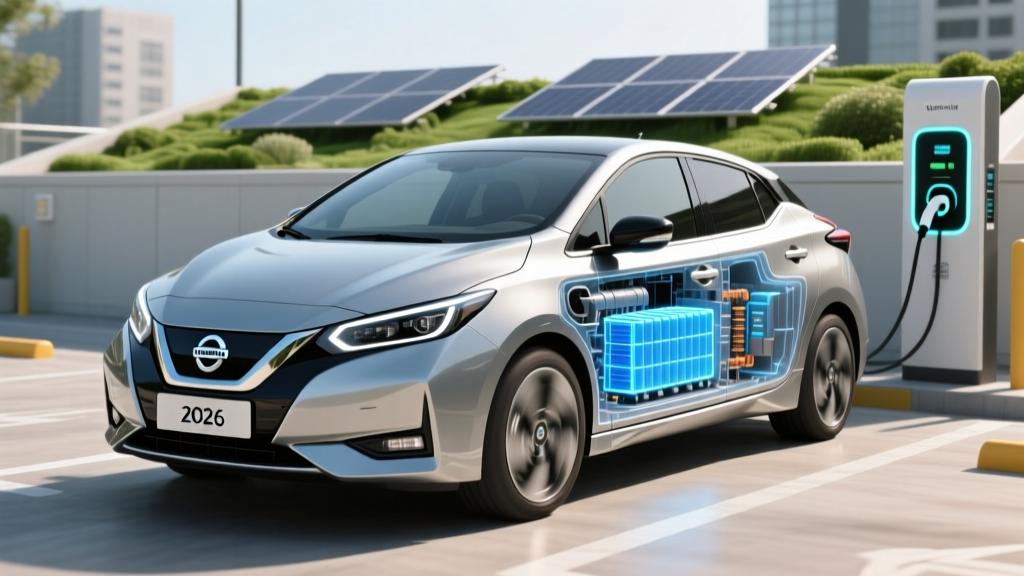
If you own a Nissan Leaf or are considering a used one, the single most important question is likely: how long will a Nissan Leaf battery last? Unlike a gas car where the engine is the long-term wildcard, the high-voltage traction battery in an EV represents both its greatest asset and its most expensive potential repair. The good news? Real-world data shows most Leaf batteries outlast the cars they're installed in — but with important caveats depending on model year, battery size, and how the car was charged and stored.
This guide breaks down Nissan Leaf battery longevity using actual degradation data, warranty terms, replacement costs, and the chemistry differences between Leaf generations. We'll also cover how to check your battery's State of Health (SoH) and what habits maximize its lifespan.
Nissan Leaf Battery Generations and Chemistry
The Nissan Leaf has used several battery pack sizes since its 2011 launch, and understanding which generation you're dealing with is critical to predicting longevity. The Leaf uses lithium-ion cells with NMC (nickel manganese cobalt) chemistry across all generations — not the LFP (lithium iron phosphate) chemistry found in some newer EVs like the base Tesla Model 3 RWD or certain BYD models.
| Attribute | NMC (Nissan Leaf) | LFP (e.g., Tesla Model 3 RWD) |
|---|---|---|
| Energy Density | Higher — more range per kg | Lower — heavier pack for same kWh |
| Cycle Life | ~1,000–2,000 full cycles | ~3,000–5,000+ full cycles |
| Cold Performance | Better low-temp discharge | More range loss in freezing weather |
| Cost per kWh | Higher (cobalt/nickel) | Lower (iron/phosphate) |
| Thermal Stability | Good — but passive cooling limits it | Excellent — inherently safer chemistry |
| Optimal Daily SoC | ~80% for longevity | 100% OK (Nissan recommends periodic full charges) |
The critical design factor unique to the Leaf is its passive air-cooling system. Most modern EVs (Tesla, Hyundai Ioniq 5, Ford Mustang Mach-E) use active liquid thermal management to keep the battery within an ideal temperature window. The Leaf relies on ambient air flow, which makes it more susceptible to heat-driven degradation — especially in hot climates or during repeated DC fast-charging sessions. This is the single biggest factor separating Leaf battery longevity from competitors.
Leaf Battery Pack Timeline
- 2011–2015 (Gen 1): 24 kWh pack — EPA range 73–84 miles
- 2016–2017 (Gen 1.5): 30 kWh pack — EPA range 107 miles
- 2018–2025 (Gen 2): 40 kWh pack (S/SV) — EPA range 149 miles; 62 kWh pack (SL Plus/e+) — EPA range 212–226 miles
Note: As of 2026, Nissan has discontinued the Leaf for the U.S. market, replaced by upcoming electric crossover offerings. This makes understanding used-Leaf battery health more relevant than ever for buyers in the secondary market.
Real-World Degradation: What the Data Shows
Battery degradation is measured as a percentage of original capacity lost over time. A brand-new 62 kWh Leaf battery that has degraded 15% now holds roughly 52.7 kWh of usable energy — meaning proportionally less range.
Typical Nissan Leaf Degradation Curve (aggregated owner data):
- Year 1–2 (0–30,000 mi): 5–8% capacity loss — the steepest initial drop as cells stabilize
- Year 3–5 (30,000–75,000 mi): Gradual loss of ~1–2% per year
- Year 6–8 (75,000–120,000 mi): Cumulative loss typically 15–22% for passively cooled packs
- Year 10+ (120,000+ mi): 20–30% loss; some packs in hot climates report 35%+ loss on 24 kWh models
Data from owner-tracking platform PushMyLeaf and Nissan Leaf owner forums consistently show that the 24 kWh Gen 1 packs experienced the worst degradation, with many 2013–2015 Leafs reporting 30–40% capacity loss by year 8 in Southern U.S. climates. The 30 kWh packs (2016–2017) showed a troubling pattern of faster-than-expected degradation in some units, prompting Nissan to extend warranty coverage in certain cases.
The 40 kWh and 62 kWh Gen 2 packs (2018+) have demonstrated meaningfully better longevity, with most owner reports showing 8–14% loss over 4–6 years. Improved cell chemistry and slightly better thermal design contributed, though the passive-cooling limitation remains.
For comparison, liquid-cooled EVs like the Tesla Model 3 and Chevrolet Bolt typically show 5–10% degradation over 100,000 miles, per data aggregated by Recurrent Auto. The Leaf's air-cooled design puts it at a measurable disadvantage in extreme climates.
Nissan Leaf Battery Warranty Explained
Nissan provides a lithium-ion battery capacity warranty that covers excessive degradation — not just outright failure. Here's what the terms look like:
| Coverage Type | Duration | Details |
|---|---|---|
| Battery Capacity Warranty | 8 years / 100,000 miles | Covers capacity loss below 9 bars out of 12 on the capacity gauge (~70–75% original capacity, varies by model year) |
| Battery Defect Warranty | 8 years / 100,000 miles | Covers manufacturing defects and outright failure |
| EV System Warranty | 5 years / 60,000 miles | Covers inverter, converter, and related EV components |
The "bars" system is Nissan's unique approach to displaying battery health. The dashboard capacity gauge shows 12 bars when new. Dropping to 8 bars or fewer (indicating roughly 66–70% remaining capacity depending on model year) triggers warranty coverage. Nissan will then repair or replace the battery pack — typically with a refurbished unit of equivalent capacity, not necessarily a brand-new pack.
For used-Leaf buyers: check the remaining warranty by running the VIN through Nissan's warranty lookup. The 8-year clock starts from the original in-service date, so a 2019 Leaf still has warranty coverage through approximately 2027.
How Much Does a Nissan Leaf Battery Replacement Cost?
If your Leaf battery degrades beyond the warranty threshold — or if you're out of warranty and want to restore range — replacement is possible but expensive. Costs vary significantly by pack size and whether you source new, refurbished, or used cells.
| Pack Size | New OEM (Dealer) | Refurbished / Aftermarket | Used Salvage |
|---|---|---|---|
| 24 kWh (2011–2015) | $6,500–$8,500 | $4,000–$5,500 | $2,500–$3,500 |
| 30 kWh (2016–2017) | $7,500–$9,500 | $4,500–$6,500 | $3,000–$4,000 |
| 40 kWh (2018–2025) | $8,500–$11,000 | $5,500–$7,500 | $3,500–$5,000 |
| 62 kWh (2019–2025) | $10,000–$14,000 | $7,000–$9,500 | $4,500–$6,500 |
Labor adds $500–$1,500 depending on shop rates. Independent EV specialists often offer better pricing than dealerships, and several aftermarket companies now offer Leaf battery refurbishment services where they replace degraded cells within your existing pack housing.
When is replacement typically needed? Most Leaf batteries don't need replacement during their warranty period. For 24 kWh packs in hot climates, owners report considering replacement or upgrade at 8–12 years / 100,000–150,000 miles when range drops below 50–60 miles. For 40/62 kWh packs, many are still performing adequately at 6+ years, with replacement rarely needed before 150,000+ miles unless there's a defect.
Important context: on a used Leaf worth $8,000–$14,000, a $10,000+ battery replacement for a 62 kWh pack may exceed the car's value. This is the economic reality that makes pre-purchase battery health checks essential.
Factors That Accelerate (or Slow) Leaf Battery Degradation
Because the Leaf lacks active liquid cooling, owner habits have an outsized impact on battery longevity compared to liquid-cooled EVs. Here are the primary factors, ranked by impact:
High-Impact Factors (Biggest Degradation Drivers)
- Repeated DC fast charging: CHAdeMO fast charging generates significant heat. Doing it daily or multiple times per week — especially in summer — accelerates cell degradation. Limit DCFC to road trips when possible.
- Hot climate exposure: Sustained ambient temperatures above 90°F (32°C), combined with parking in direct sunlight, bake the passive-cooled pack. Arizona and Texas Leafs show measurably higher degradation than Pacific Northwest examples.
- Sitting at 100% SoC: Regularly charging to full and letting the car sit for days or weeks at maximum state of charge stresses NMC cells. If you don't need full range daily, charge to 80%.
Moderate-Impact Factors
- Frequent deep discharges (below 10%): Regularly running the battery nearly empty adds stress. Try to keep SoC between 20–80% for daily driving.
- Rapid acceleration habits: High-current draws generate heat. Aggressive driving in hot weather compounds thermal stress.
- Charging immediately after hard driving: Plugging into a Level 2 or DC charger while the pack is still hot from highway driving or hill climbs prevents cool-down. If possible, let the car rest 15–30 minutes before charging in hot weather.
Protective Habits That Extend Life
- Level 2 home charging overnight: Slow, steady Level 2 charging (6.6 kW on the Leaf's onboard charger) generates minimal heat and is the ideal daily charging method.
- Parking in shade or a garage: Keeping the car cool when parked is the single most effective passive longevity strategy for an air-cooled pack.
- Using the charge timer: Set your Leaf to finish charging to 80% just before you leave in the morning, rather than sitting at full charge overnight.
- Preconditioning while plugged in: Use the Leaf's climate pre-conditioning feature while connected to power. This warms or cools the cabin using grid power rather than battery energy, reducing the pack's load.
How to Check Your Nissan Leaf's Battery Health (SoH)
Monitoring your Leaf's State of Health is straightforward, and there are several methods ranging from the built-in dashboard display to detailed OBD-II diagnostics:
Method 1: Dashboard Capacity Bars
The simplest check is the 12-bar capacity gauge on the right side of the instrument cluster. A new Leaf displays 12 bars. Each lost bar represents roughly 6–8% capacity loss. If you see 10 bars, the battery has degraded approximately 15–18%. At 9 bars, you're approaching warranty-claim territory. Note: this gauge is not perfectly precise — it's a smoothed estimate that can lag behind actual degradation.
Method 2: Leaf Spy Pro (OBD-II App)
For precise data, Leaf Spy Pro is the gold standard. This third-party app ($20 on iOS/Android) connects to the Leaf's OBD-II port via a Bluetooth adapter (like the OBDLink SX, ~$50) and reads the battery management system directly. It reports:
- State of Health (SoH): Exact percentage of original capacity remaining (e.g., 87.3%)
- Hx value: A Nissan internal health metric (higher is better; new pack ~100+)
- Individual cell voltages: Identifies weak or imbalanced cells
- Battery temperature: Real-time pack temp in °F/°C
- Ah (amp-hours) remaining: Actual measured capacity vs. original spec
For used-Leaf buyers, running Leaf Spy before purchase is non-negotiable. A seller claiming "the battery is fine" should have no objection to a 5-minute OBD-II scan. Walk away from any deal where the seller refuses.
Method 3: Dealer Diagnostic Report
A Nissan dealer can run a battery health diagnostic and print a formal capacity report. This is useful for warranty claims but costs $100–$150 if you're out of warranty. Leaf Spy gives you the same data for a one-time $70 investment.
How Long Do EV Batteries Last in General?
While this article focuses on the Leaf, it's worth understanding the broader EV battery landscape. Modern liquid-cooled EV batteries (2020+) are lasting significantly longer than early Leaf packs:
- Industry average (2020+ EVs): 10–15% degradation over 150,000 miles / 10 years, per Recurrent Auto's fleet data
- Tesla Model 3/Y: Typically 5–10% loss over 100,000 miles (liquid-cooled NMC/NCA)
- Chevrolet Bolt EV/EUV: 6–10% loss over 100,000 miles (liquid-cooled NMC)
- LFP-equipped EVs: Early data suggests 5% or less over 100,000 miles, owing to LFP's superior cycle life
The Leaf's air-cooled design places it at the higher end of the degradation spectrum, particularly in hot climates. This is a known trade-off of the platform — lower manufacturing cost and simpler design, at the expense of long-term capacity retention in challenging conditions.
Emerging Battery Tech: What's on the Horizon
For current Leaf owners considering their next EV, the battery technology landscape is shifting rapidly. Here's what's coming — with realistic timelines:
- Improved NMC formulations (available now): Current-generation NMC 811 and NMC 9½½ cells offer higher energy density and improved cycle life vs. the NMC 111/532 cells in older Leafs. Any 2024+ EV you buy will have meaningfully better cell chemistry.
- LFP expansion (available now): LFP packs from CATL and BYD are proliferating in affordable EVs. They sacrifice some energy density for dramatically longer cycle life and lower cost — ideal for daily commuters who don't need maximum range.
- Silicon-dominant anodes (2027–2029 estimated): Companies like Sila Nanotechnologies and Group14 are working to replace graphite anodes with silicon, potentially boosting energy density 20–40%. Early commercial applications are appearing in premium vehicles, with broader availability expected late this decade.
- Solid-state batteries (2028–2032 estimated): Nissan itself has announced a solid-state battery pilot program targeting production by 2028–2029. Solid-state cells promise faster charging, higher energy density, and improved safety. However, mass-market availability at competitive pricing remains several years away. Treat any "solid-state is here" claims with skepticism — these are forward-looking, not currently available in production vehicles.
Frequently Asked Questions
How long will a Nissan Leaf battery last before needing replacement?
Most Nissan Leaf batteries last 10–15 years and 100,000–150,000 miles before degradation makes the car impractical for daily use. The 24 kWh Gen 1 packs in hot climates are the exception, with some needing attention at 8–10 years. The 40 kWh and 62 kWh Gen 2 packs are more durable and many are still performing well at 6+ years old. Complete failure requiring immediate replacement is rare — the typical scenario is gradual range loss that eventually makes the car better suited for shorter commutes.
How much does it cost to replace a Nissan Leaf battery?
A new OEM battery from a Nissan dealer costs $6,500–$14,000 depending on pack size (24 kWh to 62 kWh), plus $500–$1,500 in labor. Refurbished or aftermarket packs run $4,000–$9,500, and used salvage packs are $2,500–$6,500. For context, on a 2015 Leaf worth ~$6,000–$8,000, a new 24 kWh pack replacement may not be economically justified — a refurbished pack or selling the car is often the smarter choice.
What does the Nissan Leaf battery warranty actually cover?
Nissan covers the battery against capacity loss below approximately 70% (displayed as fewer than 9 of 12 bars on the capacity gauge) for 8 years or 100,000 miles, whichever comes first. It also covers manufacturing defects for the same period. If your battery qualifies, Nissan will repair or replace it — typically with a refurbished pack. The warranty transfers to subsequent owners, so a used Leaf may still have coverage remaining.
Is LFP or NMC better for battery longevity?
For pure cycle life and longevity, LFP wins — it can handle 3,000–5,000+ full charge cycles vs. NMC's 1,000–2,000 cycles. LFP also tolerates regular 100% charging better and has superior thermal stability. However, NMC offers higher energy density (more range in a lighter, smaller pack) and better cold-weather performance. For a commuter who charges at home daily and doesn't need maximum range, LFP is the longevity champion. For road-trippers in cold climates who need every mile of range, NMC remains practical.
How do I check my Nissan Leaf's battery health before buying used?
Use the Leaf Spy Pro app with an OBD-II Bluetooth adapter to read the exact State of Health percentage from the battery management system. Check the dashboard capacity bars as a quick first pass (12 bars = new, each lost bar ≈ 6–8% degradation). Ask for the car's service history and note the climate it was driven in — hot-state Leafs degrade faster. A pre-purchase Leaf Spy reading showing 85%+ SoH on a 4–6 year old Leaf is a good sign; below 75% suggests approaching warranty-claim territory.
Does fast charging damage the Nissan Leaf battery?
Frequent DC fast charging accelerates degradation in the Leaf more than in liquid-cooled EVs, because the air-cooled pack cannot shed heat as effectively during high-current charging. Occasional fast charging on road trips is fine, but daily DCFC use — especially in hot weather — will measurably shorten battery life. For daily charging, stick to Level 2 (240V) at 6.6 kW, which generates minimal heat and is the Leaf's ideal charging method.