How Long Do EV Batteries Actually Last?
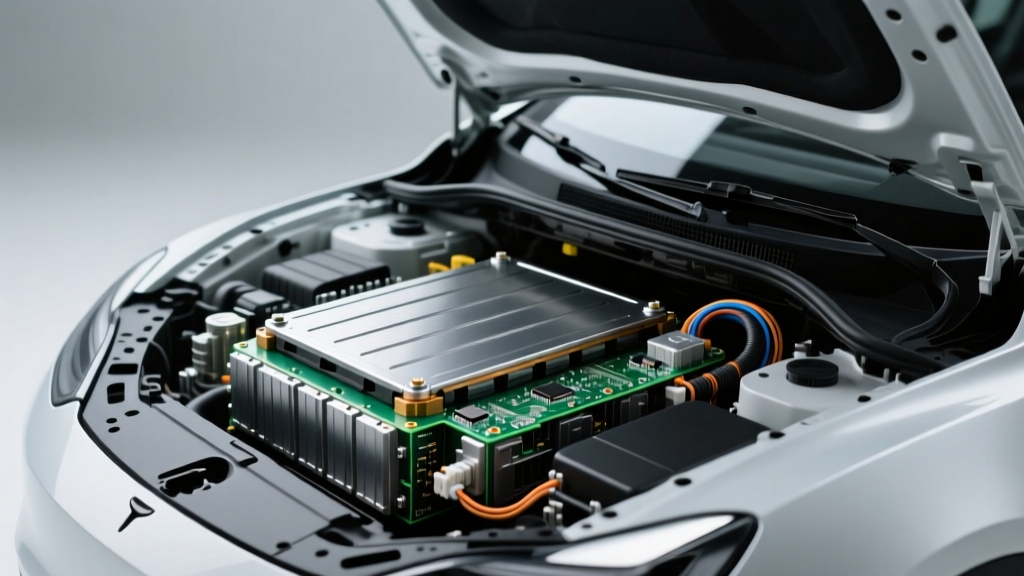
The short answer: far longer than most buyers expect. Modern lithium-ion traction batteries routinely exceed 150,000 miles before reaching 70–80% of original capacity — and many outlast the vehicles they power. Data from fueleconomy.gov and real-world fleet studies show that most EVs experience roughly 1–2% capacity loss per year under normal use, with the steepest degradation occurring in the first 25,000–30,000 miles before the curve flattens considerably.
Tesla's 2025 Impact Report, for example, documented that Model 3 and Model Y batteries retained an average of 85% capacity after 200,000 miles. Hyundai and Kia report similar findings for their E-GMP platform vehicles (Ioniq 5, EV6), with roughly 88–90% retention at 100,000 miles based on fleet telemetry. The key variable isn't just mileage — it's how you charge, what temperatures you expose the pack to, and which battery chemistry your vehicle uses.
Typical EV Battery Degradation Curve (NMC Chemistry, Average Use)
- Year 1 / 15,000 mi: ~2–3% loss (initial formation settling)
- Year 3 / 45,000 mi: ~5–7% cumulative loss
- Year 5 / 75,000 mi: ~8–10% cumulative loss
- Year 8 / 120,000 mi: ~10–14% cumulative loss
- Year 10+ / 150,000+ mi: ~12–18% cumulative loss
Sources: Tesla Impact Report, Geotab fleet study of 6,300+ EVs, Recurrent Auto battery data. LFP packs typically show 1–2% less degradation at equivalent intervals.
For context, a 2026 Chevrolet Equinox EV with an 85 kWh (usable) NMC battery and a 315-mile EPA rating would still offer roughly 265–275 miles of range after eight years and 120,000 miles — more than adequate for daily driving and most road trips.
LFP vs NMC/NCA: Which Battery Chemistry Is Right for You?
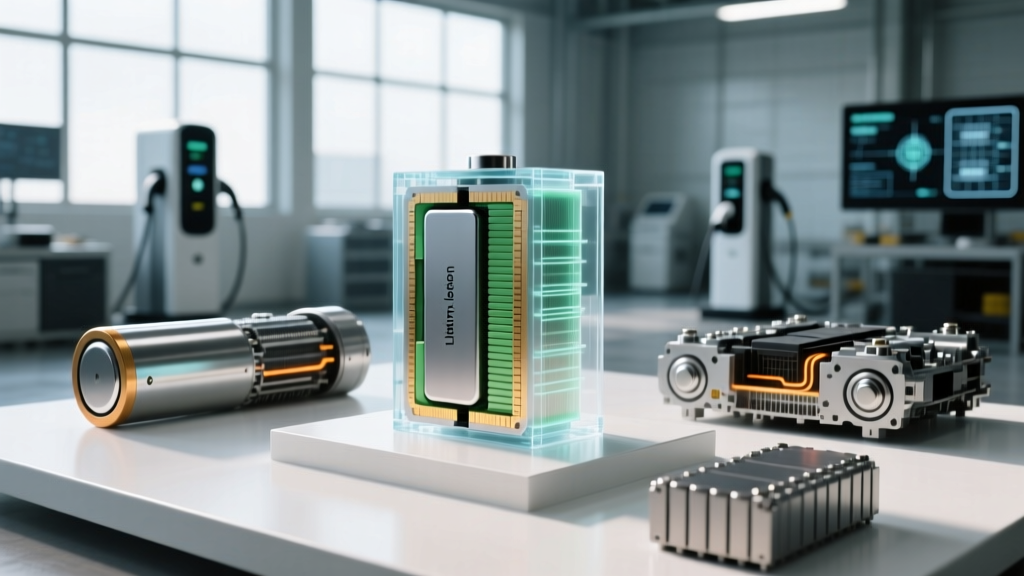
The single most consequential battery decision you make happens before you buy: the chemistry inside the pack. In 2026, nearly all mainstream EVs use one of two lithium-ion variants, each with distinct trade-offs that directly affect your maintenance strategy and long-term ownership experience.
| Factor | LFP (Lithium Iron Phosphate) | NMC / NCA (Nickel Manganese Cobalt / Nickel Cobalt Aluminum) |
|---|---|---|
| Energy Density | Lower (~160–180 Wh/kg cell-level) | Higher (~220–260 Wh/kg cell-level) |
| Range per Pack Size | Shorter; heavier pack for same kWh | Longer; lighter, more compact for same kWh |
| Cycle Life | 3,000–5,000+ full cycles | 1,000–2,000 full cycles |
| Degradation Rate | Slower; ~1–1.5% per year typical | Moderate; ~1.5–2% per year typical |
| Cold-Weather Performance | Weaker; more range loss below 32°F | Better; less range penalty in freezing temps |
| Charging to 100% | Recommended regularly (helps BMS calibration) | Best kept 20–80% for daily; 100% for trips only |
| Cost | Lower; no cobalt or nickel | Higher; commodity-sensitive pricing |
| Common Vehicles (2026) | Tesla Model 3 RWD, standard-range BYD models, some Ford commercial vans | Most long-range EVs: Model Y LR, Ioniq 5, EV6, Rivian, Cadillac Lyriq |
The maintenance implication: LFP owners can — and should — charge to 100% regularly. This helps the Battery Management System (BMS) accurately calibrate State of Charge (SoC) readings and actually benefits LFP longevity. NMC owners, by contrast, see accelerated degradation when routinely charging above 80–85% or letting the pack sit at 100% for extended periods. If you buy an NMC vehicle, set your daily charge limit to 80% and reserve 100% charges for road-trip mornings.
What Does the EV Battery Warranty Actually Cover?
Federal law mandates a minimum 8-year/100,000-mile warranty on EV battery packs for emissions-related compliance, and most manufacturers exceed this baseline. However, warranty coverage has specific triggers and exclusions that every owner should understand before assuming they're fully protected.
| Manufacturer (2026 Models) | Warranty Duration | Capacity Retention Threshold | Coverage Details |
|---|---|---|---|
| Tesla (Model 3/Y) | 8 yr / 120,000 mi (LR/AWD); 8 yr / 100,000 mi (RWD) | 70% of original capacity | Defects + excessive degradation; module-level repair or replacement |
| Hyundai / Kia (E-GMP) | 10 yr / 100,000 mi | 70% of original capacity | Defects + degradation; full pack or module replacement at dealer discretion |
| Ford (Mach-E, F-150 Lightning) | 8 yr / 100,000 mi | 70% of original capacity | Defects + degradation; covers high-voltage battery components |
| GM (Ultium platform) | 8 yr / 100,000 mi | 70% of original capacity (60% for commercial) | Defects + degradation; modular Ultium design allows section-level replacement |
| Rivian | 8 yr / 175,000 mi | 70% of original capacity | Defects + degradation; among the highest mileage coverage |
| Volkswagen (MEB platform) | 8 yr / 100,000 mi | 70% of original capacity | Defects + degradation; includes ID.4, ID. Buzz |
Critical nuance: "70% capacity retention" means the warranty triggers only when your battery's usable capacity drops below 70% of its original specification. A 2026 Ioniq 5 with a 77.4 kWh usable pack would need to fall below ~54 kWh of usable capacity for a warranty claim. In practice, very few batteries degrade this quickly — Recurrent Auto's 2025 analysis of over 15,000 EVs found that only about 1.5% of vehicles required warranty battery replacement within the first eight years.
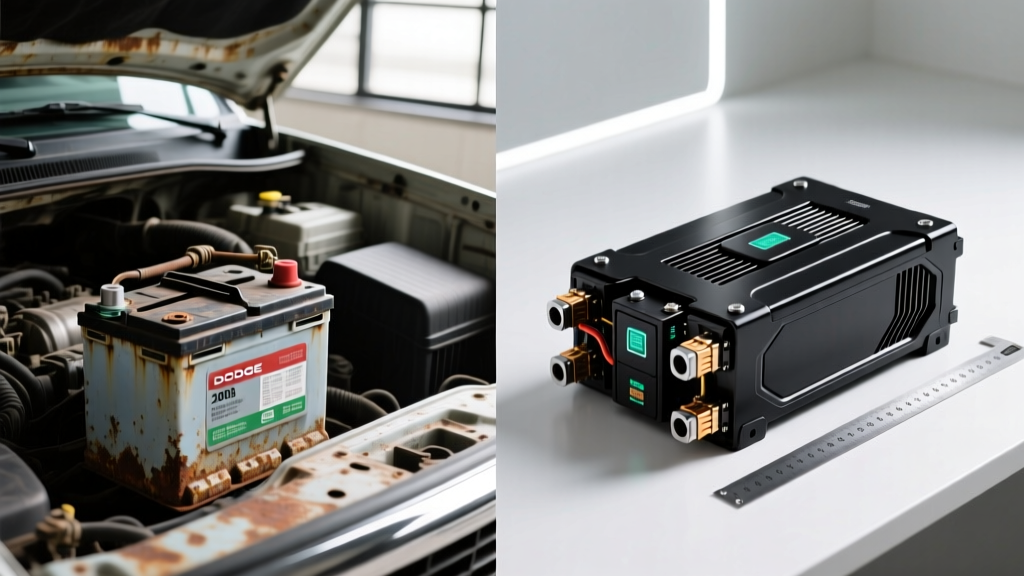
Warranties typically exclude damage from collisions, flooding, improper charging equipment, or aftermarket modifications to the high-voltage system. They also generally don't cover the 12V auxiliary battery (which powers lights, infotainment, and computers) — that's a separate, conventional lead-acid or lithium 12V unit with its own 3-year warranty.
EV Battery Replacement Costs: What Owners Actually Pay
If your battery degrades beyond the warranty threshold — or fails outside the warranty window — replacement is expensive but increasingly rare. Most packs outlive the vehicle's economic life. When replacement is necessary, costs depend heavily on pack size, chemistry, and whether the manufacturer's modular design allows partial replacement.
| Vehicle / Platform | Pack Size (Usable kWh) | Full Pack Replacement (Parts + Labor) | Module-Level Repair (if available) |
|---|---|---|---|
| Tesla Model 3 (NMC Long Range) | ~75 kWh | $12,000–$16,000 | $3,000–$5,000 per module section |
| Hyundai Ioniq 5 / Kia EV6 | 77.4 kWh | $14,000–$18,000 | Module replacement available; ~$4,000–$6,000 per section |
| Ford F-150 Lightning (Extended Range) | ~131 kWh | $20,000–$28,000 | GM Ultium-style modular repair being rolled out |
| Chevrolet Equinox EV | ~85 kWh | $13,000–$17,000 | Ultium modular: individual tray replacement ~$3,500–$5,000 |
| Rivian R1S / R1T | ~106–141 kWh | $18,000–$25,000 | Module-level repair available through Rivian service |
| Nissan LEAF (40/62 kWh) | 40–62 kWh | $8,000–$12,000 | Limited module service; often full swap |
Several factors are driving replacement costs down over time. Battery cell prices have fallen from roughly $1,200/kWh in 2010 to approximately $110–$130/kWh in 2026 (per BloombergNEF). GM's Ultium platform and Hyundai's modular E-GMP architecture both allow technicians to replace individual battery trays or modules rather than the entire pack, cutting repair bills by 60–75% in many cases. Tesla has also moved toward module-level service at its service centers.
When is replacement typically needed? Based on current degradation data, most EV batteries won't require replacement before 200,000+ miles under normal use. The more common scenario is a vehicle being retired for other reasons (collision, rust, obsolescence) while the battery still holds 75–80% capacity. For buyers of used EVs, a pre-purchase battery health check is far more important than assuming a replacement is imminent.
5 Factors That Accelerate (or Preserve) Battery Life
Battery degradation isn't purely a function of time and mileage. Your daily habits have measurable impact on how quickly your pack loses capacity. Here are the five most significant variables, ranked by impact:
1. State of Charge (SoC) Habits — Highest Impact
- NMC/NCA: Avoid sitting at 100% SoC for more than a few hours. Set daily charge limit to 80%. Charge to 100% only on the morning of a road trip, not the night before.
- LFP: Charge to 100% at least once per week. LFP cells benefit from full-charge calibration, and prolonged low SoC is more harmful than high SoC for this chemistry.
- Both: Avoid letting the pack sit below 10% for extended periods (days or weeks). If storing the vehicle, set SoC to ~50%.
2. DC Fast Charging Frequency
- Occasional DC fast charging (1–2 times per week) has minimal impact on modern packs with active thermal management.
- Exclusive DC fast charging (daily, especially at 150+ kW without preconditioning) can add 1–3% additional degradation over 100,000 miles compared to Level 2 charging, per Idaho National Laboratory research.
- Always use your vehicle's battery preconditioning feature when navigating to a DC fast charger — this warms the pack to optimal temperature and reduces stress during high-power charging.
3. Temperature Extremes
- Heat is the primary enemy of lithium-ion longevity. Parking in direct sun regularly in 100°F+ climates accelerates calendar degradation. Use shaded or covered parking when possible.
- Cold doesn't permanently damage the battery but temporarily reduces range by 15–30% at 20°F and below. Charging in extreme cold without preconditioning can cause lithium plating — always precondition before charging in sub-freezing temperatures.
- Vehicles with active liquid thermal management (Tesla, Hyundai E-GMP, GM Ultium, Rivian) handle extremes far better than older passive-cooled packs.
4. Driving Style and Regen Settings
- Aggressive acceleration and high sustained speeds (80+ mph) generate more heat in the pack, contributing to faster degradation over time.
- Using regenerative braking reduces mechanical brake wear and doesn't harm the battery — modern BMS systems manage regen current to stay within safe charge-rate limits even at low SoC.
5. Software Updates and BMS Calibration
- Keep your vehicle's software current. Manufacturers regularly refine BMS algorithms to optimize charge curves, thermal management, and cell balancing — these updates can measurably slow degradation.
- For LFP vehicles, periodic 100% charges serve as BMS calibration events. Skipping them can cause the range estimator to drift, making it appear that degradation is worse than it is.
How to Check and Monitor Your Battery's State of Health
State of Health (SoH) is the percentage of your battery's current maximum capacity relative to its original factory capacity. A new EV starts at 100% SoH; a vehicle with 12% degradation sits at 88% SoH. Monitoring this number is essential for maximizing warranty protection, planning for ownership costs, and assessing used-EV value.
Built-in vehicle tools:
- Tesla: The mobile app displays estimated range at 100% SoC. Divide your current 100% range estimate by the original EPA range to approximate SoH. Third-party apps like Tessie or Stats (iOS) provide more granular SoH estimates using OBD-II data.
- Hyundai/Kia: The EV-specific menu in the infotainment system shows battery health status. Dealership diagnostic tools can pull exact SoH percentages from the BMS.
- GM (Ultium): The myChevrolet/myCadillac app provides battery health status. OnStar diagnostics can generate a detailed SoH report.
- Ford: FordPass provides battery health indicators. The SYNC system's EV screen shows estimated range at full charge for manual SoH calculation.
Third-party diagnostic options:
- Recurrent Auto: Offers free battery health reports for enrolled vehicles using telematics data. Their reports benchmark your pack against a fleet of identical vehicles.
- OBD-II scanners with EV support: Devices like the OBDLink MX+ paired with apps such as ABRP (A Better Route Planner) or Car Scanner can read BMS data directly on many vehicles, showing cell-level voltage variance and precise SoH.
- Dealer diagnostic check: Most dealerships can run a full battery health report for $50–$100 (or free during scheduled service). Request this before a warranty expires and before purchasing any used EV.
A healthy pack should show cell voltage variance under 20–30 mV across all modules at rest. Wider variance indicates cell imbalance, which the BMS can sometimes correct through extended balancing sessions (leaving the vehicle plugged in at Level 2 for 24+ hours after reaching full charge).
Emerging Battery Technologies: What's Next (and When)
The battery landscape is evolving rapidly, but it's critical to separate laboratory breakthroughs from production-ready technology. Here's what's on the horizon and realistic timelines for each:
Silicon-dominant anodes: Companies like Sila Nanotechnologies and Group14 are replacing graphite anodes with silicon composites, boosting energy density by 20–40%. Early production deployments began in 2024–2025 for premium applications. Expect broader adoption in mainstream EVs by 2027–2028. The primary benefit: more range from the same physical pack size, or smaller/lighter packs for the same range.
Solid-state batteries: These replace the liquid electrolyte with a solid ceramic or polymer separator, promising higher energy density, faster charging, and improved safety. Toyota has announced a 2027–2028 production target for a solid-state EV with ~620 miles of range and 10-minute fast charging. Samsung SDI and QuantumScape are pursuing similar timelines. However, manufacturing scale-up remains the major bottleneck — no solid-state EV is available for purchase as of 2026, and initial production will likely be limited to low-volume, premium models.
Sodium-ion batteries: CATL and BYD have begun deploying sodium-ion packs in Chinese-market vehicles. These eliminate lithium entirely, reducing cost and supply-chain risk, but at the expense of lower energy density (~120–140 Wh/kg). Expect sodium-ion to appear in budget-oriented and commercial EVs globally by 2027–2029, primarily in shorter-range applications.
What this means for current owners: Today's lithium-ion packs — both LFP and NMC — are mature, well-understood, and demonstrably long-lasting. Waiting for solid-state is not a practical strategy for anyone who needs a vehicle in the next 2–3 years. The batteries in 2026 model-year EVs are the best they've ever been, with degradation rates and warranty terms that make replacement a rare event.
Frequently Asked Questions
How long do EV batteries last in years and miles?
Most modern EV batteries retain 70–85% of original capacity after 150,000–200,000 miles and 10–15 years of typical use. Fleet data from Tesla, Geotab, and Recurrent Auto consistently show that the majority of packs outlast the vehicles they're installed in. Complete failure before 100,000 miles is rare (under 2% of vehicles) and usually covered by the manufacturer's 8-year/100,000-mile minimum warranty.
How much does an EV battery cost to replace in 2026?
Full pack replacement ranges from approximately $8,000 for a smaller pack (Nissan LEAF, 40 kWh) to $28,000 for a large pack (F-150 Lightning Extended Range, 131 kWh). Most mainstream mid-size EVs (75–85 kWh) fall in the $12,000–$18,000 range for parts and labor. However, modular architectures like GM Ultium and Hyundai E-GMP allow module-level repairs at $3,000–$6,000 per section, significantly reducing costs in many failure scenarios. In practice, fewer than 2% of EVs need battery replacement within the warranty period.
What does the EV battery warranty cover?
Federal law requires a minimum 8-year/100,000-mile warranty covering defects and excessive capacity loss (typically defined as dropping below 70% of original capacity). Some manufacturers exceed this — Hyundai/Kia offers 10 years/100,000 miles, and Rivian covers 8 years/175,000 miles. The warranty covers the high-voltage traction battery pack, not the 12V auxiliary battery. Damage from accidents, flooding, or unauthorized modifications is excluded. Always review your specific owner's manual for exact terms.
How do I check my EV battery's State of Health?
Start with your vehicle's built-in range estimator: compare the estimated range at 100% charge to the original EPA rating. For more precision, use third-party telematics services like Recurrent Auto (free enrollment), OBD-II scanners with EV support (OBDLink MX+ with Car Scanner app), or request a dealer diagnostic report ($50–$100). Tesla owners can use apps like Tessie for detailed SoH tracking. Check SoH at least twice per year and before your warranty expires.
Is LFP or NMC better for long-term battery health?
LFP (lithium iron phosphate) has a clear longevity advantage: 3,000–5,000+ full charge cycles vs. 1,000–2,000 for NMC, plus slower annual degradation (~1–1.5% vs. ~1.5–2%). LFP also tolerates regular 100% charging without harm. However, NMC offers higher energy density (more range in a lighter, smaller pack) and better cold-weather performance. If your priority is maximum lifespan and lowest degradation anxiety, LFP is the better choice. If you need maximum range or live in a cold climate, NMC remains excellent with proper SoC management (20–80% daily limit).
Does frequent DC fast charging damage my battery?
Modern EVs with active thermal management handle DC fast charging well, but exclusive reliance on it (daily 150+ kW sessions without preconditioning) can add 1–3% additional degradation over 100,000 miles compared to primarily Level 2 home charging. The biggest risk is fast charging in extreme cold without preconditioning, which can cause lithium plating. For optimal longevity, use Level 2 (7–11 kW) for daily charging and reserve DC fast charging for road trips. Always enable battery preconditioning when navigating to a fast charger.
Should I worry about my EV battery in extreme heat or cold?
Heat is the more serious long-term concern. Regularly parking in 100°F+ direct sunlight accelerates calendar degradation. Use covered parking when possible. Cold temperatures cause temporary range loss (15–30% at 20°F) but don't permanently damage the pack. The real cold-weather risk is charging without preconditioning in sub-freezing temperatures — always precondition the battery before a DC fast charge session in cold weather. Vehicles with liquid thermal management (most 2022+ EVs) handle both extremes significantly better than older passively cooled packs.