Nissan Leaf Battery Capacity Options Explained
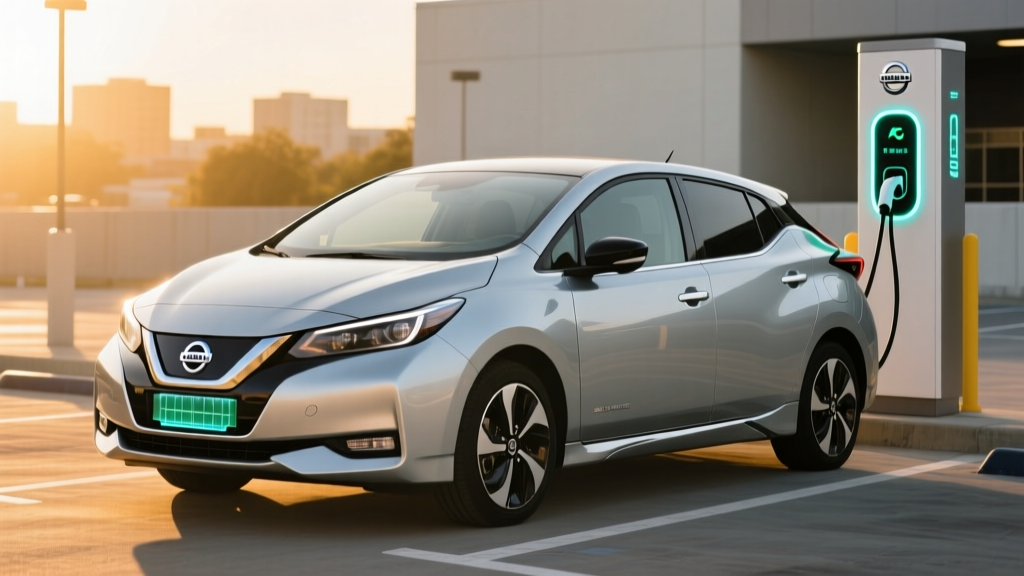
The Nissan Leaf has been one of the most widely adopted electric vehicles since its 2010 debut, and understanding its battery architecture is essential for both current owners and prospective buyers. As of the 2025 model year, the Leaf is offered with two distinct battery packs, each with different capacity, chemistry, and real-world range implications.
| Specification | Leaf S / SV (Standard) | Leaf SV Plus / SL Plus |
|---|---|---|
| Usable Battery Capacity | 40 kWh | 62 kWh |
| Chemistry | NMC (Lithium Manganese Cobalt) | NMC (Lithium Manganese Cobalt) |
| EPA Range | 149 miles | 212 miles |
| Real-World Range (highway, mild weather) | ~120–135 miles | ~175–195 miles |
| Real-World Range (cold weather, 20°F) | ~95–115 miles | ~140–165 miles |
| Peak DC Fast Charge Rate | 50 kW (CHAdeMO) | 100 kW (CHAdeMO) |
| Level 2 Charge Rate | 6.6 kW | 6.6 kW |
| Thermal Management | Passive (air-cooled) | Passive (air-cooled) |
| Connector | CHAdeMO (DC) / J1772 (AC) | CHAdeMO (DC) / J1772 (AC) |
The battery capacity of the Nissan Leaf directly determines not just range but also long-term degradation behavior. The passive air-cooling system — unlike the active liquid cooling found in vehicles like the Chevrolet Bolt or Hyundai Ioniq 5 — is the single most significant factor affecting Leaf battery longevity, particularly in hot climates or with frequent DC fast charging.
NMC vs. LFP Chemistry: Where the Leaf Stands
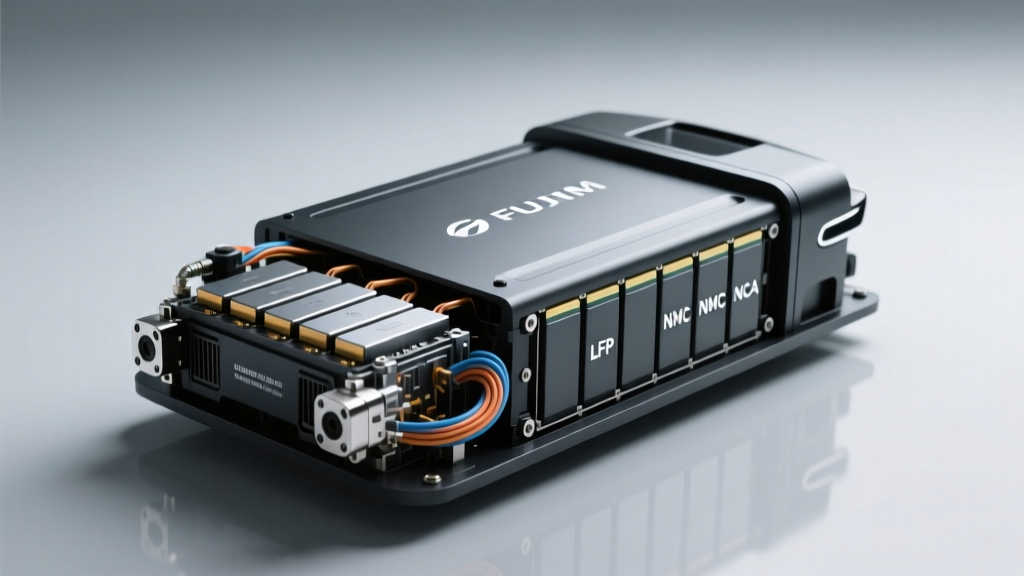
The Nissan Leaf uses NMC (nickel manganese cobalt) lithium-ion cells across both battery sizes. This is a deliberate engineering choice with specific trade-offs compared to the LFP (lithium iron phosphate) chemistry now used in vehicles like the Tesla Model 3 RWD and some BYD models.
| Attribute | NMC (Nissan Leaf) | LFP (e.g., Tesla Model 3 RWD) |
|---|---|---|
| Energy Density | Higher (~200–250 Wh/kg cell-level) | Lower (~150–180 Wh/kg cell-level) |
| Cycle Life | ~1,000–2,000 full cycles to 80% SoH | ~3,000–5,000+ full cycles to 80% SoH |
| Cold-Weather Performance | Better low-temp discharge capability | More range loss in freezing conditions |
| Thermal Stability | Good, but more sensitive to sustained heat | Excellent — more resistant to thermal runaway |
| Cost per kWh | Higher (cobalt/nickel commodity exposure) | Lower (iron/phosphate abundant) |
| Recommended Charge Habit | 80% daily, 100% only for trips | 100% daily charging acceptable (even recommended periodically) |
| Weight | Lighter for equivalent capacity | Heavier pack for equivalent range |
For Leaf owners, the NMC chemistry means you should avoid routinely charging to 100% and letting the car sit at full state of charge. Nissan's battery management system includes a top-end buffer, but consistently storing an NMC pack at 100% SoC accelerates calendar degradation. The practical recommendation: set your charge limit to 80% for daily use and charge to 100% only when you need maximum range for a trip.
LFP batteries tolerate 100% storage far better and offer significantly longer cycle life, which is why they're gaining market share in standard-range EVs. However, LFP's lower energy density means a heavier, bulkier pack — a trade-off Nissan avoided by sticking with NMC in a compact hatchback form factor.
Nissan Leaf Battery Degradation: What the Data Shows
Battery degradation in the Nissan Leaf has been extensively documented by owners and fleet operators, making it one of the best-studied EV battery platforms in existence. The data reveals a clear pattern shaped heavily by climate and charging habits.
- Year 1–2: 2–5% capacity loss (initial formation loss, normal for all Li-ion)
- Year 3–5 (mild climate, mostly L2 charging): 8–12% total loss
- Year 3–5 (hot climate, frequent DCFC): 15–22% total loss
- Year 8 (average use): 12–18% total loss (82–88% State of Health)
- 100,000 miles (moderate climate): ~10–15% loss typical
- 100,000 miles (Arizona/Texas, frequent DCFC): 18–25% loss documented in early-generation Leafs
The most important variable is temperature. The Leaf's passive air-cooling system cannot actively remove heat during rapid charging or sustained high-temperature operation. In Phoenix or Houston summers, battery temperatures can exceed 110°F (43°C) internally during DC fast charging, accelerating electrolyte decomposition and cathode wear. Owners in the Pacific Northwest or northern states consistently report significantly better capacity retention.
It's worth noting that the 62 kWh pack introduced for the Leaf Plus models has shown somewhat better degradation resistance than the earlier 24 kWh and 30 kWh packs, partly due to improved cell chemistry and a larger buffer. According to fueleconomy.gov, modern NMC cells with improved electrolyte formulations are demonstrating slower degradation curves than first-generation Leaf cells.
Nissan Leaf Battery Warranty Terms
Nissan provides a lithium-ion battery capacity warranty that covers premature degradation beyond a specified threshold. Understanding exactly what this warranty covers — and what it doesn't — is critical for purchase decisions.
| Coverage Type | Duration | Mileage Limit | Details |
|---|---|---|---|
| Lithium-Ion Battery Capacity Warranty | 8 years | 100,000 miles | Covers capacity loss below 9 bars out of 12 on the capacity gauge (approximately 66–70% of original capacity) |
| EV System Coverage | 5 years | 60,000 miles | Covers inverter, charger, onboard charging port, and related EV system components |
| Basic Vehicle Warranty | 3 years | 36,000 miles | Bumper-to-bumper, including battery-related electronics |
| Powertrain Warranty | 5 years | 60,000 miles | Electric motor and reduction gear |
The capacity warranty threshold — 9 out of 12 bars on Nissan's capacity gauge — corresponds to roughly 66–70% of original usable capacity. This means a 40 kWh pack would need to degrade to approximately 26–28 kWh of usable capacity before a warranty claim is honored. For a 62 kWh pack, that's roughly 41–43 kWh remaining.
In practice, most Leaf batteries retain well above 70% capacity at the 8-year/100,000-mile mark under normal use. The warranty primarily protects against defective cells or severely accelerated degradation. Nissan's warranty terms are consistent with industry norms, though some competitors like Hyundai offer 10-year/100,000-mile battery warranties with similar thresholds. Check current terms on Nissan's owner resources page as they may vary by model year.
EV Battery Replacement Cost for the Nissan Leaf
If your Leaf battery degrades beyond acceptable levels outside of warranty coverage, replacement is possible but represents a significant expense. Costs vary by battery size, source (new vs. refurbished), and labor rates.
| Battery Pack | New OEM Pack (Parts + Labor) | Refurbished/Remanufactured | Typical Replacement Timeline |
|---|---|---|---|
| 24 kWh (2011–2017 models) | $6,500–$8,000 | $3,500–$5,000 | Rarely needed before 150,000+ miles |
| 40 kWh (2018+ standard) | $7,500–$9,500 | $4,500–$6,500 | Rarely needed before 150,000+ miles |
| 62 kWh (Leaf Plus) | $9,000–$12,000 | $6,000–$8,500 | Rarely needed before 150,000+ miles |
Important context: the vast majority of Nissan Leaf batteries never require full replacement during the vehicle's useful life. Data from fleet operators and long-term owners suggests that most Leaf packs retain 70–80% capacity at 150,000 miles — reduced from original range, but still functional for daily commuting. A Leaf with a 40 kWh pack at 75% State of Health still delivers roughly 110 miles of real-world range, adequate for many drivers.
For older 24 kWh models (2011–2017), Nissan has offered battery upgrade programs in some markets, allowing owners to swap to a 40 kWh or 62 kWh pack. Availability and pricing vary by dealer and region. Third-party specialists also offer cell-level repairs, replacing individual degraded modules rather than the entire pack, often for $2,000–$4,000.
When replacement is genuinely needed, it's typically at the 12–15 year mark or 150,000–200,000+ miles. At that point, the vehicle's residual value and the owner's needs determine whether replacement or vehicle retirement makes economic sense.
Factors That Accelerate (or Preserve) Leaf Battery Life
The Nissan Leaf's passive cooling system makes it more sensitive to usage patterns than liquid-cooled EVs. Here are the primary factors that influence long-term battery health, ranked by impact:
- Minimize DC fast charging frequency: Use CHAdeMO DCFC only when necessary (road trips, emergencies). Daily L2 home charging at 6.6 kW generates far less heat. Frequent DCFC in hot weather is the #1 degradation accelerant for Leafs.
- Avoid sustained 100% state of charge: Charge to 80% for daily use. If you charge to 100%, drive the car soon rather than letting it sit fully charged for hours or days.
- Avoid deep discharge below 10%: The Leaf's BMS maintains a bottom buffer, but routinely running the pack to near-empty stresses cells. Plug in when you reach 15–20%.
- Park in shade or a garage in hot climates: Ambient temperature is a major degradation driver. A garage-parked Leaf in Phoenix will outlast a sun-baked one significantly.
- Precondition while plugged in: Use the NissanConnect app to precondition cabin temperature while connected to your Level 2 charger. This draws power from the grid rather than the battery and reduces the thermal load on the pack before driving.
- Drive moderately in extreme heat: Sustained high-speed driving in 95°F+ weather generates internal pack heat that the passive system can't shed quickly. Moderate your speed on hot days when possible.
- Don't store at extreme SoC: If leaving the car unused for weeks, aim for 50–60% state of charge. Avoid storing at 100% or below 10%.
The single most impactful thing a Leaf owner can do is install a home Level 2 charger and use it as the primary charging method. A 240V Level 2 station at 6.6 kW adds roughly 25 miles of range per hour and generates minimal heat compared to a 50 kW or 100 kW CHAdeMO DC fast charger. For a detailed breakdown of Level 2 installation costs, consult a licensed electrician — typical home installations range from $800–$2,500 depending on panel capacity and run length.
How to Check Your Nissan Leaf's Battery Health (SoH)
Monitoring your Leaf's State of Health is straightforward thanks to Nissan's built-in capacity gauge and available third-party tools.
The 12-Bar Capacity Gauge
Every Leaf displays a battery capacity bar gauge on the instrument cluster — 12 bars when new, decreasing as the pack degrades. This is Nissan's official measure of capacity loss. Each bar lost represents roughly 5–7% of original capacity. Most owners report losing the first bar between 20,000–40,000 miles (the initial formation loss period), with subsequent bars dropping more slowly.
LeafSpy Pro (Third-Party OBD-II Tool)
For precise State of Health data, LeafSpy Pro is the gold standard among Leaf owners. This app connects via an OBD-II Bluetooth adapter (ELM327-compatible, ~$15–$30) and reads detailed battery telemetry directly from the car's BMS, including:
- State of Health (SoH) percentage: A precise numerical readout (e.g., 87.3%) rather than the coarse 12-bar gauge
- Individual cell voltages: Identifies weak or imbalanced cells within the pack
- Battery temperature: Real-time pack temperature readings — critical for understanding thermal stress
- Total energy throughput: Cumulative kWh charged and discharged over the pack's lifetime
- Charge/discharge power: Real-time kW flow data
LeafSpy is invaluable when purchasing a used Leaf. A quick scan reveals the true battery condition regardless of what the 12-bar gauge suggests (the gauge can be reset by dealers, though LeafSpy reads the BMS directly).
NissanConnect App
The NissanConnect smartphone app provides basic charging status and range estimates but does not display a precise SoH percentage. It's useful for monitoring charge sessions and preconditioning but not sufficient for detailed battery health assessment.
Looking Ahead: Solid-State and Next-Generation Battery Tech
Nissan has been publicly developing solid-state battery technology and has announced plans for a pilot production line at its Yokohama plant. Solid-state batteries promise higher energy density, faster charging, improved safety (no liquid electrolyte to leak or combust), and potentially longer cycle life.
However, it is critical to understand the realistic timeline: Nissan's solid-state batteries are projected for commercial vehicle deployment around 2028–2029 at the earliest, and likely in limited, premium applications first. They will not be retrofittable into existing Leaf platforms. Current Leaf owners and buyers should make decisions based on today's proven NMC technology, not speculative future chemistry.
Other emerging technologies — silicon-dominant anodes (being developed by companies like Sila Nanotechnologies and Group14) and lithium-metal cells — may incrementally improve energy density in NMC-type batteries over the next 3–5 years. These could appear in future Nissan EVs but remain in pre-commercial stages as of 2026.
For practical purposes, the NMC cells in the current Nissan Leaf represent mature, well-understood technology. The degradation patterns are predictable, the warranty coverage is established, and the replacement ecosystem (both OEM and third-party) is well-developed after more than 15 years of Leaf production.
Frequently Asked Questions
How long do Nissan Leaf batteries last in years and miles?
Based on aggregated owner data, most Nissan Leaf batteries retain 70–85% of original capacity at 100,000 miles and 8 years. Many Leafs reach 150,000–200,000 miles with 65–75% capacity remaining. The pack typically outlasts the vehicle's economic life. Climate is the biggest variable: hot-climate Leafs with frequent DC fast charging degrade faster than mild-climate, home-charged examples.
How much does it cost to replace a Nissan Leaf battery?
A new OEM replacement ranges from $6,500 to $12,000 depending on pack size (40 kWh vs. 62 kWh). Refurbished packs cost $3,500–$8,500. Cell-level module repairs by third-party specialists can cost $2,000–$4,000. Full replacement is rarely needed before 150,000+ miles.
What does the Nissan Leaf battery warranty cover?
Nissan covers the lithium-ion battery against capacity loss below 9 out of 12 bars (approximately 66–70% of original capacity) for 8 years or 100,000 miles, whichever comes first. The warranty covers defective battery packs but does not cover gradual, normal degradation that remains above the threshold.
Is NMC or LFP chemistry better for an EV battery?
Neither is universally better — it depends on priorities. NMC (used in the Leaf) offers higher energy density and better cold-weather performance, making it ideal for compact vehicles where pack weight and volume matter. LFP offers significantly longer cycle life, better thermal safety, and lower cost, but is heavier and loses more range in cold weather. For a commuter hatchback like the Leaf, NMC is the practical choice.
Can I upgrade my older Nissan Leaf to a larger battery?
In some markets, Nissan has offered battery upgrade programs for older 24 kWh Leafs to 40 kWh or 62 kWh packs. Third-party specialists also perform upgrades. Availability, cost ($5,000–$10,000+), and compatibility vary. Check with your local Nissan dealer or reputable EV conversion shops for current options.
Does DC fast charging damage the Leaf battery?
Occasional DC fast charging is fine, but frequent use — especially in hot weather — accelerates degradation due to the Leaf's passive air-cooling system. The heat generated during 50 kW or 100 kW charging cannot be dissipated quickly enough, raising internal cell temperatures. Use DCFC for road trips and rely on Level 2 home charging for daily needs.
Sources: fueleconomy.gov — EV Technology, Nissan USA Leaf Specifications, IRS §30D Clean Vehicle Credit Rules.