Why Searching for a 2015 Nissan Altima Battery Leads to a Bigger EV Conversation
If you've typed "nissan altima 2015 battery" into a search bar, you're likely dealing with a dead 12-volt starter battery — a Group 35 or Group 24F lead-acid unit that costs roughly $120–$220 at any auto parts store. That's a straightforward swap. But as more Altima owners cross-shop their next vehicle against electric alternatives like the Nissan Ariya, Nissan Leaf, or competing EVs, the word "battery" suddenly means something far more complex: a high-voltage lithium-ion traction pack costing thousands of dollars and engineered to last a decade or more.
This guide bridges that gap. We'll cover what the 2015 Altima's 12V battery actually does, then explain everything modern EV buyers and owners need to know about traction battery chemistry, degradation, warranties, replacement costs, and health monitoring — with hard data, not marketing fluff.
The 2015 Nissan Altima's 12V Battery: A Quick Baseline
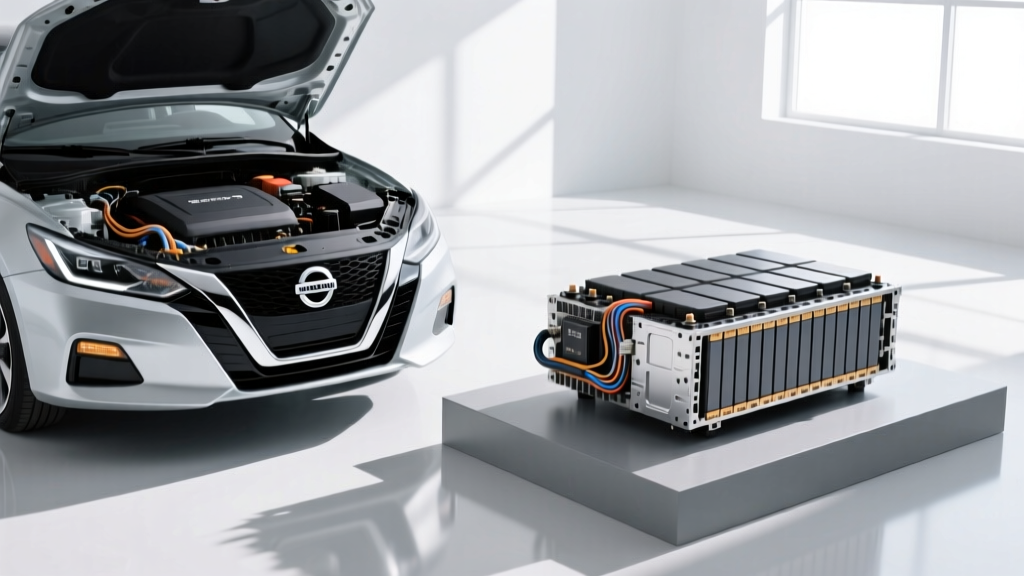
The 2015 Nissan Altima uses a conventional 12-volt flooded lead-acid battery (typically Group 35, ~550 CCA) to crank its 2.5L four-cylinder or 3.5L V6 engine. Key facts:
- Cost: $120–$220 for a replacement (AGM variants run higher)
- Lifespan: 3–5 years in moderate climates, 2–4 years in extreme heat
- Function: Starter motor cranking, accessories when engine is off
- Warranty: Typically 2–3 years free replacement from retailer
This battery has nothing in common with an EV's high-voltage traction battery — but the confusion is real. Even EVs carry a small 12V auxiliary battery to power lights, computers, and door locks. When EV owners say "my car is dead," it's sometimes the 12V that failed, not the main pack. Understanding this distinction is step one of EV literacy.
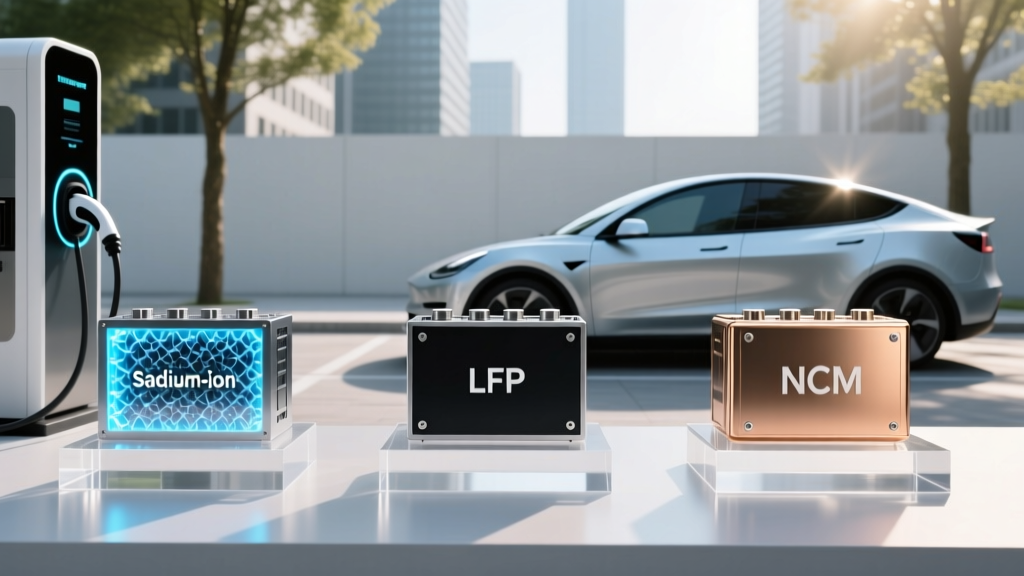
EV Traction Batteries: LFP vs. NMC Chemistry Explained
Modern EVs use one of two dominant lithium-ion chemistries for their high-voltage traction battery. The choice affects range, longevity, charging behavior, and price. Here's how they compare:
| Attribute | LFP (Lithium Iron Phosphate) | NMC/NCA (Nickel Manganese Cobalt / Nickel Cobalt Aluminum) |
|---|---|---|
| Energy Density | Lower (~160 Wh/kg cell-level) | Higher (~250–300 Wh/kg cell-level) |
| Typical Cycle Life | 3,000–5,000+ cycles | 1,000–2,000 cycles |
| Cold-Weather Performance | Weaker; more range loss below 32°F | Better low-temp discharge capability |
| Cost per kWh | Lower (no cobalt or nickel) | Higher (commodity metals exposure) |
| Recommended Daily Charge | 100% SoC is fine | 80% SoC for daily use; 100% for trips |
| Thermal Stability | Excellent; lower thermal runaway risk | Good; requires robust BMS management |
| Common in (2025–2026 models) | Tesla Model 3/Y RWD, Ford Mustang Mach-E Select, BYD models | Hyundai Ioniq 5/6, Chevy Equinox EV, Nissan Ariya, Tesla Long Range |
The practical takeaway: If you charge at home nightly and want maximum calendar life with lower cost, LFP is compelling — especially in warmer climates. If you need maximum range per charge, regularly drive in cold weather, or want the fastest DC charging speeds, NMC/NCA remains the better fit. Neither is universally "better"; the right choice depends on your driving pattern.
How Long Do EV Batteries Last? Real Degradation Data
The fear that EV batteries need replacement every few years is not supported by fleet data. Most modern lithium-ion traction batteries are engineered to outlast the vehicle's useful economic life. Here's what the numbers actually show:
Observed Degradation Benchmarks:
- Tesla Model 3/Y fleet data (2024 impact report): Average capacity loss of ~12% at 150,000 miles. Most packs retain 85–90% at 100,000 miles.
- Nissan Leaf (2011–2017, air-cooled 24/30 kWh packs): Notorious for faster degradation — some owners reported 20–30% loss by 60,000–80,000 miles, especially in hot climates. The lack of active thermal management was the culprit. The 2018+ Leaf (40/62 kWh) improved with better chemistry but still lacks liquid cooling.
- Hyundai/Kia E-GMP platform (Ioniq 5, EV6): Early fleet data suggests ~5–8% loss at 60,000 miles with liquid-cooled NMC packs — among the best in class.
- Geotab fleet study (2024, 10,000+ EVs): Average annual degradation of ~1.8% per year across all brands, with a slight curve flattening after year 3.
Translation: A 2026 EV with an EPA-rated 300-mile range and an NMC pack losing ~2% per year will still deliver roughly 255–270 miles of range at year 10. That's still practical for most daily commutes and road trips, especially as DC fast-charging infrastructure expands.
EV Battery Warranty Terms: What's Actually Covered
Federal law mandates that EV battery warranties cover at minimum 8 years or 100,000 miles (whichever comes first) in most states, and 10 years/150,000 miles in CARB states (California, New York, Massachusetts, and others). Here's how major manufacturers structure their coverage:
| Manufacturer | Warranty Period | Capacity Retention Threshold | Notes |
|---|---|---|---|
| Tesla (Model 3/Y RWD — LFP) | 8 yr / 100,000 mi | 70% | Long Range/Performance: 8 yr / 120,000 mi |
| Hyundai / Kia | 10 yr / 100,000 mi | 70% | Among the longest coverage in the US market |
| Ford (Mach-E, F-150 Lightning) | 8 yr / 100,000 mi | 70% | Covers battery components and capacity loss |
| Chevrolet (Equinox EV, Blazer EV) | 8 yr / 100,000 mi | 60% (Bolt EUV was 60%) | Verify current threshold — GM has adjusted terms |
| Nissan (Ariya, Leaf) | 8 yr / 100,000 mi | ~70% (varies by model year) | Leaf's earlier 5/60,000 mi capacity warranty was widely criticized |
Critical nuance: These warranties cover capacity loss below the threshold — not cosmetic degradation. If your pack retains 72% of original capacity at year 7, the warranty won't trigger even though you've lost 28% of your range. Read the fine print, and keep records of any dealer battery health checks.
For current federal warranty and tax credit rules, the IRS §30D clean vehicle credit page outlines how battery sourcing and capacity factor into purchase incentives — which indirectly reflects how seriously manufacturers take battery durability and supply chain compliance.
EV Battery Replacement Costs: The Honest Numbers
This is where fear-mongering runs rampant. Let's separate the data from the dread:
| Vehicle / Pack Size | Estimated Replacement Cost (2025–2026) | When Replacement Is Typically Needed |
|---|---|---|
| Nissan Leaf 40 kWh | $6,500–$9,000 (remanufactured) | Rare before 120,000 mi; mostly older air-cooled models |
| Tesla Model 3/Y (~75–82 kWh) | $12,000–$16,000 | Very rare under warranty period; most packs outlive 200,000 mi |
| Hyundai Ioniq 5 (77.4 kWh) | $13,000–$18,000 | Largely theoretical — liquid-cooled packs showing minimal degradation |
| Ford F-150 Lightning (131 kWh ext.) | $20,000–$28,000 | Larger pack = higher cost; early data shows strong retention |
| Chevy Bolt EV/EUV (65 kWh) | $9,000–$14,000 | Post-recall replacement packs (LG cells) performing well |
Context that matters: The vast majority of EV owners will never pay for an out-of-warranty battery replacement. A U.S. Department of Energy analysis via fueleconomy.gov confirms that the average EV battery pack is designed for 150,000–200,000+ miles of service. For comparison, the average age of a vehicle on US roads is now over 12.5 years — and most EV packs are engineered to last at least that long with acceptable capacity retention.
If you do face an out-of-warranty replacement, third-party remanufactured packs and module-level repairs (replacing only degraded cells rather than the entire pack) are increasingly available and can cut costs by 30–50%.
Factors That Affect EV Battery Life (and What You Can Control)
Battery degradation is inevitable, but the rate is highly dependent on how you use and store the vehicle. Here's the hierarchy of impact:
High Impact — Manage These Carefully:
- Extreme heat exposure: Prolonged parking in 100°F+ ambient temperatures accelerates calendar degradation. Garage parking or shaded spots matter, especially for packs without active thermal management (e.g., older Nissan Leaf).
- Sustained 100% SoC: For NMC/NCA packs, storing the car at full charge for days or weeks stresses the cathode. Charge to 80% for daily use; save 100% for road trips. (LFP packs are the exception — manufacturers like Tesla and BYD recommend periodic 100% charges to recalibrate the BMS.)
- Frequent DC fast charging above 150 kW: Occasional fast charging is fine. But if you DC fast charge daily at peak rates (250–350 kW), expect slightly accelerated degradation — roughly an additional 0.3–0.5% per year versus Level 2 charging, per Geotab fleet data.
Moderate Impact — Be Aware:
- Cold-weather charging without preconditioning: Charging a cold battery (below ~40°F) at high power can cause lithium plating on the anode. Always use your car's preconditioning feature before fast charging in winter.
- Deep discharges to 0%: Regularly running the pack to near-empty stresses cells. Most EVs have a buffer (typically 3–5% at the bottom) to prevent true zero, but habitually arriving at 0% isn't ideal.
Low Impact — Don't Obsess:
- Regen braking intensity: Standard vs. strong regen has negligible impact on long-term battery health.
- Occasional 100% charges: Charging to full for a weekend road trip, then driving it down within a day or two, causes minimal harm.
How to Check and Monitor Your EV's Battery Health (SoH)
State of Health (SoH) is the percentage of original capacity your battery can still hold. A new pack is 100% SoH; a pack that held 75 kWh originally but now holds 66 kWh is at ~88% SoH. Here's how to monitor it:
In-Vehicle Displays
Some manufacturers provide a battery health indicator in the infotainment or instrument cluster. Hyundai and Kia include a battery health percentage in the EV settings menu on many models. Tesla does not expose SoH directly in the car, but the displayed range at 100% charge (compared to original EPA range) gives a rough estimate.
OBD-II Diagnostic Tools
Third-party OBD-II dongles paired with apps like Leaf Spy (for Nissan Leaf), TeslaFi, or Car Scanner ELM OBD2 can pull detailed battery data directly from the BMS — including SoH percentage, individual cell voltages, pack temperature, and cycle count. These tools cost $20–$60 for the hardware and are invaluable for used-EV buyers.
Dealer Diagnostics
Any authorized dealer can run a battery health report. Request this before purchasing a used EV or if you suspect abnormal degradation. For warranty claims, the dealer's report is typically the document the manufacturer requires.
Charging Data Analysis
If you use a smart Level 2 home charger (ChargePoint, Emporia, Wallbox), compare the kWh delivered during a full charge cycle to the pack's original usable capacity. If your 77.4 kWh Ioniq 5 consistently accepts only 68 kWh from 5% to 100%, your SoH is roughly 92% (accounting for charging losses of ~5%).
What's Next: Solid-State, Silicon Anodes, and Realistic Timelines
Next-generation battery technologies promise higher energy density, faster charging, and improved safety — but timelines matter. Here's where things stand as of 2026:
- Solid-state batteries: Toyota has announced limited production for 2027–2028, targeting 750+ km (WLTP) range and 10-minute fast charging. Nissan and Honda have similar roadmaps for 2028–2030. However, "limited production" means low-volume, high-cost applications — not mainstream affordable EVs. Widespread solid-state adoption at scale is more realistically a 2030+ proposition.
- Silicon-dominant anodes: Companies like Sila Nanotechnologies and Group14 are supplying silicon-carbon anode materials that boost energy density by 15–25% over graphite. These are beginning to appear in premium EVs (2025–2026 model years) and will gradually scale downmarket.
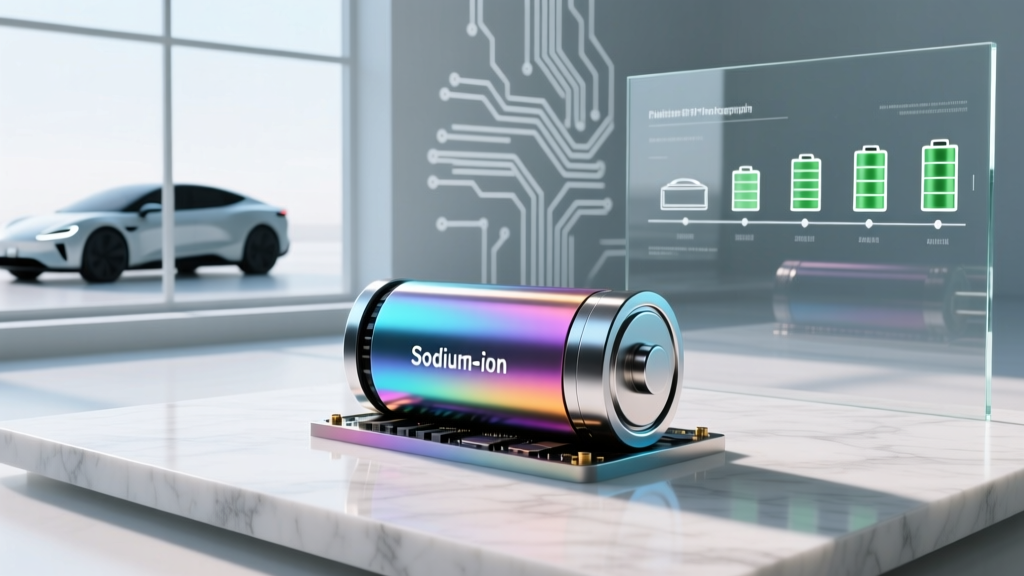
- Sodium-ion batteries: CATL and BYD have begun deploying sodium-ion packs in low-cost Chinese-market EVs. Energy density is lower than LFP, but raw material costs are dramatically cheaper. US-market availability remains uncertain — likely 2028+ for entry-level models.
- LMFP (lithium manganese iron phosphate): An evolution of LFP that adds manganese for ~15% higher energy density while retaining LFP's safety and cycle-life advantages. Expected in several 2027 model-year vehicles from Tesla and Ford.
Bottom line: Today's lithium-ion batteries (both LFP and NMC) are mature, well-understood, and demonstrably durable. Waiting for solid-state is not a practical strategy if you need a vehicle in the next 2–3 years. The National Highway Traffic Safety Administration (NHTSA) continues to monitor battery safety across all chemistries, and current-generation packs meet rigorous thermal and structural standards.
From Altima to EV: The Bottom Line on Battery Ownership
If you're replacing the 12V battery in your 2015 Nissan Altima this month, the $180 cost and 10-minute install are a useful reminder: every car has a battery, and every battery degrades. The difference with EVs is scale, cost, and engineering sophistication.
Modern EV traction batteries lose roughly 1.5–2% of capacity per year, carry 8–10 year warranties with 70% retention thresholds, and in most cases will outlast the vehicle's ownership cycle. The Nissan Leaf's early stumbles with air-cooled packs were a genuine industry lesson — and one that drove the adoption of liquid thermal management across nearly every other manufacturer.
Whether you choose LFP for its longevity and cost advantage or NMC for its range and cold-weather capability, the data is clear: EV battery replacement is a rare event, not an inevitability. Buy based on your driving needs, charge smart, and let the warranty do its job.
How long do EV batteries last in years and miles?
Most modern EV batteries are engineered for 150,000–200,000+ miles and 12–15 years of service before reaching 70–80% of original capacity. Fleet data from Tesla, Geotab, and manufacturer warranty claims support this range. Early-generation EVs (2011–2017 Nissan Leaf, early Chevy Spark EV) showed higher degradation due to smaller, air-cooled packs.
How much does an EV battery cost to replace?
Out-of-warranty replacement costs range from ~$6,500 for a remanufactured Nissan Leaf pack to $20,000–$28,000 for a large Ford F-150 Lightning extended-range pack. However, the vast majority of EV owners never face this expense — packs typically outlast the vehicle's economic life, and warranty coverage spans 8–10 years.
What does an EV battery warranty actually cover?
Federal minimum is 8 years/100,000 miles (10/150,000 in CARB states). The warranty covers capacity loss below a stated threshold (typically 70% of original capacity) and defects in battery components. It does not cover gradual degradation above the threshold or damage from accidents or improper modifications.
How do I check my EV battery's State of Health?
Options include in-vehicle battery health menus (Hyundai/Kia), OBD-II apps like Leaf Spy or TeslaFi, dealer diagnostic reports, and home charger data analysis (comparing kWh accepted vs. original pack capacity). For used-EV purchases, always request a dealer health report or bring an OBD-II scanner.
LFP vs NMC — which battery chemistry is better for me?
Choose LFP if you charge at home nightly, live in a warm climate, want maximum cycle life (3,000–5,000 cycles), and don't need maximum single-charge range. Choose NMC/NCA if you regularly drive in cold weather, need the longest EPA range, or want the fastest DC fast-charging speeds. Neither is universally superior — the right choice matches your driving pattern.
Does the 2015 Nissan Altima have any kind of EV or hybrid battery?
No. The 2015 Altima is a conventional gasoline vehicle with only a 12V lead-acid starter battery. Nissan's electrified options in that era were limited to the fully electric Leaf. If you're transitioning from a 2015 Altima to an EV, the Nissan Ariya or the latest Leaf are the brand's current electric offerings.