The Truth About EV Battery Degradation: What the Data Actually Shows
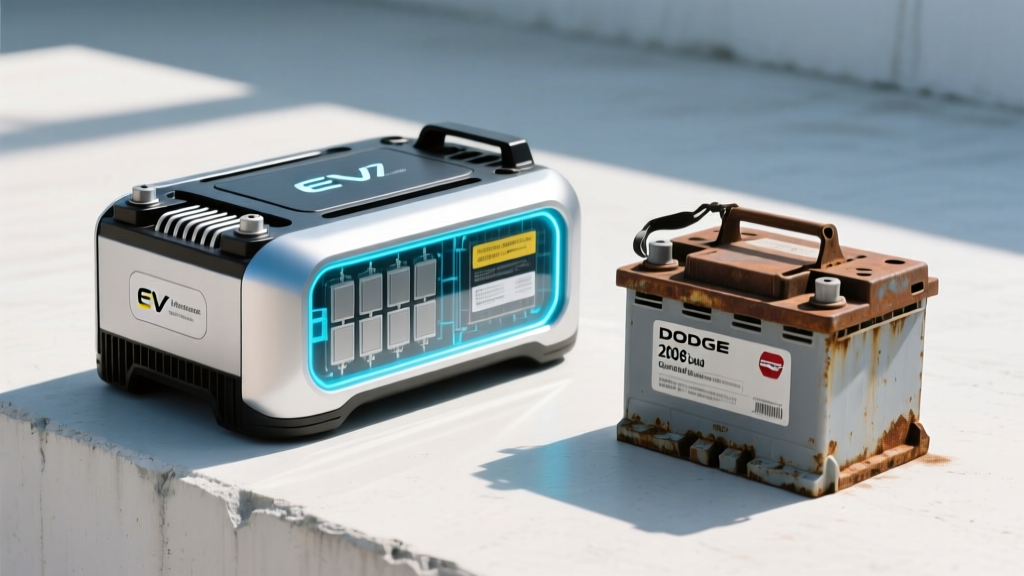
If you're shopping for an electric vehicle or already own one, battery longevity is likely your biggest long-term concern. Unlike a gas car's engine—which you can hear sputtering before it fails—an EV's high-voltage traction battery degrades silently, losing capacity gradually over years and charge cycles. The good news? The data from millions of EVs on the road tells a reassuring story: modern lithium-ion packs are outlasting early pessimistic projections by a wide margin.
Based on aggregated fleet data from manufacturers and third-party studies, most EV batteries lose roughly 5–10% of their original capacity in the first 100,000 miles, with the rate of loss slowing significantly after the initial break-in period. Tesla's 2024 Impact Report, for instance, showed its fleet retaining an average of 88% capacity at 200,000 miles. Hyundai and Kia's E-GMP platform vehicles have demonstrated similar trajectories. This isn't marketing—it's telemetry from hundreds of thousands of real vehicles.
But averages obscure important nuance. Your mileage—literally—will vary based on chemistry, climate, charging habits, and how aggressively you use DC fast charging. Let's break down every factor that matters.
LFP vs. NMC/NCA: Chemistry Determines Degradation Behavior
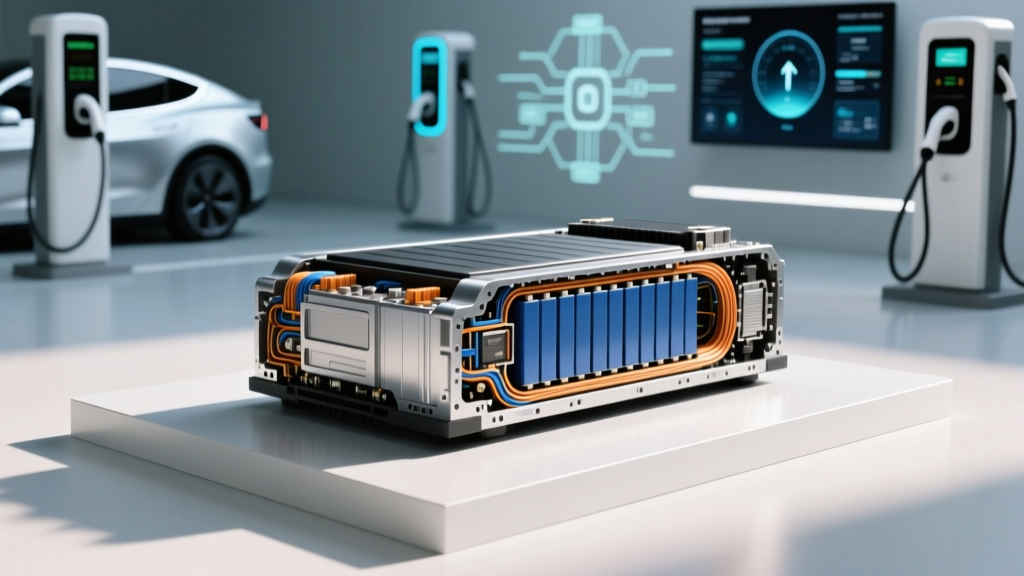
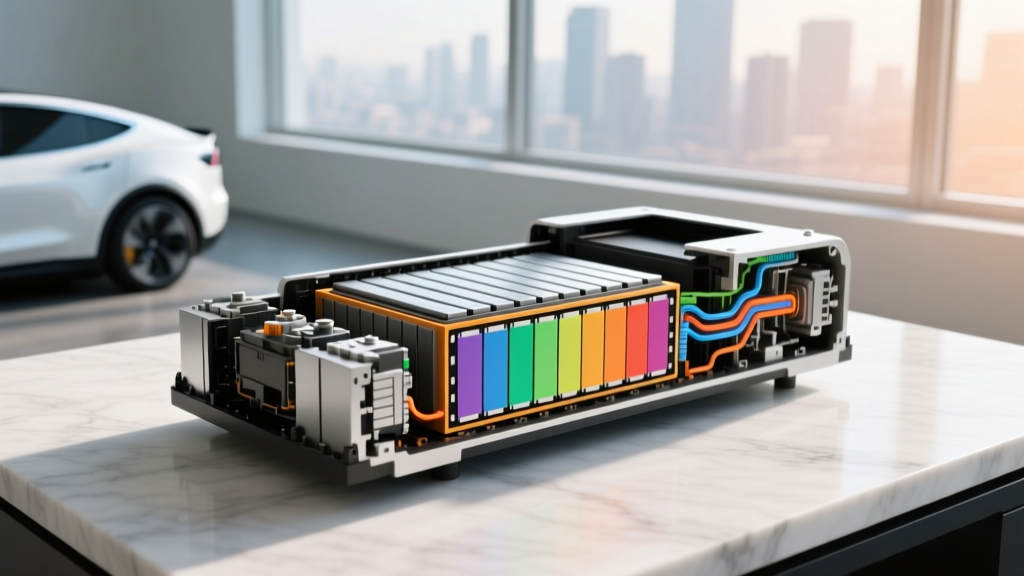
Not all EV batteries are built the same. The two dominant cathode chemistries in 2026 passenger EVs are LFP (lithium iron phosphate) and NMC/NCA (nickel manganese cobalt / nickel cobalt aluminum). The chemistry you drive directly shapes how your battery ages, how far you can go, and how it handles cold weather.
| Attribute | LFP (LiFePO₄) | NMC / NCA |
|---|---|---|
| Energy Density | ~160–180 Wh/kg (lower) | ~220–300 Wh/kg (higher) |
| Typical Cycle Life | 3,000–5,000+ cycles | 1,000–2,000 cycles |
| Degradation Rate | Slower, more linear | Slightly faster early, then plateaus |
| Cold-Weather Performance | Weaker; more range loss below 32°F | Better low-temp conductivity |
| Cost per kWh | Lower (~$80–100/kWh cell-level) | Higher (~$110–140/kWh cell-level) |
| Recommended Daily SoC | 100% OK (manufacturer-approved) | 80% preferred for daily use |
| Common In (2026 Models) | Tesla Model 3/Y RWD, Ford Mustang Mach-E Select, BYD, Rivian Standard | Tesla Long Range, Hyundai Ioniq 5/6, Kia EV6/EV9, BMW iX, Lucid Air |
| Cobalt Content | None | Yes (supply-chain & ethical concerns) |
The practical takeaway: LFP batteries trade range-per-kWh for exceptional longevity and the convenience of regular 100% charging. If you commute daily, charge at home, and don't need 350+ miles of EPA range, LFP is increasingly the smarter long-horizon choice. NMC/NCA gives you more range in a lighter, more compact pack—critical for long-range trims and larger vehicles—but demands more careful state-of-charge management to minimize degradation.
Real-World Degradation Data: What to Expect by Year and Mileage
Degradation is not linear. Most lithium-ion packs experience a steeper capacity drop in the first 1–2 years (roughly 2–5%), then settle into a very gradual decline. This "break-in loss" is normal and accounted for in manufacturer engineering margins. Here's what aggregated fleet data suggests for typical use:
| Mileage | Approximate Age | Avg. Capacity Retained (NMC) | Avg. Capacity Retained (LFP) |
|---|---|---|---|
| 25,000 mi | ~1–2 years | 95–97% | 97–98% |
| 50,000 mi | ~3–4 years | 92–95% | 95–97% |
| 100,000 mi | ~6–8 years | 88–92% | 92–95% |
| 150,000 mi | ~10–12 years | 83–88% | 89–93% |
| 200,000 mi | ~13–15 years | 78–85% | 86–91% |
Sources: Tesla Impact Report fleet data, Recurrent Auto battery studies, Geotab fleet analysis. Individual results vary with climate, charging behavior, and thermal management quality.
A critical point: "degraded" does not mean "dead." A battery at 80% State of Health (SoH) still functions perfectly—it just delivers 80% of its original EPA range. A 300-mile EV at 80% SoH still gives you 240 miles, which covers the vast majority of daily driving needs. Most EV owners sell or trade their vehicles long before the battery reaches a functionally limiting level of degradation.
Factors That Accelerate (or Slow) Battery Degradation
Battery aging isn't just about time—it's about how you treat the pack. The five most impactful factors, ranked roughly by magnitude of effect:
1. State of Charge (SoC) Habits
Keeping an NMC battery at 100% SoC for extended periods stresses the cathode. For daily driving, setting your charge limit to 80% (or 90% at most) meaningfully extends pack life. LFP batteries are an exception—manufacturers like Tesla and Ford explicitly recommend periodic 100% charges for LFP to support the battery management system's (BMS) cell-balancing routines.
2. DC Fast Charging Frequency
DC fast charging at 150–350 kW generates significant heat and pushes lithium ions into the anode at high rates. Occasional road-trip fast charging is fine—modern thermal management systems precondition the battery to handle it. But if you're DC fast charging daily (because you lack home Level 2 access), expect measurably higher degradation. Geotab's fleet data showed vehicles that fast-charged more than 3x per week degraded roughly 1–2% faster over 48 months compared to those primarily using Level 2.
3. Extreme Temperatures
Heat is the enemy of lithium-ion longevity. Sustained exposure to ambient temperatures above 95°F—especially combined with high SoC—accelerates electrolyte decomposition. Cold doesn't permanently degrade the battery, but it temporarily reduces available capacity and increases internal resistance. Vehicles with active liquid thermal management (Tesla, Hyundai E-GMP, GM Ultium) handle extremes far better than passively cooled packs.
4. Depth of Discharge (DoD)
Regularly draining the battery to 0% or very low SoC stresses the cells. The sweet spot for NMC longevity is operating between roughly 20% and 80%. You don't need to obsess over this—occasional deep discharges on road trips are fine—but habitual 100%→0% cycling will show up in your SoH data over time.
5. Calendar Aging
Even a parked EV battery degrades slowly over time, a phenomenon called calendar aging. Storing a vehicle at very high or very low SoC for weeks or months accelerates this. If you're leaving your EV for an extended period, aim for ~50% SoC and a moderate temperature environment.
Battery Care Checklist: Maximize Your Pack's Lifespan
- Daily charge limit: Set to 80% for NMC/NCA; 100% is fine for LFP
- Fast charging: Use DC fast charging for road trips, not daily commuting (if you have Level 2 home access)
- Avoid extremes: Don't leave the car at 100% SoC in hot weather for days; don't store at 0% SoC
- Precondition: Use scheduled departure/charging to precondition the battery before fast charging and cold-weather driving
- Drive it: Regular use with moderate cycling (20–80%) is healthier than sitting idle for weeks
- Monitor SoH: Check State of Health every 6–12 months (see section below)
EV Battery Warranty Terms: What's Actually Covered
Federal law mandates a minimum EV battery warranty of 8 years / 100,000 miles (in California Air Resources Board states, it's 10 years / 150,000 miles for PZEV-classified vehicles). Most manufacturers meet or exceed this baseline. The critical detail is the capacity retention threshold—the SoH level below which the manufacturer will replace or repair the battery under warranty.
| Manufacturer | Warranty Period | Mileage Limit | Capacity Threshold |
|---|---|---|---|
| Tesla (Model 3/Y LFP) | 8 years | 100,000 mi | 70% SoH |
| Tesla (Model 3/Y LR, S, X) | 8 years | 120,000 mi | 70% SoH |
| Hyundai / Kia (E-GMP) | 10 years | 100,000 mi | 70% SoH |
| GM (Ultium platform) | 8 years | 100,000 mi | 70% SoH |
| Ford (Mach-E, F-150 Lightning) | 8 years | 100,000 mi | 70% SoH |
| Rivian (R1T / R1S) | 8 years | 175,000 mi | 70% SoH |
| BMW (iX, i4, i7) | 8 years | 100,000 mi | 70% SoH |
| Volkswagen (ID.4) | 8 years | 100,000 mi | 70% SoH |
Verify current warranty terms on the manufacturer's official site—details can change by model year. CARB-state residents may be entitled to extended coverage.
What triggers a warranty claim? If your battery's measured SoH drops below the threshold (typically 70%) within the warranty period, the manufacturer will repair or replace the pack. In practice, this almost always means replacing failed modules rather than the entire battery. Outright full-pack replacements under warranty are rare because the BMS can isolate and bypass individual degraded modules.
Note: warranties cover defects and abnormal degradation. They do not cover damage from accidents, flooding, or modifications. They also typically do not cover gradual capacity loss above the threshold—a battery at 72% SoH at year 7 is functioning "within spec" even though you've lost 28% of your original range.
EV Battery Replacement Cost: What It Actually Takes
This is where fear-mongering runs rampant, so let's anchor the conversation in data. Yes, a full traction battery replacement is expensive. But context matters enormously: the vast majority of EV batteries never need replacement during the vehicle's useful life. According to data from Recurrent Auto, fewer than 1.5% of EVs in their study cohort required battery replacement—and most of those were covered under warranty due to manufacturing defects, not degradation.
When replacement is needed (typically at 15+ years or 200,000+ miles, or after physical damage), here's what it costs in 2026:
| Vehicle | Battery Size (kWh) | Chemistry | Estimated Replacement Cost |
|---|---|---|---|
| Tesla Model 3 RWD | ~60 kWh | LFP | $8,000–$12,000 |
| Tesla Model Y Long Range | ~75 kWh | NMC | $12,000–$16,000 |
| Hyundai Ioniq 5 | 77.4 kWh | NMC | $11,000–$15,000 |
| Ford Mustang Mach-E Extended Range | 91 kWh | NMC | $14,000–$18,000 |
| Ford F-150 Lightning Extended Range | 131 kWh | NMC | $18,000–$25,000 |
| Chevrolet Silverado EV | ~200 kWh | NMC (Ultium) | $22,000–$30,000 |
| Rivian R1T (Large Pack) | ~128 kWh | NMC | $16,000–$22,000 |
Costs include parts and labor at manufacturer-authorized service centers. Third-party and refurbished packs may be available at 30–50% lower cost as the EV aftermarket matures. Cell-level prices continue declining ~8–12% annually.
A few important economic points:
- Module-level repair is often possible. Many packs allow replacing individual modules (a fraction of the full pack cost) rather than the entire battery. A single module swap might cost $1,500–$4,000.
- Cell prices are falling. Battery cell costs have dropped from over $1,000/kWh in 2010 to roughly $100–130/kWh in 2026, per BloombergNEF. By the time your battery actually needs replacing in 2040, costs will likely be substantially lower.
- The car will likely be retired first. The average US vehicle age is 12.6 years. Most EVs will be sold, traded, or scrapped before the battery reaches end-of-life.
How to Check Your Battery's State of Health (SoH)
State of Health (SoH) is a percentage representing your battery's current maximum capacity relative to when it was new. A new battery is 100% SoH; a battery that can store only 85 kWh of its original 100 kWh is at 85% SoH. Here's how to monitor it:
In-Vehicle Displays
Some manufacturers provide SoH data directly. Tesla's service menu (accessible via the software screen) shows battery health metrics. Nissan Leaf's dashboard includes a capacity bar indicator. Hyundai/Kia provide SoH readouts in the EV settings menu on newer E-GMP models.
OBD-II Diagnostic Tools
For vehicles that don't surface SoH natively, an OBD-II dongle paired with an app like Car Scanner, LeafSpy (Nissan Leaf), or OBDeleven (VW/Audi) can read the BMS-reported SoH value directly from the vehicle's CAN bus. These tools cost $20–$80 for the hardware and provide dealer-level battery diagnostics.
Third-Party Battery Health Reports
Services like Recurrent offer battery health reports that compare your vehicle's actual range data against fleet averages for your model and mileage. These are increasingly used in the used-EV market to provide transparency on battery condition—valuable if you're buying or selling.
The DIY Range Test
Charge to 100% (on an LFP vehicle or occasionally on NMC) and note the displayed range estimate. Compare it to the original EPA-rated range for your model. While the dashboard range estimator isn't perfectly precise, tracking it over time gives you a practical sense of capacity loss. A 310-mile EPA vehicle now showing 275 miles at 100% suggests roughly 88–89% SoH—accounting for variables like temperature and driving style.
Emerging Battery Technology: What's on the Horizon
Current lithium-ion technology is mature and reliable, but the next generation of battery chemistries promises step-change improvements. Here's what's realistic versus hype:
Solid-State Batteries
Solid-state batteries replace the liquid electrolyte with a solid material, potentially doubling energy density, enabling faster charging, and virtually eliminating thermal runaway risk. Toyota has announced solid-state EV prototypes targeting 2027–2028 production, and Samsung SDI is ramping a pilot line. However, mass-market solid-state EVs are not expected before 2029–2030 at the earliest, and initial applications will likely be limited to premium vehicles due to manufacturing cost. This is real technology, but the timeline keeps slipping—treat any "available now" claims with skepticism.
Silicon-Dominant Anodes
Companies like Sila Nanotechnologies and Group14 are replacing graphite anodes with silicon-dominant materials, boosting energy density by 20–40%. Mercedes-Benz's upcoming G-Class EV (announced for 2025–2026) is among the first production vehicles using silicon-anode cells from Group14. This technology is closer to mainstream adoption than solid-state and will likely proliferate through the late 2020s.
Sodium-Ion Batteries
Sodium-ion chemistry uses abundant, cheap materials and performs well in cold weather. CATL and BYD are already producing sodium-ion cells in China, primarily for lower-range city EVs and energy storage. For the US market, expect sodium-ion to appear in entry-level EV trims or as a secondary battery in dual-chemistry packs (as CATL has demonstrated) within the next 2–3 years. Energy density is lower than LFP, so this won't replace NMC in long-range vehicles.
The bottom line on future tech: Don't delay an EV purchase waiting for solid-state. Current lithium-ion batteries—both LFP and NMC—are proven, warrantied for 8–10 years, and demonstrably lasting 200,000+ miles with manageable degradation. The next generation will be better, but today's tech is already good enough for the vast majority of drivers.
Frequently Asked Questions
How long do EV batteries actually last in years and miles?
Based on current fleet data, most EV batteries retain 80–90% of their original capacity at 150,000–200,000 miles (roughly 12–15 years of average US driving at ~13,500 miles/year). The battery is typically the longest-lasting major component in an EV—outlasting suspension, interior, and infotainment systems. According to fueleconomy.gov, modern EV batteries are designed to last the lifetime of the vehicle.
How much does it cost to replace an EV battery?
Full replacement costs range from roughly $8,000 for a smaller LFP pack (Tesla Model 3 RWD) to $25,000–$30,000 for a large truck pack (F-150 Lightning Extended Range, Silverado EV), including parts and labor. However, fewer than 2% of EVs ever need out-of-warranty battery replacement. Module-level repairs cost significantly less ($1,500–$4,000), and most failures within the first 8–10 years are covered by the manufacturer's warranty.
What does the EV battery warranty actually cover?
By federal mandate, EV batteries carry a minimum warranty of 8 years / 100,000 miles (10 years / 150,000 miles in CARB states). The warranty guarantees the battery will retain at least 70% of its original capacity (the threshold varies slightly by manufacturer). If SoH drops below the threshold within the warranty period, the manufacturer repairs or replaces the battery at no cost. The warranty covers defects and abnormal degradation but not accident damage, misuse, or modifications.
Is LFP or NMC better for long-term battery health?
For pure longevity and ease of ownership, LFP wins. It tolerates 100% daily charging, has a higher cycle life (3,000–5,000+ cycles vs. 1,000–2,000 for NMC), and degrades more slowly and linearly. The trade-off is lower energy density (meaning less range for the same pack weight) and worse cold-weather performance. If you need maximum range or live in a very cold climate, NMC/NCA remains the better fit—just maintain disciplined 80% daily charge limits.
Does frequent DC fast charging damage my EV battery?
DC fast charging accelerates degradation slightly, but the effect is smaller than many fear. Modern EVs precondition the battery before fast charging, managing temperature to minimize stress. Geotab fleet data suggests that vehicles fast-charging 3+ times per week showed roughly 1–2% additional capacity loss over 4 years compared to Level 2-only charging. For road trips, fast charge without worry. For daily use, Level 2 home charging is gentler and cheaper.
Can I check my EV battery health myself?
Yes. Depending on your vehicle, you can check SoH through the in-dashboard EV settings menu, via an OBD-II diagnostic tool (like Car Scanner or LeafSpy), or through a third-party battery health report service like Recurrent. Monitoring SoH annually gives you a clear picture of your battery's aging trajectory and helps you plan for the long term.