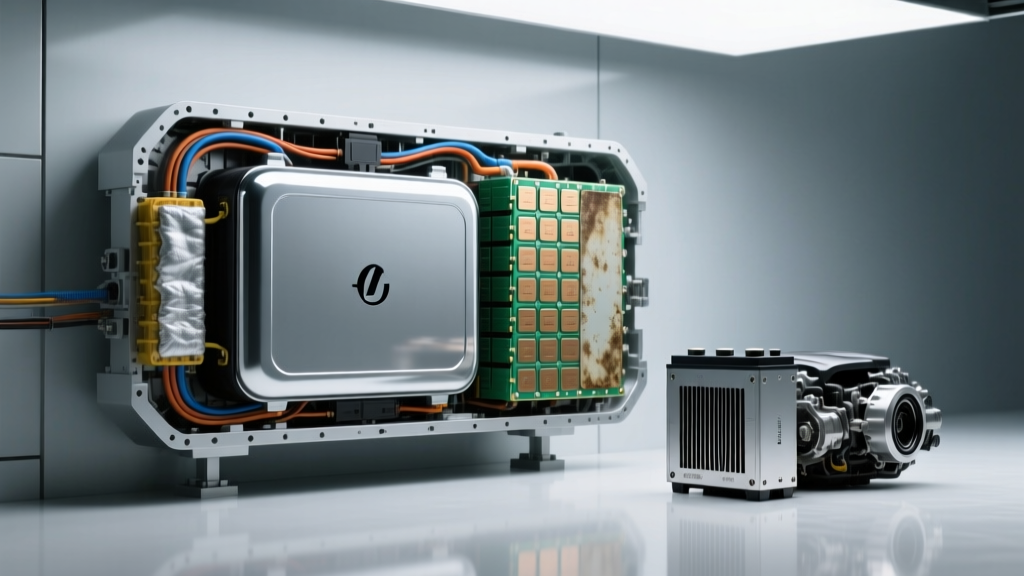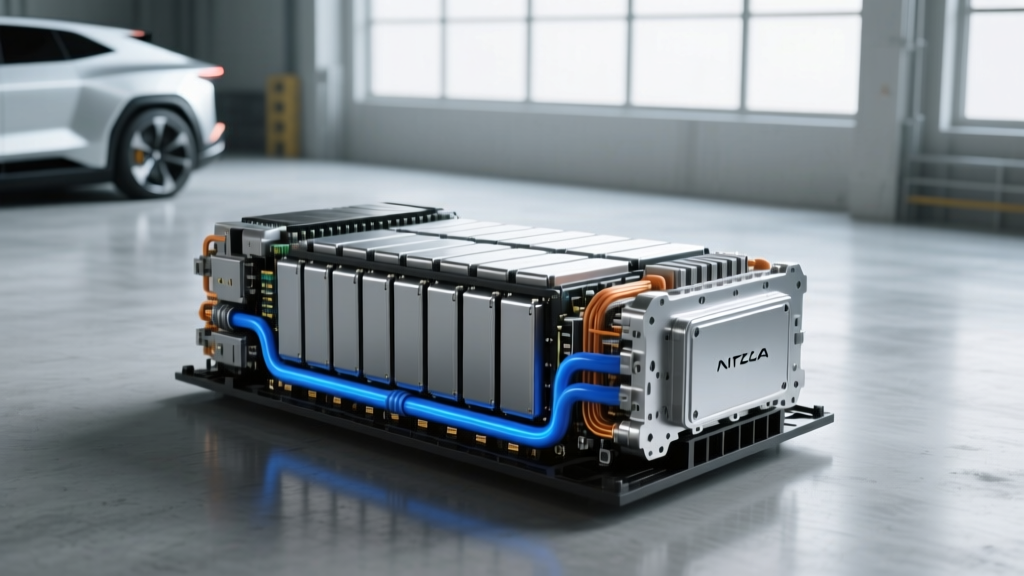
The Nikola Tre BEV (Battery Electric Vehicle) is one of the few Class 8 electric semi-trucks in real-world fleet operation, and its battery system is the single most expensive and consequential component on the chassis. Understanding the Nikola Tre BEV battery chemistry — specifically its use of NMC (nickel manganese cobalt) lithium-ion cells — is essential for fleet operators evaluating total cost of ownership, duty-cycle suitability, and long-term degradation risk.
This guide breaks down the Tre BEV's NMC pack architecture, compares it to LFP alternatives entering the heavy-duty market, and provides concrete data on degradation rates, warranty coverage, replacement costs, and health-monitoring practices. Whether you're spec'ing a fleet or researching commercial EV battery longevity, these are the numbers that matter.
Nikola Tre BEV Battery Pack: NMC Chemistry at Scale
The Nikola Tre BEV uses a high-voltage traction battery rated at up to 738 kWh of total capacity (usable capacity varies by configuration and model year). The cells employ NMC (Nickel Manganese Cobalt Oxide) chemistry — a cathode formulation that prioritizes energy density, which is critical for a Class 8 truck that needs 150–330+ miles of real-world range while hauling 80,000 lbs GVWR.
NMC cells offer a favorable energy-to-weight ratio compared to LFP (Lithium Iron Phosphate), which is why most long-range passenger EVs and heavy-duty trucks have historically favored NMC or NCA (Nickel Cobalt Aluminum) formulations. For the Tre BEV, the energy density advantage translates into fewer battery modules needed to achieve target range — reducing overall vehicle weight and preserving payload capacity.
| Attribute | NMC (Nikola Tre BEV) | LFP (Emerging HD Alternatives) |
|---|---|---|
| Energy Density (cell-level) | ~220–260 Wh/kg | ~150–180 Wh/kg |
| Cycle Life (to 80% SoH) | ~1,500–2,500 cycles | ~3,000–5,000+ cycles |
| Cold-Weather Performance | Better low-temp conductivity | More capacity loss below 32°F |
| Thermal Stability | Good; requires active BMS | Excellent; inherently safer |
| Cost per kWh (cell-level, 2026) | ~$110–$130 | ~$75–$95 |
| Cobalt Content | Yes (supply-chain risk) | None |
| Best Suited For | Long-range, weight-sensitive duty cycles | Short-haul, high-cycle, depot-return routes |
The trade-off is clear: NMC gives the Tre BEV the range and payload headroom needed for regional-haul and drayage routes, but it comes with a shorter cycle life and higher per-kWh cost than LFP. For fleets running 200+ miles per shift with heavy loads, NMC remains the pragmatic choice in 2026. For depot-based, short-haul operations with frequent top-ups, LFP competitors are becoming worth evaluating.
Real-World Degradation: What the Data Shows
Battery degradation is the gradual, irreversible loss of usable capacity over time and charge cycles. For a 738 kWh pack, even a 10% loss means 73.8 kWh less energy — roughly 25–35 fewer miles of range under load.
Based on fleet-reported data and manufacturer disclosures for NMC-based heavy-duty packs similar to the Tre BEV's architecture, here are realistic degradation benchmarks:
| Timeframe | Approx. Cycles | Typical Capacity Retention | Range Impact (from ~330 mi baseline) |
|---|---|---|---|
| Year 1 | ~300–365 | 95–97% | −10 to −17 mi |
| Year 3 | ~900–1,100 | 88–92% | −26 to −40 mi |
| Year 5 | ~1,500–1,800 | 82–88% | −40 to −60 mi |
| Year 7–8 | ~2,100–2,500 | 75–82% | −60 to −83 mi |
These figures assume a mix of DC fast charging (150–350 kW) and depot Level 2 charging, moderate thermal management use, and typical regional-haul duty cycles. Fleets that rely exclusively on high-power DCFC (>250 kW) daily, operate in extreme heat (>100°F ambient), or regularly charge to 100% SoC will see faster degradation — potentially hitting the 80% threshold closer to year 5 or 6.
According to data compiled by the National Renewable Energy Laboratory (NREL), NMC cells in controlled testing retain approximately 85–90% capacity after 1,000 full equivalent cycles when kept within a 20–80% state-of-charge window and maintained at 25°C. Real-world fleet conditions are less ideal, which is why the degradation curve steepens slightly after year 3.
Battery Warranty: What Nikola Covers
The Nikola Tre BEV's battery warranty is a critical risk-mitigation tool for fleet buyers. Warranty terms for commercial EV batteries differ from passenger vehicles — they're structured around duty-cycle expectations and fleet-mileage accumulation rates.
| Parameter | Coverage |
|---|---|
| Duration | Up to 8 years (varies by contract) |
| Mileage | Up to 500,000 miles (fleet-dependent) |
| Capacity Retention Threshold | 70% of original usable capacity |
| What's Covered | Defects, abnormal degradation below threshold |
| What's Excluded | Damage from misuse, unauthorized modifications, extreme abuse charging |
| Remedy | Module replacement, full pack replacement, or prorated credit |
The 70% retention threshold is standard across most commercial EV battery warranties. If a Tre BEV's 738 kWh pack drops below ~517 kWh usable before the warranty expires, Nikola is contractually obligated to remedy — typically through module-level replacement rather than a full pack swap, which reduces downtime and cost.
Fleet operators should verify exact warranty terms with their Nikola dealer or fleet representative, as commercial agreements are often customized based on fleet size, duty cycle, and charging infrastructure commitments.
Replacement Cost: When and How Much
Most EV batteries — including heavy-duty NMC packs — outlast the vehicle's first ownership cycle. However, understanding replacement economics is essential for second-life planning and residual-value calculations.
| Vehicle Class | Battery Size | Estimated Pack Cost | Typical Replacement Timeline |
|---|---|---|---|
| Passenger EV (e.g., Tesla Model Y) | 75–82 kWh | $12,000–$18,000 | Rarely needed in first 10 years |
| Light-Duty Commercial (e.g., E-Transit) | 68–89 kWh | $10,000–$16,000 | Year 10+ if at all |
| Class 8 Semi (e.g., Nikola Tre BEV) | 500–738 kWh | $65,000–$110,000 | Year 7–10 depending on duty cycle |
For the Tre BEV's 738 kWh pack, a full replacement at current NMC cell pricing (~$110–$130/kWh at pack level) falls in the $80,000–$110,000 range, plus labor. However, module-level repair — replacing only degraded sections — can reduce that to $20,000–$40,000 depending on how many modules need swapping.
Cell prices continue to decline. BloombergNEF's 2025 battery price survey showed pack-level NMC costs dropping roughly 8–12% annually, meaning a replacement in 2030 could cost 30–40% less than today's figures. Fleets planning a 10-year vehicle hold should model replacement costs at ~$60,000–$75,000 in 2030 dollars.
Factors That Accelerate (or Slow) Degradation
Battery longevity is not fixed — it's heavily influenced by how the pack is used. For fleet managers, operational policies around charging and route assignment directly impact how long the Tre BEV's NMC cells last before hitting that 70% warranty threshold.
Key Degradation Factors for NMC Packs
- DC Fast Charging Frequency: Daily use of 250+ kW DCFC generates significant heat. Fleets that can use overnight Level 2 (19–22 kW) depot charging for routine top-ups and reserve DCFC for mid-shift needs will extend pack life by 15–25%.
- State of Charge (SoC) Habits: NMC cells degrade fastest when held at 100% SoC or dropped to 0%. Operating in a 15–85% window is ideal. Some fleet telematics systems allow SoC ceiling settings — use them.
- Extreme Temperatures: Ambient heat above 95°F accelerates calendar degradation. Cold below 20°F doesn't permanently damage cells but forces the thermal management system to draw energy, reducing effective range. Preconditioning the battery before fast charging in cold weather is critical.
- Depth of Discharge (DoD): Shallow cycles (e.g., 60% DoD instead of 90%) dramatically extend cycle life. Route planning that avoids full pack depletion pays dividends.
- Calendar Aging: Even a parked battery degrades. NMC cells stored at 100% SoC in hot conditions lose capacity faster than those stored at 50% SoC in moderate temps. Long-term fleet storage protocols matter.
Monitoring Battery Health: State of Health (SoH) in Practice
State of Health (SoH) is the percentage of a battery's original usable capacity that remains available. A new Tre BEV starts at 100% SoH; hitting 70% triggers warranty consideration.
Fleet operators monitor SoH through several channels:
- Nikola Fleet Management Portal: The Tre BEV transmits real-time battery telemetry — SoC, SoH estimate, cell voltage spread, pack temperature — to Nikola's cloud platform. Fleet managers can view trends across vehicles and flag units with anomalous degradation curves.
- OBD-II / Diagnostic Scans: Third-party diagnostic tools can read battery management system (BMS) data, including individual module voltages and internal resistance values. Rising internal resistance is an early indicator of cell aging.
- Range Tracking: The simplest proxy — if a truck that originally delivered 300 miles on a full charge now delivers 250 under identical load and conditions, SoH is approximately 83%.
- Charging Curve Analysis: A healthy NMC pack accepts peak kW rates predictably. If DC fast charging sessions consistently take 20–30% longer to reach 80% SoC than they did when new, internal resistance has increased and SoH is declining.
Best practice: log SoH readings monthly and correlate them with duty-cycle changes. A sudden SoH drop after a route reassignment to a hotter climate or higher-DCFC-frequency schedule can be caught early and corrected.
Emerging Battery Tech: What's Next Beyond NMC
While NMC dominates the heavy-duty EV space in 2026, several next-generation technologies are in development that could reshape fleet procurement decisions within the next 3–7 years:
Solid-State Batteries: These replace the liquid electrolyte with a solid conductor, promising energy densities of 350–500 Wh/kg and improved safety (no flammable electrolyte). Toyota, Samsung SDI, and QuantumScape have demonstrated prototype cells, but commercial-scale production for heavy-duty applications remains in the 2029–2032 window based on current manufacturing timelines. Solid-state is not available in any production Class 8 truck as of 2026.
Silicon Anode Cells: Replacing graphite anodes with silicon can boost energy density by 20–40%. Companies like Sila Nanotechnologies and Amprius are shipping silicon-anode cells for consumer electronics and aviation, but scaling to automotive-grade volumes at competitive cost is still 2–4 years away for HD applications.
LFP Improvements: CATL's second-generation LFP cells and LMFP (lithium manganese iron phosphate) variants are closing the energy-density gap with NMC. If LMFP reaches 200+ Wh/kg at scale — expected by 2027–2028 — it could become viable for regional-haul trucks, offering NMC-adjacent range with LFP-like cycle life and lower cost.
Fleet operators planning vehicle purchases in the 2026–2028 window should spec NMC-based trucks like the Tre BEV for long-range routes. Those with procurement cycles extending into 2030+ should watch LMFP and solid-state developments closely.
LFP vs NMC: Which Is Better for Your Fleet?
There is no universal winner — the right chemistry depends entirely on the duty cycle:
Choose NMC (like the Nikola Tre BEV) if:
- Your routes exceed 200 miles per shift under load
- Payload capacity is critical and battery weight matters
- You operate in cold climates where NMC's low-temperature advantage preserves range
- You can manage charging protocols to limit DCFC frequency and SoC extremes
Choose LFP if:
- Your routes are under 150 miles with depot-return patterns
- You prioritize maximum cycle life (5,000+ cycles) and lower replacement cost
- Your fleet operates primarily in moderate to warm climates
- You charge frequently at lower power levels (Level 2 depot charging)
For the specific use case the Nikola Tre BEV targets — regional haul, drayage, and distribution routes of 150–330 miles with heavy loads — NMC remains the correct engineering choice in 2026. The energy density advantage directly translates into payload and range that LFP cannot yet match at equivalent pack weight.
Frequently Asked Questions
How long do EV batteries last in a commercial truck?
For NMC packs like the Tre BEV's 738 kWh system, expect 7–10 years or 500,000+ miles before reaching the 70% capacity retention threshold that triggers warranty coverage. Many packs remain functional beyond this point — they simply offer reduced range. LFP packs in lighter-duty applications can last 10–15 years with proper management.
How much does a Nikola Tre BEV battery cost to replace?
A full 738 kWh NMC pack replacement is estimated at $80,000–$110,000 at 2026 cell pricing, plus labor. Module-level repairs (replacing only degraded sections) typically cost $20,000–$40,000. Prices are expected to decline 30–40% by 2030 as cell costs continue falling.
What does the battery warranty actually cover?
Nikola's battery warranty covers defects and abnormal degradation below 70% of original usable capacity for up to 8 years or 500,000 miles (terms vary by fleet agreement). It does not cover damage from misuse, accidents, unauthorized modifications, or charging outside specified parameters. Always confirm exact terms with your dealer.
How do I check battery health on the Tre BEV?
The primary method is through Nikola's fleet management telematics portal, which displays real-time SoH estimates, cell voltage data, and pack temperature. You can also track effective range under consistent load conditions and analyze DC fast-charging session times — both serve as practical SoH proxies.
Is LFP better than NMC for electric semi-trucks?
For long-range, heavy-load routes (200+ miles), NMC is better because of its superior energy density — you get more range per pound of battery. For short-haul, high-frequency routes under 150 miles, LFP is often better due to its longer cycle life, lower cost, and cobalt-free supply chain. The right choice depends on your specific duty cycle, not on which chemistry is "better" in isolation.
Does frequent DC fast charging damage the Tre BEV battery?
Exclusive reliance on high-power DCFC (250+ kW) accelerates NMC degradation compared to mixed charging profiles. Fleets that use overnight Level 2 depot charging for routine needs and reserve DCFC for mid-shift top-ups typically see 15–25% better capacity retention over 5 years. The battery's thermal management system mitigates some heat damage, but physics favors slower, cooler charging.