What Is the Naxtra Battery and Why Is It Getting Attention?
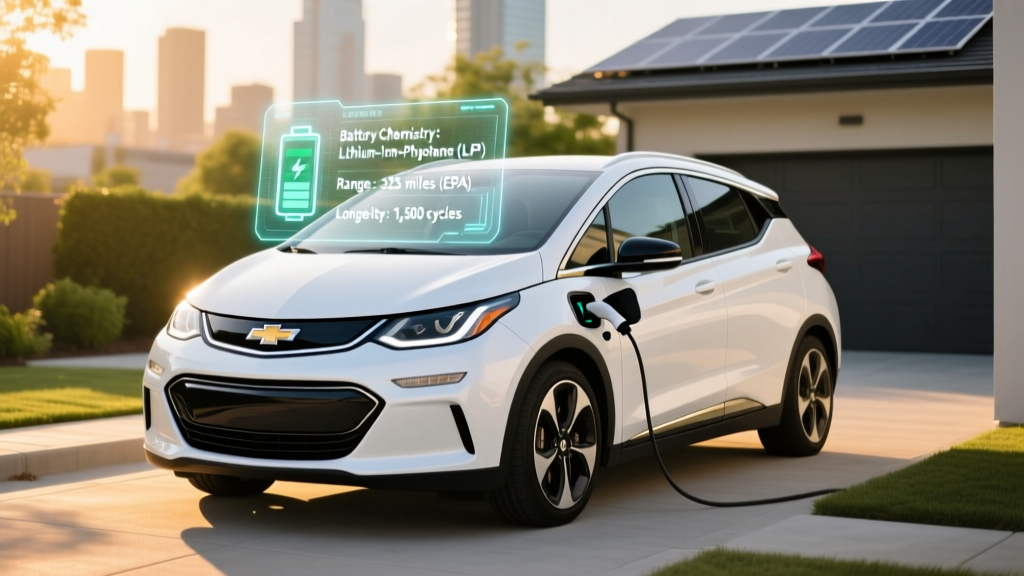
The term "Naxtra battery" has been circulating among EV enthusiasts and industry watchers as a next-generation cell chemistry concept. As of early 2026, no mainstream automaker has announced a production vehicle using a battery explicitly branded as "Naxtra." The name appears in patent filings and battery-research discussions referring to advanced sodium-ion or hybrid cathode architectures that aim to bridge the gap between the low cost of sodium-ion cells and the energy density of nickel-manganese-cobalt (NMC) lithium-ion packs.
For buyers researching their next EV, the practical question is not whether Naxtra is available today — it isn't — but whether the chemistry it represents could shift the calculus between the two dominant battery types on the market right now: lithium iron phosphate (LFP) and nickel-based NMC/NCA. This guide breaks down exactly what you get with each chemistry, what real-world degradation data shows, and how to protect whatever battery is in your EV today.
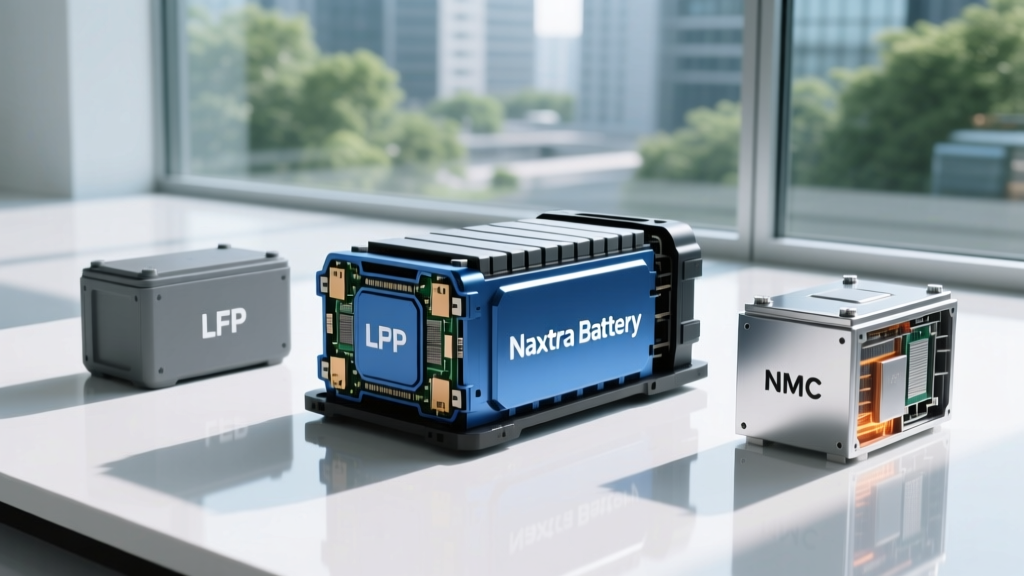
LFP vs NMC vs Emerging Chemistries: The Trade-Off Matrix
Every EV battery on sale in 2026 uses one of two dominant lithium-ion chemistries. Understanding the differences is essential because chemistry affects range, charging speed, longevity, cold-weather performance, and price.
| Attribute | LFP (Lithium Iron Phosphate) | NMC / NCA (Nickel-Based) | Naxtra / Next-Gen (Announced) |
|---|---|---|---|
| Energy Density (Wh/kg, cell-level) | 160–180 | 230–300 | Targeted 200–250 (est.) |
| Typical Cycle Life | 3,000–5,000+ cycles | 1,000–2,000 cycles | Claimed 4,000+ (lab) |
| Cold Performance (range loss at 20°F) | ~25–35% loss | ~15–25% loss | Unknown (pre-production) |
| Cost per kWh (pack-level, 2026) | $90–$110 | $120–$150 | Projected $85–$105 |
| Thermal Stability | Excellent (high runaway threshold) | Good (requires robust BMS) | Expected good (sodium hybrid) |
| Cobalt / Nickel Content | None | Significant | Minimal to none |
| Current Availability | Widely available (Tesla, BYD, Ford) | Widely available (Hyundai, GM, BMW) | Not yet in production vehicles |
Key takeaway: LFP wins on longevity and cost but sacrifices energy density and cold-weather range. NMC delivers more miles per kilogram of battery — critical for larger vehicles and longer-range trims — but costs more and degrades faster over thousands of cycles. A chemistry like Naxtra, if it reaches production, would aim to offer LFP-like cycle life with better energy density, but buyers should treat any such claims as preliminary until validated in real vehicles over real miles.
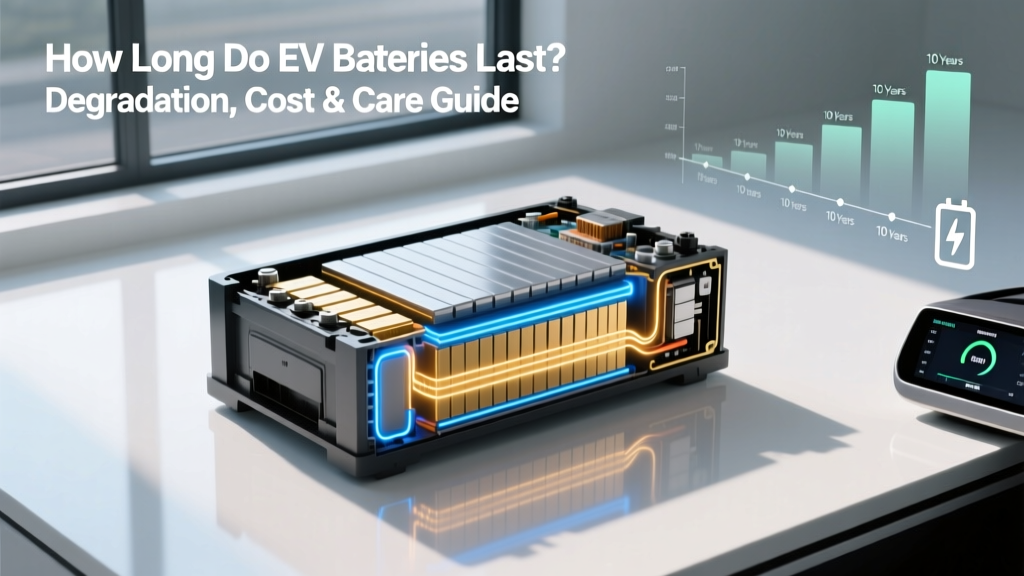
How Long Do EV Batteries Actually Last?
The fear of a dead battery is the single biggest psychological barrier to EV ownership. The data tells a more reassuring story.
Real-World Degradation Data Points (aggregated from fleet studies and owner reports):
- Tesla Model 3/Y (NMC, 2019–2023): Average ~5–7% capacity loss at 100,000 miles; ~8–12% at 150,000 miles. (Tesla Impact Report)
- Chevrolet Bolt EV/EUV (NMC, 2017–2023): Fleet data shows ~6–10% loss at 80,000 miles; a small number of early units required warranty replacements due to manufacturing defects, not normal degradation.
- BYD / Tesla Model 3 Standard Range (LFP, 2021–2025): Early LFP packs show ~3–5% loss at 80,000 miles, consistent with the chemistry's higher cycle-life rating.
- Nissan Leaf (LMO/NMC, passive-cooled, 2011–2017): The cautionary tale — passive air-cooled packs in hot climates saw 15–25%+ loss at 60,000–80,000 miles. Modern liquid-cooled packs avoid this.
How long do EV batteries last in years and miles? For a 2026 model-year EV with liquid-cooled thermal management, the reasonable expectation is 150,000–250,000 miles before the pack falls below 70% of original capacity — the typical warranty threshold. That's 12–18 years for the average American driver covering 12,000–14,000 miles annually. Most current-generation batteries will outlast the vehicle they're installed in.
What Does the Battery Warranty Actually Cover?
Federal law mandates a minimum 8-year/100,000-mile warranty on EV battery packs for emissions-related compliance, but most manufacturers exceed this. Here's what to look for:
| Manufacturer (2026 Models) | Battery Warranty | Capacity Retention Threshold | Notes |
|---|---|---|---|
| Tesla (Model 3/Y) | 8 yr / 120,000 mi (Long Range), 8 yr / 100,000 mi (RWD LFP) | 70% | Transferable to second owner |
| Hyundai / Kia (Ioniq 5, EV6, EV9) | 10 yr / 100,000 mi | 70% | Among the longest coverage terms |
| Ford (Mustang Mach-E, F-150 Lightning) | 8 yr / 100,000 mi | 70% | Covers battery and hybrid/electric components |
| GM (Ultium-based: Equinox EV, Blazer EV, Silverado EV) | 8 yr / 100,000 mi | 70% | Some commercial fleet terms differ |
| BMW (i4, iX, i7) | 8 yr / 100,000 mi | 70% | Lease-end battery assessment included |
| Rivian (R1T, R1S) | 8 yr / 175,000 mi | 70% | Higher mileage cap reflects adventure-use positioning |
What the warranty covers: Defects in materials or workmanship, and capacity loss below the stated threshold under normal use. What it typically excludes: Damage from accidents, improper charging equipment, flooding, or aftermarket modifications. Always read your specific warranty booklet — terms vary, and the capacity threshold is the critical number.
How Much Does an EV Battery Replacement Cost?
This is the question that generates the most anxiety — and the most misleading headlines. Context matters enormously.
| Vehicle Class / Example | Battery Size (kWh) | Estimated Replacement Cost (2026) | When Typically Needed |
|---|---|---|---|
| Compact EV (Chevrolet Equinox EV, Tesla Model 3 RWD) | 60–75 kWh | $8,000–$14,000 | Rarely before 150k+ mi; often never |
| Mid-size SUV (Hyundai Ioniq 5, Ford Mustang Mach-E) | 75–90 kWh | $12,000–$18,000 | Rarely before 150k+ mi; often never |
| Large SUV / Truck (Rivian R1T, F-150 Lightning, GMC Sierra EV) | 100–200 kWh | $18,000–$30,000+ | Rarely before 150k+ mi; often never |
| Luxury sedan (BMW i7, Mercedes EQS) | 100–120 kWh | $20,000–$28,000 | Rarely before 150k+ mi; often never |
The honest framing: Battery replacement costs are real and significant, but the probability of needing one outside of warranty is low for current-generation, liquid-cooled packs. Pack prices have fallen from over $1,000/kWh in 2010 to roughly $120–$140/kWh at the pack level in 2026 (BloombergNEF), and continue to trend downward. If a replacement is ever needed a decade from now, it will likely cost less than today's estimates. Additionally, module-level repair (replacing individual cell modules rather than the entire pack) is becoming more common and can cut costs by 50–70%.
Factors That Accelerate (or Preserve) Battery Life
Battery degradation is not a single-variable equation. How you charge, drive, and store your EV has a measurable impact on how much capacity your pack retains over time.
EV Battery Care — What the Data Says:
- State of Charge (SoC) habits: Storing your EV at 100% SoC for extended periods accelerates calendar degradation. For NMC packs, daily charging to 80% is optimal; LFP packs tolerate (and some manufacturers recommend) periodic 100% charges to recalibrate the BMS, but daily 100% storage is still unnecessary.
- DC fast-charging frequency: Occasional DC fast charging (150–350 kW) has minimal long-term impact. Daily exclusive use of DC fast charging — especially at high C-rates above 2C — can add 1–3% additional degradation over 100,000 miles compared to primarily Level 2 home charging. Use fast charging for road trips, not as your daily routine.
- Extreme temperatures: Lithium-ion cells degrade faster when exposed to sustained heat above 95°F (35°C) at high SoC. Cold weather (below 20°F) temporarily reduces range and available power but does not cause permanent damage — the battery management system (BMS) limits charge rate when cold to protect the cells. Preconditioning your battery before fast charging in cold weather is critical for both speed and health.
- Deep discharge avoidance: Regularly driving the pack below 10% SoC and letting it sit there stresses cells. Plug in when you get home, even if you don't need a full charge — most EVs allow you to set a charge limit.
- Software updates: Manufacturers periodically refine BMS algorithms via OTA updates. These can improve charge-curve management and thermal strategies, directly benefiting longevity. Keep your EV's software current.
How to Monitor Your Battery's State of Health (SoH)
State of Health (SoH) is the percentage of your battery's original usable capacity that remains available. A new EV starts at 100% SoH; a pack at 85% SoH still holds 85% of its original energy. Here's how to check it:
- In-vehicle displays: Some EVs (notably certain Hyundai/Kia and BMW models) show a battery health indicator in the settings menu. Tesla does not natively display SoH as a percentage, but you can infer it by comparing your current maximum range at 100% charge to the original EPA-rated range.
- OBD-II diagnostic tools: Devices like the OBDLink SX paired with apps such as EVNotify or Car Scanner can read the BMS-reported SoH directly from the vehicle's CAN bus. This is the most accurate consumer-accessible method.
- Dealer assessment: Most manufacturers can run a battery health report during service visits. Request this if you're approaching a warranty threshold or evaluating a used EV purchase.
- Third-party services: Companies like Recurrent Auto provide battery health reports based on telematics data, often available for free if you join their research fleet.
Practical tip for used-EV buyers: Before purchasing, ask the seller for a screenshot of the pack's current maximum range at 100% SoC, and compare it to the original EPA figure. A 2021 Tesla Model 3 Long Range originally rated at 353 miles EPA showing 320 miles at 100% has roughly 90% SoH — perfectly normal for 50,000–70,000 miles of use.
Looking Ahead: Solid-State, Silicon Anodes, and Sodium-Ion
The battery landscape is evolving rapidly, but timelines matter. Here's where emerging technologies stand as of 2026:
- Solid-state batteries: Toyota has announced production intent for solid-state cells targeting 2027–2028, claiming 750+ km (466 mi) range and 10-minute fast charging. Samsung SDI and QuantumScape are also advancing prototypes. However, solid-state packs remain in limited pilot production with no mass-market vehicle currently on sale using this technology. Expect initial deployment in low-volume, premium applications before broad availability.
- Silicon-dominant anodes: Companies like Sila Nanotechnologies and Group14 are supplying silicon-carbon anode materials that boost energy density by 15–25% over graphite. The Mercedes G-Class electric (2025+) uses a Sila anode in its pack. This technology is real and shipping, but currently limited to specific high-end applications.
- Sodium-ion batteries: CATL and BYD have begun deploying sodium-ion cells in Chinese-market micro-EVs and energy storage. Sodium-ion offers low cost, excellent cycle life, and good cold performance, but its lower energy density (~140–160 Wh/kg) limits it to short-range urban vehicles for now. This is the category where a "Naxtra"-type hybrid approach — blending sodium and lithium chemistries — could eventually find its niche.
Realistic timeline: For US-market buyers, LFP and NMC will remain the dominant chemistries through at least 2029. Solid-state and sodium-ion will supplement, not replace, lithium-ion in specific segments. The battery in the EV you buy today is a mature, well-understood technology — not a dead-end waiting to be obsoleted.
EV Battery FAQ
How long do EV batteries last in years and miles?
Current-generation liquid-cooled EV batteries typically retain 80–90% of their original capacity at 100,000–150,000 miles (roughly 8–12 years of average driving). Most will remain functional well beyond 200,000 miles, though with reduced range. The Nissan Leaf's early passive-cooled packs were an outlier; modern thermal management has largely solved this issue.
How much does an EV battery cost to replace?
Full pack replacement ranges from approximately $8,000 for a compact EV to $25,000–$30,000+ for a large truck or luxury sedan. However, most packs never need replacement within the vehicle's useful life. Module-level repairs can reduce costs significantly, and pack prices continue to decline annually.
What does the EV battery warranty cover?
Federal law requires a minimum 8-year/100,000-mile warranty. Most manufacturers guarantee the pack will retain at least 70% of its original capacity during that period. The warranty covers defects and abnormal degradation but excludes accident damage, misuse, and unauthorized modifications. (fueleconomy.gov provides current EV incentive and compliance information.)
LFP vs NMC — which battery chemistry is better?
Neither is universally better; it depends on your priorities. Choose LFP if you want maximum longevity, lower cost, and don't need the absolute longest single-charge range (ideal for daily commuters and standard-range trims). Choose NMC if you need maximum range, better cold-weather performance, or are buying a larger vehicle where energy density matters (long-range trims, SUVs, trucks). Both chemistries are proven and reliable in 2026.
How do I check and maximize my EV battery health?
Monitor SoH via your vehicle's BMS readout (through OBD-II tools or dealer diagnostics), charge primarily on Level 2 at home, set your daily charge limit to 80% for NMC (100% periodically is fine for LFP), minimize exclusive DC fast-charging use, precondition in cold weather, and avoid letting the pack sit at very low or very high SoC for extended periods. These habits, supported by degradation research, can add years of useful capacity to your pack.
Is the Naxtra battery available in any car I can buy today?
No. As of 2026, no production vehicle uses a battery branded or confirmed as "Naxtra." The term refers to emerging research into hybrid sodium-lithium or advanced cathode chemistries. Buyers should evaluate currently available LFP and NMC options based on proven data rather than wait for next-generation chemistries that have no confirmed production timeline in the US market.