What We Know About the 2027 Chevy Bolt EV Battery Capacity
Chevrolet's next-generation Bolt EV is one of the most anticipated affordable electric vehicles on the horizon. General Motors confirmed the Bolt's return on the Ultium platform, and while the 2027 model year is announced but not yet on sale, we can piece together a reliable picture of its battery architecture based on confirmed GM disclosures, the current Ultium platform specs, and the trajectory of the compact EV segment.
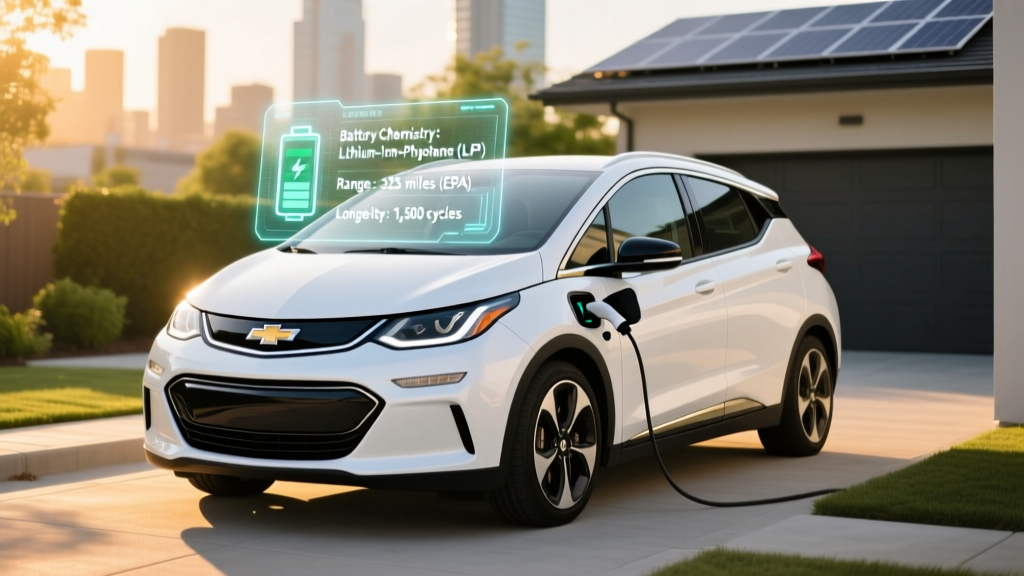
The outgoing Bolt EV (discontinued after 2023) carried a 65 kWh NMC (nickel manganese cobalt) lithium-ion battery delivering an EPA-estimated 259 miles of range. For the next-generation Bolt — expected to arrive for the 2026 or 2027 model year — GM has signaled a shift toward LFP (lithium iron phosphate) chemistry for the standard-range variant, with an estimated usable battery capacity between 60 and 70 kWh, targeting an EPA range in the 250–280 mile bracket.
| Battery Chemistry | LFP (standard range) / NMC (extended range, unconfirmed) |
| Estimated Usable Capacity | 60–70 kWh |
| Target EPA Range | 250–280 miles (estimated) |
| Platform | GM Ultium (next-gen BEV3 architecture) |
| DC Fast Charge (est.) | ~150 kW peak, 10–80% in ~30 min |
| Battery Warranty | 8 years / 100,000 miles (expected, per GM standard) |
Note: Specs are preliminary and based on GM platform disclosures. Final figures will be confirmed closer to launch. Source: Chevrolet Electric
This shift to LFP chemistry is the single biggest battery story for the new Bolt. It has direct implications for how long the battery lasts, how it performs in cold weather, and what it will cost to own over a decade. Let's break down every angle.
LFP vs NMC Battery Chemistry: Which Is in the New Bolt?
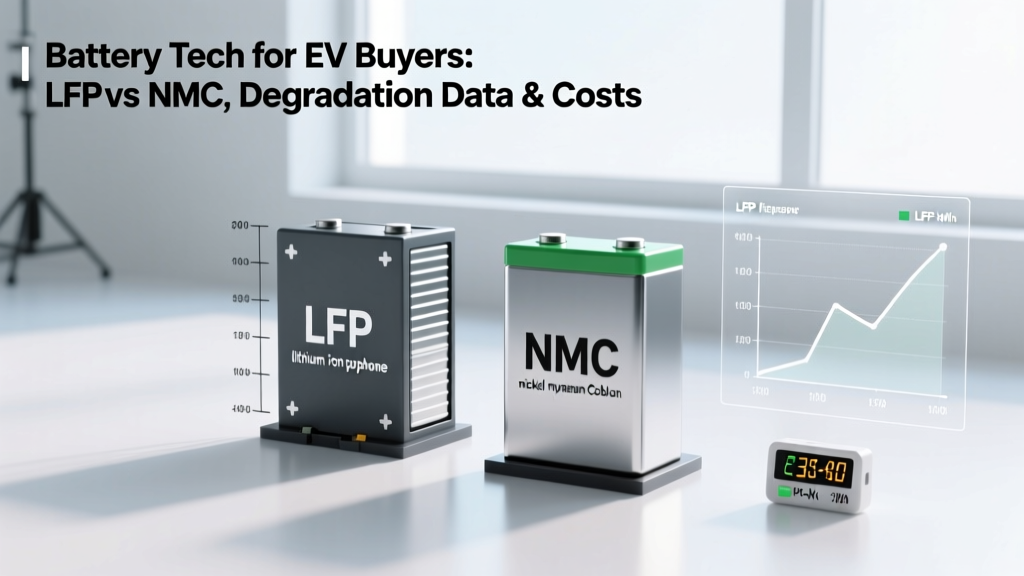
The battery chemistry inside an EV determines its energy density (how much range fits in a given weight and volume), its cycle life (how many charge-discharge cycles before meaningful degradation), its thermal stability, and its cost. The two dominant chemistries in 2026 are LFP (lithium iron phosphate) and NMC/NCA (nickel manganese cobalt / nickel cobalt aluminum).
GM's Ultium platform was originally designed around NMC pouch cells. However, GM has confirmed it will integrate LFP cells into certain models to hit lower price points — and the Bolt, positioned as one of the most affordable EVs in America, is the prime candidate.
| Attribute | LFP (Lithium Iron Phosphate) | NMC/NCA (Nickel Manganese Cobalt) |
|---|---|---|
| Energy Density | Lower (~160 Wh/kg cell-level) — heavier pack for same range | Higher (~250 Wh/kg cell-level) — more range per pound |
| Cycle Life | 3,000–5,000+ cycles before 80% capacity | 1,000–2,000 cycles before 80% capacity |
| Cold-Weather Performance | Weaker — greater range loss below freezing, slower cold charging | Better — less range loss, charges faster in cold |
| Thermal Stability / Safety | Excellent — highly resistant to thermal runaway | Good — requires more active thermal management |
| Cost | Lower — no cobalt or nickel, abundant iron/phosphate | Higher — volatile nickel/cobalt commodity pricing |
| Charging to 100% | Recommended periodically for cell balancing; no degradation penalty | Best kept at 80% daily; 100% accelerates wear |
| SoC Estimation | Flat voltage curve makes gauge less precise | Sloped voltage curve — more accurate range readout |
What this means for the 2027 Bolt: If GM fits an LFP pack, expect slightly less range per kilogram of battery compared to the old NMC Bolt, but a battery that will last significantly more charge cycles and tolerate daily 100% charging without accelerated degradation. The trade-off is reduced cold-weather range — LFP packs can lose 30–40% of range in sub-freezing conditions versus 20–30% for NMC, based on real-world testing by Recurrent Auto.
EV Battery Degradation: How Much Capacity Do You Actually Lose?
The most persistent myth in EV ownership is that batteries "wear out like phone batteries" and need replacement every few years. The data tells a different story.
According to aggregated fleet data from Geotab's analysis of over 10,000 EVs, the average EV battery loses approximately 2.3% of its capacity per year under typical use. That translates to roughly 85–90% State of Health (SoH) at the 100,000-mile mark and 75–85% SoH at 150,000 miles.
- Year 1: ~1–2% loss (initial formation loss)
- Years 2–5: ~1.5–2.5% loss per year (linear phase)
- Years 6–10: ~1–2% loss per year (degradation slows)
- 100,000 miles: ~85–92% SoH typical
- 150,000 miles: ~78–87% SoH typical
- 200,000 miles: ~72–82% SoH typical
LFP batteries tend to show slower degradation than NMC, often retaining 90%+ SoH at 100,000 miles. Tesla's 2023 Impact Report showed Model 3/Y batteries retaining ~88% capacity at 200,000 miles.
For the 2027 Bolt with a projected 65 kWh LFP pack, this means:
- At 100,000 miles: ~58–60 kWh usable (from ~65 kWh new) — still enough for 230+ miles of range
- At 150,000 miles: ~53–57 kWh usable — roughly 210–230 miles of range
- Most Bolt owners will sell or trade the vehicle before degradation becomes a practical concern
GM Battery Warranty: What the 2027 Bolt Will Cover
Federal law mandates that EV battery warranties cover a minimum of 8 years / 100,000 miles (10 years / 150,000 miles in California and states adopting CARB standards). GM has historically matched or exceeded these thresholds.
| Term | Expected Coverage |
|---|---|
| Duration | 8 years / 100,000 miles (whichever comes first) |
| CARB States | 10 years / 150,000 miles (CA, NY, MA, WA, OR, CO, and others) |
| Capacity Threshold | Below 70% of original capacity (expected, per GM precedent) |
| What's Covered | Battery module replacement or repair to restore above threshold |
| Transferability | Fully transferable to subsequent owners |
The 70% threshold is critical: if your 65 kWh Bolt battery degrades below ~45.5 kWh of usable capacity within the warranty period, GM is obligated to repair or replace it at no cost. Given the degradation data above, hitting 70% SoH within 8 years/100,000 miles is extremely unlikely under normal use — it would require a manufacturing defect or extreme abuse.
EV Battery Replacement Cost: What If You're Out of Warranty?
This is the number that generates the most anxiety. Let's ground it in reality.
| Vehicle / Battery Size | Estimated Replacement Cost | Source / Context |
|---|---|---|
| Chevy Bolt EV (65 kWh, outgoing) | $14,000–$16,000 (parts + labor) | GM dealer estimates, 2023–2025 |
| Tesla Model 3 (75 kWh) | $12,000–$16,000 | Tesla service center quotes |
| Hyundai Ioniq 5 (77.4 kWh) | $15,000–$20,000 | Hyundai dealer estimates |
| Ford F-150 Lightning (131 kWh) | $25,000–$35,000 | Ford dealer estimates |
| 2027 Bolt (est. 65 kWh LFP) | $10,000–$15,000 (projected) | Based on LFP cost trajectory |
Context that matters: Battery replacement is rare. According to data from Consumer Reports and fueleconomy.gov, fewer than 1.5% of EVs require a battery replacement outside of warranty coverage. Most EV batteries outlast the vehicle itself. By the time a 2027 Bolt might need a battery swap in 2037–2040, LFP cell prices are projected to fall below $50/kWh, potentially bringing replacement costs under $8,000.
Additionally, many replacements involve swapping individual degraded modules rather than the entire pack. On GM's Ultium platform, the battery is composed of modular trays — a technician can replace one or two trays for a fraction of the full-pack cost.
Factors That Accelerate (or Preserve) Battery Life
Not all miles are equal when it comes to battery wear. Here's what the data shows about the habits that meaningfully impact long-term State of Health:
- Daily charging limit: For LFP, charge to 100% at least once a week (GM recommends this for cell balancing). For NMC, set daily limit to 80%.
- Avoid frequent DC fast charging: Occasional road-trip fast charging is fine, but daily 150 kW sessions add ~0.5–1% extra annual degradation vs. Level 2 charging.
- Minimize extreme SoC storage: Don't leave the car at 100% or below 10% for weeks. For long storage, aim for 50–60% SoC.
- Precondition the battery: Use the Bolt's preconditioning feature before fast charging in cold weather — this warms the cells and reduces charging-induced stress.
- Park in shade/garage when possible: Sustained high battery temperatures (above 95°F / 35°C) accelerate calendar aging. A garage keeps the pack in the optimal 60–80°F range.
- Use regenerative braking moderately: Aggressive regen in cold weather can stress cold cells. The Bolt's adjustable regen lets you dial it back in winter.
The single most impactful factor is temperature management. Batteries degrade fastest when repeatedly cycled at high temperatures (above 104°F / 40°C at the cell level). The Bolt's active liquid thermal management system handles most of this automatically, but parking in a garage in Phoenix or avoiding back-to-back track days anywhere will measurably extend pack life.
How to Check Your Bolt's Battery Health (State of Health)
State of Health (SoH) is a percentage representing your battery's current maximum capacity relative to its original capacity. A new battery is 100% SoH; a battery that can only hold 58 kWh of its original 65 kWh is at ~89% SoH.
Methods available to Bolt owners:
- In-vehicle display: The Bolt's infotainment system includes an energy usage screen. While it doesn't show SoH directly, you can track your "guess-o-meter" range estimate over time. If your full-charge range drops from 260 miles to 240 miles over 30,000 miles, that's roughly a 7–8% capacity loss — normal and expected.
- OBD-II diagnostic tools: Devices like the OBDLink SX paired with apps such as EVNotify or Car Scanner can read the battery management system's SoH value directly. This gives you a precise percentage.
- Dealer diagnostic check: A Chevrolet dealer can run a full battery health report during routine service. Request this if you're approaching a warranty threshold or planning to sell.
- Third-party testing: Services like Recurrent offer battery health reports that are increasingly recognized by used-EV buyers and insurers.
For prospective used-Bolt buyers, a SoH reading is the single most important data point. A 4-year-old Bolt at 93% SoH is in excellent shape; one at 82% SoH warrants a deeper look at its charging history.
Emerging Battery Tech: Solid-State and Silicon Anodes
The battery landscape is evolving, and it's worth understanding what's on the horizon — and what isn't.
Solid-state batteries replace the liquid electrolyte with a solid material, promising higher energy density, faster charging, and improved safety. Companies like QuantumScape and Toyota have demonstrated prototype cells, but mass production for affordable vehicles like the Bolt remains at least 3–5 years away from commercial viability at scale. Expect solid-state to debut in premium vehicles ($70,000+) in the late 2020s before trickling down to the compact segment in the 2030s.
Silicon anode technology is closer to reality. By replacing graphite anodes with silicon-dominant materials, cells can store 20–40% more energy at the same weight. Companies like Sila Nanotechnologies and Group14 are already shipping cells to manufacturers. GM's partnership with these suppliers could mean silicon-enhanced NMC cells in future Ultium packs — potentially boosting a Bolt's range to 300+ miles without increasing pack size. Timeline: 2027–2029 for initial deployment, likely in higher-trim or extended-range variants first.
Solid-state and silicon anode batteries are not yet available in any production vehicle as of early 2026. Any 2027 Bolt EV you purchase will use proven lithium-ion chemistry (LFP or NMC). These emerging technologies are relevant for understanding the long-term trajectory of EV ownership costs and resale values, but should not factor into a near-term purchase decision.
Frequently Asked Questions
How long do EV batteries last in years and miles?
Based on fleet data, most EV batteries retain 80–90% of their original capacity at 100,000 miles and 75–85% at 150,000 miles. In years, that's typically 15–20 years of usable service before the battery drops below 70% SoH. LFP batteries, like the one expected in the 2027 Bolt, tend to last even longer — often exceeding 3,000 full charge cycles, which translates to 500,000+ miles of theoretical use.
How much does a 2027 Chevy Bolt EV battery cost to replace?
Based on current LFP pricing trends and the outgoing Bolt's replacement costs, expect a full pack replacement to cost between $10,000 and $15,000 (parts and labor) if needed outside of warranty. However, module-level repairs would be significantly cheaper, and the vast majority of Bolt owners will never need a replacement. By the 2035–2040 timeframe when a 2027 Bolt might realistically need one, costs are projected to be substantially lower.
What does the GM battery warranty actually cover?
GM's battery warranty (expected at 8 years/100,000 miles, 10 years/150,000 miles in CARB states) covers the high-voltage traction battery against defects and excessive capacity loss — specifically, degradation below 70% of original capacity. It does not cover damage from accidents, flooding, or unauthorized modifications. The warranty is fully transferable to subsequent owners, which supports resale value.
Is LFP better than NMC for the Bolt?
It depends on your priorities. LFP offers longer cycle life, lower cost, better safety, and the ability to charge to 100% daily without degradation concerns — making it ideal for daily commuting and high-mileage drivers. NMC offers higher energy density (more range in a lighter pack) and better cold-weather performance. For a budget-friendly commuter like the Bolt, LFP is the pragmatic choice: the slightly lower range is offset by dramatically longer battery life and lower cost.
How do I check my Bolt EV's battery health?
You can monitor battery health through: (1) tracking your full-charge range estimate over time via the in-vehicle display, (2) using an OBD-II scanner with an EV-compatible app like Car Scanner or EVNotify to read SoH directly from the battery management system, or (3) requesting a battery health report from a Chevrolet dealer during service. For the most accurate assessment, combine the OBD-II reading with a dealer diagnostic.
Will the 2027 Bolt qualify for the federal EV tax credit?
Potentially yes, but eligibility depends on several factors under IRS §30D rules. The vehicle must have an MSRP under $55,000 (sedans/hatchbacks), the buyer must meet income caps ($150,000 single / $300,000 joint), and the battery must meet critical mineral and component sourcing requirements that tighten annually. GM's North American battery manufacturing gives the Bolt an advantage, but final credit eligibility for the 2027 model year will depend on the sourcing rules in effect at time of purchase. The credit can be transferred to the dealer as a point-of-sale discount. Always verify with a tax professional before purchase.