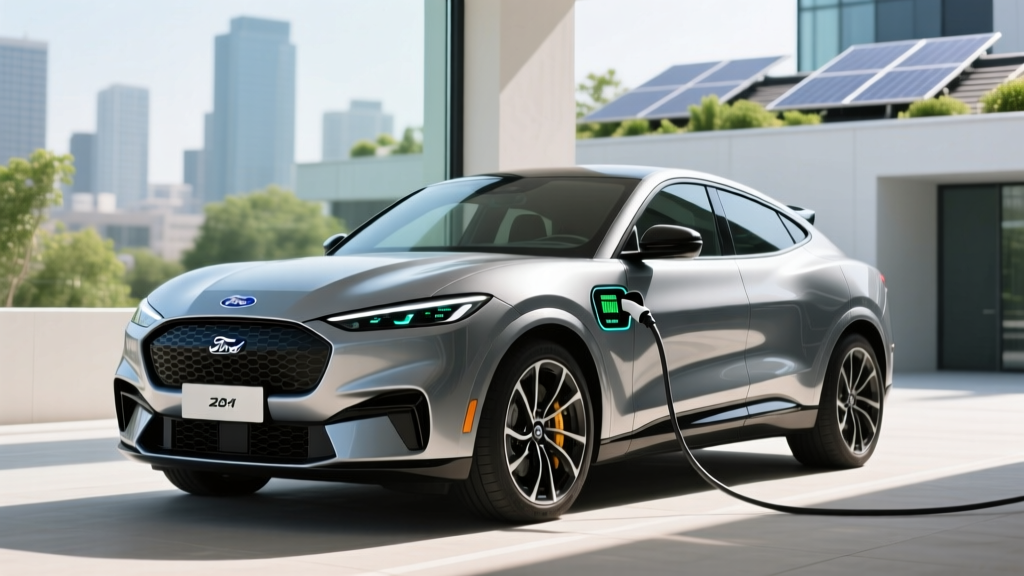
The Ford Mustang Mach-E anchors its value proposition on usable electric range, and the high-voltage traction battery is the single most expensive component in the vehicle. Buyers researching the Mustang Mach-E battery range encounter EPA stickers from 230 to 320 miles depending on trim, battery pack, and drivetrain — but the real ownership question is what happens at year five, mile 80,000, and beyond. This guide breaks down the Mach-E's battery chemistry, real-world degradation data, warranty coverage, replacement economics, and actionable habits that preserve State of Health (SoH) over a decade of driving.
Mustang Mach-E Battery Specs and EPA Range by Trim
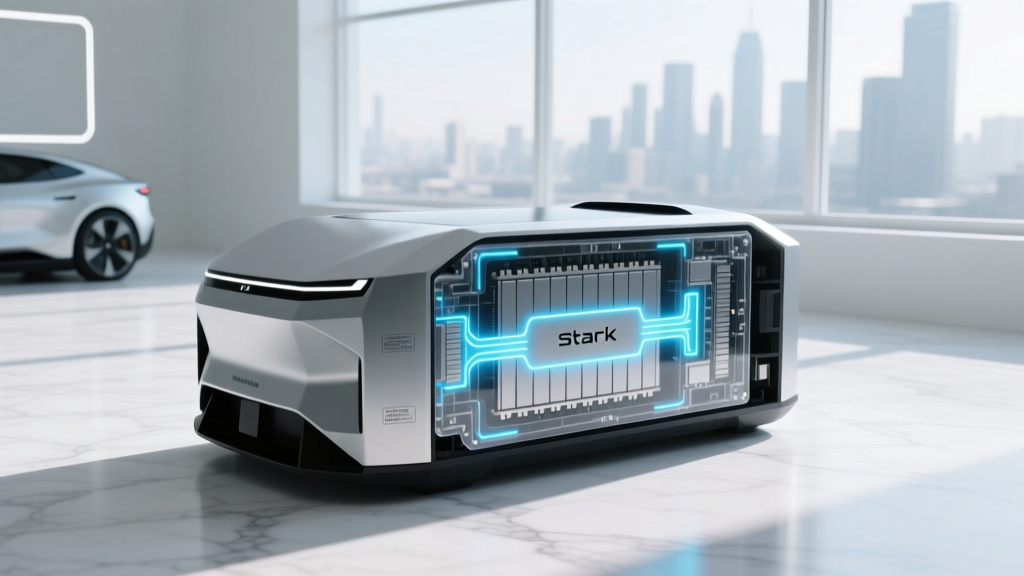
Ford offers the 2025-2026 Mach-E with two lithium-ion pack sizes, both using NMC (nickel-manganese-cobalt) cathode chemistry. The Standard Range pack delivers roughly 70 kWh of usable capacity, while the Extended Range pack provides approximately 91 kWh. Unlike some competitors experimenting with LFP packs for base trims, Ford has kept NMC across the Mach-E lineup to prioritize energy density and cold-weather output.
| Trim / Config | Battery (usable kWh) | Chemistry | EPA Range (mi) | Real-World Highway* | Peak DC Charge (kW) | 10-80% Time |
|---|---|---|---|---|---|---|
| Select RWD (Std Range) | ~70 | NMC | 230 | ~195-210 | 115 | ~38 min |
| Premium RWD (Ext Range) | ~91 | NMC | 320 | ~270-290 | 150 | ~36 min |
| Premium AWD (Ext Range) | ~91 | NMC | 290 | ~245-265 | 150 | ~36 min |
| GT (Ext Range, Perf) | ~91 | NMC | 270 | ~225-245 | 150 | ~36 min |
| Rally (Ext Range) | ~91 | NMC | 265 | ~220-240 | 150 | ~36 min |
Real-world range reality: EPA estimates assume a mixed city/highway cycle at moderate temperatures. Expect 10-15% range loss at sustained 75+ mph highway speeds, and 20-30% loss in sub-freezing conditions due to cabin heating and reduced battery efficiency. A Premium RWD with the Extended Range pack rated at 320 miles EPA will typically deliver 270-290 miles on a warm-weather highway trip and 220-250 miles in winter.
NMC Chemistry in the Mach-E: Trade-Offs vs LFP
The Mach-E's NMC cells are optimized for energy density — packing more kWh into a smaller, lighter enclosure than LFP (lithium iron phosphate) can achieve. That's why the Extended Range pack fits 91 usable kWh without compromising cargo space or vehicle weight distribution. The trade-off is that NMC cells degrade slightly faster over thousands of cycles and are more sensitive to sustained high State of Charge (SoC) than LFP.
| Attribute | NMC (Mach-E) | LFP (e.g., Tesla Model 3 RWD) |
|---|---|---|
| Energy Density | Higher (~250 Wh/kg cell-level) | Lower (~170 Wh/kg cell-level) |
| Typical Cycle Life | 1,000-2,000 full cycles | 3,000-5,000+ full cycles |
| Cold-Weather Performance | Better output below freezing | More range loss in cold |
| Recommended Daily SoC | 80% for longevity | 100% OK (periodic full charge recommended) |
| Cost per kWh (cell) | Higher | Lower (no cobalt/nickel) |
| Thermal Runaway Risk | Slightly higher | Lower (inherently stable chemistry) |
For Mach-E owners, NMC is the right call if you need maximum range per charge and drive in cold climates. The trade-off is that you should avoid routinely charging to 100% unless you're about to take a long trip. LFP owners don't face that restriction, but they sacrifice range and cold-weather capability.
Mach-E Battery Degradation: What the Data Shows
Real-world degradation data from Mach-E owner communities and fleet analyses indicates that NMC packs in liquid-cooled EVs like the Mach-E lose approximately 5-8% of original capacity in the first 50,000 miles, then settle into a slower degradation curve. By 100,000 miles, most Mach-E packs retain 88-93% of their original capacity. This is consistent with broader industry data from fueleconomy.gov and independent battery-health aggregators.
Typical Mach-E NMC Degradation Curve (illustrative based on fleet data):
- Year 1 / 15,000 mi: ~2-3% capacity loss (initial formation period)
- Year 3 / 45,000 mi: ~5-7% capacity loss
- Year 5 / 75,000 mi: ~7-9% capacity loss
- Year 8 / 120,000 mi: ~10-14% capacity loss
These figures assume moderate DC fast-charging habits (1-2 times per week max) and avoidance of prolonged 100% SoC storage. Heavy DCFC use (daily fast charging) and frequent deep discharges below 10% SoC can accelerate loss by 2-4 percentage points over the same period.
A Premium RWD Mach-E that started at 320 miles EPA will realistically show 290-300 miles of range at year five, assuming normal use. That's a noticeable but manageable reduction — not the cliff-like failure some buyers fear.
Ford's Battery Warranty: Coverage and Thresholds
Ford covers the Mach-E's high-voltage traction battery with an 8-year / 100,000-mile warranty (whichever comes first), which meets the federal minimum mandated for EVs sold in the United States. California Air Resources Board (CARB) states extend this to 10 years / 150,000 miles for certain emissions-related components, though the traction battery warranty itself typically remains at 8/100k across all states.
| Parameter | Coverage |
|---|---|
| Duration | 8 years / 100,000 miles (whichever first) |
| Capacity Retention Threshold | 70% of original capacity |
| What's Covered | Defects, abnormal degradation below threshold, internal component failure |
| What's NOT Covered | Damage from accidents, flooding, unauthorized modifications, external abuse |
| Remedy | Repair, module replacement, or full pack replacement at Ford's discretion |
| Transferable? | Yes — transfers to subsequent owners automatically |
The 70% threshold is critical context: Ford will only intervene if your pack drops below 70% capacity within the warranty window. Given the degradation data above, most Mach-E packs will retain 85-90%+ at the 8-year mark under normal use, meaning warranty claims for degradation are relatively rare. Most claims involve manufacturing defects in individual modules or battery management system (BMS) faults rather than wholesale capacity loss.
EV Battery Replacement Cost: Mach-E Economics
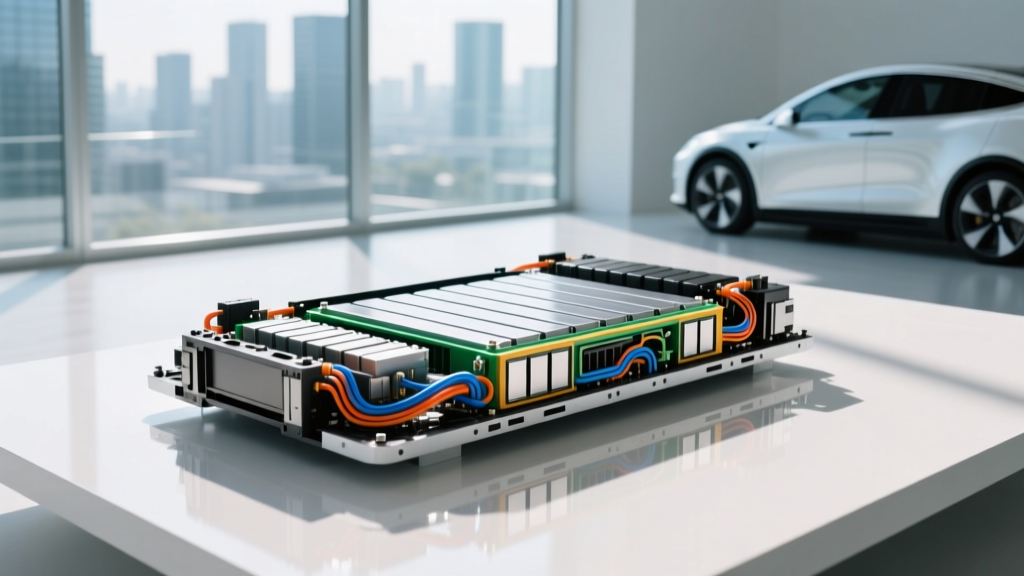
Out-of-warranty replacement of a Mach-E traction battery is a significant expense, but it's also one that very few owners will ever face. Full pack replacement at a Ford dealer typically runs between $15,000 and $22,000 for the Extended Range pack and $12,000 to $17,000 for the Standard Range pack, including parts and labor. However, module-level repair — replacing only the degraded or faulty cell modules rather than the entire pack — can reduce costs to $3,000-$7,000 depending on the number of modules affected.
| Service Type | Standard Range (~70 kWh) | Extended Range (~91 kWh) |
|---|---|---|
| Full Pack Replacement | $12,000 - $17,000 | $15,000 - $22,000 |
| Module-Level Repair (2-4 modules) | $3,000 - $5,000 | $4,000 - $7,000 |
| BMS / Contactors Repair | $1,500 - $3,500 | $1,500 - $3,500 |
| Typical Replacement Trigger | Rarely before 150,000+ mi; most packs outlast the vehicle | |
Context matters: the average age of a vehicle scrapped in the US is roughly 15 years. A Mach-E driven 12,000 miles annually will reach 150,000 miles at year 12-13, by which point the vehicle's residual value is typically $5,000-$10,000. In practice, most EV batteries outlive the economic life of the car around them. The fear of a $20,000 battery swap at year seven is not supported by fleet data — catastrophic pack failure is rare, and gradual degradation is the norm.
Maximizing Mach-E Battery Health: Practical Care
NMC chemistry rewards owners who follow a few straightforward habits. These aren't theoretical — they directly affect how much capacity your pack retains at year five and beyond.
- Set a daily charge limit of 80%. Use the FordPass app or in-vehicle settings to cap charging at 80% for daily driving. Reserve 100% charges for road trips where you'll drive immediately after charging.
- Avoid prolonged storage above 90% or below 10% SoC. If the car will sit for more than a few days, aim for 50-70% SoC — this is where NMC cells are most stable.
- Limit DC fast charging to 1-2 sessions per week. Daily 150 kW DCFC sessions generate sustained heat that accelerates electrolyte breakdown. Level 2 home charging (7-11 kW) is gentler and should be your primary method.
- Use preconditioning before fast charging. The Mach-E's navigation-routed preconditioning warms the battery to optimal temperature before you arrive at a DC fast charger, improving charge speed and reducing thermal stress.
- Don't baby it in cold weather — just plan for it. The Mach-E's liquid thermal management system protects the battery in sub-zero temps. Range loss is real (20-30%), but the system prevents damage. Plug in when possible to use grid power for cabin heating instead of battery energy.
- Avoid frequent deep discharges below 10%. Occasional low-SoC driving is fine, but habitually running the pack to near-empty stresses NMC cells.
Monitoring State of Health: How to Check Your Mach-E Battery
The Mach-E doesn't expose a precise State of Health percentage in the instrument cluster the way some competitors do. However, owners can monitor battery health through several methods:
- FordPass App: Displays estimated range and charging behavior. A noticeable drop in full-charge range over months (not days — range fluctuates with temperature) may indicate degradation.
- OBD-II diagnostic tools: Third-party apps like Torque Pro or EV-specific scanners can read battery SoH data from the BMS via the OBD-II port. This gives a more precise percentage but requires compatible hardware.
- Dealer battery health check: Ford service centers can run a full diagnostic that reports individual module voltages, capacity, and overall SoH. Request this during routine service visits, especially as you approach the warranty mileage threshold.
- Manual tracking: Record your full-charge range estimate at 80% SoC periodically (e.g., every six months). A consistent downward trend beyond seasonal variation is the simplest early-warning indicator.
Looking Ahead: Solid-State and Silicon Anode Batteries
Next-generation battery chemistries promise step-change improvements in energy density, charge speed, and longevity — but none are available in production vehicles as of 2026. Here's where the technology stands:
- Solid-state batteries: Replace the liquid electrolyte with a solid material, potentially doubling energy density and enabling 10-minute fast charges. Toyota, Samsung SDI, and QuantumScape have announced pilot production timelines of 2027-2030, but mass-market availability in affordable EVs remains 2030+ at the earliest. Ford has not announced a solid-state partnership for the Mach-E.
- Silicon anode cells: Companies like Sila Nanotechnologies and Group14 are shipping silicon-dominant anode materials that boost energy density 10-20% over graphite anodes. These are entering production in limited applications (e.g., Mercedes G-Class EV) but won't reach mainstream pricing until the late 2020s.
- Sodium-ion batteries: CATL and BYD are producing sodium-ion cells for budget EVs in China. These offer lower energy density but dramatically lower cost and excellent cycle life. US availability in vehicles like the Mach-E is unlikely before 2028-2029.
For current Mach-E buyers, these technologies are informational — not a reason to delay a purchase. NMC packs in today's EVs are mature, well-understood, and proven to last 150,000+ miles with proper care.
Frequently Asked Questions
How long do Mustang Mach-E batteries last?
Based on fleet data and NMC degradation curves, a Mach-E battery should retain 85-90%+ of its original capacity at 100,000 miles and 80-88% at 150,000 miles under normal use. Most packs will outlast the vehicle's economic lifespan. Catastrophic failure before 150,000 miles is rare and typically covered under the 8-year/100,000-mile warranty if it results from a defect.
How much does it cost to replace a Mustang Mach-E battery?
A full out-of-warranty pack replacement runs $15,000-$22,000 for the Extended Range and $12,000-$17,000 for the Standard Range pack. However, most failures involve individual modules rather than the full pack, and module-level repairs cost $3,000-$7,000. Very few owners will ever need a replacement — the battery typically outlives the car.
What does the Mach-E battery warranty cover?
Ford covers the high-voltage traction battery for 8 years or 100,000 miles, with a capacity retention threshold of 70%. If your pack drops below 70% of original capacity within that window, Ford will repair or replace it. The warranty is transferable to subsequent owners and covers manufacturing defects and abnormal degradation, but not accident damage or external abuse.
Is NMC or LFP better for the Mach-E?
NMC is the right chemistry for the Mach-E's use case: it delivers higher energy density (more range in a smaller pack) and better cold-weather performance than LFP. The trade-off is that NMC degrades slightly faster and requires more careful SoC management (avoiding routine 100% charges). Ford has chosen NMC across the Mach-E lineup to maximize range, which is the priority for most buyers in this segment.
Does frequent DC fast charging damage the Mach-E battery?
Occasional DC fast charging (1-2 times per week) has minimal impact on battery health. Daily fast charging, especially at 150 kW, generates sustained heat that accelerates electrolyte and cathode degradation over thousands of cycles. For longest pack life, use Level 2 home charging as your primary method and reserve DCFC for road trips. The Mach-E's liquid thermal management system mitigates much of the heat stress, but physics still favors slower charging for longevity.
How do I check my Mach-E's battery health?
Monitor full-charge range estimates via the FordPass app, use an OBD-II EV scanner for precise SoH readings, or request a dealer diagnostic during service visits. Track your 80% charge range every six months — a consistent decline beyond seasonal variation is the simplest indicator of degradation.