Why Moss Landing Matters to EV Battery Buyers
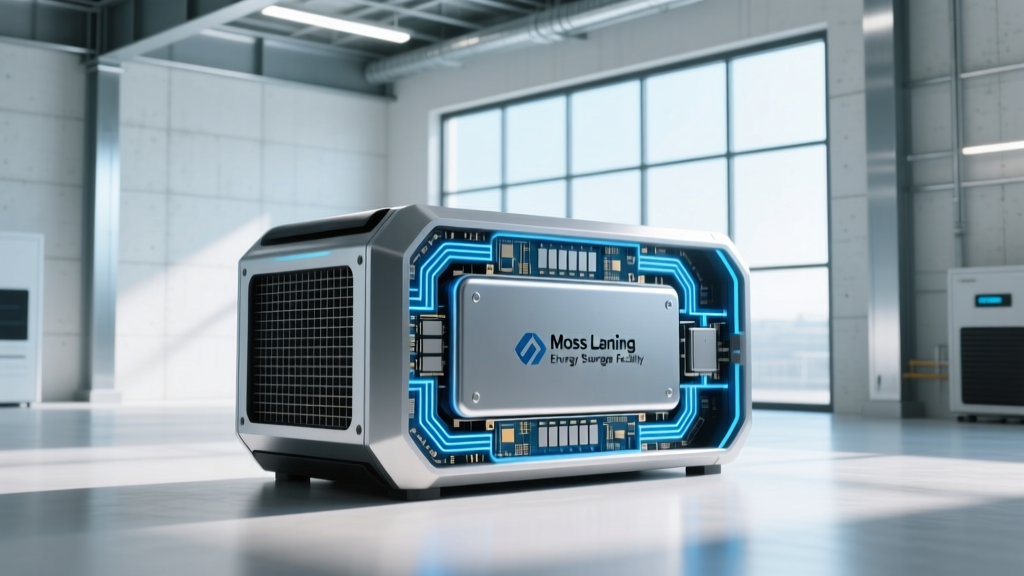
The Moss Landing Energy Storage Project in Monterey County, California, is one of the world's largest grid-scale battery installations — a 750 MWh lithium-ion facility that quietly shapes how EV owners in California and beyond think about battery reliability, chemistry trade-offs, and long-term degradation. While Moss Landing itself powers the grid rather than any specific vehicle, the battery technologies it validates at scale — particularly lithium iron phosphate (LFP) and nickel manganese cobalt (NMC) chemistries — are the exact same chemistries in your EV's traction battery.
Understanding what happens when thousands of battery cells cycle daily at a facility like Moss Landing gives EV buyers and owners a rare, data-rich window into real-world battery longevity. This guide translates those grid-scale lessons into practical ownership intelligence: which chemistry suits your driving, how much degradation to expect, what warranties actually cover, and when (if ever) you'll face a replacement bill.
Battery Chemistry 101: LFP vs NMC/NCA
Every EV sold in the U.S. today uses one of three lithium-ion chemistries for its high-voltage traction battery. The choice directly affects your range, charging habits, cold-weather performance, and long-term durability.
| Attribute | LFP (Lithium Iron Phosphate) | NMC (Nickel Manganese Cobalt) | NCA (Nickel Cobalt Aluminum) |
|---|---|---|---|
| Energy Density | ~160–180 Wh/kg (lower) | ~220–260 Wh/kg (higher) | ~250–270 Wh/kg (highest) |
| Cycle Life | 3,000–5,000+ cycles | 1,000–2,000 cycles | 1,000–1,500 cycles |
| Cold Performance | Moderate loss (~15–25% at 20°F) | Better retention (~10–18% at 20°F) | Good retention (~10–15% at 20°F) |
| Cost per kWh | ~$80–100 (lower) | ~$110–140 (higher) | ~$120–150 (highest) |
| Recommended SoC | Can charge to 100% daily | 80% daily; 100% for trips only | 80% daily; 100% for trips only |
| Thermal Stability | Excellent (less prone to thermal runaway) | Good (requires active management) | Good (requires active management) |
| Common In | Tesla Model 3/Y RWD, Ford Mustang Mach-E Select, BYD models | Hyundai Ioniq 5/6, VW ID.4, most long-range models | Tesla Model S/X, some Lucid configs |
The Moss Landing facility primarily uses NMC cells from suppliers like Samsung SDI and LG Energy Solution — the same manufacturers supplying automakers. But the rapid adoption of LFP in grid storage (driven by its superior cycle life and lower cost) mirrors the trend in entry-level and mid-range EVs. Tesla's shift to LFP in standard-range Model 3 and Model Y vehicles was one of the most significant chemistry decisions in the industry, and by 2026, LFP powers roughly 40% of new EVs sold globally.
Which Chemistry Is Better for You?
Choose LFP if: You charge at home daily, drive under 250 miles between charges, want maximum cycle life, and prefer the simplicity of charging to 100% without babying the battery.
Choose NMC/NCA if: You need maximum range per charge (300+ miles), frequently drive in cold climates, or regularly take road trips where energy density matters more than cycle count.
EV Battery Degradation: What the Data Actually Shows
Grid-scale installations like Moss Landing provide unprecedented degradation data because operators track every cell's capacity over tens of thousands of cycles. For EV owners, the relevant data comes from fleet studies, owner-reported telemetry, and manufacturer disclosures.
Typical EV Battery Degradation Curve (2026 Fleet Data):
- Year 1 / 15,000 miles: 2–4% capacity loss (initial formation loss)
- Year 3 / 45,000 miles: 5–8% total loss
- Year 5 / 75,000 miles: 8–12% total loss
- Year 8 / 120,000 miles: 10–17% total loss
- Year 10 / 150,000 miles: 12–22% total loss
Sources: Geotab fleet study, Recurrent Auto battery data (2025). Degradation varies by chemistry, climate, and charging habits. LFP packs typically show 2–4% less loss at equivalent mileage.
The critical takeaway: degradation is not linear. Most capacity loss occurs in the first 12–18 months (formation cycling), after which the curve flattens significantly. A 2024 Tesla Model 3 with an NMC pack might lose 3% in year one, then average only 1–1.5% per year thereafter. LFP packs in the same vehicle show even gentler curves.
Real-world context: a 2026 Hyundai Ioniq 5 with a 77.4 kWh NMC battery rated at 305 miles EPA might deliver ~280 miles when new (accounting for real-world highway and climate losses) and ~255 miles at year 8 — still well within daily usability for most drivers.
Battery Warranty Terms: What Manufacturers Actually Guarantee
Federal law mandates a minimum 8-year/100,000-mile warranty on EV battery packs (10 years/150,000 miles in California and states adopting CARB standards). But the details matter enormously.
| Manufacturer | Warranty Period | Mileage Cap | Capacity Threshold | Notes |
|---|---|---|---|---|
| Tesla (Model 3/Y LFP) | 8 years | 120,000 miles | 70% retention | LFP packs warrantied to 70% vs 70% for NMC |
| Tesla (Model S/X) | 8 years | 150,000 miles | 70% retention | Higher mileage cap for premium models |
| Hyundai/Kia | 10 years | 100,000 miles | 70% retention | Among the longest time-based coverage |
| Ford (Mach-E, F-150 Lightning) | 8 years | 100,000 miles | 70% retention | Standard across BEV lineup |
| GM (Ultium-based) | 8 years | 100,000 miles | 70% retention | Covers battery and drive components |
| VW (ID.4) | 8 years | 100,000 miles | 70% retention | Transferable to second owner |
What "70% retention" means: If your 77.4 kWh pack drops below ~54.2 kWh of usable capacity within the warranty period, the manufacturer must repair or replace it — typically by swapping in a refurbished pack that meets the threshold, not necessarily a brand-new unit. In practice, very few EVs breach this threshold within the warranty window. Data from Recurrent Auto shows that fewer than 2% of EVs in their study required warranty battery replacements.
EV Battery Replacement Cost: When and How Much
The fear of a $20,000 battery replacement is the single biggest psychological barrier to EV adoption. Here's the data-driven reality.
| Vehicle | Battery Size | Chemistry | Replacement Cost (Parts + Labor) | Typical Replacement Trigger |
|---|---|---|---|---|
| Tesla Model 3 RWD | 60 kWh | LFP | $12,000–$15,000 | Rare before 200K+ miles |
| Tesla Model Y LR | 75 kWh | NMC | $14,000–$18,000 | Rare before 180K+ miles |
| Hyundai Ioniq 5 | 77.4 kWh | NMC | $14,000–$17,000 | Rare before 180K+ miles |
| Ford F-150 Lightning Ext. | 131 kWh | NMC | $22,000–$28,000 | Rare before 150K+ miles |
| Chevy Bolt EV/EUV | 65 kWh | NMC | $13,000–$16,000 | Post-recall packs show strong longevity |
When replacement is typically needed: Most modern EV batteries outlast the vehicle's economic life. The median EV in the U.S. is scrapped or retired around 180,000–200,000 miles, and data from grid-scale and fleet studies shows that well-managed NMC packs retain 75–85% capacity at 200,000 miles, while LFP packs often retain 85–90%. Full pack replacement is most commonly triggered not by gradual degradation but by manufacturing defects (covered under warranty), physical damage, or coolant intrusion — not by normal aging.
Costs are also declining. According to BloombergNEF, average lithium-ion pack prices fell from $1,200/kWh in 2010 to approximately $115/kWh by late 2025. A 77 kWh pack that cost $25,000 to replace in 2020 might cost $14,000 in 2026 — and will likely cost less by the time most current EVs actually need replacement.
Factors That Accelerate Battery Degradation
Not all miles are equal. Your charging habits and environment have a measurable impact on how quickly your pack loses capacity.
Battery Care Best Practices
- Limit DC fast charging to road trips. Frequent use of 150+ kW DC fast chargers generates significant heat. Studies show vehicles that DC fast-charge more than 3x per week degrade ~1–2% faster over 5 years vs. primarily Level 2 charging.
- Avoid sustained 100% or 0% SoC. For NMC/NCA packs, keep daily charging between 20–80%. LFP packs tolerate 100% better but still benefit from not sitting at 0% for extended periods.
- Precondition before fast charging. Most modern EVs automatically warm the battery when you navigate to a charger. A cold battery (below 50°F) charged at high power suffers accelerated lithium plating.
- Park in shade or a garage in extreme heat. Sustained ambient temperatures above 95°F with a high SoC accelerates electrolyte decomposition. If you live in Phoenix or Las Vegas, charge to 80% and park covered.
- Don't obsess over avoiding fast charging entirely. Occasional DCFC use (1–2x per week) shows negligible degradation difference vs. L2-only charging in controlled studies.
- Keep coolant systems maintained. EV battery thermal management systems use glycol-based coolant. Follow manufacturer service intervals (typically every 4–5 years) to ensure the pack stays in its optimal temperature window.
Monitoring Your Battery's State of Health (SoH)
State of Health (SoH) is the percentage of your battery's original capacity that remains usable. Unlike your phone, most EVs don't display a prominent SoH percentage on the dash — but the data is accessible.
How to Check SoH
- In-vehicle diagnostics: Some EVs (notably Hyundai/Kia and recent Tesla software updates) display a battery health estimate in the service menu or settings.
- OBD-II apps: Tools like LeafSpy (Nissan), Scan My Tesla, or ABRP's OBD integration can read the battery management system (BMS) directly, reporting SoH, cell voltage variance, and pack temperature.
- Dealer diagnostics: Request a battery health report during service visits. Most manufacturers can pull a detailed cell-level report.
- Third-party services: Companies like Recurrent Auto offer free battery health reports by connecting to your vehicle's telematics data, comparing your degradation to a fleet of identical vehicles.
What to watch for: Cell voltage variance (the difference between the highest and lowest cell in the pack) is often a more useful early-warning metric than overall SoH. A variance exceeding 100 mV at rest may indicate an imbalanced or failing module — addressable under warranty before it causes noticeable range loss.
Emerging Battery Technologies: Solid-State and Beyond
The Moss Landing facility and similar grid installations serve as proving grounds for next-generation chemistries, but it's critical to separate announced timelines from showroom reality.
Solid-State Batteries
Solid-state batteries replace the liquid electrolyte with a solid ceramic or polymer, promising higher energy density (~400+ Wh/kg), faster charging, and improved safety. Toyota has announced limited production of solid-state EVs for 2027–2028, and Samsung SDI targets 2027 for mass production. However, manufacturing yield challenges and cost remain significant barriers.
Realistic timeline: Expect solid-state batteries in limited, premium models by 2028–2029, with mainstream adoption not before 2031–2032. These are announced timelines and subject to delay.
Silicon Anode Technology
Companies like Sila Nanotechnologies and Group14 are replacing graphite anodes with silicon-dominant materials, increasing energy density by 20–40% without the manufacturing overhaul that solid-state requires. Mercedes-Benz's EQG (G-Class EV) uses silicon anode cells from Sila, and broader adoption is expected in 2026–2027 model-year vehicles.
Sodium-Ion Batteries
Sodium-ion chemistry eliminates lithium and cobalt entirely, trading energy density (~120–150 Wh/kg) for dramatically lower cost and abundant raw materials. CATL and BYD are deploying sodium-ion packs in budget Chinese-market EVs. U.S. availability is not expected before 2028, and likely limited to entry-level models where cost matters more than range.
Bottom line for today's buyer: Waiting for next-generation battery tech is rarely the right financial decision. Current LFP and NMC chemistries are mature, well-warrantied, and cost-competitive. The vehicles on sale in 2026 will have batteries that outlast most ownership cycles.
Frequently Asked Questions
How long do EV batteries last in years and miles?
Based on fleet data from Recurrent Auto and Geotab, most modern EV batteries retain 80–88% of original capacity at 150,000 miles and 10 years. LFP packs often exceed 90% retention at equivalent mileage. In practical terms, the battery will likely outlast the vehicle's economic useful life. Full replacement before 200,000 miles is uncommon outside of manufacturing defects or physical damage.
How much does an EV battery cost to replace?
Replacement costs range from approximately $12,000 for a 60 kWh LFP pack (Tesla Model 3 RWD) to $28,000 for a 131 kWh NMC pack (F-150 Lightning Extended Range), including parts and labor. These costs have declined roughly 50% since 2020 and continue falling. However, most owners will never pay for a replacement — the battery is either still functional at the vehicle's end of life or covered under the 8–10 year warranty.
What does the EV battery warranty actually cover?
Manufacturer warranties guarantee that the battery will retain at least 70% of its original usable capacity for 8 years/100,000 miles minimum (10 years/150,000 miles in CARB states). If capacity drops below that threshold within the warranty period, the manufacturer repairs or replaces the pack at no cost. Warranties also cover defects, module failures, and thermal management system issues. They do not cover damage from accidents, flooding, or unauthorized modifications.
How do I check and maximize my EV battery health?
Check SoH through your vehicle's service menu, OBD-II diagnostic apps (Scan My Tesla, LeafSpy), or free third-party services like Recurrent Auto. To maximize longevity: charge NMC/NCA packs to 80% for daily use, limit DC fast charging to road trips, precondition the battery before fast charging in cold weather, avoid leaving the vehicle at 0% or 100% SoC for extended periods, and follow coolant service intervals.
LFP vs NMC — which battery chemistry is better?
Neither is universally better; they serve different use cases. LFP offers superior cycle life (3,000–5,000+ cycles), lower cost, better thermal stability, and the convenience of daily 100% charging — but with lower energy density and somewhat worse cold-weather performance. NMC delivers higher energy density (more range in a lighter pack) and better cold-weather retention, but with shorter cycle life and a requirement to avoid sustained high SoC. For daily commuting with home charging, LFP is increasingly the pragmatic choice. For maximum range and cold-climate driving, NMC retains advantages.
Does the Moss Landing battery project use the same tech as my EV?
Yes, at the cell-chemistry level. Moss Landing uses NMC lithium-ion cells from manufacturers like Samsung SDI — the same companies producing EV battery cells. Grid-scale installations validate these chemistries over hundreds of thousands of cycles, providing the degradation data that informs EV battery design and warranty terms. The main difference is packaging: grid storage uses standardized rack-mounted modules with aggressive thermal management, while EV packs are shaped to fit vehicle platforms and prioritize energy density.