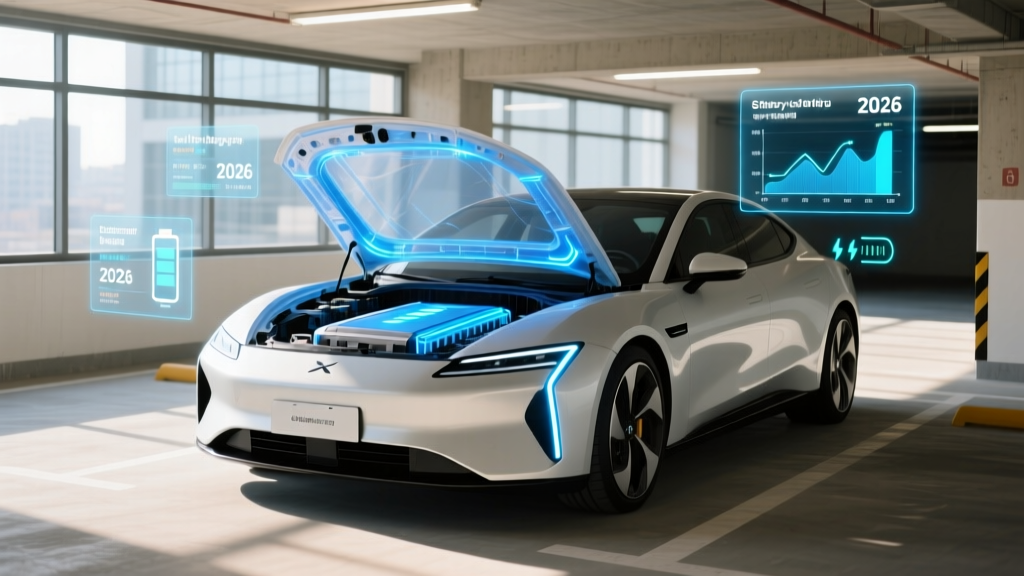
A recurring question in EV forums and comment sections is whether you can charge an EV battery from a cigarette lighter socket — the same 12V accessory port that once powered phone chargers and dashcams in gas cars. The short answer is no, and understanding why reveals a great deal about how electric vehicles actually store and manage energy.
This guide unpacks the fundamental difference between the 12V auxiliary system and the high-voltage traction battery, then dives deep into EV battery chemistry, degradation realities, warranty coverage, replacement costs, and the habits that extend pack life. Whether you drive a Tesla Model 3, a Ford Mustang Mach-E, or a Chevrolet Equinox EV, the physics and economics are largely the same.
Why a Cigarette Lighter Socket Cannot Charge an EV Traction Battery
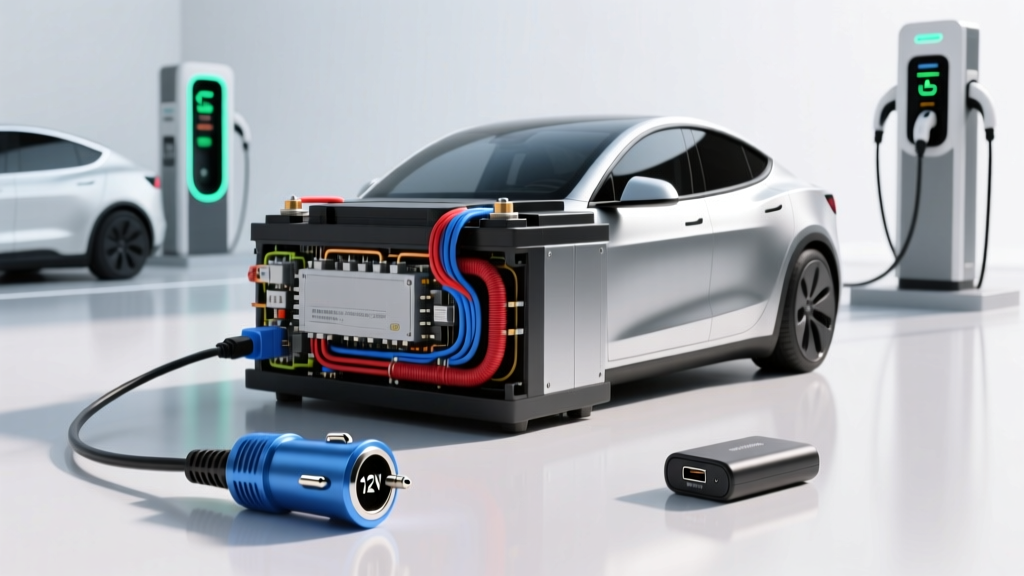
Every modern EV contains two separate electrical systems:
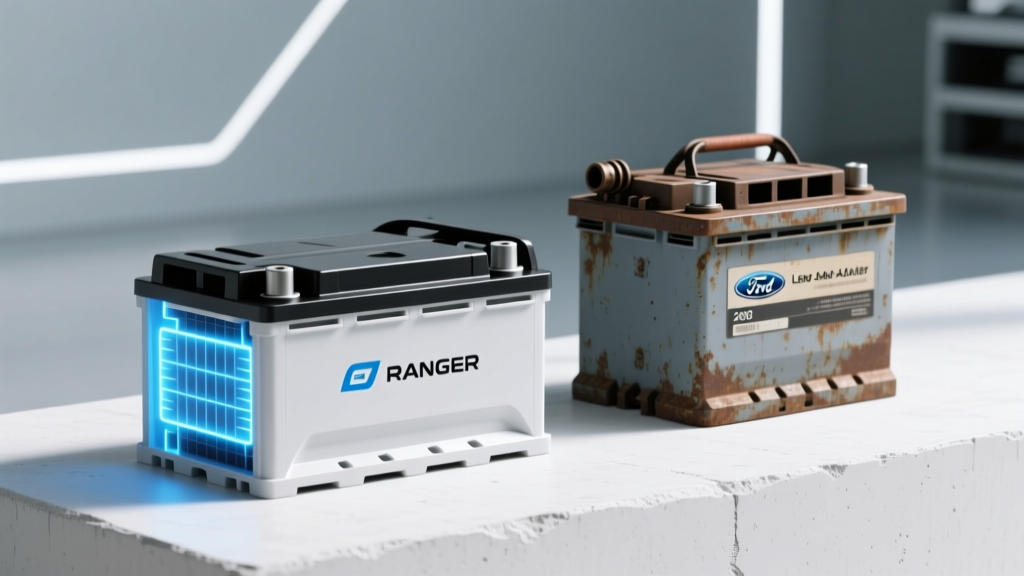
- 12V auxiliary battery — a small lead-acid or lithium-ion battery (typically 12–16V, under 1 kWh) that powers lights, infotainment, door locks, and the onboard computers. The cigarette lighter / accessory port is wired to this system.
- High-voltage traction battery — the large lithium-ion pack (typically 50–120 kWh, operating at 400V or 800V) that actually drives the wheels.
A cigarette lighter socket is fused at roughly 10–15 amps on a 12V circuit, delivering a maximum of about 120–180 watts. Even if you could somehow route that power into a 75 kWh traction battery, the math is brutal:
- 180W continuous = 0.18 kW
- Charging 75 kWh at 0.18 kW would take approximately 417 hours (over 17 days) of non-stop, 100% efficient charging — longer than most people keep a car parked in one spot.
- In reality, conversion losses, inverter inefficiency, and thermal management loads would make the effective rate even slower.
By contrast, a Level 2 home charger delivers 7–19 kW, and a DC fast charger delivers 50–350 kW. The cigarette lighter socket is off by a factor of 40x to 2,000x. It is not a viable charging pathway, and no adapter or aftermarket device can change this physics reality.
LFP vs NMC vs NCA: EV Battery Chemistry Explained
The high-voltage traction battery in your EV uses one of several lithium-ion chemistries. The two dominant families in 2026 are LFP (lithium iron phosphate) and NMC/NCA (nickel manganese cobalt / nickel cobalt aluminum). Each has distinct trade-offs.
| Attribute | LFP (Lithium Iron Phosphate) | NMC / NCA (Nickel-based) |
|---|---|---|
| Energy density | Lower (~160–180 Wh/kg cell-level) | Higher (~220–300 Wh/kg cell-level) |
| Cycle life | 3,000–5,000+ cycles to 80% capacity | 1,000–2,000 cycles to 80% capacity |
| Cold-weather performance | Weaker — greater range loss below freezing; slower DC fast charging in cold without preconditioning | Better — retains more usable capacity and charges faster in cold conditions |
| State of Charge (SoC) habits | Can be charged to 100% daily without significant degradation; manufacturers recommend periodic full charges for BMS calibration | Best kept between 20–80% for daily use; 100% reserved for road trips |
| Cost | Lower — no cobalt or nickel; ~$100–120/kWh at pack level (2026 estimates) | Higher — commodity-sensitive; ~$130–160/kWh at pack level |
| Thermal stability / safety | Excellent — higher thermal runaway threshold | Good — requires more active thermal management |
| Notable 2026 vehicles using | Tesla Model 3/Y RWD, Ford Mustang Mach-E Select (standard range), Chevrolet Equinox EV 2LT | Tesla Model 3/Y Long Range, Hyundai Ioniq 5, Kia EV6, Rivian R1T/R1S, BMW iX |
Which is better? It depends on your use case. If you drive mostly in moderate climates, charge at home nightly, and want maximum cycle life, LFP is a strong fit — and it's usually cheaper. If you need maximum range per charge, frequently drive in sub-freezing weather, or rely on DC fast charging in winter, NMC/NCA packs perform better. Neither chemistry is universally superior; both are proven at scale.
How Long Do EV Batteries Last? Real-World Degradation Data
The fear that EV batteries "die" after a few years is not supported by fleet data. Modern lithium-ion packs are engineered for longevity, and most will outlast the vehicle's first and second owners.
- Year 1: ~2–3% capacity loss (initial formation loss, steepest part of the curve)
- Years 2–4: ~1–1.5% per year (linear, gradual decline)
- Years 5–8: ~0.5–1% per year (plateau phase)
- At 100,000 miles: Most packs retain 88–93% of original capacity (Recurrent Auto fleet data)
- At 200,000 miles: Expect 80–88% retention for well-maintained packs
Tesla's own impact report (2024) states its Model 3/Y packs retain approximately 85% capacity at 200,000 miles. Hyundai/Kia fleet data shows similar curves for the Ioniq 5 and EV6.
The key insight: degradation is non-linear. The biggest drop happens early, then the curve flattens. A battery that retains 90% at 60,000 miles is very likely to retain 83–86% at 150,000 miles — not drop off a cliff.
Factors That Accelerate Degradation
- Frequent DC fast charging — High C-rates generate heat. Occasional fast charging is fine; daily DC fast charging (especially at 350 kW on a regular basis) can add 1–2% extra annual loss compared to Level 2 home charging.
- Extreme heat exposure — Sustained ambient temperatures above 95°F (35°C), especially when the car sits at high SoC, accelerate electrolyte decomposition. Garage parking in hot climates matters.
- Sustained high SoC (for NMC/NCA) — Storing an NMC pack at 100% for days or weeks stresses the cathode. LFP packs tolerate 100% storage much better.
- Deep discharge cycles — Regularly driving to 0% SoC and leaving the car depleted for extended periods can cause copper dissolution in the anode.
- Cold charging without preconditioning — Charging a cold battery at high power can cause lithium plating on the anode, permanently reducing capacity.
EV Battery Warranty Coverage: What's Protected and for How Long
Federal law mandates a minimum EV battery warranty of 8 years / 100,000 miles (10 years / 150,000 miles in California and states that follow CARB standards). Most manufacturers exceed this baseline. The warranty typically covers capacity falling below a specified threshold — usually 70% of original capacity.
| Manufacturer | Warranty Term | Capacity Threshold | Notes |
|---|---|---|---|
| Tesla | 8 yr / 120,000 mi (Model 3/Y LR); 8 yr / 100,000 mi (RWD) | 70% | Covers defects and excessive degradation |
| Hyundai / Kia | 10 yr / 100,000 mi | 70% | Among the longest terms in the industry |
| Ford | 8 yr / 100,000 mi | 70% | Covers Mustang Mach-E, F-150 Lightning |
| General Motors (Chevrolet, Cadillac) | 8 yr / 100,000 mi | 70% (some models 60% for Bolt legacy) | Ultium platform packs; check specific model terms |
| BMW | 8 yr / 100,000 mi | 70% | iX, i4, i7 covered |
| Rivian | 8 yr / 175,000 mi | 70% | Highest mileage threshold among major OEMs |
Important caveat: A warranty threshold of 70% means the manufacturer only replaces or repairs the pack if it drops below 70% within the term. A pack at 72% capacity at 95,000 miles is functioning "within spec" even though you've lost 28% of your original range. In practice, very few packs hit 70% within the warranty window based on current fleet data.
How Much Does an EV Battery Replacement Cost?
This is the question that generates the most anxiety — and the most misinformation. Here are the realities:
| Vehicle (2024–2026 Model Years) | Pack Size | Estimated Replacement Cost (Parts + Labor) |
|---|---|---|
| Tesla Model 3 RWD (LFP) | ~60 kWh | $10,000–$14,000 |
| Tesla Model Y Long Range (NMC) | ~75 kWh | $13,000–$18,000 |
| Hyundai Ioniq 5 (NMC) | 77.4 kWh | $14,000–$20,000 |
| Ford Mustang Mach-E Extended Range | 91 kWh | $18,000–$25,000 |
| Chevrolet Equinox EV | ~85 kWh | $15,000–$22,000 |
| Rivian R1T (Large Pack) | ~128 kWh | $22,000–$30,000+ |
Context that matters:
- These costs are for full pack replacement. In many cases, dealerships or specialized shops can replace individual modules for a fraction of the cost — a single module swap might run $1,500–$4,000.
- Pack prices have declined roughly 80% since 2013 (per BloombergNEF lithium-ion battery price surveys). The trend continues as LFP adoption and manufacturing scale increase.
- The vast majority of EV batteries never need replacement during typical ownership. Data from Recurrent Auto shows that fewer than 1.5% of EVs in their tracked fleet (over 15,000 vehicles) have required a battery replacement — and most of those were early-manufacturing defects covered under warranty, not end-of-life degradation.
- When replacement is needed, it typically occurs at 150,000–250,000+ miles — well beyond the average ownership period.
How to Check and Maximize EV Battery Health
Monitoring State of Health (SoH)
State of Health (SoH) is a percentage representing your battery's current maximum capacity relative to its original capacity. Here's how to check it:
- In-car displays: Some vehicles (Tesla via the service menu, Hyundai/Kia via the infotainment diagnostics page) show SoH or usable capacity figures directly.
- OBD-II apps: Third-party apps like LeafSpy (Nissan Leaf), Scan My Tesla, or Car Scanner ELM OBD2 can read SoH from the Battery Management System (BMS) via an OBD-II dongle (~$30–60 hardware).
- Dealer diagnostics: Any authorized service center can pull a full battery health report during a service visit. Request this if you're buying a used EV.
- Manual calculation: Charge to 100% (for LFP) or a known SoC, note the displayed range, and compare to the original EPA range adjusted for the SoC percentage. This is imprecise but directionally useful.
- ✅ Home Level 2 charging as your primary method — slower charging generates less heat and stress than daily DC fast charging.
- ✅ Set charge limits appropriately — 80% daily for NMC/NCA; 100% is fine for LFP (and recommended periodically for BMS calibration).
- ✅ Precondition before DC fast charging — most EVs do this automatically when you navigate to a charger. Preconditioning warms the pack to ~95°F (35°C) for optimal charge acceptance and reduced lithium-plating risk.
- ✅ Avoid leaving the car at 0% or 100% SoC for extended periods (especially NMC in hot weather). If storing for a week+, leave it around 50%.
- ✅ Park in shade or a garage in hot climates — sustained heat is the single biggest environmental degradation factor.
- ✅ Drive it regularly — lithium-ion batteries prefer moderate, regular cycling over long idle periods.
- ❌ Don't rely on the cigarette lighter port for anything traction-battery-related — it's a 12V accessory circuit with no physical or electrical connection to the high-voltage pack.
Emerging Battery Technologies: Solid-State and Silicon Anodes
Several next-generation battery technologies are in development, but it's critical to separate announced timelines from showroom availability:
- Solid-state batteries: Replace the liquid electrolyte with a solid ceramic, polymer, or sulfide material. Promises include higher energy density (potentially 400+ Wh/kg), faster charging, and improved safety. Toyota has announced a target of 2027–2028 for limited production, while Samsung SDI and QuantumScape are targeting similar timelines. However, manufacturing yield, cost, and scalability remain unsolved challenges at production volume. No solid-state EV is currently available for purchase as of 2026.
- Silicon anode batteries: Replacing graphite anodes with silicon can boost energy density by 20–40%. Companies like Sila Nanotechnologies and Group14 are supplying early silicon-dominant anode materials to automakers. The Mercedes-Benz G-Class electric (announced for 2025–2026) is among the first to use silicon-anode cells from Factorial Energy. Expect gradual adoption through 2027–2030 as costs decline.
- Sodium-ion batteries: Lower cost and no lithium required, but significantly lower energy density (~120–150 Wh/kg). Likely limited to budget city cars and stationary storage, not long-range EVs. CATL and BYD are producing these at scale in China; US adoption remains minimal.
For buyers today, these technologies are forward-looking context, not purchase factors. Current LFP and NMC packs are mature, well-understood, and backed by extensive warranty and fleet data.
Frequently Asked Questions
Can I charge my EV's main battery using the 12V cigarette lighter port?
No. The cigarette lighter port is connected to the 12V auxiliary system, which delivers at most 120–180 watts. The traction battery requires kilowatts of power through dedicated charge ports (J1772/NACS for AC, CCS/NACS for DC). The two systems are electrically isolated by design for safety. No consumer adapter exists to bridge them, and attempting to modify the electrical system would void your warranty and create serious safety hazards.
How long do EV batteries last in years and miles?
Based on aggregated fleet data, most modern EV batteries retain 85–93% capacity at 100,000 miles and 80–88% at 200,000 miles. In calendar years, expect 15–20+ years of service before the pack drops below 70% capacity under normal use. Most EV batteries will outlast the vehicle's useful economic life.
What does the EV battery warranty actually cover?
Federal law requires a minimum 8-year/100,000-mile warranty on EV batteries (10/150,000 in CARB states). Coverage includes manufacturing defects and capacity loss below a specified threshold — typically 70% of original capacity. If your pack drops to 68% at 90,000 miles, the manufacturer must repair or replace it at no cost. Normal gradual degradation above the threshold is not covered.
How much does it cost to replace an EV battery?
Full pack replacement ranges from approximately $10,000 for a smaller LFP pack (e.g., Tesla Model 3 RWD, ~60 kWh) to $30,000+ for a large pack (e.g., Rivian R1T, ~128 kWh). However, fewer than 1.5% of EVs have required battery replacement based on fleet tracking data, and most replacements are covered under warranty. Individual module replacement, when applicable, costs $1,500–$4,000.
LFP vs NMC — which battery chemistry should I choose?
Choose LFP if you want lower cost, longer cycle life, the ability to charge to 100% daily, and maximum thermal safety — and you don't mind slightly lower range and weaker cold-weather performance. Choose NMC/NCA if you prioritize maximum range per charge, better cold-weather efficiency, and faster DC fast charging in winter. Both chemistries are proven; the right choice depends on your climate and driving patterns.
Does frequent DC fast charging damage the battery?
Occasional DC fast charging (road trips, a few times per month) has minimal measurable impact on modern batteries with active thermal management. However, daily or near-daily DC fast charging — especially at high power (150–350 kW) without adequate preconditioning — can add approximately 1–2% additional annual degradation compared to predominantly Level 2 charging. If you rely on public fast charging daily, consider an LFP-equipped vehicle, which tolerates high-rate charging somewhat better due to its chemistry stability.