Why the Mercedes Samsung Battery Deal Matters for EV Buyers
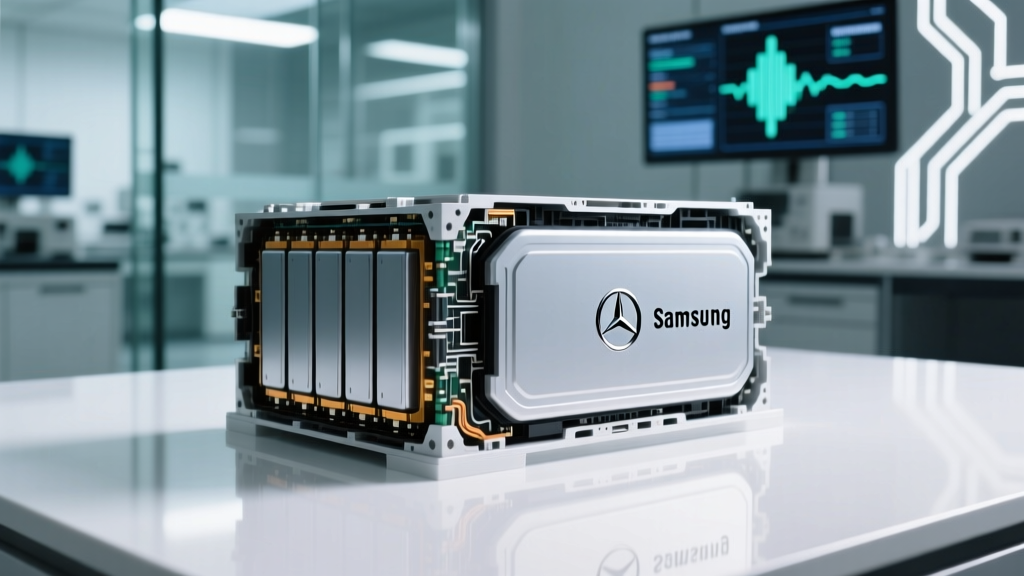
When Mercedes-Benz and Samsung SDI expanded their battery supply partnership, it signaled more than a procurement contract — it highlighted where premium EV battery technology is heading. Samsung SDI, one of the world's largest lithium-ion cell manufacturers, supplies high-nickel NMC (nickel-manganese-cobalt) cells to Mercedes for its EQ lineup, including the EQE and EQS sedans and SUVs. The deal covers next-generation prismatic cells with improved energy density and is part of Mercedes' strategy to secure supply chains outside of sole-dependency on Chinese battery makers like CATL and BYD.
For EV shoppers and owners, this partnership is a useful lens for understanding the battery chemistry decisions that affect range, longevity, and cost. Whether your next EV uses Samsung SDI cells, CATL's LFP packs, or something else entirely, the fundamentals of battery health, degradation, and replacement remain the same. Here's a comprehensive breakdown.
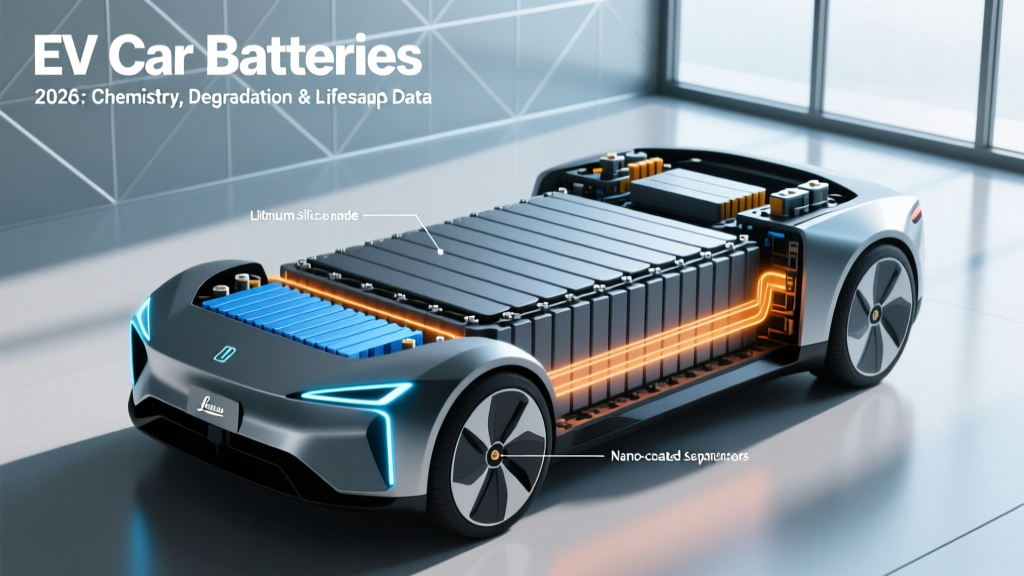
LFP vs NMC: The Chemistry Decision Behind Every EV
The Mercedes Samsung battery deal centers on NMC chemistry — specifically, high-nickel formulations that maximize energy density. But across the EV market, two dominant chemistries compete, and understanding the trade-offs is essential for buyers.
| Attribute | NMC / NCA (Nickel-based) | LFP (Lithium Iron Phosphate) |
|---|---|---|
| Energy Density | High (250–300 Wh/kg cell-level) | Moderate (160–200 Wh/kg cell-level) |
| Typical Range per Pack Size | More miles per kWh of battery weight | Requires larger/heavier pack for same range |
| Cycle Life | 1,000–2,000 full cycles to 80% SoH | 3,000–5,000+ full cycles to 80% SoH |
| Cold-Weather Performance | Better low-temp discharge capability | More range loss below 32°F / 0°C |
| Thermal Stability | Good; requires active thermal management | Excellent; inherently more stable |
| Cost per kWh | Higher ($120–$150/kWh pack-level, 2025–2026) | Lower ($80–$110/kWh pack-level, 2025–2026) |
| Recommended SoC Range | 20–80% daily; 100% for trips only | Can be charged to 100% regularly |
| Notable Users | Mercedes (Samsung SDI), BMW, Hyundai, VW, Ford (extended range) | Tesla (Model 3/Y RWD), Ford (Mustang Mach-E SR), BYD, Rivian (standard) |
The practical takeaway: If you need maximum range and don't mind babying your state of charge (keeping it between 20–80% daily), NMC delivers. If you want a battery that tolerates 100% charges, lasts longer in cycle count, and costs less upfront, LFP is the better fit — provided the added weight and cold-weather penalty don't matter for your use case.
How Long Do EV Batteries Actually Last?
The most persistent EV myth is that batteries need frequent replacement. Real-world data tells a different story. According to analysis by Recurrent Auto, which tracks over 15,000 EVs in real-world conditions, the average EV battery retains approximately 90–95% of its original capacity after 5 years and 80,000–100,000 miles.
Typical Degradation Curve (NMC, liquid-cooled pack):
| Timeframe | Mileage | Average Capacity Retained |
|---|---|---|
| Year 1 | 12,000–15,000 mi | 95–97% |
| Year 3 | 40,000–45,000 mi | 91–94% |
| Year 5 | 60,000–75,000 mi | 88–92% |
| Year 8 | 100,000–120,000 mi | 82–88% |
| Year 10 | 120,000–150,000 mi | 78–85% |
Key observations from fleet data:
- Early drop is normal: Most batteries lose 2–5% in the first year as the SEI (solid electrolyte interphase) layer stabilizes. This is not a defect.
- Degradation slows significantly: After year 2–3, the curve flattens. Losing 1–2% per year is typical thereafter.
- Tesla's own fleet data (published in their 2023 Impact Report) showed Model S/X batteries retaining ~88% capacity at 200,000 miles — well past the point most vehicles are scrapped.
- LFP batteries degrade even slower in cycle count, though calendar aging (time-based degradation regardless of use) affects all chemistries similarly.
Bottom line: Most EV batteries will outlast the vehicle they're installed in. Replacement is the exception, not the expectation.
EV Battery Warranties: What's Actually Covered
Federal law mandates a minimum 8-year / 100,000-mile warranty on EV batteries for emissions-related compliance in California Air Resources Board (CARB) states, and most manufacturers match or exceed this nationwide. Here's how major warranties stack up:
| Manufacturer | Warranty Period | Capacity Retention Threshold | Notes |
|---|---|---|---|
| Mercedes-Benz (EQ lineup) | 8 years / 100,000 mi | 70% of original capacity | Covers Samsung SDI NMC packs; includes defects + excessive degradation |
| Tesla (Model 3/Y Long Range) | 8 years / 120,000 mi | 70% | NMC packs; LWD models have 100,000 mi limit |
| Tesla (Model 3/Y RWD — LFP) | 8 years / 100,000 mi | 70% | LFP chemistry |
| Hyundai / Kia (E-GMP platform) | 10 years / 100,000 mi | 70% | Among the longest coverage periods |
| Ford (Mach-E, F-150 Lightning) | 8 years / 100,000 mi | 70% | Covers NMC and LFP variants |
| Rivian (R1T, R1S) | 8 years / 120,000 mi | 70% | Standard and Max packs covered |
| BMW (i4, iX, i7) | 8 years / 100,000 mi | 70% | Gen5 eDrive battery packs |
Critical fine print: Warranties cover defects in materials and workmanship, plus capacity loss below the stated threshold under normal use. They do not cover damage from accidents, flooding, improper modifications, or use of the battery as a stationary power source outside manufacturer-approved V2H/V2G systems. If your 90 kWh Mercedes EQS pack drops to 62 kWh (below 70%) at year 6, the warranty covers replacement or repair — but a pack at 72% capacity is considered within spec.
EV Battery Replacement Cost: The Numbers
Out-of-warranty battery replacement is the scenario that generates the most anxiety. Here are realistic cost ranges based on 2025–2026 service data and manufacturer parts pricing:
| Vehicle / Pack Size | Battery Chemistry | Replacement Cost Range | Typical When Needed |
|---|---|---|---|
| Tesla Model 3 RWD (~60 kWh) | LFP | $12,000–$16,000 | Rarely before 200,000+ mi |
| Tesla Model Y LR (~82 kWh) | NMC | $16,000–$22,000 | Rarely before 180,000+ mi |
| Mercedes EQS (~108 kWh) | NMC (Samsung SDI) | $25,000–$35,000 | Rarely before 150,000+ mi |
| Ford F-150 Lightning Ext. Range (~131 kWh) | NMC | $28,000–$40,000 | Rarely before 150,000+ mi |
| Hyundai Ioniq 5 (~77 kWh) | NMC | $14,000–$20,000 | Rarely before 180,000+ mi |
| Chevrolet Bolt EV (~65 kWh) | NMC | $14,000–$18,000 | Post-recall replacements; improved chemistry |
Context that matters:
- These are full pack replacements. In many cases, only individual modules need replacement, cutting costs by 50–70%.
- Battery prices have fallen roughly 80% since 2013 and continue declining. A replacement in 2035 will cost substantially less than today's pricing.
- Most EVs are totaled or retired before the battery needs replacement. The average age of a scrapped vehicle in the US is ~16 years; most batteries at that age still function at 75–85% capacity.
- The used EV tax credit (up to $4,000 under IRC §25E) can offset some cost if you replace the battery and then sell the vehicle, though the credit applies to the vehicle purchase, not the battery itself.
Factors That Accelerate (or Preserve) Battery Life
Not all miles are created equal when it comes to battery wear. Here are the variables that measurably impact longevity:
What Hurts Your Battery
- Frequent DC fast charging above 150 kW: Occasional road-trip fast charging is fine. Daily reliance on 250–350 kW chargers accelerates degradation by ~1–3% over 5 years vs. Level 2 charging, per Idaho National Laboratory testing.
- Sustained 100% state of charge: Storing an NMC battery at 100% SoC for days or weeks stresses the cathode. LFP is more tolerant of this.
- Extreme heat exposure: Parking in 110°F+ ambient temperatures regularly without thermal management running accelerates calendar aging. Garage parking helps.
- Deep discharges to 0%: Dropping below 5% SoC regularly strains the anode. Most EVs have a buffer (the "0%" displayed still has ~2–5 kWh reserve), but repeated deep cycling isn't ideal.
- Track use / sustained high-C-rate discharge: Repeated full-power launches and track sessions generate excessive heat in cells.
What Preserves Your Battery
- Daily charging to 80% (NMC) or 100% (LFP): Use your car's built-in charge limit setting.
- Level 2 home charging as primary method: 7–11 kW charging generates minimal heat compared to DC fast charging.
- Preconditioning before fast charging: Most EVs automatically warm the battery when navigating to a charger. This optimizes the charge curve and reduces stress.
- Moderate climates or garage parking: Keeping the battery between 50–80°F when parked minimizes calendar aging.
- Driving it regularly: Batteries that sit at low SoC for months degrade faster than batteries in regular use. A plugged-in EV set to 50–70% is ideal for long storage.
How to Check and Monitor Battery Health (State of Health)
State of Health (SoH) is the percentage of your battery's original capacity that remains usable. Here's how to track it:
Built-in Vehicle Displays
- Mercedes EQ models: The MBUX system displays battery health data in the service menu. Dealerships can pull a detailed SoH report via XENTRY diagnostics.
- Tesla: While Tesla doesn't display a direct SoH percentage in-car, you can estimate it by charging to 100% and comparing the displayed range to the original EPA rating. Third-party tools like Tessie or the Tesla app API can calculate SoH more precisely.
- Hyundai/Kia: The EV Connect app and in-car diagnostics show estimated battery condition.
Third-Party SoH Testing
- OBD-II dongles + apps: Tools like OBDeleven (VW Group), Car Scanner (broad compatibility), and LeafSpy (Nissan Leaf) read the BMS (Battery Management System) directly for precise SoH figures.
- Dealer diagnostics: Any authorized service center can pull a certified SoH report — essential for warranty claims or pre-purchase inspections on used EVs.
- AVTO / Geotab fleet tools: For fleet managers, these platforms track SoH across hundreds of vehicles with telematics data.
What Comes After NMC and LFP: Emerging Battery Tech
The Mercedes Samsung battery deal also encompasses R&D into next-generation cells. Here's where the technology is heading — with realistic timelines:
Silicon-Anode Batteries (2026–2028)
Replacing graphite anodes with silicon-dominant anodes increases energy density by 20–40%. Companies like Sila Nanotechnologies and Group14 are already shipping early silicon-anode cells. Mercedes has invested in Sila and plans to use silicon-anode cells in the upcoming G-Class electric SUV (announced for 2027). Expect limited initial availability in premium models before broader adoption.
Solid-State Batteries (2028–2032)
Solid-state cells replace the liquid electrolyte with a solid material, promising 30–50% more energy density, faster charging, and improved safety. Toyota, Samsung SDI, and QuantumScape are leading development. However, manufacturing scale-up remains the bottleneck. Realistic mass-market availability is 2030 or later — not available in any production vehicle today.
Sodium-Ion Batteries (2025–2027)
CATL and BYD are deploying sodium-ion cells in Chinese-market vehicles. These are cheaper than LFP but have lower energy density (~140 Wh/kg). Expect them in budget EVs and as range-extender supplements, not in premium long-range vehicles.
Forward-looking disclaimer: All timelines above are based on announced plans and industry analysis as of early 2026. Production delays, supply chain issues, and technical hurdles frequently shift these windows. No solid-state or sodium-ion vehicle is currently available for purchase in the US market.
Frequently Asked Questions
How long do EV batteries last in years and miles?
Most modern liquid-cooled EV batteries (NMC or LFP) last 15–20 years or 150,000–250,000+ miles before degrading below 70–80% of original capacity. Real-world fleet data from Recurrent Auto and Tesla confirms that the vast majority of EV batteries outlast the vehicle they're installed in. Replacement before 150,000 miles is uncommon unless there's a manufacturing defect covered by warranty.
How much does an EV battery cost to replace?
Full pack replacement ranges from $12,000 for a ~60 kWh pack (Tesla Model 3 RWD, LFP) to $35,000+ for a ~108 kWh pack (Mercedes EQS, NMC). However, many out-of-warranty repairs involve replacing individual modules rather than the full pack, reducing costs to $3,000–$8,000. Battery costs continue to decline year over year, so a replacement needed in 2035 will be substantially cheaper than today's pricing.
What does the EV battery warranty cover?
Federally mandated minimum coverage is 8 years / 100,000 miles (longer in CARB states). Most manufacturers warrant the battery against defects and capacity loss below 70% of original capacity during this period. This means if your 100 kWh battery can only hold 65 kWh (65% SoH) at year 7, the manufacturer must repair or replace it at no cost. The warranty does not cover accident damage, flooding, or unauthorized modifications.
How do I check and maximize my EV battery health?
Check SoH through your vehicle's built-in diagnostics menu, a third-party OBD-II app (like Car Scanner or OBDeleven), or a dealer service visit. To maximize longevity: charge to 80% daily (NMC) or 100% (LFP), rely primarily on Level 2 home charging, precondition before DC fast charging, avoid prolonged storage at 0% or 100% SoC, and park in shade or a garage in extreme heat.
LFP vs NMC — which battery chemistry is better?
Neither is universally better — it depends on your priorities. Choose NMC if you need maximum range from a lighter pack, drive in very cold climates, or want the longest single-charge trips (this is what Samsung SDI supplies to Mercedes). Choose LFP if you want a battery that tolerates daily 100% charges, has a longer cycle life (3,000–5,000+ cycles), costs less, and offers superior thermal stability — and you don't mind slightly reduced cold-weather range or a heavier vehicle. For most daily commuters who charge at home, LFP is the lower-maintenance choice.
Does the Mercedes Samsung battery deal affect my current EQ vehicle?
If you own a current-generation Mercedes EQ vehicle (EQE, EQS, EQB, etc.), your Samsung SDI-supplied NMC battery is covered by Mercedes' 8-year/100,000-mile warranty with a 70% capacity retention threshold. The expanded deal primarily affects future model years and next-generation cell designs. Your existing battery is not impacted — and based on fleet data, Samsung SDI NMC cells have shown strong degradation performance consistent with industry averages.