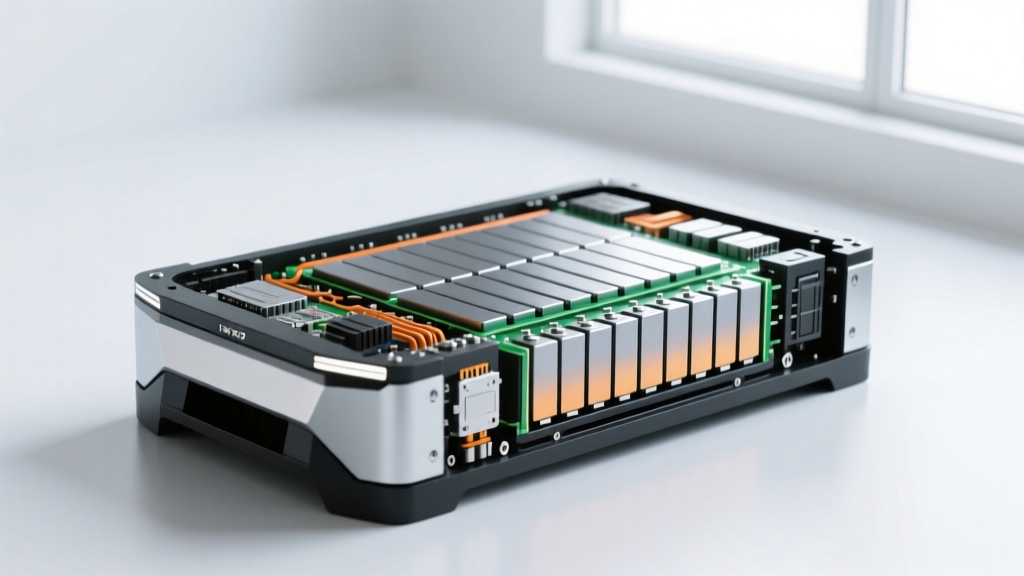
Searches for "lunar energy battery" have been climbing as space-tech headlines bleed into automotive forums. The term usually refers to one of two things: batteries designed to operate on the Moon's surface (extreme cold, vacuum, regolith dust) or speculative claims about lunar-sourced materials powering next-generation EV cells. Neither is in your driveway today. But the engineering challenges that lunar battery programs tackle — extreme-temperature resilience, ultra-long cycle life, energy-density maximization — map directly onto the problems EV buyers care about right now.
This guide separates the science-fiction from the science-fact. We'll walk through the battery chemistries actually available in 2026 model-year EVs, show you real degradation data, break down warranty coverage and replacement costs, and explain how to monitor and maximize your pack's State of Health (SoH). Where lunar-adjacent research (solid-state, silicon anodes) intersects with the EV roadmap, we'll flag it with realistic timelines.
What "Lunar Energy Battery" Actually Means
NASA's Artemis program and commercial lunar landers rely on batteries that must survive 14-day lunar nights at −173 °C (−280 °F) and charge during 14-day lunar days that reach 127 °C (260 °F). The cells used are typically custom lithium-ion or silver-zinc chemistries with heavy thermal-management overhead — not something you'll find in a Tesla Model Y or Hyundai Ioniq 5.
When EV forums mention a "lunar energy battery," they're usually conflating two trends:
- Lunar-harvested helium-3 as a future fusion fuel (decades away, unrelated to EV traction batteries).
- Space-grade battery engineering — radiation-hardened, extreme-temp cells — trickling down to automotive use (real but slow).
The practical takeaway: no production EV in 2026 uses a "lunar" battery. But the same physics that govern lunar cells — energy density, thermal management, cycle life — define the LFP and NMC packs in today's showrooms.
LFP vs. NMC/NCA: The Chemistry Showdown
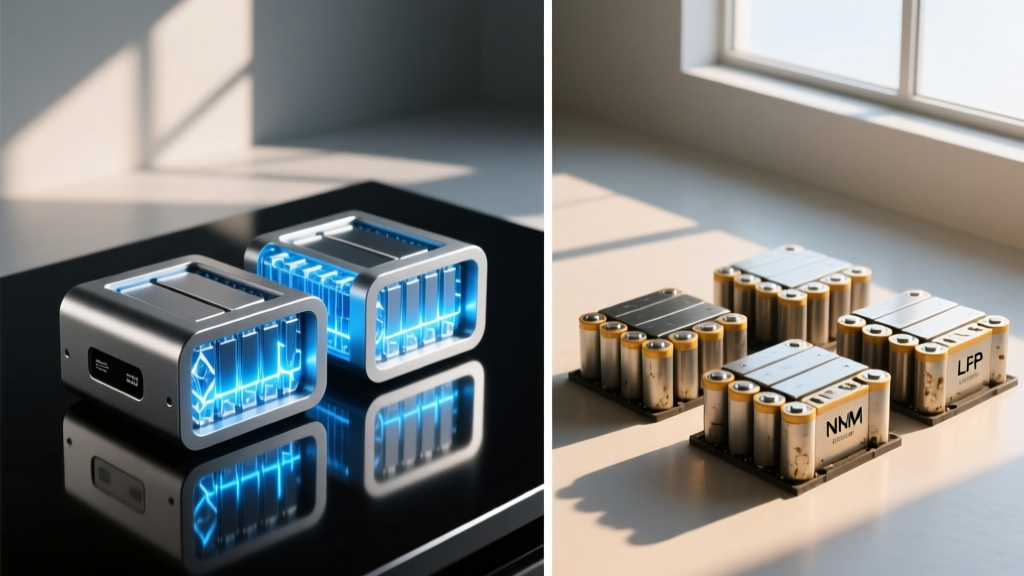
Every mainstream EV sold in the U.S. in 2026 uses one of two lithium-ion cathode chemistries: LFP (lithium iron phosphate) or NMC/NCA (nickel manganese cobalt / nickel cobalt aluminum). Here's how they stack up on the metrics that matter:
| Metric | LFP (LiFePO₄) | NMC / NCA |
|---|---|---|
| Energy density (cell-level) | ~160–180 Wh/kg | ~220–260 Wh/kg |
| Typical cycle life (to 80% SoH) | 3,000–5,000+ cycles | 1,500–2,500 cycles |
| Cold-weather range loss (~20 °F) | ~30–40% loss | ~20–30% loss |
| Cost per kWh (pack-level, 2026) | ~$95–$115 | ~$125–$155 |
| Recommended daily SoC | 100% OK | 80–90% preferred |
| Cobalt / ethical sourcing | Cobalt-free | Contains cobalt & nickel |
| Common 2026 models | Tesla Model 3 RWD, Model Y RWD, Ford Mustang Mach-E Select (LFP option) | Chevy Equinox EV, Hyundai Ioniq 5, BMW i4, most long-range trims |
Choose LFP if: you prioritize longevity, lower cost, and don't need maximum range. LFP's lower energy density means heavier packs for the same kWh, so it's best for standard-range trims. The ability to charge to 100% daily without accelerated degradation makes LFP ideal for home-charging commuters.
Choose NMC/NCA if: you need maximum range per charge, better cold-weather performance, or a lighter pack (important for larger SUVs and trucks). Just plan to keep daily charge around 80–90% and save 100% for road trips.
How Long Do EV Batteries Last? Real Degradation Data
The short answer: most 2026 EV batteries will outlast the car they're bolted into. Here's what the data shows:
- Tesla fleet data (2025 impact report): Model 3/Y packs retain ~88% capacity after 200,000 miles — roughly 12% loss over the typical life of the vehicle.
- Geotab analysis of 10,000+ EVs: average annual degradation of ~1.8% per year across all chemistries, meaning ~82% SoH after 10 years.
- Recurrent Auto (2025 dataset): LFP packs showing <5% loss at 100,000 miles in temperate climates; NMC packs averaging ~7% loss at the same mileage.
Sources: fueleconomy.gov, Geotab EV Battery Degradation Study, Recurrent Auto Battery Health Reports.
Notice the pattern: degradation is non-linear. Most packs lose 2–3% in the first year (the "formation loss"), then settle into a slow, linear decline of ~1–2% annually. A 2026 model-year EV with an EPA range of 310 miles and an NMC pack should still deliver ~270–285 miles after five years of typical use — still well above most daily commutes.
What Does the Battery Warranty Actually Cover?
Federal law (EPA emissions warranty requirements adopted by CARB states) pushes automakers to offer robust battery coverage. Here's what the major brands provide in 2026:
| Automaker | Duration | Mileage | Capacity Threshold |
|---|---|---|---|
| Tesla (Model 3/Y RWD — LFP) | 8 years | 100,000 mi | 70% retention |
| Tesla (Long Range / Performance — NMC) | 8 years | 120,000 mi | 70% retention |
| Hyundai / Kia | 10 years | 100,000 mi | 70% retention |
| GM (Ultium-based) | 8 years | 100,000 mi | 70% retention |
| Ford | 8 years | 100,000 mi | 70% retention |
| BMW | 8 years | 100,000 mi | 70% retention |
What triggers a warranty claim: if your battery's usable capacity drops below the threshold (typically 70% of original) within the time/mileage window. A 75 kWh pack at 70% retention still holds ~52.5 kWh — enough for ~180–210 miles depending on efficiency. That's diminished but very drivable.
What's NOT covered: cosmetic issues, damage from accidents or flooding, degradation from ignoring manufacturer charging guidelines (e.g., consistently leaving an NMC pack at 100% in extreme heat), or use of non-approved chargers that cause electrical damage.
EV Battery Replacement Costs: What to Budget
Out-of-warranty battery replacement is the number-one fear among prospective EV buyers. Here's the reality in 2026:
| Model / Pack Size | Battery Cost (parts) | Labor | Total Estimate |
|---|---|---|---|
| Tesla Model 3 RWD (~60 kWh LFP) | $7,000–$9,000 | $1,500–$2,500 | $8,500–$11,500 |
| Tesla Model Y LR (~82 kWh NMC) | $10,000–$13,000 | $1,500–$2,500 | $11,500–$15,500 |
| Hyundai Ioniq 5 (~77.4 kWh NMC) | $9,500–$12,000 | $2,000–$3,000 | $11,500–$15,000 |
| Ford F-150 Lightning Ext. Range (~131 kWh) | $18,000–$24,000 | $2,500–$4,000 | $20,500–$28,000 |
| Chevy Equinox EV (~85 kWh) | $10,000–$13,500 | $2,000–$3,000 | $12,000–$16,500 |
Critical context: these costs are rare. The vast majority of EVs are scrapped, sold, or traded before the battery needs replacement. According to IIHS and industry data, fewer than 2% of EVs require a full pack replacement under normal use. Module-level repairs (replacing individual cell groups rather than the entire pack) are increasingly available and cost 40–60% less than full replacements.
Battery prices continue to fall. Pack-level pricing dropped from ~$180/kWh in 2022 to roughly $110–$130/kWh in 2026, per BloombergNEF. By the time a 2026 model-year EV actually needs a new pack (likely 2036+), replacement costs will be substantially lower.
Factors That Kill (or Extend) Battery Life
Battery degradation isn't random — it's driven by specific, controllable factors:
- Minimize DC fast charging: Occasional road-trip fast charges are fine, but daily use of 150+ kW DC charging accelerates degradation by ~0.5–1% per year vs. Level 2 home charging. The heat generated at high C-rates stresses cell chemistry.
- Avoid extreme SoC storage: Don't leave an NMC pack at 100% or below 10% for days. Store at 50–60% if the car will sit for a week+. LFP is more tolerant of 100% storage.
- Use preconditioning: When navigating to a DC fast charger, the car's thermal management system warms or cools the battery to the optimal ~35–40 °C (95–104 °F) for charging. This reduces stress and improves charge speed. Always use the car's built-in navigation to chargers to trigger preconditioning.
- Mitigate extreme heat: Sustained ambient temps above 100 °F (38 °C) accelerate calendar degradation. Garage parking in hot climates measurably extends pack life. Cold is less damaging to long-term health but temporarily reduces range.
- Keep firmware updated: OTA updates often refine the BMS (Battery Management System) algorithms for better thermal management and charge-curve optimization.
How to Monitor Your Battery's State of Health (SoH)
State of Health (SoH) is the percentage of original capacity your pack can still hold. A new EV starts at 100% SoH; a pack at 85% SoH holds 85% of its original kWh. Here's how to check it:
- Tesla: The 2025.44+ software update includes a "Battery Health" screen under Service mode showing SoH percentage and a degradation curve. Third-party apps like TeslaFi and Tessie also track SoH using charge-log data.
- Hyundai/Kia: The EV menu in the infotainment system displays a battery health indicator. Dealers can pull a detailed SoH report via the KDS (Kia Diagnostic System) or GDS (Genesis/ Hyundai Diagnostic System).
- GM (Ultium): The myChevrolet/myCadillac app shows a battery health estimate. OnStar can provide a detailed SoH report on request.
- OBD-II tools: Devices like the OBDLink MX+ paired with apps such as ABRP (A Better Route Planner) or LeafSpy (Nissan) can read the BMS-reported SoH. Note that BMS estimates have a ±2–3% margin of error.
- Dealer diagnostic: Any authorized service center can perform a full capacity test — this is the gold standard and is typically free during warranty-period service visits.
Pro tip: Track your SoH quarterly rather than obsessing over daily fluctuations. Seasonal variation (slightly lower apparent capacity in winter due to increased internal resistance) is normal and reverses in warmer weather.
Beyond Today's Cells: Solid-State, Silicon Anodes, and the Lunar Connection
The battery research that most closely mirrors "lunar energy battery" aspirations — extreme energy density, ultra-wide temperature tolerance, zero fire risk — is solid-state battery technology. Here's where it stands in 2026:
- Toyota: Has announced a solid-state prototype with ~750 km (466 mi) range and 10-minute 10–80% charging, but production is slated for 2027–2028 in limited Japanese-market models. U.S. availability is not confirmed.
- Samsung SDI: Showing solid-state samples to automakers with ~900 Wh/L volumetric energy density (vs. ~600–700 Wh/L for current NMC). Mass production targeted for 2028.
- QuantumScape: Continues testing its anode-free lithium-metal cells with VW/Porsche. Durability data (cycle life beyond 800 cycles) remains under validation.
- Silicon anode (near-term): Already in limited use (GM's Ultium cells incorporate silicon in the anode). Pure silicon-anode cells from Sila Nanotechnologies are expected in 2027–2028 models, offering ~20% energy-density gains over graphite anodes.
Realistic timeline: Solid-state batteries will not appear in mainstream U.S.-market EVs before 2029 at the earliest, and likely at premium price points initially. Silicon-anode enhancements will arrive sooner (2027–2028) as incremental upgrades to existing NMC platforms.
The "lunar" connection? NASA's investment in solid-state and high-temperature battery research for Artemis moon missions is genuine, but the technology transfer to automotive applications takes 5–10 years. The extreme thermal cycling a lunar battery endures (−173 °C to +127 °C) dwarfs anything an EV pack faces, making automotive requirements far easier to meet with today's liquid-cooled lithium-ion systems.
Frequently Asked Questions
Is there a "lunar energy battery" I can buy for my EV today?
No. Lunar battery technology refers to specialized cells designed for space missions and is not available in any production vehicle. The closest analog in today's market is LFP chemistry, which offers exceptional cycle life (3,000–5,000+ cycles) and is widely available in 2026 models like the Tesla Model 3 RWD and Ford Mustang Mach-E Select.
How long do EV batteries last in years and miles?
Based on fleet data from Tesla, Geotab, and Recurrent Auto, a typical 2026 EV battery retains 80–90% of its original capacity after 150,000–200,000 miles or 10–15 years. Most packs will outlast the vehicle's useful life. Warranty coverage of 8–10 years / 100,000–120,000 miles at 70% retention provides a safety net.
How much does an EV battery cost to replace?
Out-of-warranty replacement ranges from ~$8,500 for a Tesla Model 3 RWD (60 kWh LFP) to ~$28,000 for a Ford F-150 Lightning Extended Range (131 kWh NMC). However, fewer than 2% of EVs ever need a full pack replacement under normal use, and module-level repairs cost significantly less. Prices are also declining ~8–12% annually.
What does the battery warranty cover?
Most 2026 EV battery warranties cover capacity loss below 70% of original for 8–10 years or 100,000–120,000 miles (whichever comes first). Hyundai/Kia leads with 10-year/100,000-mile coverage. Warranties do not cover accident damage, improper charging, or cosmetic issues. Check your specific owner's manual for exact terms, as they vary by model and trim.
LFP vs. NMC — which is better for me?
LFP is better if you want maximum longevity, lower cost, cobalt-free sourcing, and don't mind slightly less range. It handles daily 100% charging well. NMC/NCA is better if you need maximum range, better cold-weather performance, or a lighter pack. You'll need to keep daily charges at 80–90% for optimal NMC lifespan. Neither is universally "better" — it depends on your driving pattern and climate.
Can I check my battery health myself?
Yes. Tesla owners can access SoH directly in the vehicle's Service menu (2025.44+ software). Hyundai/Kia and GM owners can view health indicators in the infotainment system or companion app. For any EV, an OBD-II scanner with BMS-reading capability (e.g., OBDLink MX+ with ABRP) provides SoH data. For the most accurate reading, request a dealer diagnostic capacity test.